Updated July 24, 2026
8 min read
How to Transfer a Business Lease: Assignment and Consent Guide
How to Transfer a Business Lease: Assignment and Consent Guide
- Why the Lease Matters in a Business Sale
- What Can (and Can’t) Be Transferred Under a Lease
- Assignment vs. Sublease: Why Assignment Is Usually Required
- How to Transfer a Lease to Someone Else When Selling a Business
- What Happens to Liability After the Transfer?
- Common Mistakes to Avoid
- What If the Lease Can’t Be Transferred?
Content
When you want to sell a business, the commercial lease does not transfer automatically. In many small-business sales, lease transfer and landlord consent become one of the main deal-breaking issues. Until the transfer is completed correctly, the current tenant remains legally responsible — even after the business is sold.
This guide explains how lease transfers work, what landlords typically require, and how to move lease responsibility to a new tenant without creating legal or financial risk.
Why the Lease Matters in a Business Sale
In the U.S., two-thirds of office buildings are more than 90% leased, which shows how common it is for businesses to operate in rented space rather than owned property. Because of that, the lease becomes a key part of any business sale.
If there are problems with the lease, they can quickly affect the deal. Unresolved issues can:
Delay or even cancel the closing;
Lower the final sale price;
Leave the seller responsible for rent even after the business is sold.
That’s why it’s important to review the lease early — ideally before the business is listed for sale.
What Can (and Can’t) Be Transferred Under a Lease
A commercial lease isn’t just permission to use a space — it’s a package of rights and obligations that are tightly connected.
On one side are the rights, such as the right to occupy the premises, operate your business there, and use shared areas. On the other side are the obligations, including paying rent, maintaining the space, following building rules, and complying with use restrictions. In most cases, these rights and obligations must transfer together — you usually can’t pass on the benefits without the responsibilities.
For first-time sellers, the biggest surprise is that most leases do not allow free transfers. Instead, they limit or condition transfers through clauses such as:
Assignment approval requirements, which give the landlord the right to review and approve any new tenant before a transfer takes effect.
Change-of-control provisions, which treat a sale of the business or ownership interests as a lease transfer — even if the tenant name doesn’t change.
Continuing liability clauses keep the original tenant responsible if the new tenant later defaults.
These clauses exist to protect the landlord, not the seller. As a result, you can only transfer the lease to the extent the lease explicitly allows. Anything outside those terms — including informal handovers or early closing — typically requires the landlord’s written consent.
Assignment vs. Sublease: Why Assignment Is Usually Required
Lease assignment
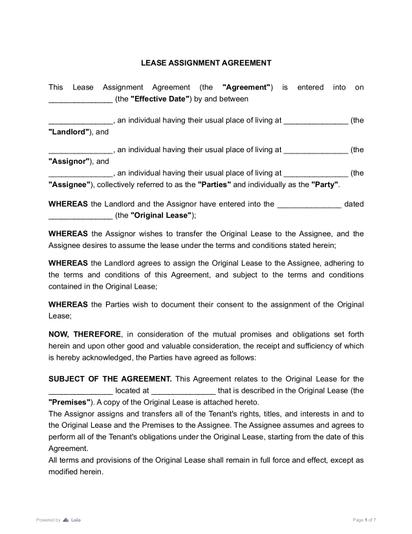
An assignment transfers the lease from the current tenant to a new tenant (the buyer). The buyer takes over the lease and becomes directly responsible to the landlord.
This is the common approach in business sales. In fact, most landlords require an assignment — not a sublease — when ownership changes.
However:
Most commercial leases require written landlord consent before an assignment can take place.
Many leases keep the original tenant liable unless formally released.
Sublease
A commercial sublease means the seller keeps the lease and rents the space to the buyer. This is uncommon in business sales and risky for sellers, because they:
Remain fully liable to the landlord;
Depend on the buyer to perform.

How to Transfer a Lease to Someone Else When Selling a Business
Step 1: Review the lease before you sell
Before you negotiate with a buyer or set a closing date, start with the lease itself. Your lease often determines whether the business sale can move forward smoothly — or stall completely. To save time, you can use AI summary tools to quickly identify assignment clauses, consent requirements, and personal guarantees before doing a deeper review.
Review these key sections carefully:
- Assignment and consent clauses
This section explains whether you’re allowed to transfer the lease at all and whether landlord approval is required. Some leases allow assignment only with consent, while others prohibit it entirely. Knowing this early helps you avoid signing a deal you can’t legally complete. - Change-of-ownership language
Many leases treat a business sale — especially a sale of ownership interests — as a lease “assignment,” even if the tenant name stays the same. This means landlord consent may still be required even if the business entity doesn’t change. - Personal guarantees
If you personally guaranteed the lease, selling the business does not automatically release you from liability. Without a written release from the landlord, you could remain responsible for rent and damages long after the sale. - Default triggers related to a sale
Some leases define a sale or transfer as a potential default if not handled correctly. Missing notice requirements or closing before approval can trigger penalties or even lease termination.
Why this step matters
First-time sellers often assume the lease will “sort itself out later.” In reality, lease terms can limit buyer options, reduce the purchase price, or delay closing by months.

Step 2: Understand the landlord consent process
Landlord consent is a legal requirement. Even if you’ve already found a buyer, the lease usually cannot be transferred unless the landlord formally approves the new tenant in writing.
For someone going through this process for the first time, it helps to know what landlords actually look at. In most cases, the landlord will review the buyer’s financial stability, business experience, and ability to meet rent and lease obligations. This often includes requesting financial statements, credit information, or details about how the business will operate in the space.
Timing is another common surprise. Landlord approvals are rarely instant. Many leases allow landlords 15–30 days (or longer) to review an assignment request after receiving complete documentation. If documents are missing or incomplete, the review period often resets, causing delays.
It’s also important to understand that consent may come with conditions. Landlords sometimes require additional security deposits, personal guarantees, or amendments to the lease terms as part of the approval. These conditions can affect both the deal structure and the final purchase price.
- Buyer’s financial strength;
- Credit history;
- Business experience;
- Fit with the property.
- Financial statements;
- Credit reports;
- Business background;
- Draft transfer documents.
To ensure the buyer is legally prepared for this review, advise them to follow our guide on how to register a business in the U.S. to verify their new entity is active and compliant before the landlord starts their due diligence.
Step 3: Tenant checklist for transferring the lease
If you are the current tenant selling the business, the lease transfer process should follow a clear order. Skipping or rushing steps is one of the most common reasons sellers remain legally and financially liable after closing.
- 1
Confirm the lease allows assignment
Start by reviewing your lease to see whether assignment or transfer is permitted at all. Some leases prohibit assignment entirely, while others allow it only with landlord approval. Knowing this upfront prevents wasted negotiations with buyers. - 2
Identify the landlord’s consent requirements
Most commercial leases require the landlord’s written consent before a transfer. The lease often specifies what the landlord can ask for — such as financial statements, business experience, or personal guarantees from the buyer. Understanding these requirements early helps you set realistic timelines. - 3
Collect the buyer’s financial information
Landlords usually evaluate the buyer’s ability to pay rent. Be prepared to collect documents like financial statements, tax returns, or credit information from the buyer. Delays here are one of the most common causes of stalled approvals. - 4
Submit a formal approval request
Verbal discussions aren’t enough. Most landlords require a written request that includes the buyer's details, the proposed transfer date, and supporting documents. Submitting a complete package increases the chance of faster approval. - 5
Prepare the lease transfer documents
Depending on the lease, this may involve an assignment agreement, assumption agreement, or landlord consent form. These documents define who is responsible for the lease going forward and on what terms. - 6
Align landlord approval with the closing date
Lease approval should be obtained before closing or clearly tied to it as a condition. Closing without approval can leave the seller responsible for rent even after selling the business. - 7
Confirm whether liability is fully released
Some leases allow assignment but keep the original tenant liable if the new tenant defaults. If possible, negotiate a release of liability, so you’re not responsible for future rent or damages after the transfer.
Skipping steps is one of the most common reasons sellers remain liable after closing.
Step 4: Use the right contract documents
A lease transfer only becomes legally effective when the right documents are signed and aligned. Verbal agreements or emails are not enough. In most commercial transactions, the transfer depends on a small set of contracts, each with a specific role.
A lease assignment agreement (transferring rights and obligations).
This is the core transfer document. It formally moves the lease rights and obligations from the current tenant to the new tenant. It defines who takes over rent payments, maintenance duties, and compliance with lease terms from the effective date. Without a properly executed assignment agreement, the original tenant may remain fully responsible for the lease — even after selling the business.A landlord consent addendum (approving the transfer).
This document is the landlord’s written approval of the transfer. It confirms that the landlord agrees to the new tenant and often sets conditions, such as guarantees or updated lease terms. Without this consent, the assignment may be invalid, and closing without it can trigger default under the lease.An estoppel certificate (confirming lease status).
An estoppel certificate is the landlord’s confirmation that the lease is in good standing. It states key facts such as the current rent, remaining term, and whether any defaults exist. Buyers rely on this document to confirm there are no hidden issues that could affect the business after closing. In 2026, the estoppel certificate should explicitly confirm that all tax pass-throughs and CAM reconciliations for the prior year are finalized.
- Tenant Estoppel Certificate
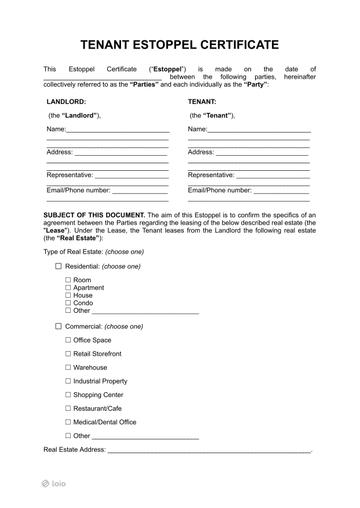 5698 downloads
 - Lease Addendum
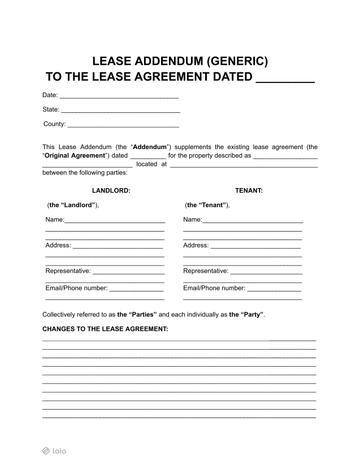 8459 downloads
Step 5: Coordinate the lease transfer with closing
Lease transfer approval shouldn’t be an afterthought — it should be coordinated directly with the sale closing. In practice, this means the landlord’s written consent is obtained before closing or clearly listed as a condition that must be satisfied at closing. Without this, ownership of the business may change hands while the lease legally stays behind, creating serious risk for both sides.
When lease issues aren’t addressed early, several problems commonly arise:
Deals take longer to close.
Landlords often require financial reviews, background checks, or additional documentation from the buyer. If this process starts late, it can stall the entire transaction.Buyers renegotiate or walk away.
If lease approval becomes uncertain near closing, buyers may lower their offer, delay payment, or exit the deal altogether to avoid being stuck without a location.Sellers remain liable longer than expected.
Until the landlord formally approves the transfer, the seller is often still legally responsible for rent, damages, or lease violations — even after selling the business.
Treat lease approval like financing or licenses — something that must be cleared before closing, not after. Build landlord consent into your closing checklist and timeline so the deal doesn’t depend on last-minute approvals.
What Happens to Liability After the Transfer?
Many sellers assume their liability ends once the lease is assigned, but that’s often not the case. If the landlord does not provide a written release, the original tenant may still be responsible for the lease. Personal guarantees frequently survive the transfer as well. Without a formal release or novation, a seller can remain liable for the lease for years after the business has been sold.
To guarantee your exit, use Loio eSign to finalize a formal release of liability. In 2026, maintaining a cryptographically time-stamped release is the most secure way to prove to future lenders and credit bureaus that you are no longer a guarantor for the transferred lease.
Common Mistakes to Avoid
Assuming the lease transfers automatically
Consequences: The sale may be delayed or canceled if the landlord objects, and the seller may remain legally responsible for rent and lease violations after closing. In some cases, an unapproved transfer can trigger a lease default.How to avoid it: Always review the lease before selling and confirm whether assignment and landlord consent are required. Treat the lease transfer as a separate legal step, not an automatic part of the sale.
Treating landlord consent as a formality
Consequences: Landlords can deny consent based on the buyer’s finances or experience, which may force renegotiation of the deal or cause the buyer to walk away. Late consent requests often delay closing.How to avoid it: Contact the landlord early, understand approval criteria, and prepare all required documents in advance. Make landlord consent a condition of closing.
Ignoring personal guarantees
Consequences: Even after selling the business, the seller may remain personally liable for unpaid rent or damages if the buyer defaults. This can lead to unexpected financial exposure years later.How to avoid it: Review the lease for guarantee clauses and request a written release or novation from the landlord as part of the transfer.
Waiting too long to address the lease
Consequences: Last-minute lease issues can delay closing, reduce the purchase price, or derail the transaction entirely. Buyers may lose confidence if lease risks surface late.How to avoid it: Address lease transfer requirements at the start of the sale process and align lease approval timelines with the business closing schedule.

What If the Lease Can’t Be Transferred?
If a landlord refuses to approve a lease transfer, the deal doesn’t automatically fall apart — but it does become more complicated. At that point, the seller and buyer usually have to renegotiate how the risk and cost are handled.
Common options include:
Negotiating early lease termination.
Some landlords will agree to terminate the lease in exchange for a fee. This can be expensive, but it gives the buyer a clean start without lease risk.Buying out the remaining lease term.
The seller may pay a lump sum to cover the remaining rent obligations, making the business easier to sell without ongoing lease liability.Temporarily retaining the lease.
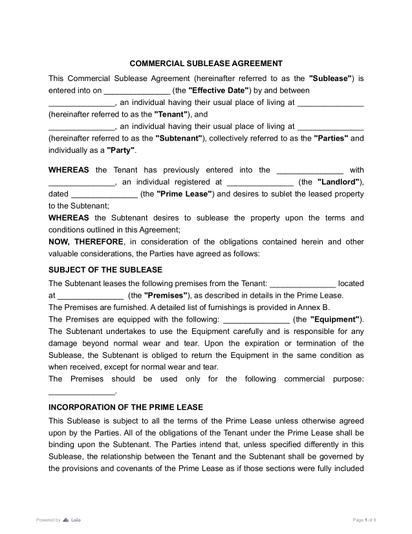
In some deals, the seller keeps the lease for a transition period and subleases the space to the buyer (if allowed). This is often used to keep the business running while a long-term solution is negotiated.
Adjusting the purchase price.
Lease uncertainty directly affects value. Research shows that commercial real estate deals can shift by around 10% based on how certain the transaction is to close, reflecting the risk involved.
Lease issues are one of the most common reasons business sales are delayed or repriced. Buyers want certainty. If they can’t be sure they’ll keep the location, they will either demand a lower price or walk away entirely.
Tip: Address lease transferability early in the sale process. Knowing the landlord’s position upfront gives you leverage and prevents last-minute surprises that can derail the deal.
More guides
September 1
7 min read
How to Provide Proof of Employment: Documents and Steps

July 24
4 min read
What Is a Fixed-Term Lease, and How Is It Different From an Automatic Renewal Lease?

July 20
4 min read
Addendum vs. Amendment: Change Your Purchase Agreement Properly
September 4
8 min read
Buying vs. Leasing Commercial Property in 2026: Which Is Better for Your Business?

September 9
8 min read
Triple Net Lease vs Gross Lease: Costs, Risks, and Who Pays What

July 22
9 min read
Rent a Space for Business: Commercial Leasing Guide

One home for your
agreements
Edit PDFs seamlessly
Tweak agreements before signing or sending for signatures. Update details, add or remove clauses, adjust formatting, and redline changes instantly.
eSign legally and securely
Sign documents and collect legally binding signatures. Invite up to ten people to sign in any order, track the progress, and send reminders.
Request legally binding signatures
Invite up to ten people to sign your document in any order. Get a finalized, audit-ready copy without chasing signatures.
Skip the drafting.
Choose from 2,500+ templates
Browse templatesChoose a template
Fill in details
Sign and download