Updated July 21, 2026
9 min read
5 Steps on How To Get an Eviction Off Your Record

5 Steps on How To Get an Eviction Off Your Record
- Why Evictions Stay on Your Record
- Step 1: Get Copies of Your Records (This Is Where Everything Starts)
- Step 2: If Money Was Owed, Resolve It and Get Proof in Writing
- Step 3: Request Expungement or Sealing
- Step 4: Dispute Errors with Tenant Screening Companies
- Step 5: How To Rent With an Eviction if It Can’t Be Removed Yet
- Why Documentation Matters Going Forward
- Conclusion
Content
An eviction on your record can feel like a closed door. It can affect where you live, what neighborhoods you can access, and even how landlords respond to your rental applications. But an eviction does not have to follow you forever. Whether the eviction happened because of financial hardship, miscommunication, or a dispute, there are clear steps you can take to fix the record, explain the situation, and move forward.
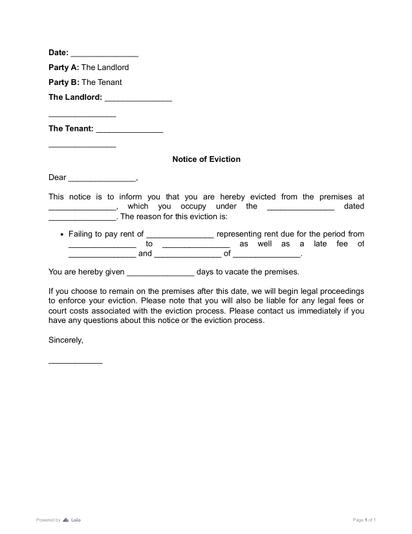
Before we begin, one important point: evictions often become complicated when notices and agreements aren’t properly documented. Using the right legal form, such as the notice to quit, helps landlords and tenants communicate clearly and avoid misunderstandings that lead to court filings in the first place. Documentation matters on both sides.
Why Evictions Stay on Your Record
Many renters are surprised to learn that an eviction isn’t just a physical removal — it also involves a court filing. This filing is what appears on background checks and tenant screening reports.
According to the Eviction Lab’s Preliminary Analysis: Eviction Filing Patterns in 2024, landlords filed just over one million eviction cases in the U.S. jurisdictions tracked, representing a filing rate of approximately 7.8% of renter households in those areas.
How long does an eviction stay on your record?
Up to seven years on tenant screening reports under the Fair Credit Reporting Act (FCRA).
Forever in some online court public records, unless sealed or expunged.
This is why the first step is to understand what exactly is being reported.
Step 1: Get Copies of Your Records (This Is Where Everything Starts)
To remove an eviction from the record, you need to know what is actually listed. Many people assume they have “an eviction” when the record is inaccurately reported, incomplete, or mislabeled.
Check:
1. Your court case history from the county court website or clerk’s office.
2. Your tenant screening reports, such as:
- Experian RentBureau.
- TransUnion SmartMove.
- CoreLogic SafeRent.
You are legally entitled to a free copy of any tenant screening report used to deny your rental application. If a landlord rejects you, they must provide an “adverse action” notice that tells you how to request this report.
Look for:
- 1
Wrong case status (e.g., shows as “evicted” when the case was dismissed).
- 2
Someone else’s case is attached to your name.
- 3
Missing evidence of payment or settlement.
Missing evidence of payment or settlement.
Step 2: If Money Was Owed, Resolve It and Get Proof in Writing
If the court has ordered you to pay overdue rent or fees, settling the balance can help you remove the eviction from your record or make sealing possible (depending on your state).
Ways to handle repayment:
- Pay in full (if possible).
- Request a settlement discount.
- Create a structured repayment plan.
If you arrange a payment plan with your landlord, make sure the terms are written down so both sides understand the amount, schedule, and expectations. A clear document, such as a payment agreement, helps protect you by keeping the agreement transparent and enforceable.
Once the balance is settled, request:
- 1
A Satisfaction of Judgment filed with the court.
- 2
A written statement from the landlord confirming that the matter is resolved.
This documentation is essential for Step 3.
Step 3: Request Expungement or Sealing
Many states now allow renters to close or delete eviction cases under certain circumstances, especially:
- If the case was dismissed.
- If the landlord did not obey proper legal procedures.
- If the eviction happened during the COVID-era hardship relief.
- If the judgment has been paid in full.
Visit your state’s judicial branch or court website (.gov) and search:
Eviction expungement, motion to seal, or vacate judgment.
This process may sound intimidating, but you don’t always need an attorney. Court clerks are generally allowed to explain:
- 1
Which form to use?
- 2
Whether you qualify.
- 3
How to file the request.
If your petition is approved → the eviction becomes hidden from screening reports, making renting dramatically easier.
Step 4: Dispute Errors with Tenant Screening Companies
If your tenant screening report still shows the eviction even after the case was dismissed, sealed, vacated, or the judgment has been fully paid, you have the right to request a correction. Provide the screening company with proof, such as the court order showing the dismissal or sealing of the case, or documentation confirming that the judgment was satisfied.
Include a short, clear explanation of what changed and why the record is no longer accurate. Under the Fair Credit Reporting Act, the screening party must review your request and respond within 30 days, allowing you to correct or have inaccurate information removed once proper documentation is submitted.
Step 5: How To Rent With an Eviction if It Can’t Be Removed Yet
Some records can’t be sealed right away, but you can still rent successfully.
What helps:
- A letter explaining the situation.
- Proof of steady income.
- References from employers or previous landlords.
- Offering a slightly larger deposit, if financially possible.
If the eviction can’t be removed yet, you can still show future landlords that you're a reliable tenant by demonstrating stable income and strong references. And if you share rent, clearly outline responsibilities with anyone you live with. Using a written roommate contract helps prevent misunderstandings and shows that you manage housing arrangements responsibly. The goal is to present your current stability, rather than past eviction, as the defining aspect of your rental history.
Why Documentation Matters Going Forward
Many eviction situations begin with unclear communication or undocumented agreements. A written notice sets a clear timeline and expectations. If you are a landlord or might become one later, having the correct form prevents disputes from escalating to court.
A properly written lease sets clear expectations, timelines, and responsibilities, which helps prevent misunderstandings from escalating into legal disputes. Using a rental agreement ensures a transparent rental process and protects both the landlord and the tenant.
Conclusion
An eviction on your record can feel discouraging, but it doesn’t define your future. Once you understand exactly what is being reported, you can start correcting inaccuracies, resolving any outstanding financial matters, and exploring whether sealing or expungement is possible in your state.
Even if removal isn’t immediate, it’s still possible to secure housing by presenting documentation that shows stability, responsibility, and clear communication. With the right steps and the right paperwork, you can move forward confidently — the eviction becomes something in your past, not something that controls your next chapter.
More guides
September 4
How To Break a Lease in Florida Without Penalties
September 1
7 min read
How to Provide Proof of Employment: Documents and Steps

July 24
4 min read
What Is a Fixed-Term Lease, and How Is It Different From an Automatic Renewal Lease?

July 23
5 min read
Commercial Lease Negotiation & Mastering the Deal

October 6
14 min read
How to Make a PDF Searchable: 5 Tested OCR Methods in 2026
September 16
9 min read
Lease vs. Rent: What’s the Difference and What to Choose

One home for your
agreements
Edit PDFs seamlessly
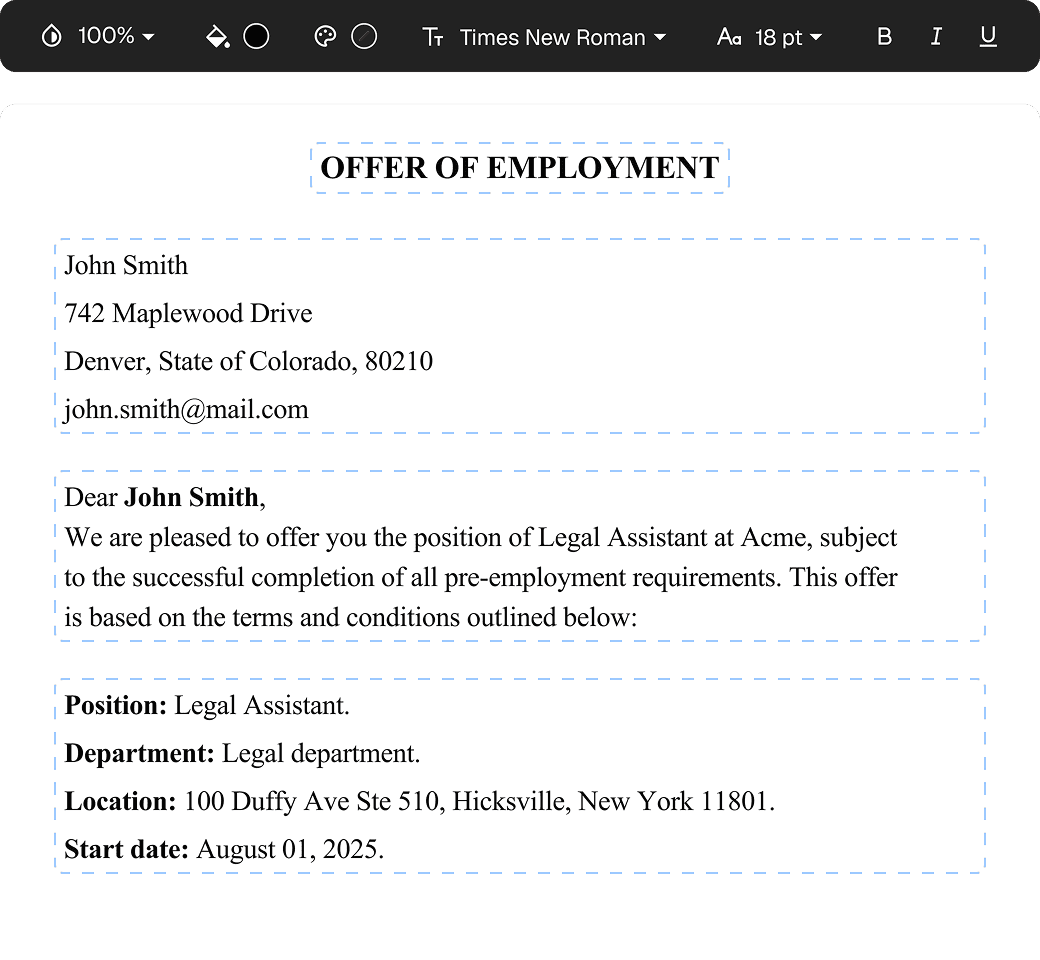
Tweak agreements before signing or sending for signatures. Update details, add or remove clauses, adjust formatting, and redline changes instantly.
eSign legally and securely
Sign documents and collect legally binding signatures. Invite up to ten people to sign in any order, track the progress, and send reminders.
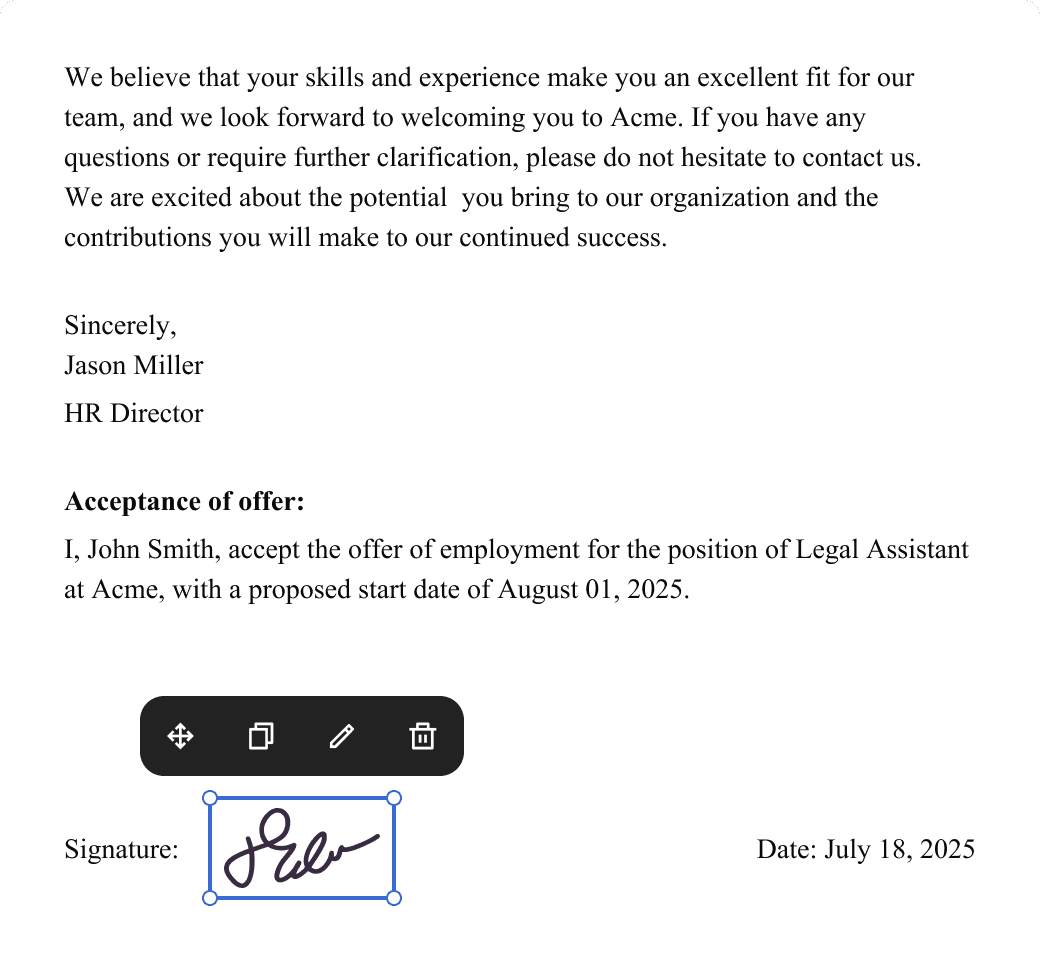
Request legally binding signatures
Invite up to ten people to sign your document in any order. Get a finalized, audit-ready copy without chasing signatures.
Skip the drafting.
Choose from 2,500+ templates
Browse templatesChoose a template
Fill in details
Sign and download