Updated July 26, 2026
3 min read
How to Start a Catering Business in 2026: Complete Guide
How to Start a Catering Business in 2026: Complete Guide
- A Step-by-Step Guide on Starting a Catering Business Legally
- What Should a Catering Business Plan Include Before Launch?
- Should a Catering Business Register as an LLC?
- What Food Safety Rules Apply When Starting a Catering Business from Home?
- How Do You Market a New Catering Service Business to Local Clients?
- How Should You Design and Price a Catering Menu for Different Events?
- Final Word
Content
If you are among those who love to cook, you have probably already dreamt of starting a culinary venture. But moving from a home kitchen to a professional operation requires more than unusual recipes.
To learn how to start a catering business successfully, you will need to conduct your own research. Begin by picking a niche. It can be corporate events, weddings, or home-based services.
It is a good time to start a catering business from home in 2026, as the industry is booming, especially if you work through a specialized menu like vegan or allergen-safe options.
Narrowing your focus helps you stand out and meet that modern demand for inclusive dining. That can be your starting point.
A Step-by-Step Guide on Starting a Catering Business Legally
You need to follow a specific sequence of legal and operational milestones if it is your goal to transform your catering dream into reality.
Getting things up right from the start ensures you’re following the latest rules and protecting your business from unexpected legal and financial risks. So, here is what you have to take care of:
- 1
Establish legal identity. Register your Limited Liability Company (LLC) and get an Employer Identification Number (EIN) from the Internal Revenue Service(IRS). This step is vital because it separates your personal finances from your business liabilities. It is required for all official contracts.
- 2
Secure professional certification. Get a Food Manager Certificate mandated by the Food and Drug Administration (FDA). It can be a ServSafe or an equivalent certificate. This document will prove that you are trained in advanced food safety and will provide you with the right to serve your customers.
- 3
Get necessary permits. You will need your local Public Health Permit. Keep in mind that these are different for each state, so you will need the one that suits your location. And, if you are planning on serving alcoholic drinks, make sure to get your Liquor License, too. Once you have your permits, it is a green flag from the government for you to begin business operations.
- 4
Insure your assets. Purchase Product Liability and Public Liability Insurance. If your guest gets sick or some property damage occurs during an event you are serving, these policies will protect you.
- 5
Pass health inspections. A Health Department walkthrough usually concerns verifying that your refrigerator, prep surfaces, and plumbing meet sanitary codes. Don’t forget to plan this in advance – this way, you will have time to prepare and meet an inspector at your best.
- 6
Finalize your logistics. Complete your menu and check your suppliers for traceability. Make sure you can track every ingredient back to its source so that it complies with today’s food safety transparency laws. The Food Safety Modernization Act (FSMA) has a special rule for that. If you want to speed up the process of reading and analyzing documents, use the online AI Summary service to help you.
These steps can become a good foundation for trust between you and your clients, so don’t miss any of these stages when starting up a catering business. Besides, when all these are set, you can focus on culinary creativity while your business works properly and legally.
What Should a Catering Business Plan Include Before Launch?
Every successful catering business requires a business plan to use as a roadmap. If you don’t plan in advance, you risk overspending on equipment and food supplies. What’s more, without a business plan, you won’t be able to target the right audience, so your income might be less than you expected.
So, here is what everyone who wonders how to start a catering service has to think through:
An executive summary: think of the ways you will pitch your business concept to banks or potential investors. Will you be serving parties, weddings, or quick corporate lunches? What kind of food will you sell? This information is important, as well as your calculations of the potential income and further business development. Make sure to have a clear vision of your business's future and present it in a persuasive way.
Marketing analysis: identify your potential clients and evaluate the local competitors. This will ensure your business can fill a specific gap in the market.
Potential costs: get acquainted with the actual minimum wage in your state for the upcoming year to calculate your spendings precisely. Check out the projected increase in food-away-from-home prices, too. High-volatility products like beef might require careful menu engineering to protect your margins.
Operations plan: detail your logistics and decide how you will source traceable ingredients, secure a licensed commissary kitchen or a permitted home-based space.
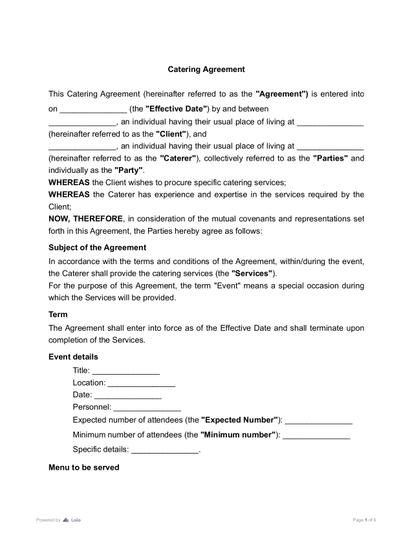
Legal base: plan on getting all the necessary specific licenses required for your state and draft a Catering Contract to sign with your clients. It is especially fast and convenient to use an electronic signature for operations like that. And if you need any changes made in your agreement, consider the editing PDF function online.
Should a Catering Business Register as an LLC?
When you are looking into how do you start a catering business, choosing a business structure is one of the first questions that arise. And for most, a Limited Liability Company (LLC) is the gold standard.
If your business is an LLC, your home and personal savings are protected from business-related lawsuits. So, if a guest has an allergic reaction or slips at an event, the LLC will create a “legal wall” between your personal life and your catering service business.
Also, vendors and high-end clients treat you more seriously when you have an LLC. It shows that you are serious about handling your business and doing it properly.
And finally, under the 2026 Corporate Transparency Act (CTA), you will need to report who owns the business to the federal government. And registering as an LLC guarantees that your business stays legal. The government pays close attention to how the business functions and pays the taxes, so an LLC can be another proof that you do everything right legally.
What Food Safety Rules Apply When Starting a Catering Business from Home?
A lot of new entrepreneurs try to save on rent and start their catering businesses in their own kitchens. But a home-based catering service must comply with food safety regulations just like any restaurant.
State-by-state variations on “non-hazardous” foods are significant, so make sure you know what is especially important in your state. For example, in California, cottage food laws may allow high-acid fruit jams and dry pastries, while Texas can permit specific shelf-stable pickles.
No matter where you reside, to identify potential biological or chemical risks in a home environment, you will need to implement a Hazard Analysis and Critical Control Points (HACCP).
In 2026, the Food and Drug Administration (FDA) introduced stricter guidance in allergen training. According to it, you have to prevent cross-contact: keep ingredients like nuts and dairy away from other foods. And more, there are clear rules on when and why you can label certain dishes “Gluten-free.”
The law often requires you to keep your business food separate from your family’s groceries. You will need a separate shelf or even a separate fridge just for your catering ingredients. This will more likely guarantee that everything stays clean and professional.
How Do You Market a New Catering Service Business to Local Clients?
You can have the most sophisticated cuisine, but if nobody knows it exists, chances are you won’t be able to grow your business. In 2026, you have to make yourself visible in your local community, so here are some ideas on how to do it.

Final Word
Discovering how to start catering services is challenging, but exciting. This kind of business needs deep passion for the job you are doing and great respect towards the strict laws that regulate this area, as it is about other people’s safety, first and foremost. And you have all the chances to build a successful catering business if you follow safety regulations, pay your taxes, and carefully plan the menu.
Each step in establishing a business is vital, from registering your EIN to passing health inspections. These are the basics that ensure trust between you and your clients and protect the hard work you do.
If you are staying compliant with the food safety and traceability standards, it shows that you commit to the quality of your final product. And this is what customers value most, after all.
Make the professional setup of your business your secret ingredient that allows you to succeed!
More guides
September 1
7 min read
How to Provide Proof of Employment: Documents and Steps

October 7
How to Start a Staffing Agency: Licensing, Pricing, and Cash Flow
July 20
10 min read
How to Start a Landscaping Business: Legal and Business Checklist

September 1
5 min read
How to Start a Tutoring Business and Succeed

September 11
6 min read
How to Start a Moving Company
July 22
Vendor vs Supplier: Key Differences and Which Agreement to Use
One home for your
agreements
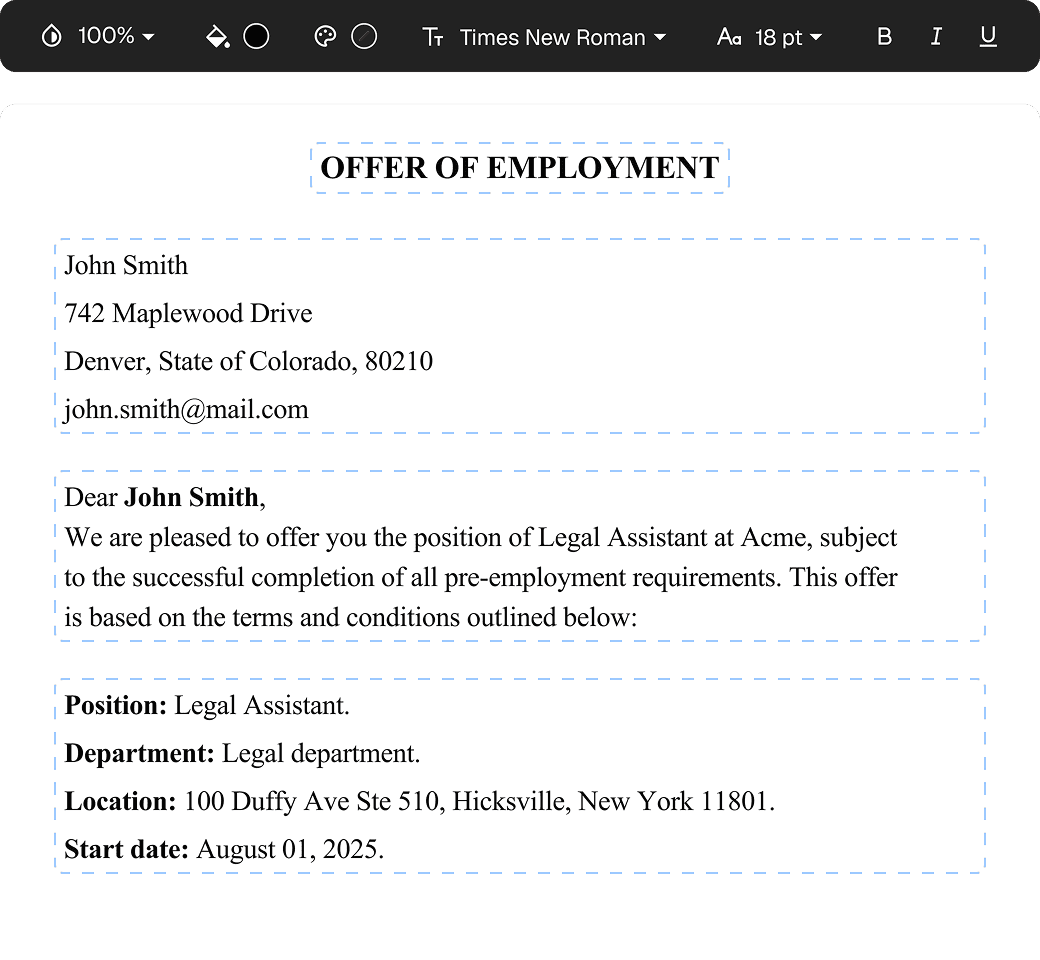
Edit PDFs seamlessly
Tweak agreements before signing or sending for signatures. Update details, add or remove clauses, adjust formatting, and redline changes instantly.
eSign legally and securely
Sign documents and collect legally binding signatures. Invite up to ten people to sign in any order, track the progress, and send reminders.
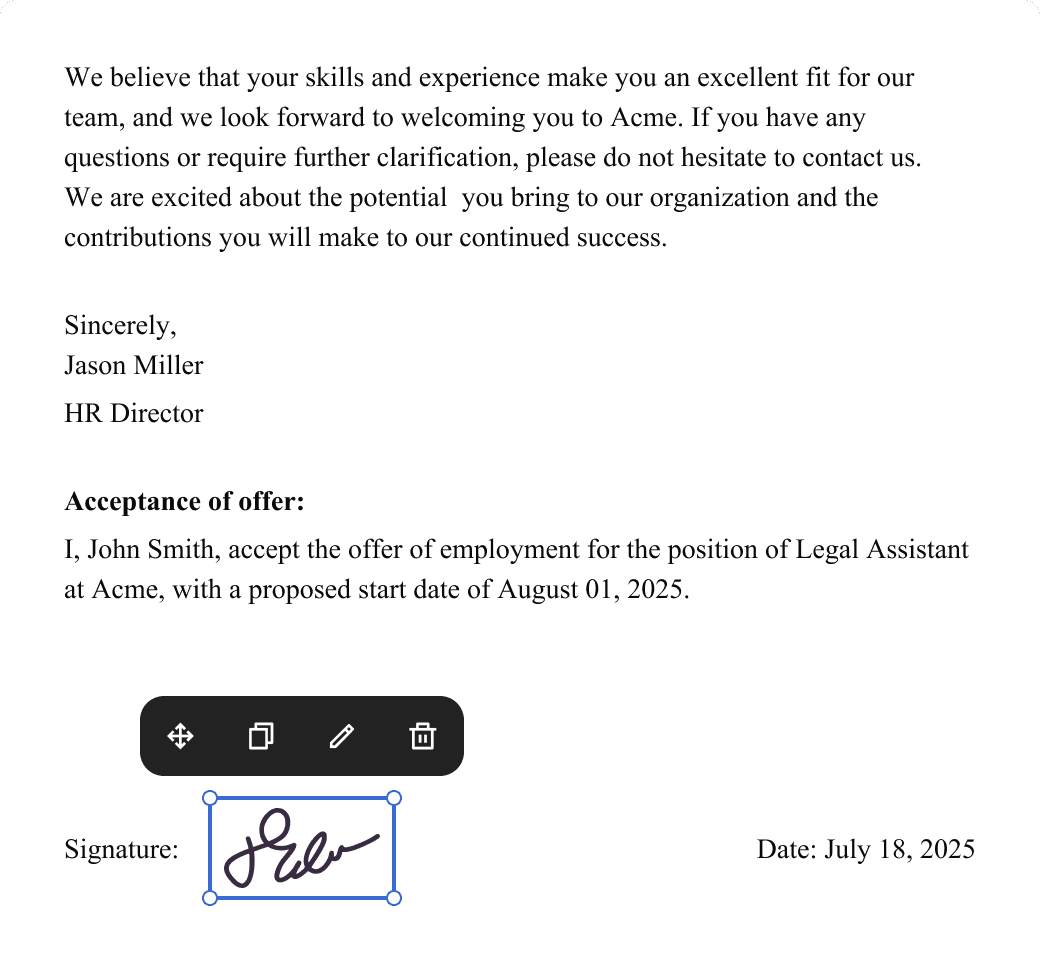
Request legally binding signatures
Invite up to ten people to sign your document in any order. Get a finalized, audit-ready copy without chasing signatures.
Skip the drafting.
Choose from 2,500+ templates
Browse templatesChoose a template
Fill in details
Sign and download