Updated July 22, 2026
Vendor vs Supplier: Key Differences and Which Agreement to Use
Vendor vs Supplier: Key Differences and Which Agreement to Use
- What Is a Vendor?
- What Is a Supplier?
- Supplier vs Vendor: Key Differences
- Does the Vendor vs Supplier Difference Change by Industry?
- Does the Vendor and Supplier Difference Actually Matter for Your Business?
- What Documents Do You Need for Vendors and Suppliers?
- Common Mistakes When Working With Vendors and Suppliers
Content
People often use vendor and supplier as if they mean the same thing. In everyday conversation, that may be fine. In business, the difference matters. A vendor usually sells a finished product or service. A supplier usually provides materials, parts, or inputs that another business uses to make or deliver something else.
That difference affects your contracts, payments, timelines, and risk. For example, if a supplier delivers materials late, your production may stop, and your customer orders may be delayed. If a vendor provides poor service, you may need a refund, replacement, support, or clear warranty terms. If you use the wrong agreement, the contract may miss the exact protections you need.
This guide explains what vendors and suppliers are, where each fits in the supply chain, how the difference between vendors vs suppliers plays out across industries, and exactly which documents you need based on the relationship.
What Is a Vendor?
A vendor sells finished goods or services to businesses or end customers. The vendor is the last commercial link before the product or service reaches the person who will actually use it. Vendors do not manufacture or transform what they sell.
- Finished products ready for use or resale.
- Software platforms and technology tools.
- Services such as IT support, cleaning, or marketing.
- Businesses buying goods or services for internal use.
- Retailers purchasing products to resell.
- End customers are buying directly.
Type of relationship:
Vendor relationships can be short-term and transactional or long-term and ongoing.
Real examples:
- An office supply company sells equipment and paper to businesses.
- A SaaS company providing a CRM platform to corporate clients.
- A food vendor selling packaged goods to a grocery chain.
What documents govern a vendor relationship:
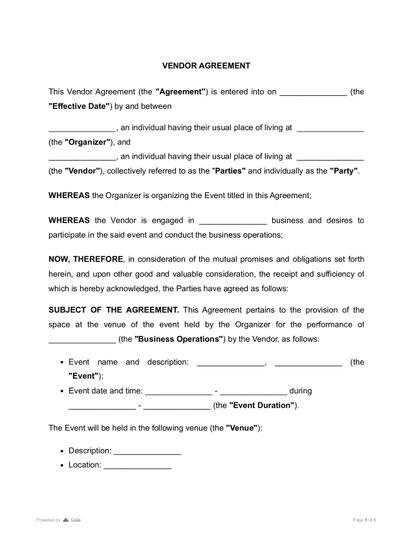
A vendor agreement defines what is being delivered, at what price, and what happens if either party does not perform. Without one, disputes over delivery timelines, pricing changes, or service quality have no written basis for resolution. If the agreement arrives as a PDF, a PDF editor can help you review comments, mark changes, and finalize the document before signature.
What Is a Supplier?
A supplier provides raw materials, components, or inputs to manufacturers or other businesses that process or transform them into other products. Suppliers sit at the beginning of the supply chain, before the product takes its final form.
NIST notes that 100% of domestic manufacturers in the United States procure materials, components, sub-assemblies, or assemblies from other companies. In practice, this means manufacturers rarely control all the inputs they need to produce finished goods. If a supplier delivers late, sends the wrong materials, or fails to meet quality standards, the buyer may face production delays, rejected products, or missed customer orders. That is why supplier relationships need written terms on quality, delivery, inspection, and remedies, not just a basic purchase order.
- Raw materials such as steel, cotton, wheat, or lumber.
- Components such as circuit boards, engines, or packaging materials.
- Bulk inputs used in manufacturing or assembly.
- Manufacturers that turn raw materials into finished goods.
- Distributors that buy in bulk and resell to other businesses.
Type of relationship:
Supplier relationships are typically long-term, B2B, and contract-based. Production schedules depend on consistent supply, which means businesses need reliability, defined quality standards, and predictable pricing.
Real examples:
- A steel mill supplying metal sheets to an auto manufacturer.
- A wheat farmer supplying grain to a food producer.
- A fabric manufacturer supplying material to a clothing brand.
What documents govern a supplier relationship:
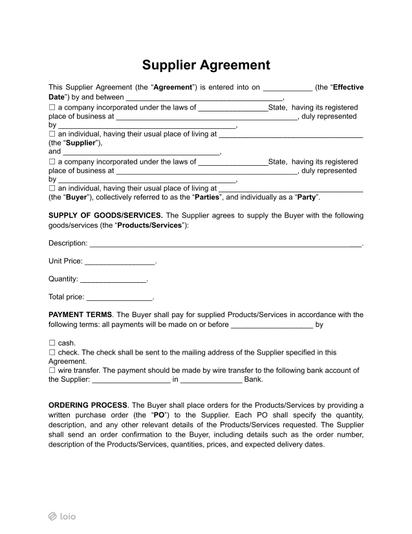
A supply agreement covers delivery schedules, quality standards, pricing, liability, minimum order quantities, and termination terms. A vendor agreement used in a supplier context will almost always be missing these critical clauses.
Supplier vs Vendor: Key Differences
The easiest way to compare vendors and suppliers is to ask what your business receives and how that purchase affects operations. A vendor usually provides something ready to use. A supplier provides something your business needs before it can make, package, assemble, or deliver something else. In simple terms, the supply chain connects suppliers, manufacturers, distributors, vendors, and customers, and each participant carries a different type of operational and contractual risk.
The difference matters in five practical ways:
Supply chain role: Suppliers usually sit earlier in the process. Vendors usually sit closer to the final sale or final use.
Business risk: Supplier problems can affect production, inventory, and customer orders. Vendor problems usually affect service quality, delivery, warranties, refunds, data protection, or finished work.
Contract focus: Supplier relationships need stronger terms around quality, delivery schedules, inspection rights, minimum quantities, and supply interruptions. Vendor relationships focus more on scope, pricing, payment, warranties, returns, liability, and termination.
Negotiation style: Suppliers are often negotiated around volume, long-term demand, pricing stability, and continuity. Vendor negotiations are more often focused on service levels, pricing, support, cancellation rights, and warranties.
Customization: Suppliers may provide materials or components made to exact specifications. Vendors usually provide standardized goods or ready-to-use services, although some vendor work can still be customized.
A simple test can help: if the item becomes part of what your business produces, packages, or resells after processing, the relationship is likely supplier-based. If the item or service is ready to use as delivered, the relationship is likely vendor-based.
Does the Vendor vs Supplier Difference Change by Industry?
Yes, and this is one of the main reasons the terms are confusing. The same word can mean something different depending on the industry you work in.
Retail:
"Vendor" is used broadly to mean any seller, including manufacturers, distributors, and wholesalers. A retailer may call everyone who stocks their shelves a vendor, regardless of whether those goods are raw or finished. This is technically imprecise but widely accepted in retail contexts.
The distinction is much stricter. A supplier provides components or materials used in production. A vendor sells finished goods or services that the manufacturer buys for its own operations, such as office software, cleaning services, or packaging equipment. Mixing these up in procurement creates the wrong approval process and the wrong contract template.
"Vendor" almost always means a software or technology provider. Infrastructure providers, such as cloud hosting or data centers, are more commonly called suppliers or partners, even though the boundary is not always clear.
A supplier provides materials: lumber, concrete, and steel. A subcontractor provides labor and services. These are legally distinct relationships with different contracts, different liability rules, and different insurance requirements. Treating a subcontractor as a vendor is a common and costly mistake.
If there is any risk of ambiguity in your industry or your specific contract, define the term explicitly in the agreement. A one-sentence definition clause can prevent months of dispute.
Does the Vendor and Supplier Difference Actually Matter for Your Business?
When you need a supplier
You need a supplier when your business depends on materials, components, or bulk inputs to make, assemble, or package something else. With suppliers, price is only one part of the deal. The bigger question is whether the business can rely on the materials, timing, and quantity behind that price.
When you need a vendor
You need a vendor when buying a finished product or a ready-to-use service. The main risk is usually different: whether the vendor delivers what was promised, charges the agreed price, protects your data. If the vendor creates something for your business, the agreement should also say who owns the final work.
Impact on negotiations and pricing
Supplier pricing is typically negotiated based on volume, contract length, and exclusivity. Vendor pricing tends to be catalog-based or fixed. Knowing which relationship you are in determines how much leverage you have, what terms are standard to request, and when it makes sense to push back.
Impact on documents
The document should match the risk. Supplier agreements protect production continuity with terms on quality, delivery, inspection, minimum quantities, and supply interruptions. Vendor agreements protect finished delivery, service quality, payment terms, warranties, data handling, and termination. Using the wrong agreement can leave important obligations uncovered.
What Documents Do You Need for Vendors and Suppliers?
The right document depends on the type of relationship, not just the label you use for the other party.
Documents for a supplier relationship
A supply agreement is the core document. It should cover delivery schedules and lead times, quality standards and inspection rights, pricing and price adjustment mechanisms, liability and insurance requirements, and termination rights, including what happens to open orders.
Key clauses that are often missing from generic agreements include exclusivity provisions, minimum order quantities, force majeure, and supplier audit rights. These clauses matter because supplier problems can affect production schedules, customer orders, and replacement costs.
Documents for a vendor relationship
A vendor agreement is the core document. It should cover the product or service scope, pricing and payment terms, delivery or performance timelines, warranties, and what happens if the product or service fails, liability limits, and termination rights.
Key clauses that matter more in vendor agreements than in supply agreements include the return and refund policy, IP ownership if the vendor creates anything for you, and data protection if the vendor handles customer data.
This is especially important for software, marketing, payment, or operations vendors that may touch customer or employee information. The FTC advises small businesses to pay close attention to how vendors protect personal information and to include security expectations in vendor relationships. Once the terms are final, eSign can help both sides sign the vendor agreement without printing or scanning.
An NDA may be useful in either relationship if the other party will access pricing, customer lists, product specifications, formulas, internal systems, or technical files. For suppliers, the risk is often production know-how. For vendors, the risk is often customer data, marketing plans, or internal business information.
When a purchase order is enough and when it is not
A purchase order is suitable for one-time or low-value transactions, purchases with simple, standard terms, and situations where price, quantity, and delivery are the only variables.
A full agreement is necessary when the relationship is ongoing, when the transaction involves large volumes or custom products, or when there is any liability, IP ownership, confidentiality, or compliance risk.
Many businesses default to purchase orders for everything and only discover the gap when a dispute arises over quality, delivery, or payment terms that the purchase order never addressed.
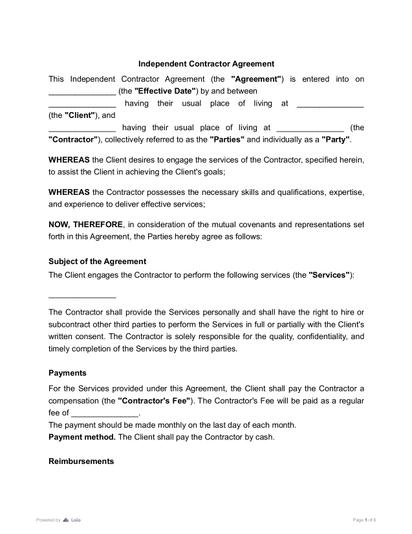
When to use an independent contractor agreement instead of a vendor agreement
If the vendor providing services is an individual, a freelance developer, a consultant, or a designer, a vendor agreement may be the wrong document. The key questions to ask are: is this person working as an individual or through a registered business, does the work involve deliverables with a specific deadline, and who owns the intellectual property once the work is done?
If the answers indicate an individual performing work with IP implications, an independent contractor agreement is more appropriate. Using a vendor agreement in this situation can leave IP ownership unclear and create misclassification risk, potentially leading the person to claim later employee status, which carries tax and benefits obligations.
For federal tax purposes, the IRS considers behavioral control, financial control, and the relationship between the parties when determining whether a worker is an employee or an independent contractor. If there is any doubt about how to classify the relationship, reviewing the IRS common law rules before signing anything is the safer starting point.
Common Mistakes When Working With Vendors and Suppliers
Using a vendor agreement for a supplier relationship
A business signs a standard vendor agreement with a company that will supply raw materials for ongoing production. The agreement has no quality standards, no delivery schedule, and no minimum order terms. When the supplier delivers late or below spec, the buyer has no contractual remedy. The only options are to absorb the loss or renegotiate from a weak position, usually without leverage.
Not distinguishing between vendors and suppliers in internal processes
A procurement team uses the same onboarding checklist, approval process, and payment terms for all external partners. A strategic supplier providing critical components undergoes the same three-day approval process as a one-time office supply vendor. When a supply disruption hits, there is no escalation process, no backup supplier clause in the contract, and no senior sign-off requirement. The business is exposed because it managed a high-risk relationship as if it were a low-risk one.
Not putting terms in writing
A business agrees verbally with a vendor on pricing, delivery dates, and return terms. The vendor ships the wrong quantity at a higher price. Without a written agreement or a signed purchase order that confirms the original terms, the business has no documented basis for a dispute and no clear path to a refund or replacement.
Treating a vendor as a contractor without the right documents
A company hires a vendor to build a custom software feature. The relationship is governed by a vendor agreement that says nothing about IP ownership. When the project is complete, the creator may still control key rights unless the agreement properly transfers ownership or qualifies as a valid work made for hire. The U.S. Copyright Office explains that commissioned work generally needs a written, signed agreement expressly stating that the work is made for hire, and not every type of work qualifies.
Most of these mistakes share a root cause: the relationship was not documented correctly from the start. The label you use, vendor or supplier, matters less than whether the agreement you sign reflects the actual risk, the actual obligations, and the actual consequences if something goes wrong. Getting the right document in place before the relationship starts is always easier than trying to establish rights after a dispute has already begun.
More guides
September 1
7 min read
How to Provide Proof of Employment: Documents and Steps
October 15
How to Start a Staffing Agency: Licensing, Pricing, and Cash Flow
July 21
8 min read
Statement of Work vs Scope of Work: Differences and How They Work Together
September 10
14 min read
How to Protect Your Small Business from Lawsuits
September 15
10 min read
Who Can Sign a Contract on Behalf of a Company?
September 15
What Is Contract Redlining?
One home for your
agreements
Edit PDFs seamlessly
Tweak agreements before signing or sending for signatures. Update details, add or remove clauses, adjust formatting, and redline changes instantly.
eSign legally and securely
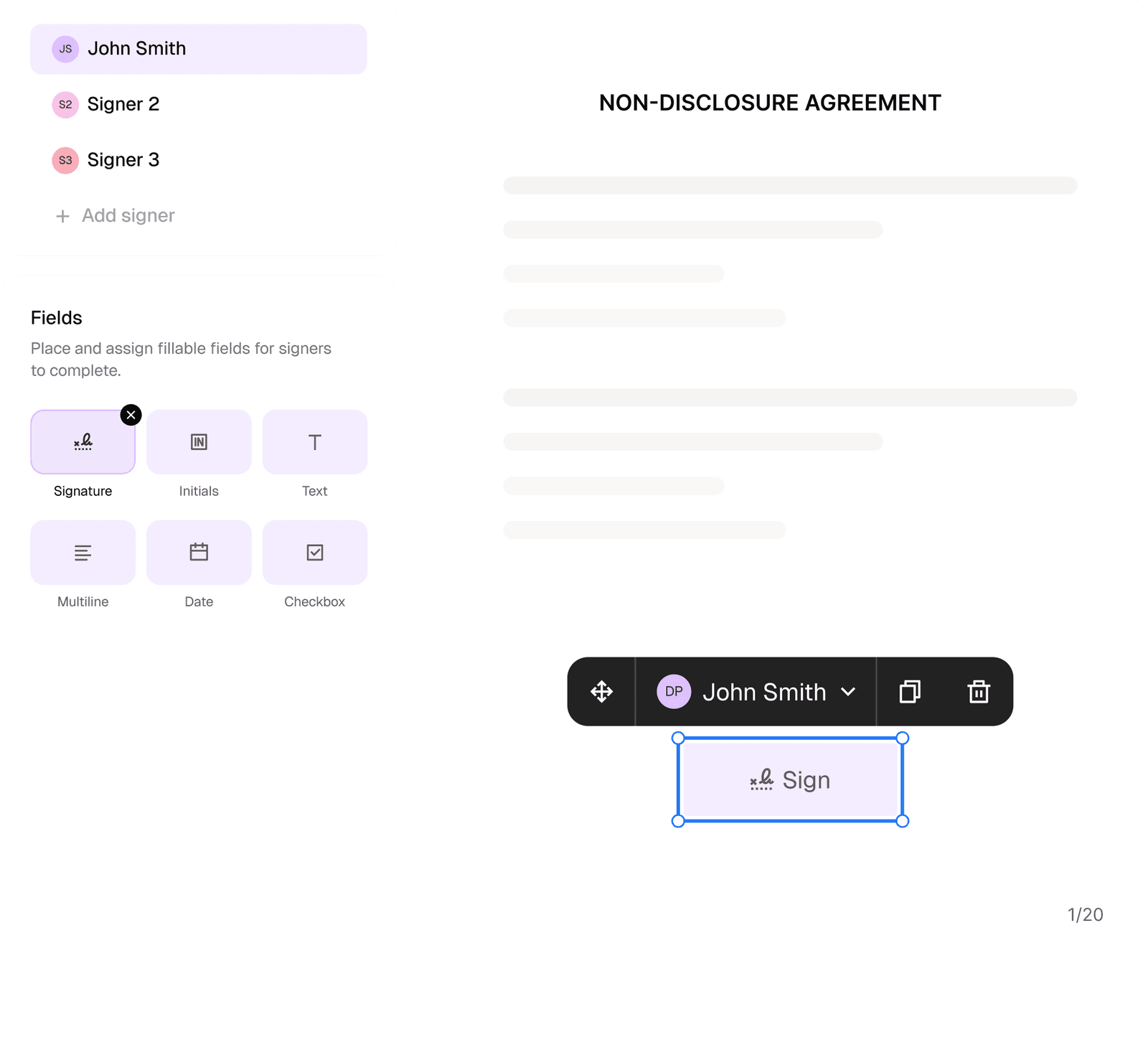
Sign documents and collect legally binding signatures. Invite up to ten people to sign in any order, track the progress, and send reminders.
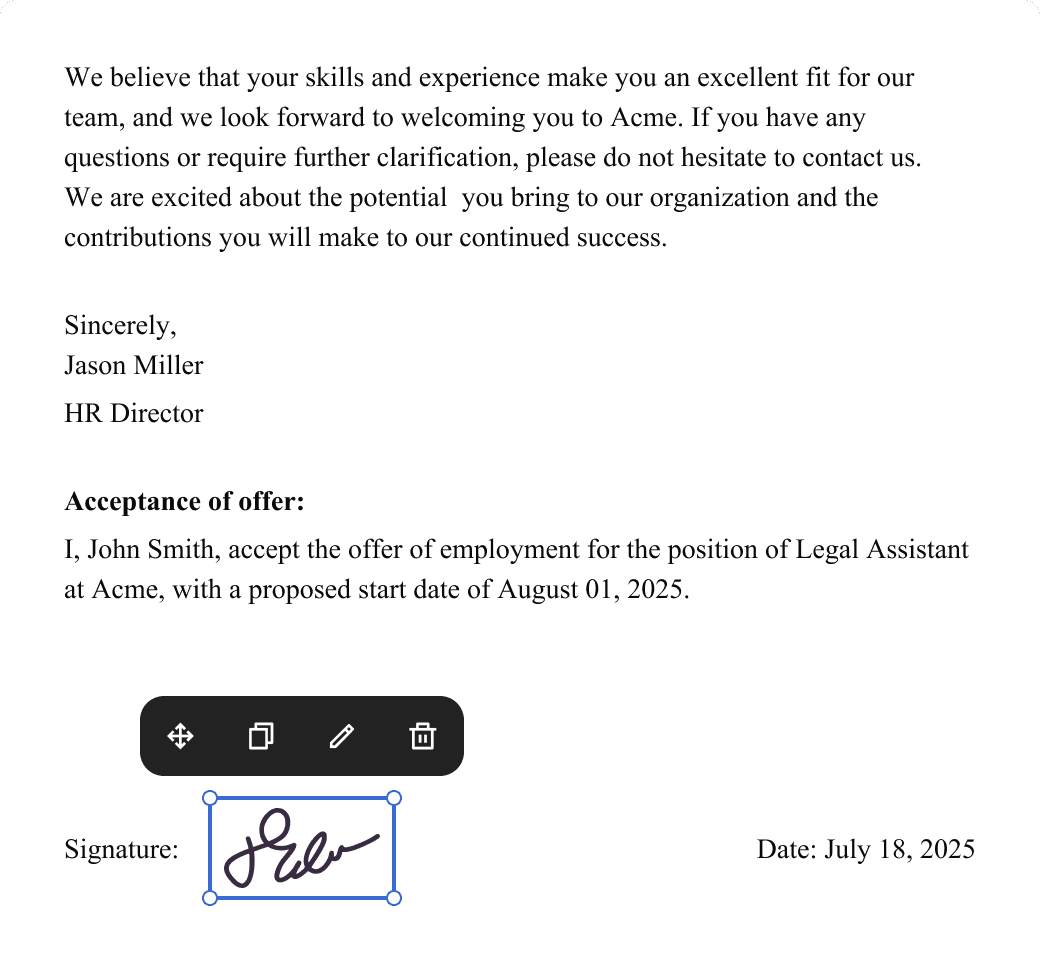
Request legally binding signatures
Invite up to ten people to sign your document in any order. Get a finalized, audit-ready copy without chasing signatures.
Skip the drafting.
Choose from 2,500+ templates
Browse templatesChoose a template
Fill in details
Sign and download