Updated July 23, 2026
14 min read
Who Can Override a Power of Attorney? Rights and Legal Steps

Who Can Override a Power of Attorney? Rights and Legal Steps
Content
A power of attorney, or POA, allows someone else to act on your behalf in legal, financial, or medical matters. That authority can be either narrow or very broad depending on how the document is written. Still, in certain situations, the document can be challenged, changed, or canceled.
People usually start asking who can override a power of attorney when they notice decisions that seem unusual or harmful. The answer depends on whether the principal is still mentally capable and whether the agent is acting within their legal duties. Let’s look more closely at this matter and in what cases a POA can be challenged.
What Is a Power of Attorney and What It’s For?
In the simplest of terms, a POA is a legal document that allows one person to act for another. The person creating it is the principal and the person receiving authority is the agent.
Appointing a POA agent is relatively straightforward and can often be done within a few days. It can be even easier with a Power of Attorney template you can adjust to your specific situation.
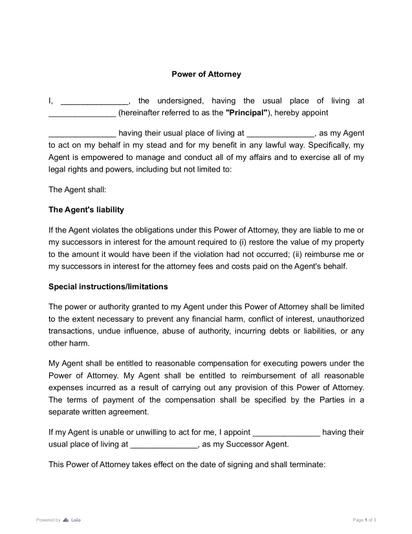
People often prepare a POA to avoid interruptions during illness, travel, aging, or business absence. You can also grant limited power of attorney for specific actions only if you need it temporarily.
It helps ensure important responsibilities continue without delays or confusion. Depending on the document, an agent may be allowed to:
Manage bank accounts and expenses
Sign contracts or real estate paperwork
Handle taxes or insurance matters
Operate business transactions
Make healthcare decisions when necessary
The principal keeps control over the POA as long as they remain mentally capable of making decisions. This protection is central to how the document works.
— Can the principal revoke a power of attorney if they are still of sound mind?
Yes. A competent principal can cancel it at any time without court approval.
Questions often arise about whether a spouse can override a power of attorney. In most situations, a spouse cannot replace or cancel the agent unless the principal agrees or a court determines that intervention is necessary.
Who Can Override the POA and Under What Circumstances?
A power of attorney cannot be canceled just because someone disagrees with the agent’s decisions. The law limits who can step in and when. In most situations, authority stays with the agent unless the principal takes action or a court finds a legal reason to intervene.
The principal
The principal has the strongest control over a POA while they remain mentally capable. Сhanging the power of attorney in this case does not require court approval if the principal understands their decision.
A principal who remains mentally competent can revoke a power of attorney in writing at any time, which immediately ends the agent’s authority to act on their behalf.
If you are trying to understand how to revoke power of attorney, the typical steps include signing a written revocation, notifying the agent, and informing any banks, healthcare providers, or business partners that relied on the document.
Some states also recommend filing the revocation with the same office where the original POA was recorded, especially if property or business authority was involved.
A court
Courts can override a POA if there is evidence of abuse, fraud, incapacity, or conflict with the principal’s interests.
Judges often step in when:
The agent misuses funds
The agent exceeds granted authority
Family members raise concerns about exploitation
The principal becomes incapacitated and oversight is needed
The POA document appears invalid
If misuse is proven, a court can remove the agent from their role under the power of attorney and appoint another decision-maker when necessary. In case the court appoints a guardian or conservator, that person may replace the agent’s authority entirely or share control depending on the ruling.
A guardian or conservator
Guardians usually manage personal or healthcare decisions. Conservators often control financial matters. Their authority comes directly from the court rather than the principal. Once appointed, they may:
Suspend the agent’s authority
Review the agent’s actions
Replace the agent completely
Courts decide the scope of authority case by case.
Family members in limited situations
Family members cannot cancel a POA on their own, but they can ask a court to review the agent’s authority if they believe something is wrong. They usually begin by filing a legal request supported by evidence.
For example, many people ask whether a wife can override a power of attorney simply because she is married to the principal. A spouse cannot override the document automatically because court action is usually required.
Judges may intervene after family members report financial exploitation, pressure during signing, lack of mental capacity at the time the POA was created, or decisions that clearly harm the principal’s interests.
Financial institutions
Banks and other financial organizations cannot revoke a POA, but they can refuse to honor it if they believe something is wrong, for example:
Missing signatures or notarization
Outdated documents
Suspected fraud
Unclear authority language
Conflicts with internal policies
Banks and other institutions may temporarily stop transactions until the agent provides proper verification. This can limit the agent’s authority in practice until the issue is resolved.
Healthcare providers
Healthcare providers can limit the use of a medical POA if the document conflicts with other medical instructions or does not clearly apply to the situation. Their role is to confirm that the agent is acting within authorized medical decision-making powers.
Doctors may pause decisions if another legally recognized decision-maker exists, if the agent exceeds their authority, or if authenticity concerns arise. This temporary refusal can override the agent’s instructions until the legal authority becomes clear.
Types of POA
The type of POA determines when the agent’s authority starts, how long it lasts, and how easy it is to change or cancel later. Knowing which type you are dealing with will help you understand what options exist if the arrangement no longer fits the needs.
Durable
A durable power of attorney stays in effect even if the principal becomes mentally incapacitated. This makes it one of the most common tools used in long-term planning for aging, illness, or unexpected emergencies.
Because the document is designed to remain active during incapacity, it is usually harder to challenge than other types. However, a court can still remove an agent if there is evidence of misuse or appoint a guardian or conservator to take over decision-making.
— Do you need a lawyer to revoke power of attorney?
Not necessarily. In most situations, if the principal is still competent, but legal help may be useful when disputes or incapacity are involved.
Springing
A springing power of attorney becomes active only after a specific event occurs. Most often, that event is medical incapacity confirmed by one or more physicians.
Until the triggering condition is verified, the agent has no authority. This structure gives the principal more control while they remain capable, but it can slow urgent decisions if proof of incapacity takes time.
Disagreements sometimes arise about whether the conditions for activation were met. Courts may review medical documentation if family members or institutions question whether the POA should be in effect.
General
A general power of attorney gives the agent broad authority over financial and legal matters. This may include managing accounts, signing contracts, handling property management transactions, or operating business interests.
Unless the document is also durable, a general POA usually ends if the principal becomes incapacitated. For that reason, it is often used for temporary situations such as travel, short-term illness, or business delegation.
When circumstances change, the principal can usually adjust the arrangement. Understanding how to change power of attorney is especially important with general POAs, since they are commonly replaced as responsibilities shift over time.
Financial
A financial power of attorney focuses only on money, property, and business-related decisions. Agents acting under this type of POA may:
Access bank accounts
Manage investments
Handle tax filings
Buy or sell property
Operate business accounts
Because these responsibilities involve access to assets, financial POAs receive closer review if concerns about misuse appear. Courts may require transaction records or explanations if someone questions how authority is being used.
Questions sometimes arise about spousal rights and POA authority in these situations. A spouse cannot automatically replace the agent, but they may ask a court to review decisions if there is evidence of harm or misuse.
Medical
A medical power of attorney allows the agent to make healthcare decisions when the principal cannot communicate their wishes directly. This authority applies only during periods of incapacity and usually works together with advance directives or living wills. Some medical decisions under this type of POA may include:
Approving treatment plans
Authorizing surgery
Choosing long-term care placement
Managing medication decisions
Making end-of-life care choices
Healthcare providers generally follow the agent’s instructions if the document is valid and clearly applies to the situation. If changes become necessary later, the principal can cancel the document.
— How do you formally revoke a power of attorney in writing and notify the current agent?
This usually involves signing a written revocation and delivering a notarized notice to the agent and any institutions relying on the document.
How to Prove Power of Attorney Misuse or Abuse
Concerns about misuse are one of the most common reasons people try to challenge a POA. Still, courts require clear evidence before limiting an agent’s authority.
To start, you need to understand the agent’s fiduciary duty and abuse of authority. What happens if an agent misuses funds or acts outside the authority granted in the POA? Let’s take a closer look.
Watch for warning signs
Certain patterns often signal that an agent may be acting improperly. Common warning signs include:
Unexplained withdrawals from accounts
Sudden property or lease transfers without explanation
Missing financial records
Unpaid bills despite available funds
Limited contact between the principal and family
Decisions that clearly benefit the agent personally
When several of these appear together, courts are more likely to review the situation.
Collect financial records
Bank statements, contracts, and transaction histories help show whether an agent acted properly. Courts often review:
Payment timelines
Transfer destinations
Investment decisions
Spending patterns
Request an accounting
Agents are expected to keep accurate records of their actions. In many states, they must provide a formal accounting if requested by the principal or interested family members. If the agent cannot explain transactions clearly, courts may investigate further.
Obtain medical evidence If capacity Is questioned
Sometimes misuse claims involve the principal’s mental capacity at the time the POA was signed. Medical evaluations can help clarify whether the principal had decision-making capacity at that time.
Doctors or specialists may provide written statements that support a request to review or cancel the POA.
File a petition with the court
If concerns remain unresolved, a court petition may be necessary. A judge can review the agent’s actions and decide whether changes are required. Possible outcomes include limiting the agent’s authority, ordering repayment of funds, appointing a conservator, or canceling the POA entirely.
Legal Requirements and Paperwork
Creating or canceling a POA involves several formal steps. Follow them carefully to prevent delays, disputes, or rejected documents later.
Signing requirements
Most states require the principal to sign the POA while mentally competent. Many documents must also be notarized and witnessed before institutions will accept them. Healthcare POAs sometimes have additional witness rules depending on state law. Missing these details can make a document harder to use when it is needed most.
Today, many people prefer to eSign documents online, especially when preparing updated paperwork quickly or working across different locations, and you can do it easily with Loio.
Choosing the right agent
A strong choice is someone who communicates clearly, keeps records carefully, and respects the principal’s wishes. Business owners often appoint partners, spouses, or trusted advisors who already understand their responsibilities. Naming a backup agent also helps avoid interruptions if the first agent becomes unavailable.
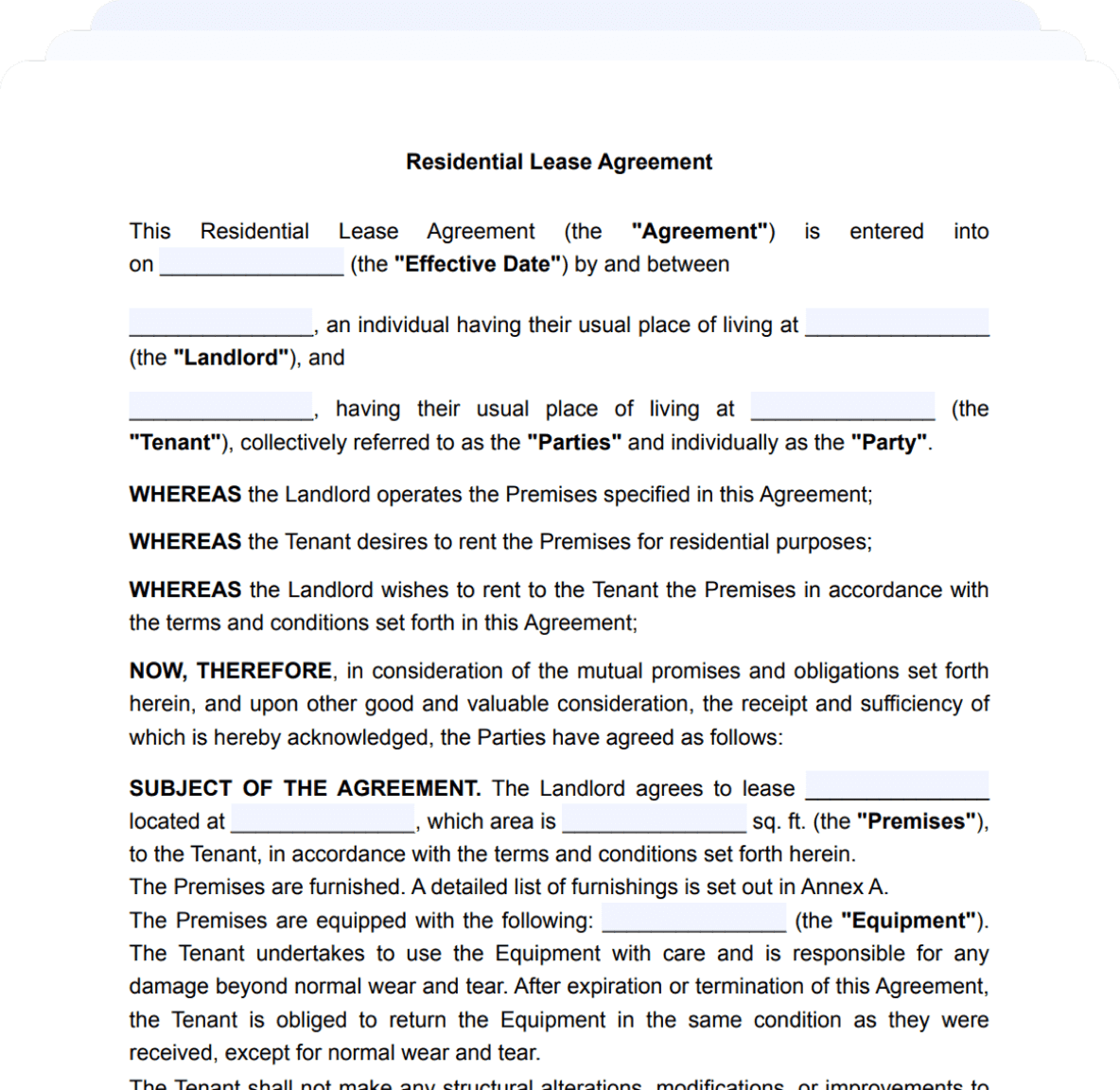
If you are preparing a document for the first time, you can make it easier with our Power of Attorney templates, if you want to appoint someone without starting from scratch.
- Power of Attorney for Child
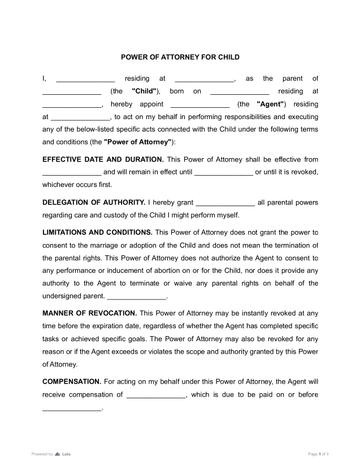 4322 downloads
 - Medical Power of Attorney (MPOA)
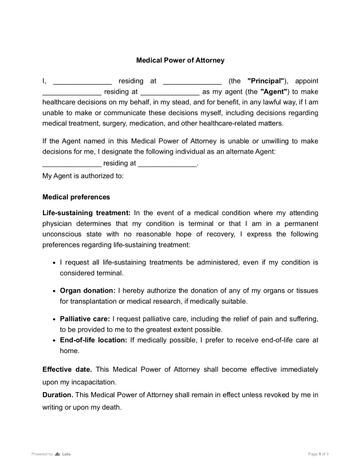 4596 downloads
Recording the document
Some POAs must be recorded with a local office before the agent can manage real estate or certain business assets. Recording requirements depend on state rules and the type of authority granted.
Revoking a power of attorney
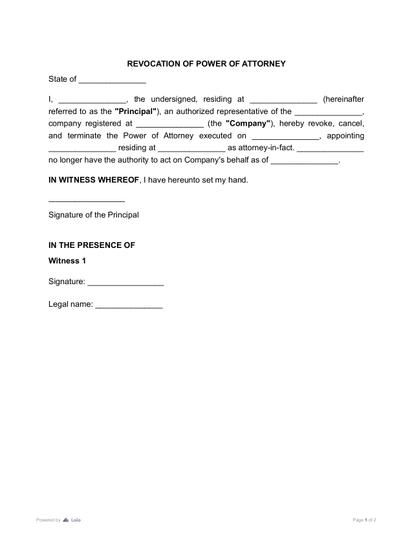
Revoking a POA usually requires a written notice signed by the principal and shared with everyone who relied on the original document. That includes banks, healthcare providers, agencies, and business partners.
Many people ask how to change power of attorney when circumstances shift. In practice, the process often involves revoking the existing document and signing a new one that reflects updated instructions.
If you are unsure how to change your power of attorney, reviewing the original document first helps confirm whether special revocation steps apply. Once you’ve figured it out, using our POA Revocation Form will help you make things easier. You can then edit this and other PDFs online to adjust them to your situation and needs.
Always Keeping Copies Accessible
Understanding how to change POA early can prevent many issues later. But remember that agents cannot act without proof of authority. Copies and all the legal paperwork should be stored in secure but accessible locations and shared with people who may need them during emergencies. Make sure you always have digital backups as well.
If the document feels difficult to review, our AI contract review tool is here to help you go through and summarize legal paperwork so you can identify what needs updating more quickly.
More guides
September 15
The Difference Between First, Second, and Third-Degree Murders
September 4
Living Will vs Last Will: What’s the Difference?
August 31
4 min read
Living Will vs Power of Attorney: Understand What You Need

September 13
11 min read
How to Hire a Nanny in 2026: The Full Legal Process Explained

July 24
5 min read
Do You Need a Counselor Recommendation Letter for College?

July 21
7 min read
Common App Document Requirements: Complete Checklist

One home for your
agreements
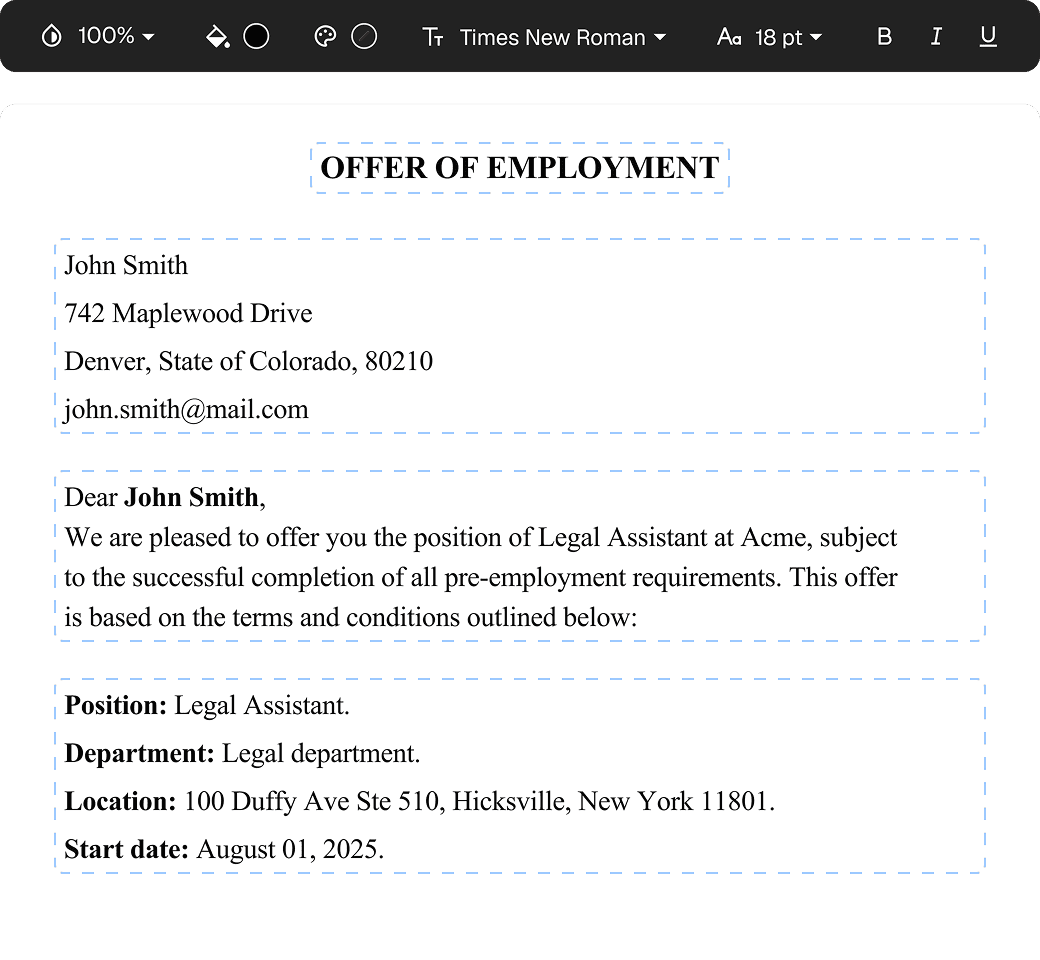
Edit PDFs seamlessly
Tweak agreements before signing or sending for signatures. Update details, add or remove clauses, adjust formatting, and redline changes instantly.
eSign legally and securely
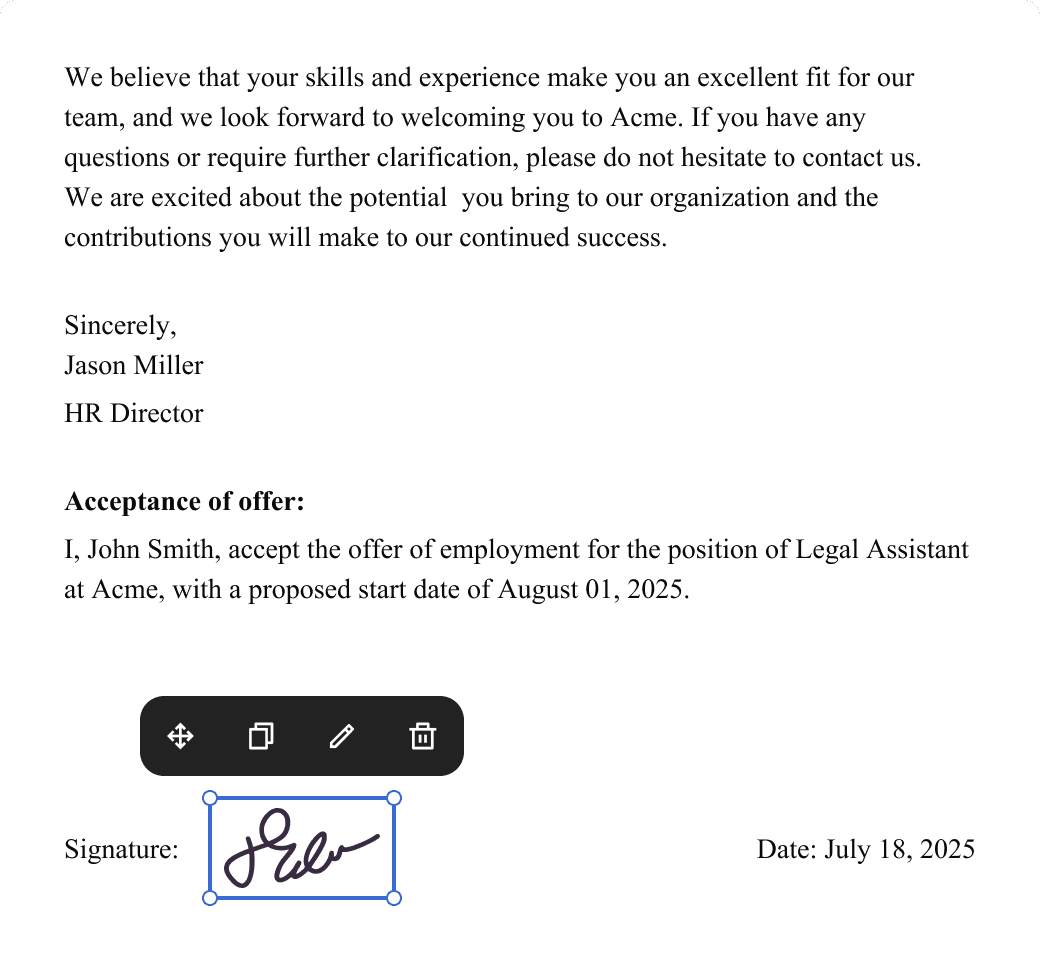
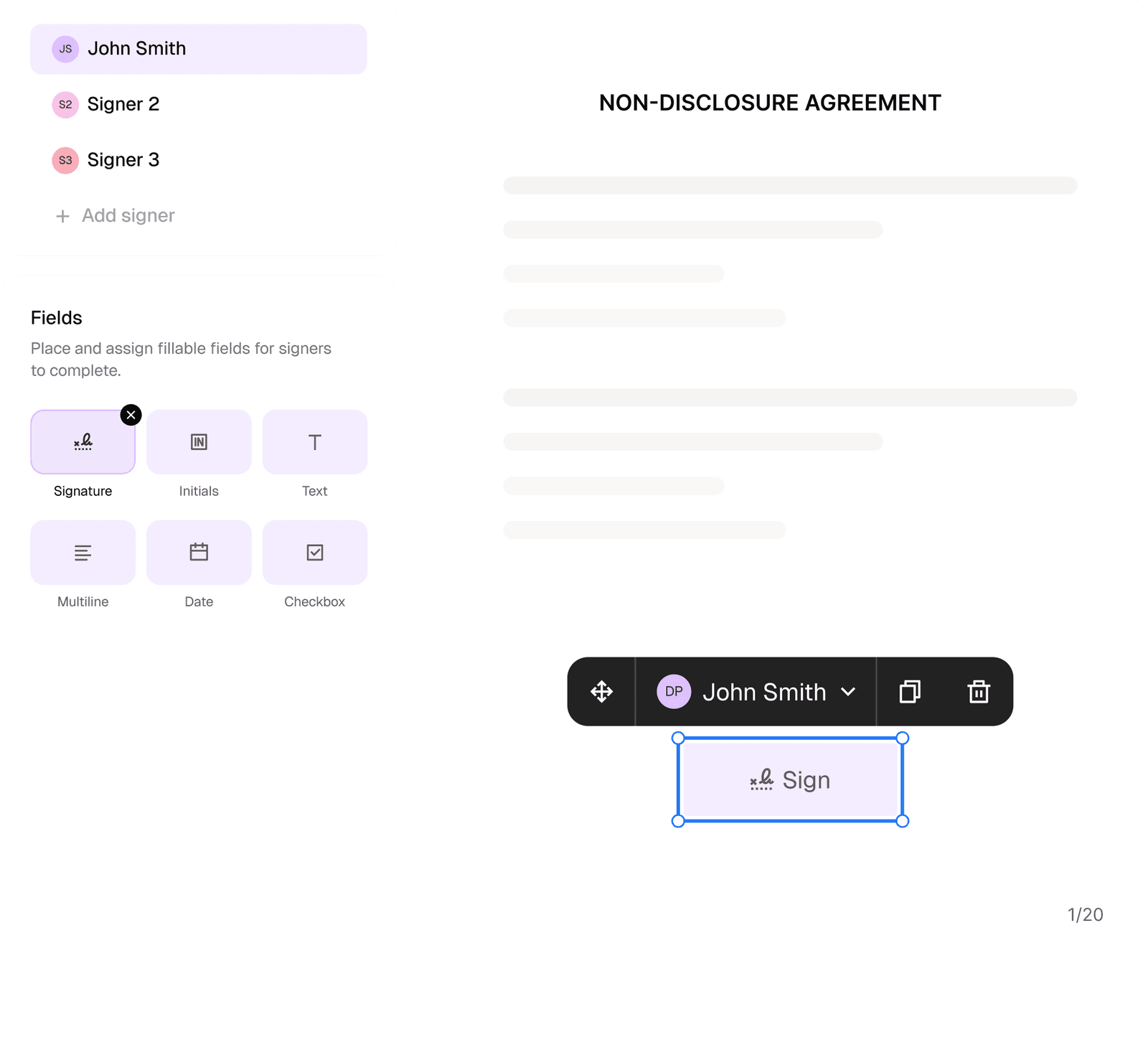
Sign documents and collect legally binding signatures. Invite up to ten people to sign in any order, track the progress, and send reminders.
Request legally binding signatures
Invite up to ten people to sign your document in any order. Get a finalized, audit-ready copy without chasing signatures.
Skip the drafting.
Choose from 2,500+ templates
Browse templatesChoose a template
Fill in details
Sign and download