Updated July 21, 2026
12 min read
LLC vs. Corporation: What to Choose for Your Business

LLC vs. Corporation: What to Choose for Your Business
Content
Your choice of a legal structure for your business will shape everything: how you will work, what responsibilities you will share, and whether investors will give you money. In the U.S., the two most common options for a growth-ready business are an LLC and a corporation. Both can protect your personal assets, but they work differently in terms of taxes, ownership, and long-term fundraising. So, what is the difference between an LLC and a corporation, and how should you choose one?
LLC vs. Corporation: What’s the Difference?
Both an LLC and a corporation are company types formed under state law, but they differ in many aspects.
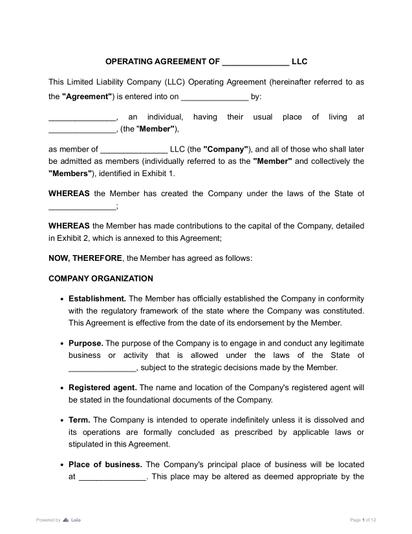
As for an LLC, its owners (called members) can set their own rules in an operating agreement. This document explains who makes decisions, how profits get paid out, and what happens if they add another owner.
Meanwhile, a corporation comes with a more fixed structure. The shareholders own shares and have the right to elect a board of directors that, in its turn, appoints officers (such as a CEO).
You may come across two terms – C corp and S corp – and it's important to differentiate between them:
A C corporation (C‑corp) is a legal business structure that is separate from its owners, which means the latter are not liable for the business's debts.
An S corporation (S‑corp) is not a different kind of business structure. It is a tax election you make with the IRS. To qualify, your business must have no more than 100 shareholders, only one class of stock (which means no preffered stock allowed), and must not fall into an ineligible category, such as certain financial institutions, insurance companies, or domestic international sales corporations. With an S‑corp tax status, profits usually pass through to the owners' personal tax returns, which makes it similar to an LLC.
Now, let's focus on the core differences between an LLC and a corporation:
Liability
Both LLCs and corporations protect owners from personal liability in the same basic way: under state entity laws, the business is treated as a separate legal entity, so most debts and lawsuits stay with the business, not you. If your LLC cannot pay a supplier, the supplier collects from the company's assets, not your bank account. If your corporation is sued over a customer injury, the claim is usually against corporate assets and insurance.
In practice, corporations can be easier to defend as "separate" because they have built-in formalities (stock, corporate bylaws, directors, written consents). LLCs, in turn, have fewer documents to prove their separate status, so you must be cautious about mixing personal transactions with business ones so the LLC does not look like a sole proprietorship.
You can still face personal liability in either structure if you:
- 1
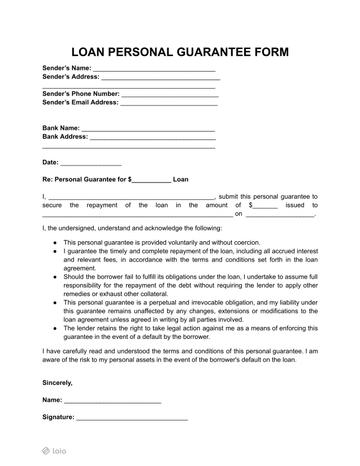
Electronically sign a personal guarantee on a loan or lease;
- 2
Commit fraud or other wrongful acts;
- 3
Mix personal and business finances so badly that a court applies veil-piercing rules under state law.
- Loan Personal Guarantee Form
 8206 downloads
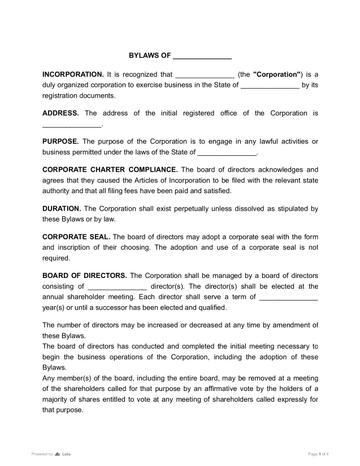
 - Corporate Bylaws
 4012 downloads
Assets and intellectual property
An LLC and a corporation can both own business property, such as:
Physical assets (vehicles, equipment, inventory);
Intellectual property (brand name, logo, website, software code, designs, customer lists).
The most important thing is that the owner should be the company, not you personally. When you sign a lease, buy equipment, or register a trademark, the paperwork should contain the name of the LLC or corporation as the signer.
The practical corporation vs. LLC difference shows up with outside parties. When it comes to IP, investors usually prefer dealing with corporations as they expect the IP to belong to the company automatically.
An LLC can own IP just as well, but one must be careful with paperwork, especially contractor agreements and IP assignments, to ensure the LLC is the only owner of the work. To check it, use reliable contract-review tools that identify all IP-related issues in documents in seconds.
To prove their ownership, LLC members should be able to provide:
Purchase agreements and titles in the entity name for equipment and vehicles;
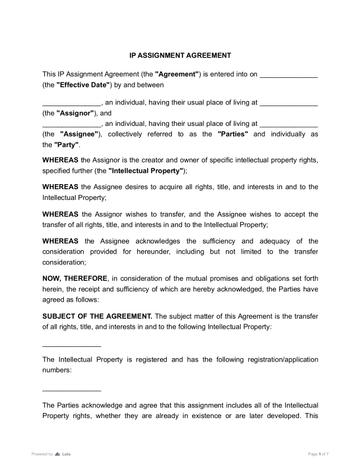
Written IP assignment terms for founders and contractors;
- Purchase Agreement
 4162 downloads
 - IP Assignment Agreement
 5523 downloads
Taxes
The IRS treats LLCs and corporations differently, which directly impacts the taxes these business structures file.
An LLC usually uses pass-through taxation, which means the business itself generally does not pay federal income tax. Instead, profit or loss flows to the owners report it on their own returns.
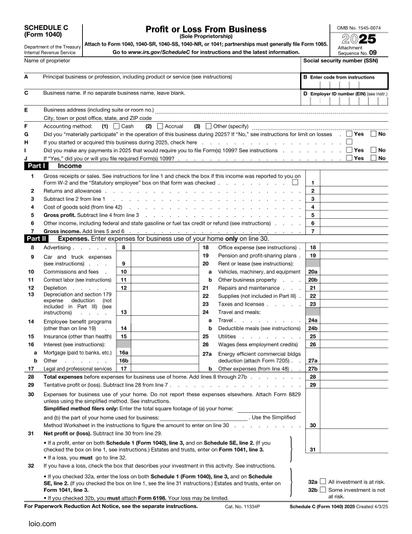
Single-member LLC: the owner typically pays self-employment taxe on all their business income and reports the latter on Schedule C (Form 1040).
Multi-member LLC: the LLC files Form 1065 and issues a Schedule K‑1 to each member. Every LLC member is also tesponsible for paying self-employment tax for their stare of the business income.
Meanwhile, a corporation is a separate entity, and the taxes it files depend on whether it is taxed as a C corporation or an S corporation.
C corporation files Form 1120 and pays corporate income tax on its profits. If it then pays dividends to shareholders, those dividends are reported on the shareholders’ personal returns.
S corporation files Form 1120‑S and issues Schedule K‑1 to shareholders. Profits generally pass through to owners’ returns, so the business usually does not pay federal income tax. However, the owner gets reasonable compensation, which is a salary they get for their work in the company, and should pay Social Security and Medicare taxes for it.
Ownership
Corporations vs. LLCs handle ownership differently, and that distinction may affect future fundraising.
With an LLC, members can flexibly split ownership and profits, as long as they document it in the operating agreement. For example, you and a partner can each own 50% of the LLC, but agree that one of you receives a larger share of profits for the first year because you contributed more cash up front.
In a corporation, ownership is shown through shares of stock: the more shares you own, the more voting power and influence over major decisions you have. Corporations can also:
Issue different types of shares (common stock for founders and employees, and preferred stock for investors);
Decide whether and when to pay out profits as dividends;
Reserve a set percentage of shares for employee stock options.
Therefore, for businesses that work with outside investors, want to grant equity to employees, or plan to sell part of the business later, a corporation is often a better option.
Management
An LLC gives you more freedom to decide who runs the business and how decisions get made. You can run it yourself as a member-managed LLC, or you can appoint a manager, which can be you, another owner, or an outside hire. You can also customize decision rules in your operating agreement: for example, which choices you can make alone and which require written consent.
A corporation follows a more fixed structure under state corporate law.
- 1
Shareholders elect a board of directors.
- 2
The board appoints officers to run day-to-day operations.
- 3
The board approves all major actions, such as big business purchases or partnerships.
That structure can feel heavier for a small owner-run business, but it creates a clear chain of authority that investors and lenders understand.
Reporting
Both LLCs and corporations have two kinds of paperwork:
- 1
Filings you submit to the government.
- 2
Records you keep inside the company.
The government filings look similar in many states and typically include:
A formation filing;
A registered agent;
An annual or biennial report;
Local business licenses and tax registrations.
Meanwhile, internal records for corporations presuppose more paperwork. It is expected to show who owns shares and how major decisions are approved. That usually includes such documents:
- 1
Corporate bylaws;
- 2
A stock ledger or cap table;
- 3
Board and shareholder written consents or meeting minutes;
- 4
Stock issuances and, if applicable, option grants.
An LLC generally has fewer formalities and typically requires an operating agreement and written owners’ consents for major actions (opening a bank account, taking on debt, adding a member).

Financing
If you wonder what is better for your business, a limited liability company vs. a corporation, the answer depends on who you expect to ask for money.
A corporation is usually the easier fit when you want equity investors. You have a variety of options to offer them:
Sell a preferred stock of shares to investors with guaranteed liquidation preference and anti‑dilution protection.
Set aside an employee option pool so you can grant equity to key hires.
Add new investors without rewriting profit‑sharing terms each time.
An LLC, however, can raise money, but it often creates friction with outside investors because profits pass through to owners. Many investors do not want the trouble of filing the K‑1 form, and some funds cannot accept pass‑through tax exposure. In practice, this can reduce your investor pool or push you toward a corporation later.
Meanwhile, for bank financing, the entity type matters far less than your repayment ability. Banks usually focus on:
Business cash flow (often based on bank statements and tax returns);
Collateral (equipment, receivables, inventory);
Owner credit and down payment;
A personal guarantee, which is common for newer businesses, whether you form an LLC or a corporation.

Corp vs. LLC: How to Choose?
Before you make a decision, consider all the LLC vs. corporation pros and cons. Pick the structure that matches what your business will look like in two to three years, not just what feels easiest today.
Consider these criteria:
Investor plan: Will you raise money from angel investors or venture funds, or do you expect to stay self-funded?
Equity for hires: Do you plan to offer equity as part of compensation, or will you rely on wages/bonuses?
Profit strategy: Will you reinvest most earnings in the business to fund growth, or will you take profits out regularly?
Owner involvement: Do you expect multiple owners with different levels of involvement, or will you be the only active owner?
Exit path: Do you plan a long-term business or a future sale to a strategic buyer?
Admin tolerance: Are you comfortable with formal approvals and detailed recordkeeping, or do you prefer lighter internal processes?
State costs and complexity: What are your state’s annual fees, report requirements, and tax costs for each structure?
Future changes: How likely is it that you will restructure within the next year (add investors, add owners, change tax elections)?
As you answer these questions, it will give you a better understanding of how you want your business to develop and what route to choose.
When Should a Small Business Choose a Corporation Instead of an LLC?
If you own a small business, opt for a corporation versus LLC in such situations:
You plan to raise money from investors. Investors usually want to buy shares, and a corporation is built for that.
You want to give equity to employees. If you want to hire great people and offer stock options, a corporation makes this much easier to set up and explain.
You expect several owners over time. Shares are simple to track and transfer when people join, leave, or sell their stake.
You need different deals for different people. For example, you may want investors to get special rights (like getting paid first if the company sells). Corporations handle these “special terms” more cleanly.
You want a clear chain of command as you grow. A corporation has a built-in structure for big decisions (owners elect a board, the board oversees management). It can prevent confusion later.
You expect to sell the company and want a clean ownership record. Many buyers like a clear share structure because it reduces questions about who owns what.
If none of these fit your plan, an LLC is often the simpler starting point. The cost of switching later can be manageable and does not take much time.
Though they seem similar in some ways, especially in terms of liability, the difference between an LLC and a corp may be defining for your choice. Choose based on your tax plan, funding goals, and how you want to run the business in a few years. And, remember: going from simple to complex is always an option.
More guides
July 25
12 min read
How to Register a Company in the US: What No One Tells You in 2026

September 1
7 min read
How to Provide Proof of Employment: Documents and Steps

October 8
8 min read
How to Start a Videography Business: 8 Essential Steps
October 15
How to Start a Staffing Agency: Licensing, Pricing, and Cash Flow

July 25
12 min read
How to Start a Flooring Business and Get Your First Clients in 2026

October 8
8 min read
A Comprehensive Guide to Starting a Child Care Business

One home for your
agreements
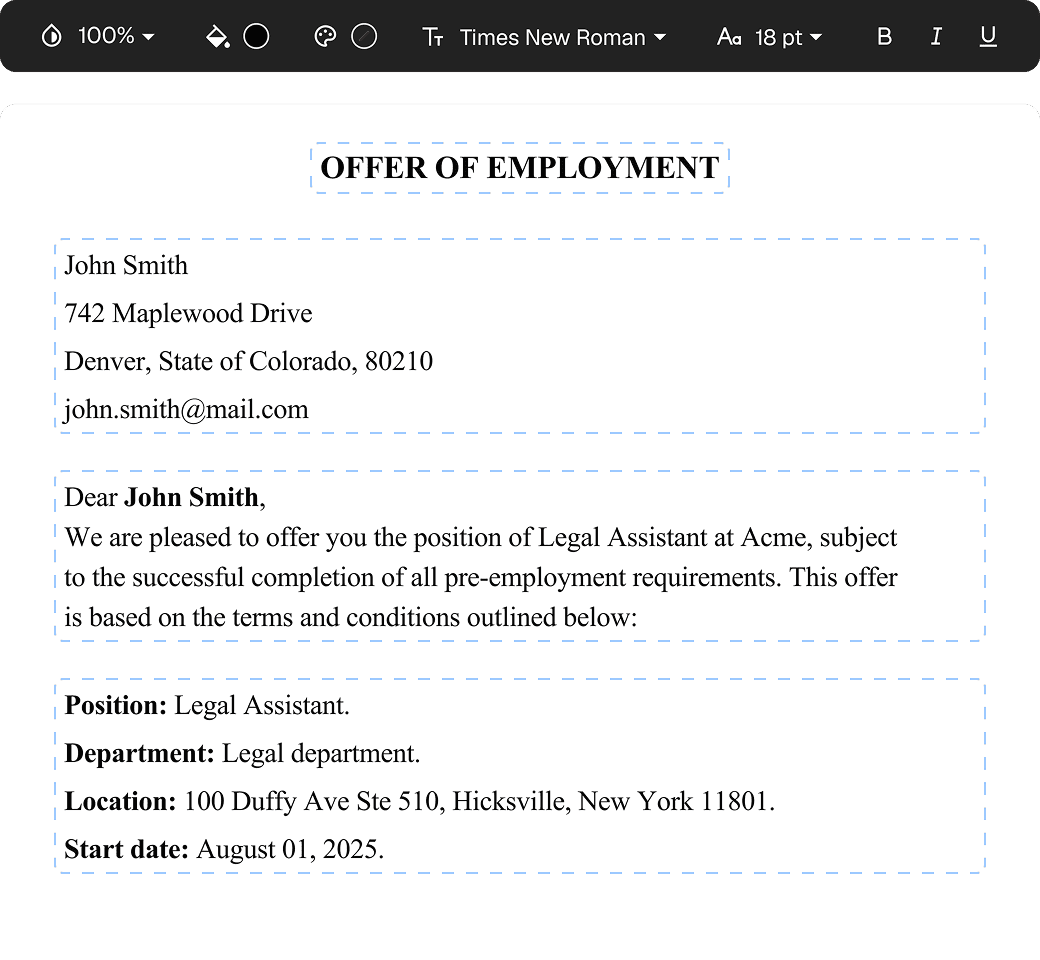
Edit PDFs seamlessly
Tweak agreements before signing or sending for signatures. Update details, add or remove clauses, adjust formatting, and redline changes instantly.
eSign legally and securely
Sign documents and collect legally binding signatures. Invite up to ten people to sign in any order, track the progress, and send reminders.
Request legally binding signatures
Invite up to ten people to sign your document in any order. Get a finalized, audit-ready copy without chasing signatures.
Skip the drafting.
Choose from 2,500+ templates
Browse templatesChoose a template
Fill in details

Sign and download