Updated October 8, 2026
8 min read
A Comprehensive Guide to Starting a Child Care Business

A Comprehensive Guide to Starting a Child Care Business
- How to Start Your Own Daycare Business
- Pick the Right Childcare Business Model
- Choosing Your Services and Age Groups for Running a Daycare
- What Are the Requirements for Opening a Daycare Business?
- Create a Daycare Business Plan
- How to Open Your Own Daycare Center: Prepare the Facility
- Why Hiring and Training Staff is Important
- Market and Grow Your Daycare Business
- How Much Does It Cost to Start a Daycare Business?
- How Much Can a Daycare Business Make?
Content
Many families across the United States struggle to find reliable and affordable childcare, especially for infants and toddlers. According to the Child Care Aware of America report, the average annual cost of childcare for one child exceeds $13,000, while childcare shortages cost the U.S. economy approximately $172 billion every year in lost productivity and earnings.
Still, opening a daycare involves far more than simply watching children. Owners must manage licensing, staffing, safety compliance, insurance, budgeting, and daily operations while meeting strict state and local requirements.
If you are planning to open a daycare, it is important to understand both the childcare and business sides of the industry. This guide walks through the key steps on how to start a daycare business, including legal requirements, startup costs, staffing, and long-term growth considerations.
How to Start Your Own Daycare Business
The United States continues to face a significant shortage of affordable childcare. This growing gap between supply and demand is one of the key reasons daycare businesses remain in high demand across many communities nationwide.

But how hard is it to start a daycare? For many entrepreneurs, opening a daycare business can be attractive because it offers:
Consistent local demand: Many communities continue to face childcare shortages and long waitlists.
Recurring monthly revenue: Most daycare businesses operate on stable weekly or monthly tuition payments.
Long-term industry demand: More parents continue working full-time and need reliable childcare solutions.
Expansion opportunities: Some daycare businesses eventually add preschool programs, after-school care, or multiple locations.
Meaningful community impact: Daycare providers support working families while helping children develop socially and educationally.
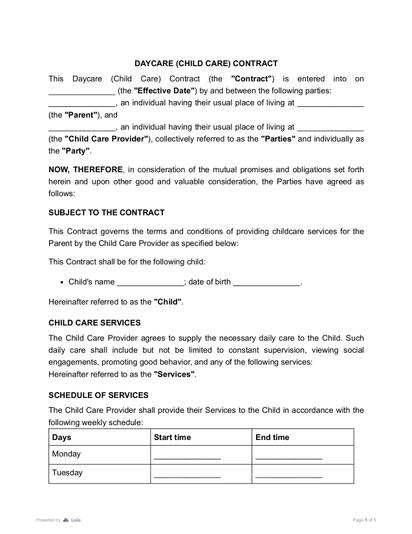
Still, running a daycare involves much more than simply supervising children. It is also important to have clear documentation, like daycare contracts, that explain tuition payments, pickup procedures, illness policies, liability terms, and enrollment rules from the beginning.
If you are planning to open a daycare, we invite you to walk through the main steps to owning a daycare — from choosing the right daycare model and preparing your facility to understanding legal requirements, hiring staff, and building a daycare business that can grow long-term.
Pick the Right Childcare Business Model
One of the first decisions is determining what type of daycare business you want to operate. Your business model affects licensing requirements, startup costs, staffing, insurance, and daily operations.
A home daycare operates from a private residence and is usually smaller in size, serving a limited number of children. This model is often attractive for first-time childcare entrepreneurs because startup costs are lower and operations are easier to manage in the beginning. In many states, providers may care for a small group of children without hiring additional employees right away. Home daycare businesses also tend to offer more scheduling flexibility, including evening or weekend care.
However, operating from a residential property also creates limitations. Home daycare owners may face strict zoning rules, occupancy restrictions, and lower enrollment capacity. Expansion opportunities are often limited, and owners may have greater personal liability exposure because the business operates directly from the home.
- Lower startup costs;
- Smaller staffing requirements;
- Flexible scheduling options;
- Easier entry point for first-time owners;
- Lower operational overhead.
- Lower enrollment capacity;
- Strict residential zoning restrictions;
- Limited expansion opportunities;
- Greater personal liability exposure;
- Less separation between business and personal life.
A child care center, on the other hand, operates from a commercial facility designed for larger enrollment. These businesses usually have multiple classrooms, serve different age groups, and can generate significantly higher revenue over time. Child care centers also provide greater scalability because owners can hire larger teaching teams and increase enrollment as the business grows.
Running a daycare requires a much larger financial investment. Owners typically need commercial leases or property purchases, larger insurance coverage, additional staffing, and extensive licensing inspections before opening. Many facilities must also address ADA accessibility compliance and commercial building requirements. In practice, larger daycare centers often require six-figure startup investments.
- Higher revenue potential;
- Ability to serve multiple age groups;
- Greater long-term scalability;
- Larger staffing and classroom capacity;
- More professional commercial setup.
- Higher startup costs;
- Larger insurance and payroll expenses;
- More complex licensing requirements;
- Commercial lease or property obligations;
- Extensive compliance and inspection requirements.
Choosing Your Services and Age Groups for Running a Daycare
Before opening your daycare, you need to decide exactly what type of childcare services you will offer and which age groups you want to serve. This decision affects nearly every part of the business, including licensing requirements, staffing ratios, facility design, equipment costs, daily schedules, tuition pricing, and even how to run a daycare efficiently on a day-to-day basis.
Infant care
Usually the most expensive to operate because infant supervision ratios are strict. Depending on the state, they can vary from 1:3 to 1:6.Toddler care
Requires child-safe learning and play environments.Preschool programs
Often include structured educational activities.Before- and after-school care
Focused on school-aged children.Summer programs
Seasonal childcare during school breaks.Drop-in childcare
Short-term flexible care arrangements.
Some daycare businesses specialize in one age group, while others operate multiple classrooms with different developmental programs. The right approach usually depends on local demand and the type of childcare shortages in your area. For example, some communities have long waitlists for infant care, while others need more after-school programs for elementary students.
Demand for preschool services also remains strong nationwide. The National Center for Education Statistics reported that approximately 59% of children ages 3–5 were enrolled in school or early education programs, showing continued demand for daycare and preschool providers across the United States.
What Are the Requirements for Opening a Daycare Business?
Daycare businesses are heavily regulated at both the state and local levels. Requirements vary by state, county, and city.
What does it take to open a daycare?
- 1
A childcare license
Usually issued by a state childcare or human services agency.
- 2
Such as forming an LLC or corporation.
- 3
Employer Identification Number (EIN)
Required for taxes and payroll. You can obtain one from the IRS.
- 4
Health and safety inspections
Fire departments and health agencies often inspect daycare facilities before approval.
- 5
Background checks
The federal law requires criminal background screening for owners and staff that includes:
- National FBI criminal history check;
- National Crime Information Center's National Sex Offender Registry search;
- State criminal registry or repository check;
- State sex offender registry or repository check;
- State-based child abuse and neglect registry and database check.
State-based checks should be conducted in all states where a person has lived for the past 5 years. The screening should be repeated at least every five years.
- 6
CPR and first aid certifications
Many states require current certifications before licensing approval.
- 7
Zoning approval
Some residential areas restrict daycare operations or limit enrollment capacity. Before signing a lease or preparing your home for licensing, confirm that the property is properly zoned for childcare use. If you plan to operate from a rented property, carefully review the lease to ensure it does not prohibit childcare services or impose occupancy restrictions that could affect your business.
Licensing rules also regulate many parts of daily daycare operations, not just the initial approval process. Understanding these rules early helps prevent compliance problems after opening.
Common licensing requirements include:
- Maximum group sizes
States limit how many children can be placed in one classroom or group at the same time. Younger children often require much smaller groups because they need closer supervision. For instance, for kids under 3 years old, a group can have only 8 or 9 children, while for 4-5-year-olds, the limit is 20. Exceeding group limits can lead to licensing violations and safety concerns. - Staff qualifications
Many states require daycare employees to complete background checks, CPR certification, first aid training, and child development courses. Some positions may also require formal education or childcare experience. - Sleeping arrangements
Licensing agencies often regulate where and how children sleep during naps. For example, infants may need separate cribs spaced a certain distance apart, while blankets, pillows, and sleeping equipment must meet safety standards. - Emergency evacuation plans
Daycare businesses usually must create written emergency procedures for fires, severe weather, medical emergencies, or lockdown situations. Many states also require regular evacuation drills and clearly marked exits. - Medication administration procedures
Most states have strict rules for giving medication to children. Daycares may need written parental permission forms, medication logs, secure storage areas, and staff training before administering medicine. - Recordkeeping requirements
Daycare owners are typically required to maintain organized records for enrollment forms, attendance, emergency contacts, immunization records, incident reports, and staff certifications. Poor recordkeeping can create problems during inspections or emergencies.
Because regulations differ significantly between states, always review your state childcare agency requirements before signing a lease, renovating a property, or purchasing equipment.
Create a Daycare Business Plan
A daycare business plan helps organize the practical and financial side of opening your childcare business. It outlines:
How the daycare will operate.
How much it may cost to run.
What licensing steps are required.
How you plan to attract and manage enrollment.
Even small home daycare businesses benefit from formal planning because childcare operations involve ongoing expenses, staffing responsibilities, and strict compliance requirements.
Your business plan should clearly explain the structure of your daycare and the type of care you plan to provide. That includes your daycare model, target age groups, services offered, business structure, and location plans.
How to Open Your Own Daycare Center: Prepare the Facility
Your daycare facility must be designed with children’s safety and daily needs in mind because young children require constant supervision and a secure environment.
Key areas to prepare include:
- 1
Safety requirements
Install childproof locks, smoke detectors, fire extinguishers, secure entry systems, covered electrical outlets, first aid kits, and emergency exits. Many states also require regular fire and safety inspections before licensing approval. - 2
Space requirements
Licensing agencies usually establish minimum indoor and outdoor space requirements. It is 35 square feet of usable indoor and 75 square feet of usable outdoor space per child. You may also need separate areas for sleeping, eating, learning activities, diaper changing, and outdoor play. - 3
Equipment requirements
Daycare businesses typically need age-appropriate furniture and supplies, including cribs, cots, high chairs, classroom storage, educational materials, toys, and playground equipment that meet child safety standards.
One of the biggest mistakes new daycare owners make is focusing on classroom design before fully reviewing safety requirements. Before purchasing equipment or renovating the property, carefully check your state’s childcare safety standards and inspection rules. Fixing safety violations after licensing inspections can become expensive and delay your opening date.
Why Hiring and Training Staff is Important
The U.S. Bureau of Labor Statistics notes that demand for preschool teachers and childcare professionals is expected to grow by 4% through 2033, which means competition for qualified workers may remain strong in many areas.
Most states require daycare employees to meet minimum qualifications before working with children. Depending on the role, staff members may need child development training, CPR and first aid certification, background checks, health screenings, and continuing education courses. Some positions may also require formal childcare or early education experience.
The type of employees you need depends on the size and structure of your daycare business. Most facilities typically hire:
Teachers
Lead classroom activities, supervise children, support early learning development, and communicate with parents about daily progress and behavior.Assistant teachers
Help teachers supervise children, prepare activities, manage classroom routines, and maintain safety throughout the day.Administrative staff
Handle enrollment paperwork, billing, scheduling, parent communication, licensing records, and general office management.Kitchen workers
Prepare meals and snacks while following food safety and allergy guidelines required by state regulations.Floaters or substitute caregivers
Provide backup coverage when employees are absent or when classrooms temporarily need additional supervision to maintain required staff-to-child ratios.
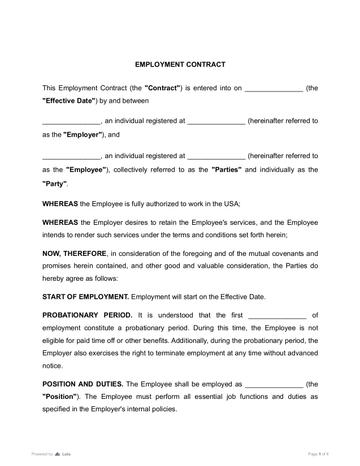
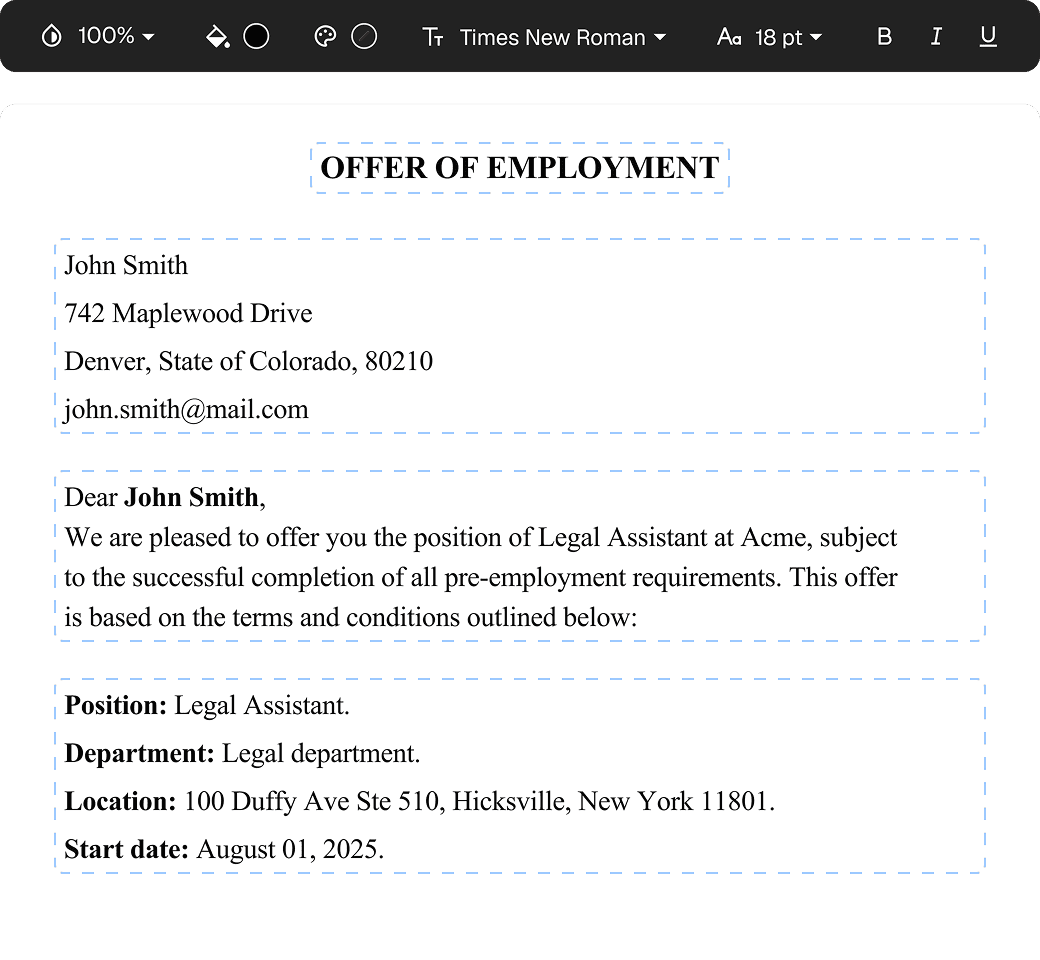
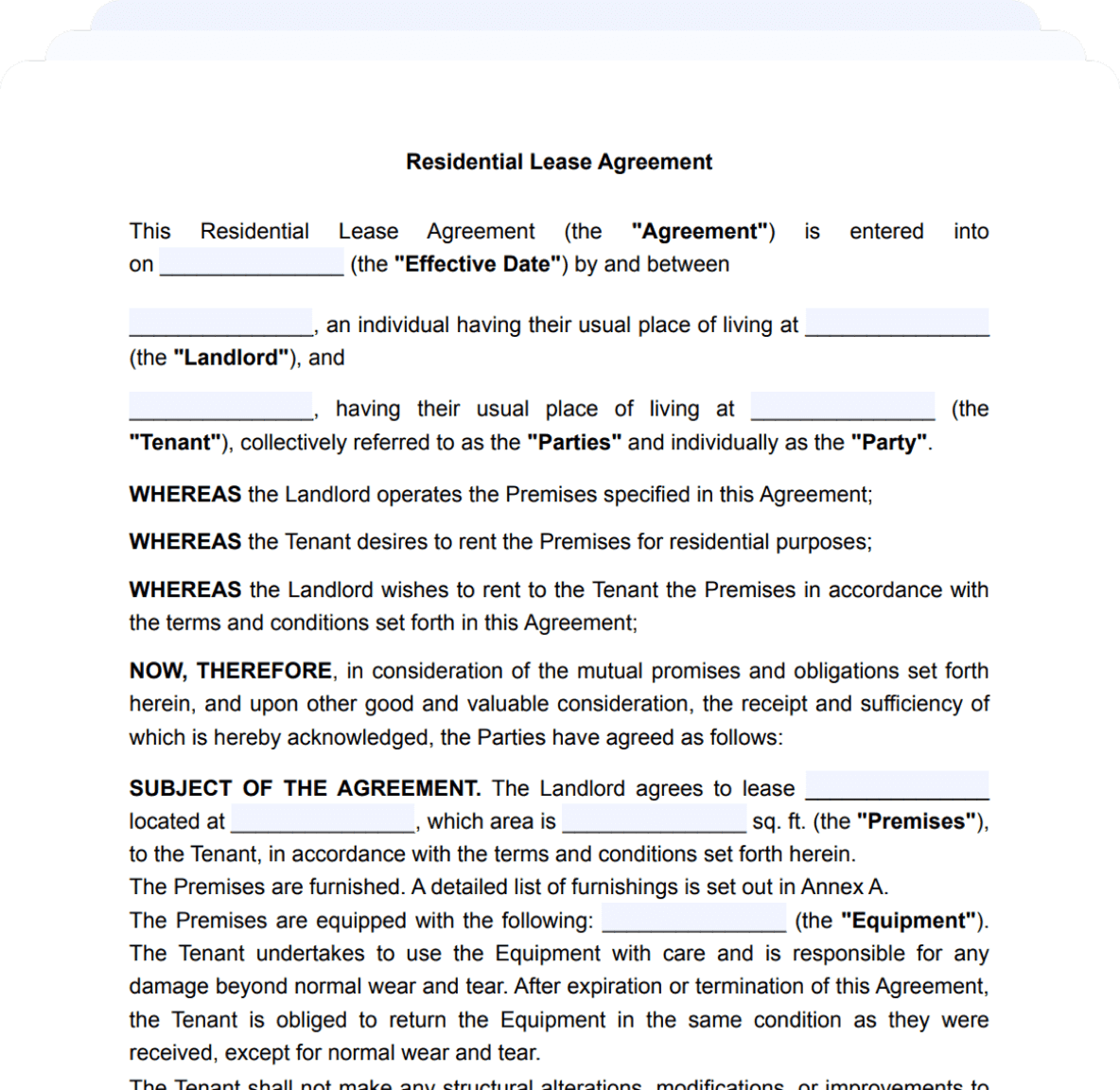
Besides hiring qualified employees, daycare owners should also create clear internal policies for emergency procedures, child pickup rules, discipline policies, illness handling, and parent communication standards. Many of these expectations should be formally addressed in employment agreements so staff members clearly understand their responsibilities and workplace requirements from the beginning.
- Employment Contract
 4412 downloads
 - Offer of Employment
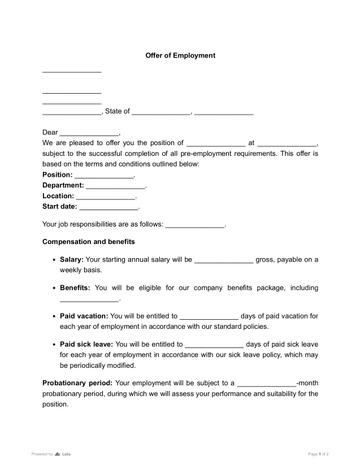 4325 downloads
Additional operational policies, training documents, confidentiality rules, incident reporting procedures, and staff handbooks can also be organized and managed using reliable document management tools. Keeping policies centralized and easy to update with a PDF editor helps daycare businesses maintain compliance, improve staff consistency, and reduce misunderstandings during daily operations.
Why do daycare staff need pediatric first aid and CPR training?
The law obliges all child care workers to get receive ongoing health and safety training and have pediatric CPR and first aid certification because emergencies involving children can escalate very quickly.
Training helps staff respond to:
Choking incidents;
Allergic reactions;
Injuries;
Breathing emergencies;
Seizures;
Falls.
Besides legal compliance, certification reassures parents that staff members are prepared to handle emergencies responsibly. Many states also require daycare employees to complete ongoing training or continuing education hours each year to maintain licensing eligibility. For example, South Carolina childcare licensing rules require annual training hours for childcare staff and directors, while states such as Florida, Texas, California, and New York also require regular continuing education related to child safety, development, health, and supervision.
Market and Grow Your Daycare Business
Even high-quality daycare businesses need consistent marketing because parents usually compare multiple providers before making enrollment decisions. If you are learning how to start a daycare, remember that attracting families is just as important as meeting licensing and safety requirements. In practice, parents often evaluate not only pricing, but also safety, cleanliness, staff professionalism, communication quality, and online reviews before choosing a daycare.
One of the first steps is creating a professional online presence. Most daycare businesses benefit from having a simple website that explains their programs, age groups, pricing structure, operating hours, and licensing information. Many parents also search for childcare providers through Google, local childcare directories, Facebook parenting groups, and community recommendation pages, so maintaining updated business profiles can help increase visibility.
Trust plays a major role in childcare decisions. Because parents are leaving young children in someone else’s care, reviews and referrals often influence enrollment more than traditional advertising. Many successful daycare businesses grow through positive word-of-mouth from existing families, open house events, and partnerships with local employers or schools.
Besides attracting new families, daycare owners must also focus on retention. Poor communication, inconsistent staffing, or high employee turnover can quickly damage parent trust and create enrollment instability. Clear communication with families, organized daily operations, and reliable staff members are often just as important as marketing when growing a daycare business long-term.
How Much Does It Cost to Start a Daycare Business?
Startup costs vary dramatically depending on location, property type, enrollment size, and licensing requirements. State-level childcare funding and local market conditions can also affect operating costs and pricing expectations.
According to the Child Care Aware of America FY26 data, state investments in childcare and preschool programs vary significantly across the U.S. Some states invest less than $500 per child under age 5, while others invest several thousand dollars per child annually. Washington, D.C., for example, invests more than $9,800 per child, highlighting how childcare funding and support systems differ widely by location.

Typical startup expenses include:
Licensing fees;
Business registration costs;
Lease deposits or property purchases;
Renovations;
Classroom furniture;
Playground equipment;
Insurance (general, professional liability, workers' compensation, and commercial property insurance, if you lease the space);
Employee payroll;
Marketing;
Technology and management software.
A small home daycare may start with less than $20,000, while larger childcare centers can require several hundred thousand dollars in startup capital.
According to the U.S. Department of Labor childcare cost data, families spend between 8.9% and 16% of median household income on childcare, depending on location and care type. Annual childcare costs can range from approximately $6,500 to over $15,000 per child. These pricing pressures create both strong demand and significant operational responsibility for daycare providers.
How Much Can a Daycare Business Make?
How much a daycare business can earn depends on enrollment capacity, tuition rates, staffing costs, facility expenses, local demand, and the age groups served. Infant care programs often charge the highest tuition because younger children require lower staff-to-child ratios and more supervision. At the same time, payroll is usually one of the largest ongoing expenses because childcare businesses are labor-intensive and heavily regulated.
Revenue can vary significantly depending on the size of the daycare. A small home daycare may generate moderate owner income with lower overhead costs, while larger childcare centers with multiple classrooms can generate substantially higher revenue.
Profitability usually improves once enrollment stabilizes and operational systems become consistent. However, daycare ownership is highly hands-on. Bureau of Labor Statistics overview for childcare center directors states that directors are typically responsible for budgeting, staffing, educational oversight, licensing compliance, and daily operations. That means daycare owners often spend substantial time managing both educational quality and business administration while balancing rising labor and operational costs. Understanding how to make a daycare financially sustainable requires careful planning, organized operations, strong staffing systems, and consistent enrollment management.
More guides
July 25
12 min read
How to Register a Company in the US: What No One Tells You in 2026
September 1
7 min read
How to Provide Proof of Employment: Documents and Steps

October 7
How to Start a Staffing Agency: Licensing, Pricing, and Cash Flow
September 1
5 min read
How to Start a Tutoring Business and Succeed

July 25
12 min read
How to Start a Flooring Business and Get Your First Clients in 2026
July 22
10 min read
How to Start a Storage Unit Business: What You Need to Know
One home for your
agreements
Edit PDFs seamlessly
Tweak agreements before signing or sending for signatures. Update details, add or remove clauses, adjust formatting, and redline changes instantly.
eSign legally and securely
Sign documents and collect legally binding signatures. Invite up to ten people to sign in any order, track the progress, and send reminders.
Request legally binding signatures
Invite up to ten people to sign your document in any order. Get a finalized, audit-ready copy without chasing signatures.
Skip the drafting.
Choose from 2,500+ templates
Browse templatesChoose a template
Fill in details
Sign and download