Updated July 25, 2026
11 min read
Vendor Onboarding: Process, Checklist, and Faster Approvals

Vendor Onboarding: Process, Checklist, and Faster Approvals
Content
Vendors are priceless strategic partners regardless of your business size. However, a nationwide corporation has more vendors to choose from, while smaller companies typically have a much narrower circle of partners they know well. In the rush to grow their business, many small and medium business (SMB) owners rely on handshake deals or informal email threads. And yet, without a standardized new vendor onboarding process, you expose your company to more than just poor service. You may risk facing tax penalties or operational disruptions if your vendor turns out to be unreliable or if you didn’t document your choice properly.
This article provides you, as a business owner, with a practical roadmap to finding and choosing the best vendors, as well as protecting yourself legally. This way, you can start a strong partnership and focus on what’s important rather than paperwork.
Vendor Onboarding Process Flow
What is vendor onboarding? It is a strategic and structural integration of vendors into your company’s system. While onboarding vendors can differ if you’re choosing one for goods or services, the underlying principles remain the same.
Create the application page
Want to save time? Skip the lengthy back-and-forth email chain. You need a centralized place where potential partners can apply to work with you.
- 1
Set up an application form, such as “Work with us.”
- 2
Ask for basic business info.
- 3
Add a few filters. Use a digital form to ask the deal-breaker questions. Do they have a business license? Can they provide a certificate of insurance (COI)?
You don’t have to ask for proof — at this stage, online responses are enough.
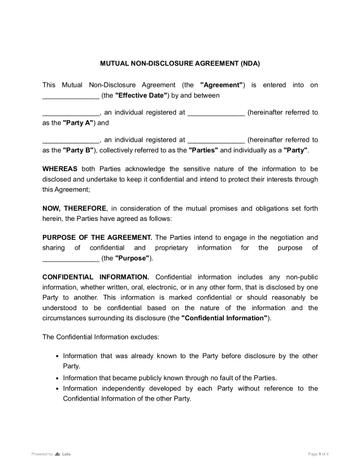
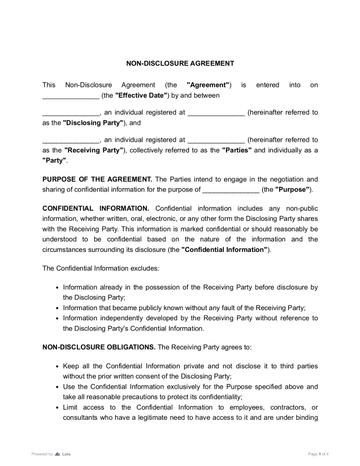
All companies share sensitive data with their vendors. At this stage, you would also want them to eSign a Mutual Non-Disclosure Agreement as part of the application. Sometimes, a company chooses to have a one-sided NDA if it is the only one sharing sensitive information. This is a common practice: somewhere between 33% and 57% of U.S. workers have signed an NDA or its equivalent.
- Mutual Non-Disclosure Agreement (NDA)
 4383 downloads
 - Non-Disclosure Agreement (NDA)
 4699 downloads
The first contact
The moment a vendor reaches out to you or when you proactively contact a suitable candidate, you are on the path to deciding if there’s a possible fit.
Identity & compliance
This is where you send your onboarding invite. You will ask for the following:
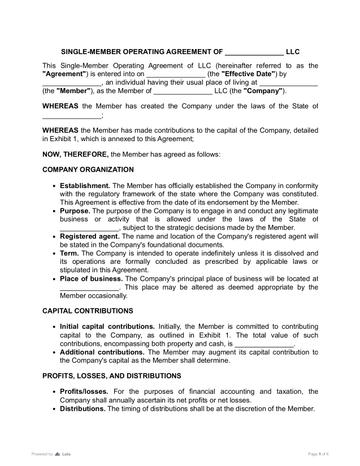
Legal structure. Ask for a breakdown of their ownership structure. By understanding whether they’re a sole proprietor, a single-member LLC, or a corporation, you will identify the beneficial owners and gain a deeper insight into their operations. A company will send you documentation. A business usually has its own Single-Member LLC Operating Agreement or LLC Operating Agreement, which regulate their business operations.
Proof of legitimacy. Request an upload of their current business license and a recent Certificate of Good Standing, which they can typically order from their specific Secretary of State's office.
- Single-Member LLC Operating Agreement
 3958 downloads
 - LLC Operating Agreement
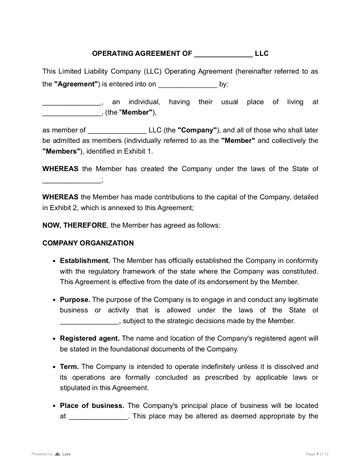 4046 downloads
Once your internal foundation is set, it’s time to move the vendor through the onboarding funnel. This phase is about gathering evidence. In the U.S., the burden of proof is on you. So if you pay a vendor that the IRS later deems invalid or unauthorized, your business could be on the hook.
Due diligence
The previous step was more on your potential partner — this one’s on you. Your team must verify that the provided documents aren’t forged or outdated. Regardless of how you put it, a court won’t accept a statement, “I didn’t know it wasn’t a real company.”
Tax identity. Due diligence verifies the Taxpayer Identification Number. To do so, the vendor submits Form W-9 (US), which captures its legal name and TIN.
Secretary of State check. Don’t take their word for it. Visit the Secretary of State website specifically for the state where your vendor is registered. There, you can run a business search to look into registration, legal status, and basic operating information. If any information you have found seems confusing, you can always use AI document review to get through the complex language.
Credit check. A credit check gives you an understanding of whether the vendor has any financial challenges that might affect your performance. In the U.S., three major business credit bureaus are D&B, Experian, and Equifax. For smaller businesses, however, this search might be lackluster due to a lack of reporting.
Reference calls. Call at least a few prior clients, which is particularly useful if your potential partner isn’t a large business and you can’t verify much through the official channels.
You may want to find out how vendor activity is regulated. The U.S. doesn’t have a specific institution that’s concerned with vendors, but it indirectly impacts them through:
Federal Trade Commission (FTC), which oversees fair competition and data privacy
The IRS, which regulates how you report payments
State-level laws enforced by the Secretary of State, which dictate whether a business is even allowed to operate in your backyard.
Diving Deeper Into Vendor Onboarding
For deals that demand a much longer-term and ongoing collaboration, it makes sense to conduct a more in-depth examination of what they can offer. You need to ensure their team can actually solve your specific business challenges.
The interview & problem-solving
Once you’re interested in your vendor, invite them for an interview. By now, you have already shared an MNDA — this gives you an opportunity to share vulnerable data and present the actual business need to them.
Present the vendor with a real-life scenario you want them to solve. Ask them for a potential solution. Even if they don’t have a solution (chances are, they don’t; not immediately), they will demonstrate the vector of their problem-solving.
Test their skills
Business owners considering a long-term high-stakes contract might want to get a trial run before moving ahead. This can be a live demo, a pilot project, or a formal proposal that outlines each step with the knowledge of the provided specifics. That’s when, if you have a co-owner or make purchasing decisions with others, you’d want to evaluate vendors as a team.
This prevents you from wasting time collecting bank details or insurance certificates for a vendor that fails the skills test.
Financial threats can occur even during email exchanges. In the U.S., business email compromise (BEC) is gaining attention as one of the most dangerous types of cybercrime. In 2025, 76% organizations reported facing or suffering financial fraud.
Financial & risk setup
Once you’ve verified the vendor’s identity and skills, you need to build a fortress around your company’s cash flow and legal liability. In 2024, the FTC announced 2.6 million fraud reports, the majority of which were imposter scams, so accounting for this saves your business from a potential mistake near the finish line.
Collect bank information. Collecting bank information involves implementing secure payment procedures and taking a few steps to prevent fraud and loss. For this, you’ll need:
A voided check to confirm routing and account numbers;
A signed bank letter if you don’t use paper checks.
Vendors often scan or photograph these documents — a voided check, business license, or COI; if the file has no selectable text, make the scanned PDF searchable before filing it in your vendor record.
Check their insurance. Protect your company from potential liability by verifying the vendor’s Certificate of Insurance (COI). COI typically proves that a supplier has active General Liability, Workers’ Compensation, and Commercial Auto insurance, but these can vary.
Discuss payment terms. Be proactive about the payment terms. Don’t let every vendor dictate when they get paid; standardizing your terms helps you predict your monthly outflows. Businesses usually pay their vendors via:
ACH transfers;
Corporate credit/virtual cards;
Paper checks;
Wire;
Other payment service providers.
Secure Payment Flow

Finalize the agreement
Now that you’ve verified all the documentation and know your vendor is trustworthy, you can move toward deciding the rules of your cooperation. When entering into a contract with vendors, business owners typically sign a Vendor Agreement. Don’t rush when reviewing your contract and verify that your agreement outlines:
Pricing
Service terms
Delivery schedules
This document protects both parties and ensures you have a signed proof of mutual understanding of your responsibilities.
Your Vendor Onboarding Checklist
For a 100% confidence that everything is in order, use this checklist to wrap things up. This vendor onboarding checklist captures bank account and service-level agreement (SLA) requirements, plus important compliance documents.
Identity and compliance:
W-9 Form (US)
Business license
Certificate of Good Standing
MNDA/NDA
Financial and security setup:
A voided check or signed bank letter
Voice verification
Payment schedule
Risk management and performance:
Certificate of Insurance
Vendor Agreement
Credit and reference check
Vendor Risk and Evaluation Matrix
Not every vendor requires the same level of scrutiny. A one-time $50 purchase doesn’t need a full evaluation of a long-term strategic partner. This table can help you decide how much you need to invest in building a business relationship.

How to Improve Your Onboarding Process
You need to ensure that your onboarding has a clear structure and accounts for all stakeholders in the final decision.
Draft your procurement policy
A procurement policy is a document that outlines rules and principles for purchasing goods or services. It helps your procurement team evaluate and onboard new suppliers based on agreed-upon criteria. It basically makes sure that, in case of additional purchases from suppliers, someone in your company doesn’t overpay or doesn’t make decisions outside of their expertise.
In your procurement policy, you need to decide:
Who can make purchasing decisions?
What are the thresholds for spending?
Is there a conflict of interest?
Share this policy with the relevant team members; once they edit a PDF or doc version of your policy draft, you can finalize it.
What is a 3 vendor rule?
The 3 vendor rule (or three-quote rule) is a procurement policy that requires employees to obtain and compare formal bids from at least 3 vendors before making a final selection. It supports competitiveness and reliability for your vendor onboarding. This rule can be ignored if you’re agreeing on a small purchase or are short of time.
What are the criteria for vendor analysis?
When you have at least three quotes on your desk, you need an objective way to pick the winner. Having some stepping stones to rely on will help you remain objective and avoid favoritism:
Financial stability
Operational capacity
Technical fit
Cultural alignment
Hidden costs
Ready to Onboard
Fine-tuning your vendor evaluation and onboarding procedures will take some time at first. Fortunately, once it’s done, you’ll spend fewer resources managing unreliable suppliers and re-onboarding in case of emergency. In the long run, your partnership with vendors will help you build a sustainable system in which each element proves itself to be trustworthy.
More guides
September 1
7 min read
How to Provide Proof of Employment: Documents and Steps

September 10
14 min read
How to Protect Your Small Business from Lawsuits

July 26
12 min read
How to Read a Profit and Loss Statement

October 16
7 min read
How to Redact a PDF Safely: Step-by-Step Data Protection Guide
September 15
What Is Contract Redlining?
September 15
What Are the Stages of the Contract Management Lifecycle?
One home for your
agreements
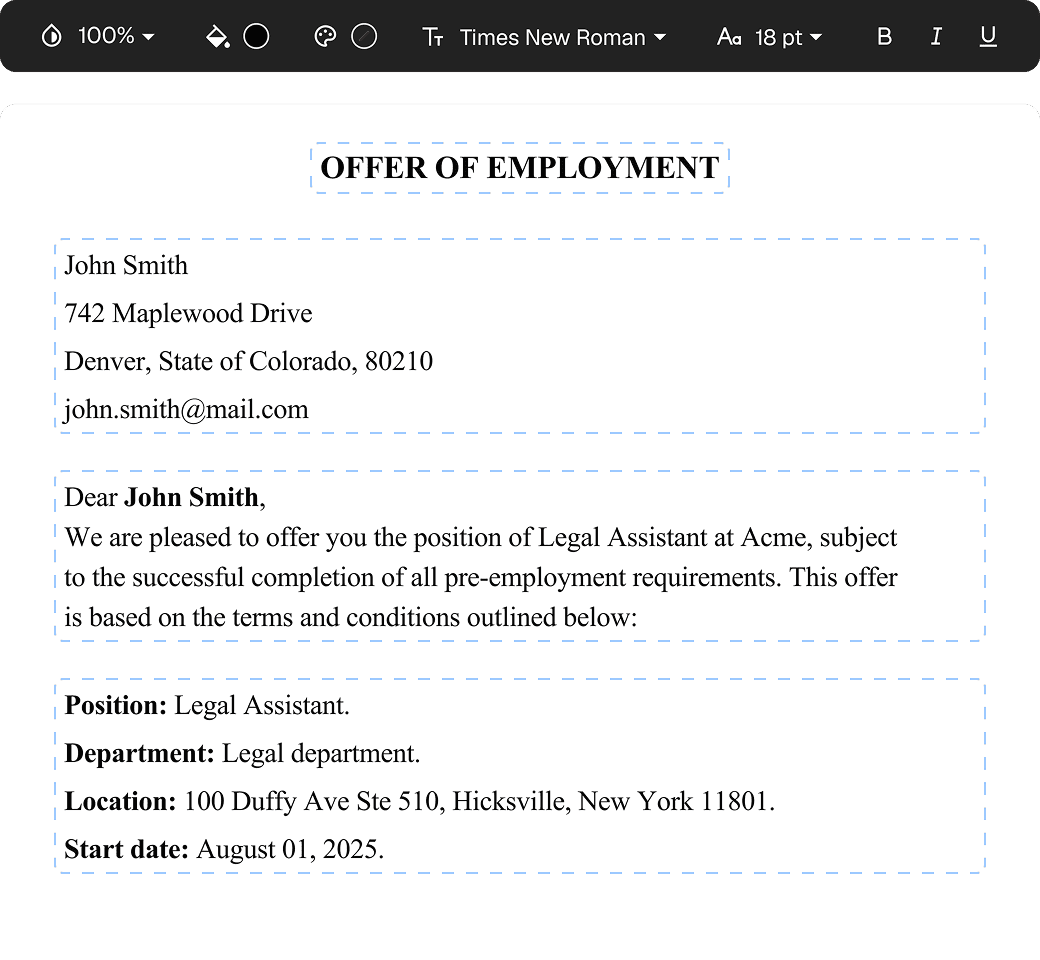
Edit PDFs seamlessly
Tweak agreements before signing or sending for signatures. Update details, add or remove clauses, adjust formatting, and redline changes instantly.
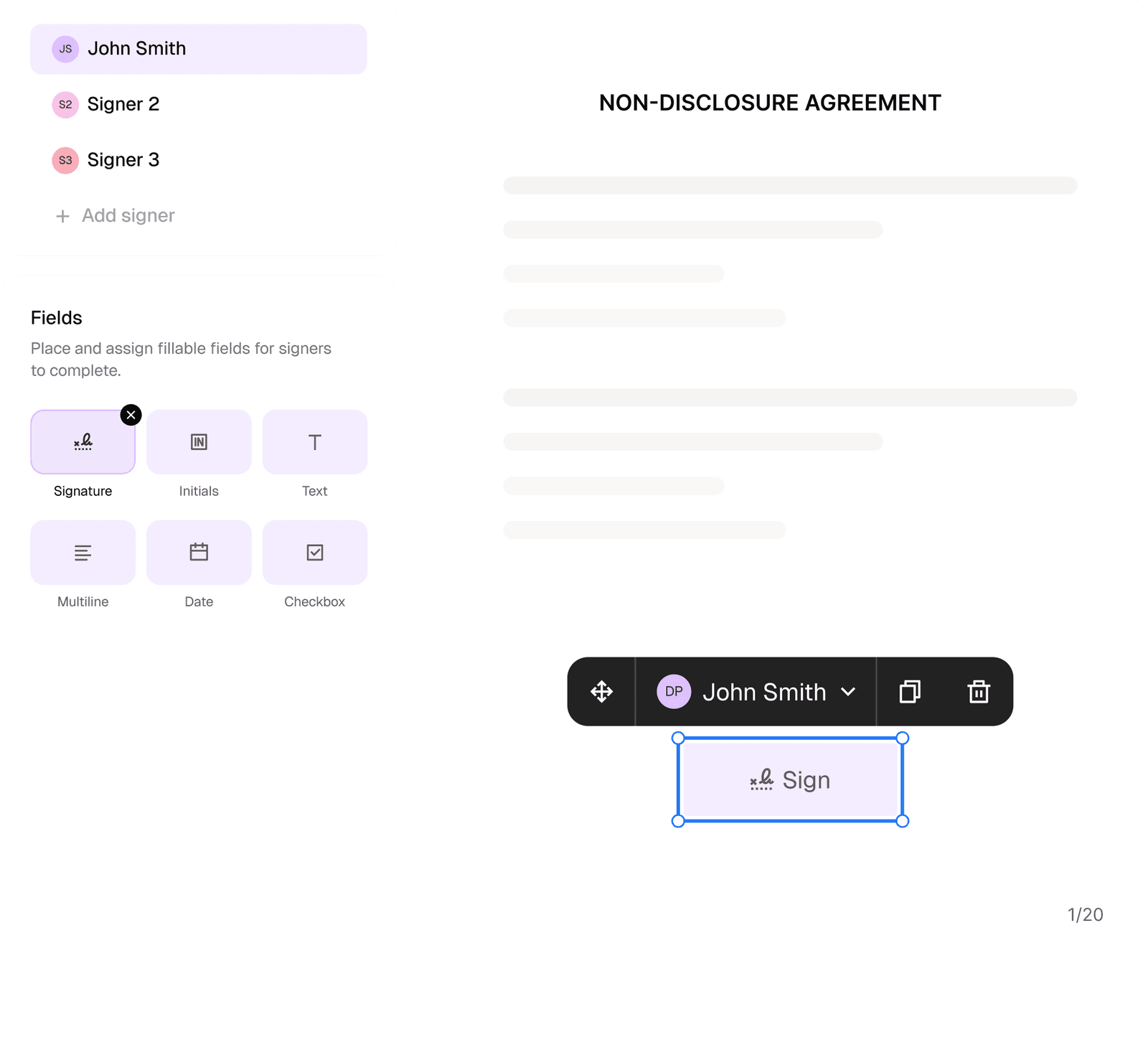
eSign legally and securely
Sign documents and collect legally binding signatures. Invite up to ten people to sign in any order, track the progress, and send reminders.
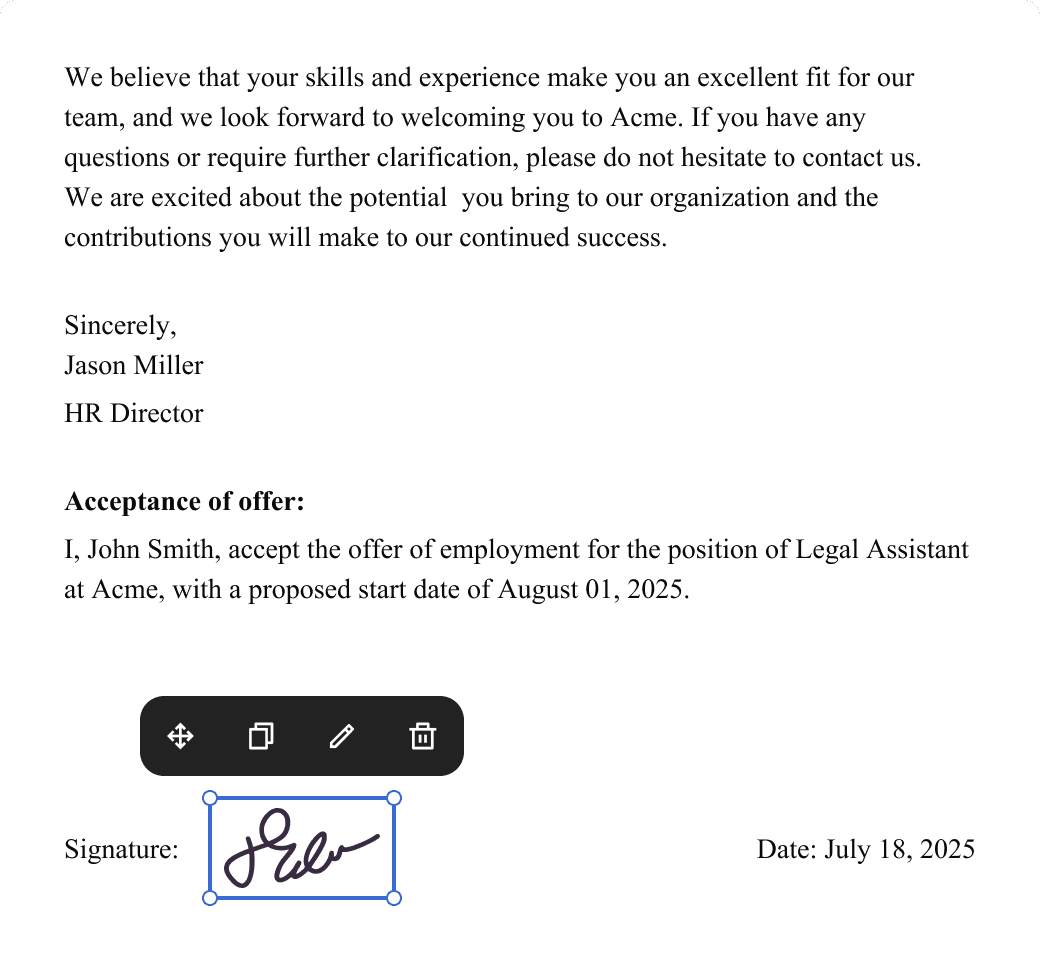
Request legally binding signatures
Invite up to ten people to sign your document in any order. Get a finalized, audit-ready copy without chasing signatures.
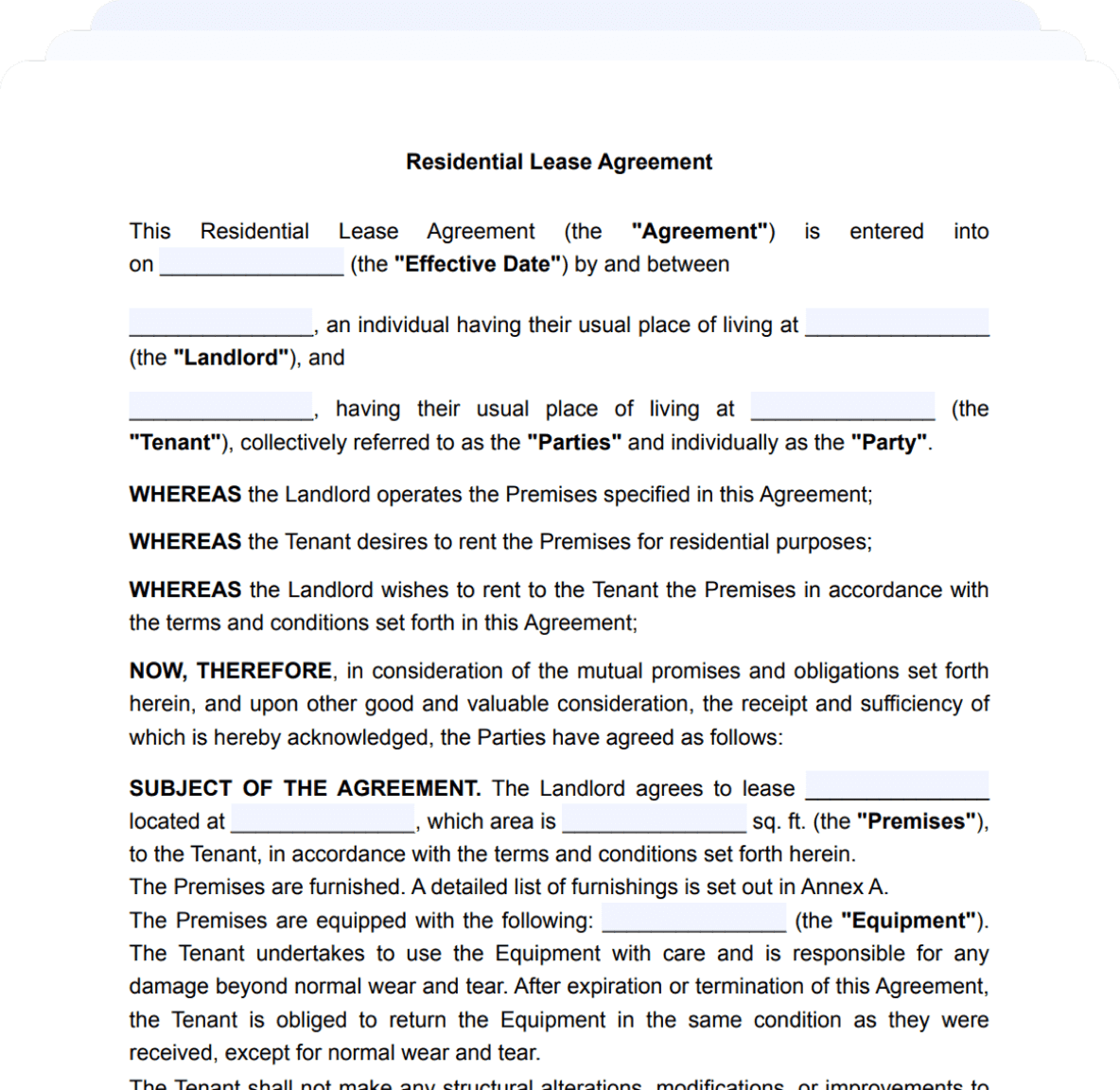
Skip the drafting.
Choose from 2,500+ templates
Browse templatesChoose a template
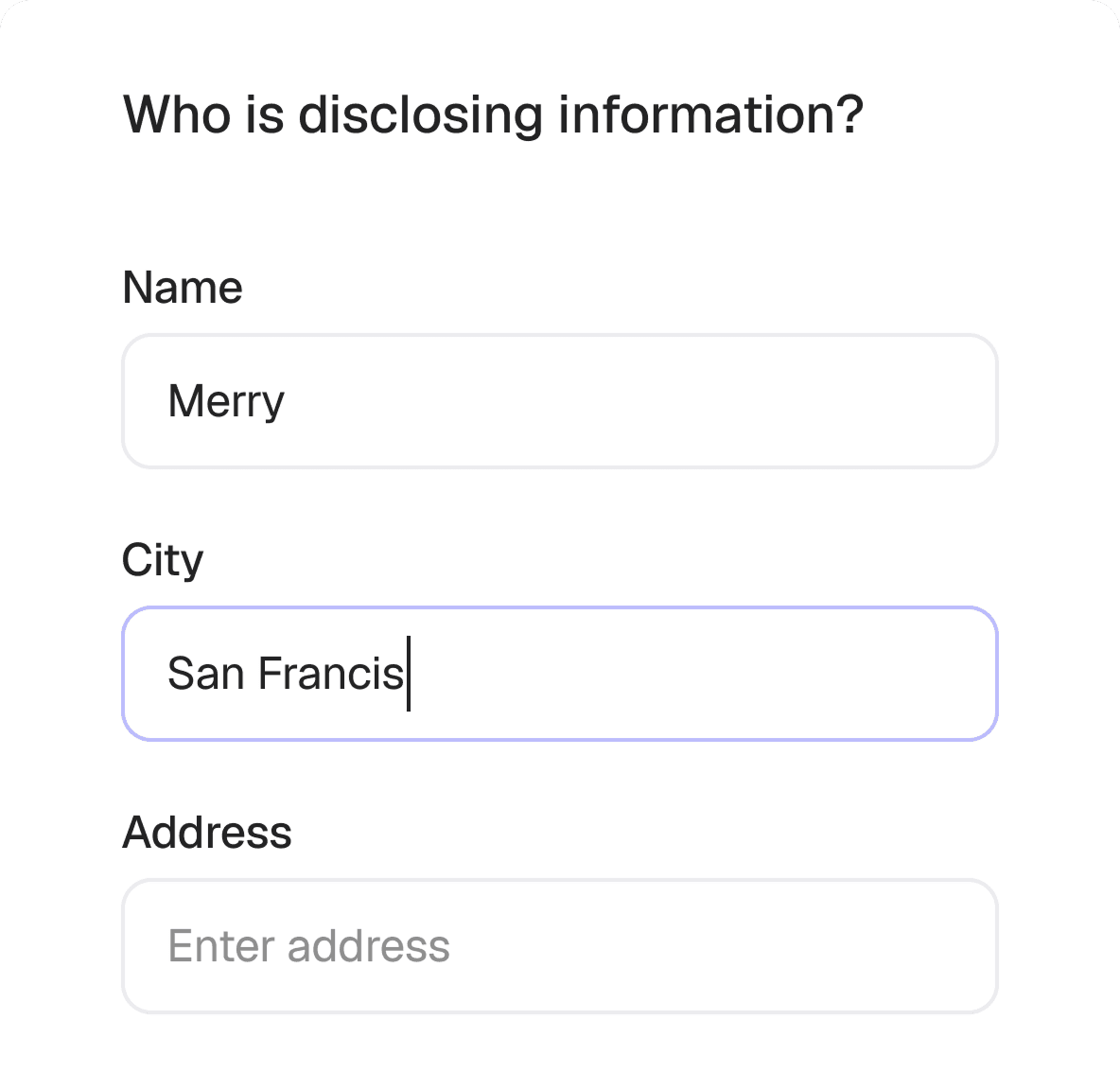
Fill in details
Sign and download