Free template
Free Mutual Non-Disclosure Agreement (NDA) Template
4.7 (40 reviews)
Updated Aug 19, 2026
~ 4 pages
PDF
4.4K downloads
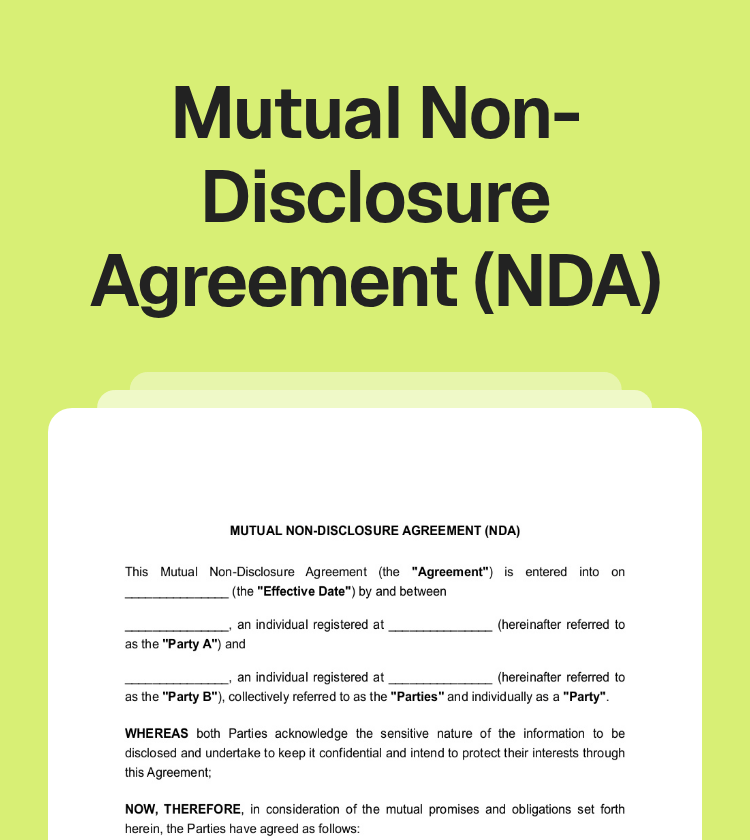
A mutual NDA is a customizable agreement in which two parties agree to protect confidential information they disclose to each other during negotiations, transactions, or business collaborations.

Preview
Written by Megan Thompson, LLB - Reviewed by Kate Adkham, LLB
What Is a Mutual NDA?
Copy section linkKey Components of a Mutual NDA
Copy section linkWhat Is the Difference Between a Mutual and Unilateral NDA?
Copy section linkSources
Copy section linkAlso read