Free template
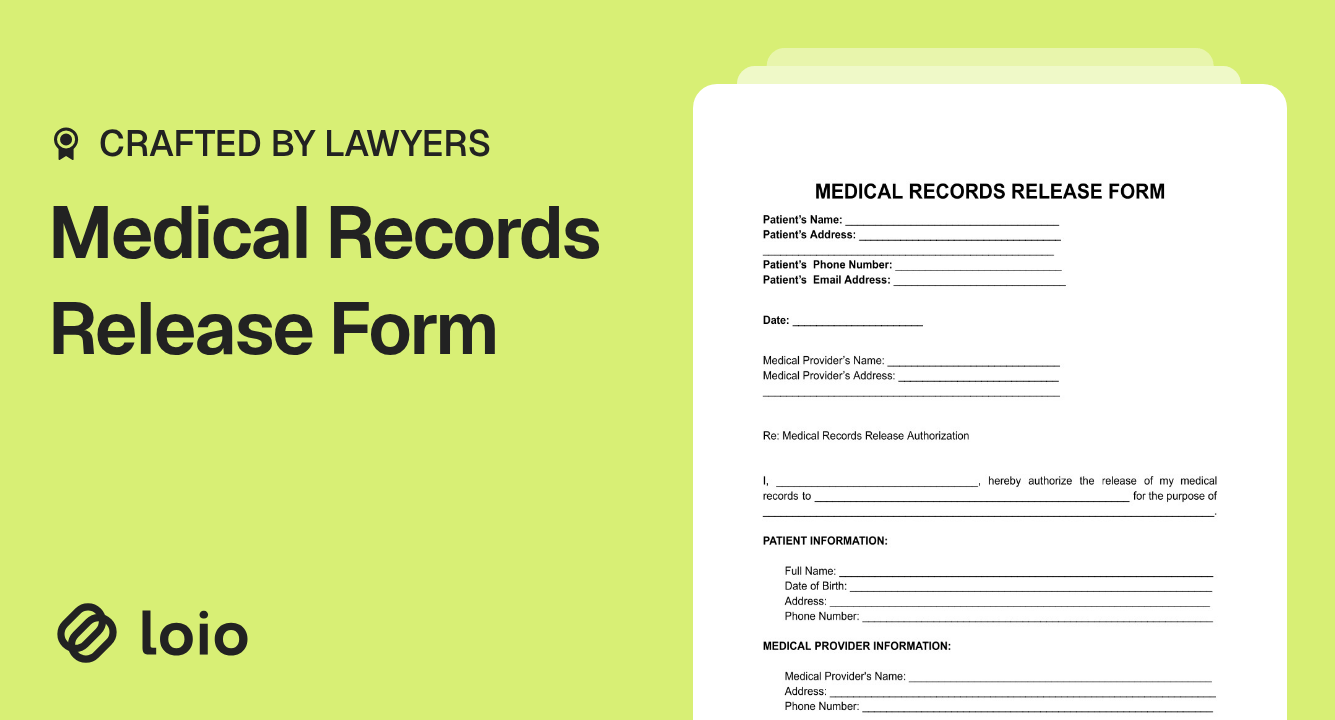
Free Medical Records Release Form Template

What Is a Medical Records Release Form?
Copy section linkA medical records release form is a written authorization that allows a healthcare provider or other record holder to share a patient’s medical information with another person or organization.
Medical records often contain protected health information, including diagnoses, prescriptions, test results, treatment history, billing records, and mental health information. Because this information is sensitive, a healthcare provider usually cannot disclose it to third parties without a valid authorization unless another legal rule allows the disclosure.
This form helps define exactly what information may be shared, who may disclose it, who may receive it, why the records are being released, and when the authorization expires. Under the HIPAA Privacy Rule, patients generally have the right to access and receive copies of their medical records, with limited exceptions.
When to Use a Medical Records Release Form
Copy section linkA medical records release form is used when a patient wants to give written permission for a healthcare provider to share medical information with another person or organization. A medical records release form is especially useful in situations such as:
Changing healthcare providers: A new doctor, clinic, or specialist needs access to previous records to understand the patient’s medical history and continue care.
Getting a second opinion: Another provider needs test results, imaging, diagnoses, or treatment notes before reviewing the patient’s condition.
Filing an insurance or benefits claim: An insurer, disability office, or benefits administrator needs medical documentation to review eligibility, coverage, or payment.
Allowing a family member or caregiver to help: A spouse, parent, adult child, caregiver, or trusted person needs permission to receive health information or communicate with a provider.
Preparing for a legal matter: An attorney, court-related professional, or agency needs medical documentation connected to an injury claim, disability case, guardianship matter, or other legal process.
Requesting personal copies: A patient wants copies of their own records for personal files, future care, travel, employment-related paperwork, or another personal reason.
Providing limited information to a school or program: A school, camp, sports program, workplace, or community program needs specific medical information for participation, accommodations, or safety planning.
Coordinating specialized care: A provider needs access to certain mental health, therapy, rehabilitation, or specialist records, depending on the patient’s consent and applicable privacy rules.
A medical records release form only allows medical information to be shared. It does not let another person make healthcare decisions for the patient. For that, use a medical power of attorney. And for sharing protected health information with a vendor or service provider, a business associate agreement may be required.
Parties to the Medical Records Release Form
Copy section linkPatient: The person whose medical records or health information will be disclosed.
Disclosing party: The healthcare provider, hospital, clinic, insurer, therapist, pharmacy, or other record holder authorized to release the information.
Receiving party: The person, provider, company, agency, attorney, caregiver, or organization allowed to receive the records.
Personal representative: A parent, legal guardian, healthcare agent, executor, or person with power of attorney who may sign on the patient’s behalf when legally authorized.
Key Components of the Medical Records Release Form
Copy section linkA medical records release form should clearly identify the patient, the healthcare provider, the records covered by the authorization, and the person or organization permitted to receive them. The form includes the following sections:
- Patient Contact Information: Identifies the patient through their name, address, phone number, and email address.
- Form Date: Records when the medical release authorization was prepared or submitted.
- Medical Provider Details: Names the healthcare provider holding the records and provides the provider’s address.
- Release Authorization: Confirms that the patient authorizes the disclosure of their medical records to a specified person or organization for a stated purpose.
- Patient Information: Provides the patient’s full name, date of birth, address, and phone number so the correct medical records can be located.
- Medical Provider Information: Identifies the provider responsible for releasing the records and includes their name, address, and phone number.
- Records Subject to Release: Specifies the medical documents or categories of information the provider is authorized to disclose.
- Release Purpose: Explains why the records are being requested, such as for continued treatment, insurance, legal review, or personal use.
- Authorization Period: Sets the dates during which the authorization remains valid and explains what happens when no expiration date is provided.
- Revocation Instructions: States that the patient may withdraw the authorization in writing and identifies where the revocation must be sent.
- Patient Consent: Confirms that the patient understands the records may contain sensitive and confidential medical information and voluntarily agrees to their release.
- Name and Signature: Verifies the identity of the person granting permission and confirms their approval of the medical records release.
Key Terms of the Medical Records Release Form
Copy section linkAuthorization: Written permission allowing a healthcare provider or record holder to disclose medical information.
Protected health information (PHI): Individually identifiable health information, such as medical history, diagnoses, test results, billing details, or treatment records.
HIPAA: The Health Insurance Portability and Accountability Act, a federal law that sets privacy and security standards for certain health information.
Covered entity: A healthcare provider, health plan, or healthcare clearinghouse subject to HIPAA rules.
Disclosure: The act of sharing or releasing medical information to another person or organization.
Minimum necessary: A privacy principle that limits disclosure to the information reasonably needed for the stated purpose.
Revocation: The patient’s cancellation of a previously signed authorization.
How to Fill Out a Medical Records Release Form
Copy section linkBefore signing a medical records release form, make sure every required detail is complete and accurate. The form should clearly identify the patient, the record holder, the person or organization receiving the records, and the exact medical information covered by the authorization.
- Enter the patient’s information. Add the patient’s full legal name, date of birth, address, phone number, and other identifying details requested in the form.
- Add the disclosing party. Write the name and contact information of the healthcare provider, hospital, clinic, pharmacy, insurer, or other organization that will release the records.
- Add the receiving party. Enter the full name, address, phone number, email, or fax number of the person or organization authorized to receive the records.
- Describe the records to be released. Specify the type of information covered by the authorization, such as medical history, treatment records, lab results, imaging reports, prescriptions, billing records, or records from specific dates.
- Identify any sensitive records. State whether the release includes mental health records, substance use treatment records, HIV/AIDS information, genetic testing, reproductive health information, or other specially protected records.
- State the purpose and delivery method. Add the reason for the release, such as treatment, insurance, legal review, personal use, or care coordination, and explain how the records should be sent.
- Set an expiration date or event. Add the date or condition that ends the authorization, such as a specific calendar date, completion of treatment, or resolution of a claim.
- Add revocation instructions. Explain how the patient can cancel the authorization before it expires, such as by sending a written request to the disclosing provider.
- Review state-specific requirements. Check whether your state requires special wording, additional consent for certain records, witness signatures, or notarization.
- Sign and complete the final section. The patient or authorized representative should sign and date the form. When a parent, guardian, agent, or executor signs, add their name, relationship to the patient, and authority to act. A witness or notary public should also sign if required.
Requirements for this document vary by state. Review your state's laws and procedures — or consult a licensed attorney — before using this template to ensure it's valid and enforceable where you live.
Sources
Related documents
Also Read