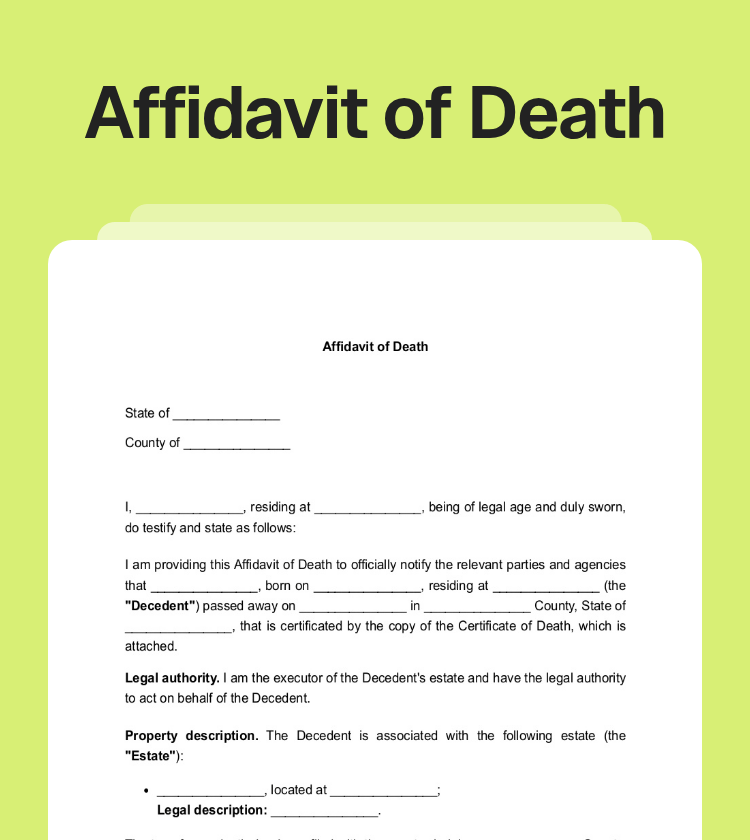
Free template
Free Affidavit of Death Form

Template Description
Copy section link
An affidavit of death is a legal document used to declare an individual's end officially. This affidavit is a sworn statement signed under oath by a person with personal knowledge of the deceased's passing. It is an essential document in various legal and financial processes, providing proof of death and facilitating the transfer of assets and property rights after the individual's demise.
When to Use Affidavit of Death
Copy section linkAn affidavit of death form is used in various legal and financial situations to provide official confirmation of an individual's passing. It is essential during estate administration, trust administration, insurance claims, property transfers, and legal proceedings such as wrongful death lawsuits or inheritance disputes. This document serves as proof of death, facilitating the distribution of assets, transferring property ownership, and assisting in resolving legal matters.
By recognizing the need for an affidavit of death form in these specific instances, individuals can effectively navigate the complexities of dealing with a deceased person's estate, ensuring compliance with legal requirements and the proper distribution of assets according to the individual's wishes or applicable laws.
Parties of the Affidavit of Death
Copy section link- Affiant — The affiant is the person making the statement in the affidavit of death form. Usually, someone who has firsthand knowledge of the deceased individual and their passing, the affiant provides important information and personal details in the document, affirming the truthfulness of their statements under oath.
- Deceased — The deceased refers to the individual who has sadly passed away. Their name, date of birth, and date of death are essential details that must be accurately recorded in the affidavit of death to establish the identity and occurrence of their passing.
- Witness — A witness is an individual present when the affiant signs the affidavit of death. Their role is to attest to the authenticity and validity of the document. Their presence adds credibility and helps ensure the accuracy of the information provided in the affidavit.
Key Terms
Copy section link- Affiant: The person making the affidavit, providing a statement under oath.
- Notary Public: An authorized official who verifies the identity of signatories and witnesses, adding legal weight through their seal and signature.
- Probate: The legal process of administering an estate after someone's passing, including validating the will, paying debts, and distributing assets.
- Beneficiary: Individuals or entities named in a will or trust entitled to receive assets or benefits upon someone's death.
- Estate: The collective assets, property, and debts left behind by someone who has passed away.
How to Write an Affidavit of Death
Copy section linkWhen it comes to writing the affidavit for death certificate, it is important to follow a specific format and include all the necessary information. Here is a step-by-step guide on how to write an effective affidavit:
Introduction:
Start by introducing the document as an "Affidavit of Death." State your full name, address, and relationship with the deceased individual. Provide a concise overview of the death affidavit sample for the purpose and its significance in establishing the death of the individual.Personal details:
Begin by providing the full legal name of the deceased, along with their date of birth and date of death. Ensure accuracy and precision in recording these details to avoid any confusion or discrepancies later on.Circumstances of death:
Clearly and briefly describe the circumstances surrounding the individual's death. Include relevant information such as the location, cause of death, and any other important details necessary for legal or administrative purposes.Legal certification:
Affirm that the information provided in the affidavit is true and accurate to your knowledge. Declare that you are voluntarily making this statement under oath and understand the legal implications of providing false or misleading information.Notarization:
Sign the affidavit of death certificate in the presence of a notary public, who will acknowledge your signature and apply their official seal to the document. Notarization adds credibility and authenticity to the affidavit, making it legally recognized.
In case you need a reference, an affidavit of death sample is available at Loio that can provide a visual representation of how the document should be structured and formatted. Understanding the steps involved and utilizing available sample documents can effectively create a comprehensive and accurate affidavit.