Free template
Free Small Estate Affidavit Form

Template Description
Copy section link
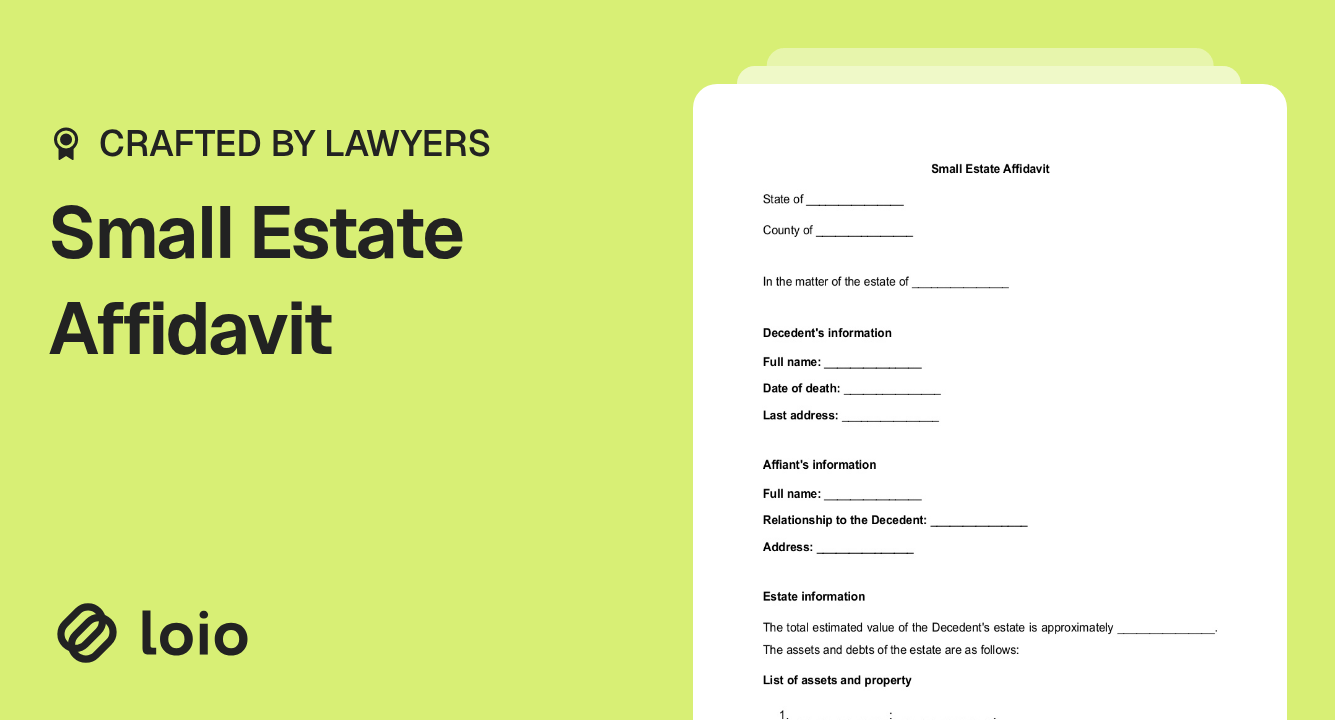
A small estate affidavit is a legal document used to bypass probate court when distributing the assets of a decedent with a relatively small amount of property. The purpose of an affidavit of small estate is to provide a more streamlined and cost-effective way to transfer property rights and ownership in situations of lower-valued estates. It is critical to note, however, that the value limit for an estate that qualifies as 'small' varies from jurisdiction to jurisdiction. However, using a printable small estate affidavit form makes it possible to manage the estate distribution with fewer complications and bureaucratic hurdles.
When to Use a Small Estate Affidavit
Copy section linkAn affidavit for collection of small estate should be used when the value of the estate is below a certain threshold, as specified by a particular jurisdiction. Notably, the small estate affidavit form is available for situations where the traditional probate process could be expensive or lengthy. It's particularly applicable in cases when the deceased didn't leave a will (i.e., died intestate) or when the named executor is unable or unwilling to serve. For instance, the small estate affidavit for bank account enables the rightful heirs to gain access and administrate bank accounts of a decedent's estate without having to go through the complex probate process.
Parties
Copy section link- Affiant –– This is the individual who completes the small claim affidavit. They pledge under oath that the deceased left behind an estate under a specific value (with the threshold varying by jurisdiction), validating it as a 'small estate.' Their responsibility is to ensure all data in the form is correct and truthful and that the assets from the estate are distributed without conflicts. Upon final distribution, they might provide a statement confirming the property transfer has happened according to the laws and regulations. Use a small estate affidavit example to ensure you have mentioned all the essential information in the document.
- Heir –– This is usually the individual, such as a surviving spouse, child, or other family member, who legally inherits the deceased's property and assets under statute or as specified in a will. Upon receipt of assets, the heir receives the small estate affidavit that authorizes the transfer of those assets. This document can serve as legal proof of their ownership of the inherited assets.
Key Terms
Copy section link- Estate: This refers to any owned properties, including real estate, bank accounts, personal possessions, or any other tangible assets.
- Decedent: This is the individual who passed without a legal will.
- Affiant: The individual who swears to the small affidavit estate form.
- Heir: The individual set to receive the decedent's estate through inheritance.
- Probate: The legal procedure through which a will is validated or an estate is settled.
How to Write a Small Estate Affidavit
Copy section linkA small estate affidavit is an essential legal paper that assists in the efficient management of a decedent's estate, particularly when it falls below a state-designated threshold. It makes the process of asset distribution swifter and less complex. Free small estate affidavit forms are conveniently accessible online or can be drafted with the expert guidance of legal personnel.
Here are the steps for the heir or the affiant to draft a small estate affidavit form PDF:
- List comprehensive details, such as your full legal name and contact information.
- Clearly mention the entire estate value to meet the state-designated threshold in the small claims affidavit form.
- Provide details of the decedent, such as their name, date, and place of death.
- Identify all assets included in the estate along with their value.
- Submit the name of the decedent whose estate is subject to the affidavit of collection of small estate.
- Declare that there's no probate proceeding pending or taking place in the state.
- Assert that all the provided information, such as decedent details, estate value, and beneficiaries, are accurate.
- State the laws governing the affidavit per your specific state jurisdiction.
- Attest that you will disburse the estate's assets as per the state law if no will exists or as per the deceased's last will.
Both parties involved should obtain legal advice to examine the small estate affidavit form. It's crucial that there's a mutual agreement on substantial aspects of the document, such as asset distribution.
Handling the responsible distribution of a decedent's assets can be a complex and emotionally taxing ordeal. Simplifying it using a free printable small estate affidavit form can greatly reduce these burdens. Though it has its limitations and requisites, this document provides a path for timely and economically efficient estate resolution.
Related Documents