Updated July 24, 2026
7 min read
Buying a Car Without a Title: What You Should Know
Buying a Car Without a Title: What You Should Know
Content
"I bought a car without a title, how do I get one?" is one of the most frequent questions DMV employees hear. A missing title is a common problem that can bring the new car owner to court if not solved on time. What can be done if you have bought a no-title car? This guide will give you the answers you need.
What Is a Car Title and Why Is It Important?
A car title, which is also called a certificate of title, is a legal document issued by the state's Department of Motor Vehicles that proves who owns the vehicle. It should contain such information:
- The owner's name and address;
- Vehicle's VIN;
- Current liens;
- Car details (make, model, year, and current mileage).
"Can I buy a car without a title?" potential buyers, allured by low prices, ask. There's no law preventing you from such a purchase, but you should think of other documents, like a car bill of sale, that can prove you're the owner.
When is a car title required?
- 1
You need to prove the car belongs to you and was not stolen.
- 2
You sell the vehicle. Most buyers will not agree to purchase a car that has no proper documentation. Or, if they agree, the price will be much lower.
- 3
You want to register the vehicle with the state to legally drive it on public roads.
- 4
An insurance company asks you to prove ownership to get an insurance policy.
- 5
You want to check information about the vehicle's history, such as previous accidents.
A title is your guarantee that the vehicle you buy will not bring you legal headaches in the future. Without it, transferring ownership or registering the vehicle becomes complicated, and even impossible in some cases.
Can You Buy a Car Without a Title?
Technically, you can, but it doesn't mean you'll be able to do it legally. In many jurisdictions, like California, Texas, and Florida, the DMV won't allow you to register a no-title car unless you can prove ownership through other means.
Why doesn't a car have a title?
There are several common reasons a vehicle might not have a title:
- The title was lost or stolen.
- The car came from a state with different titling laws.
- The vehicle is very old and was never titled.
- The car was stolen, abandoned, or salvaged.
According to the National Insurance Crime Bureau (NICB), 334,114 vehicle thefts were reported in the United States during the first half of 2025, a 23% decrease compared with the same period in 2024. A missing or questionable title can also create a risk of title fraud, so buyers should verify the vehicle’s history before completing the purchase.
What Are the Consequences of Buying a Car Without a Title?
A profitable deal on a car isn't worth it if it is accompanied by legal and logistical issues. Here are the most common problems you may face if you buy a car without a title:
Inability to register or drive the car legally.
Difficulty proving ownership.
Higher risk of buying a stolen vehicle.
Reduced resale value.
Potential insurer refusal to issue a policy.
Before you proceed with any such purchase, confirm the vehicle's history using specialized services, like Carfax or the NICB's free VINCheck.
How Can You Get a New Title for a Car Without a Title?
If you've already bought a car that has no title, there are legal ways to obtain a new document, although the process may vary by state. Here are common steps to get a new title:
1. Contact your DMV.
Visit your state Department of Motor Vehicles (DMV) or equivalent motor vehicle agency website or office. Ask which procedure applies when you do not have acceptable proof of ownership. Some jurisdictions have specific processes like bonded titles or court-ordered titles.
2. Gather required documentation.
You'll typically need:
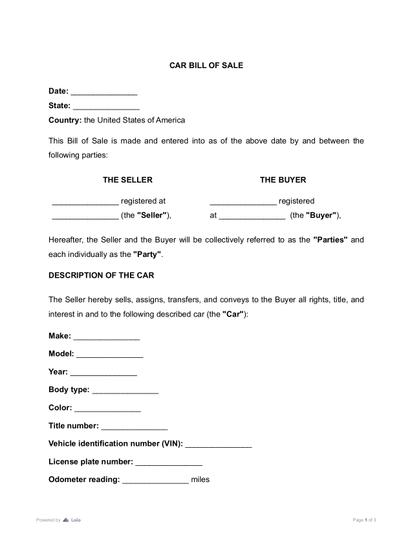
- A bill of sale from the seller.
- A completed VIN verification form.
- Any previous registration documents.
- A signed sworn statement of ownership explaining how you acquired the vehicle.
3. Run a VIN check.
Ensure the vehicle isn't stolen or has a salvage history. Use services like the National Motor Vehicle Title Information System (NMVTIS) or AutoCheck.
4. If eligible, apply for a bonded title.
Bonded-title procedures and eligibility rules vary by state, so check with the motor vehicle agency where you live. Georgia and New York, for example, both provide a surety-bond process when acceptable proof of ownership is unavailable. Bond requirements also vary: Georgia generally requires a bond equal to twice the vehicle’s average retail value, with a minimum bond amount of $5,000, while Texas generally sets the bond at 1.5 times the vehicle’s value.
A bonded-title application typically requires evidence of ownership, such as a bill of sale, and a surety bond in the amount required by the state.
Texas has additional restrictions and deadlines for bonded titles. If the vehicle record shows a lien that is 10 years old or less, the applicant must provide an original lien release or letter of no interest; otherwise, the applicant is not eligible for a bonded title. After TxDMV issues a Notice of Determination, the applicant has one year to obtain the required surety bond and must apply for title at the county tax office within 30 days after purchasing the bond. The bond remains in effect for three years.
5. Submit your bonded-title application.
Submit the required forms, ownership documents, and surety bond to the agency specified by your state and pay the applicable fees. These fees vary by state and transaction. For example, Georgia charges an $18 title fee for a bonded-title application. In Texas, the initial bonded-title eligibility review carries a $15 administrative fee; if approved, the title application fee is generally $28 or $33 depending on the county, in addition to any other applicable taxes or registration fees.
6. Complete the bonded-title process.
Follow your state motor vehicle agency’s instructions after the application is reviewed. The remaining steps and processing time vary by state.
7. If a bonded title is unavailable, use the alternative procedure in your state.
A bonded title and a court or administrative ownership proceeding are alternative routes, not consecutive steps. If a bonded title is unavailable for your situation or you do not qualify for one, contact your state motor vehicle agency to determine the appropriate alternative procedure.
The decision to buy a car without a title is associated with many risks and complications, and the money you'll spend on their solutions may outweigh what you saved with a good deal. Still, if you have already bought a car without a title, your best move is to obtain a new title — starting with verification and working through your state's process. It will protect you from many legal problems in the future.
More guides
July 24
9 min read
How to Register a Vehicle in the U.S.: 5 Steps and State Rules
July 25
8 min read
How to Give a Car as a Gift: Title, Tax, and Registration Rules
July 26
9 min read
How to Sell a Car: A Comprehensive Guide
September 1
7 min read
How to Provide Proof of Employment: Documents and Steps

September 8
11 min read
How to Sell Land by Owner: Complete Guide for Landowners
September 8
4 min read
Packing Slip vs. Bill of Lading: Learn How to Use Both
One home for your
agreements
Edit PDFs seamlessly
Tweak agreements before signing or sending for signatures. Update details, add or remove clauses, adjust formatting, and redline changes instantly.
eSign legally and securely
Sign documents and collect legally binding signatures. Invite up to ten people to sign in any order, track the progress, and send reminders.
Request legally binding signatures
Invite up to ten people to sign your document in any order. Get a finalized, audit-ready copy without chasing signatures.
Skip the drafting.
Choose from 2,500+ templates
Browse templatesChoose a template
Fill in details
Sign and download