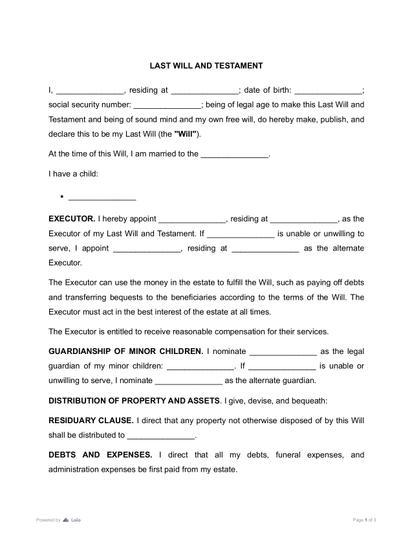

Creating a last will and testament (will) and changing a will are both relatively easy to do. You can use last will and testament from a document service to create your own will or use it as a guide when consulting with an attorney about drafting one. After you have created your will, it is critical to review it periodically, especially after major life events, to determine whether any changes to the will are necessary.
As your family evolves, the needs of your loved ones are likely to change. This can happen due to relocations, divorces, marriages, new additions, and many other reasons.
The factors below could make changing a will not only desirable but necessary to protect those needs:
- Marriage;
- New stepchildren;
- Birth or adoption;
- Divorce.
1. Changing a will because of marriage
Getting married is a common reason for changing a will. All states have laws regulating how much of a person’s estate will be inherited by their spouse if the person dies without a will. However, most people want to be sure their wishes are followed and that their surviving spouse is adequately provided for. Of course, if you and your spouse have purchased assets together, your will can only affect your ownership portion of that asset. Knowing whether you live in a community property state is vital to understanding your spouse’s rights upon death.
If you marry for the first time and do not have children, you will likely have an easier time changing a will and allocating assets. However, a person’s decisions may be complicated by second marriages or children. In these circumstances, it is wise to carefully consider your wishes and make the necessary changes to your will to reflect your new marital status.
2. Changing a will because of new stepchildren
No matter how much you love your new stepchildren, in most states, they are not entitled to receive a portion of your inheritance automatically. If you want your stepchildren to be provided for after your death, be sure to consider changing a will you already have or creating a new one to include them in the way that best reflects your wishes.
3. Changing a will because of the birth or adoption of children
While most state laws allow minor children to receive a portion of their parent’s estate, updating your will after having children is important. Rather than leaving it up to the state, changing a will shows how you want your children to be treated upon your death. If you have minor children, someone else will need to manage any assets left to them. You may wish to appoint a person of your choice to manage their property as a guardian, or you may choose to place assets in a trust for your children.
Regardless, when a new child joins your family, it may be helpful to discuss your circumstances with an experienced attorney to be sure that your wishes are known. An estate planning attorney can help with creating a new will, forming a trust, changing a will, and working through other estate planning needs.
4. Changing a will because of divorce
You may want to consider changing a will after a divorce. Depending on your state, a legacy to a former spouse may or may not be honored after a divorce. Thus, divorced spouses may want to review their legal wills, decide whether they wish to make any bequests to their former spouses, and make any necessary changes to the will.