Updated September 4, 2026
Living Will vs Last Will: What’s the Difference?

Living Will vs Last Will: What’s the Difference?
- Living Will vs. Last Will and Testament: What Is a Living Will?
- Last Will vs. Living Will: What Is a Last Will and Testament?
- Difference Between a Living Will and a Last Will
- Difference Between a Last Will and a Living Will: Comparison
- Standard Will vs. Living Will: Using Them Together
- Make Sure Your Estate Planning Documents Work Together
Content
Although the names a Living Will and a Last Will sound very similar, they deal with entirely different sections of your life: your medical treatment and your estate distribution after your passing. We rarely like to think about the hard decisions we need to make in our final days. But it’s a matter of taking care of our family members and preserving our own dignity and legacy — that’s why understanding how a Living Will and a Last Will work will help you protect yourself. This article explains what they mean, their differences, and how to synchronize them to respect your life and the people you love.
Living Will vs. Last Will and Testament: What Is a Living Will?
A living will records your preferences for life-sustaining and end-of-life treatment if you cannot communicate those preferences yourself. It generally becomes operative only when the qualifying conditions established by state law are met—such as a terminal condition, an end-stage condition, or permanent unconsciousness—and the required medical professionals certify your condition. Requirements vary by state, and incapacity alone may not be enough to activate a living will.
Typically, a living will deals with one or several of the following subjects:
- Life-sustaining equipment. Often, a living will expresses preferences regarding the use of equipment such as mechanical ventilation. Many individuals choose not to use it, even when their lives are under threat.
- Artificial nutrition and hydration. You will need to write down whether you want to allow medics to administer intravenous fluids or feeding tubes if you can no longer eat or drink naturally.
- Palliative care. These instructions direct physicians to administer (or not to) medication to manage pain and provide comfort, even if those treatments do not prolong your life.
- Resuscitation. A living will frequently incorporates patients’ expectations regarding Cardiopulmonary Resuscitation (CPR) or intubation if their heart stops beating.
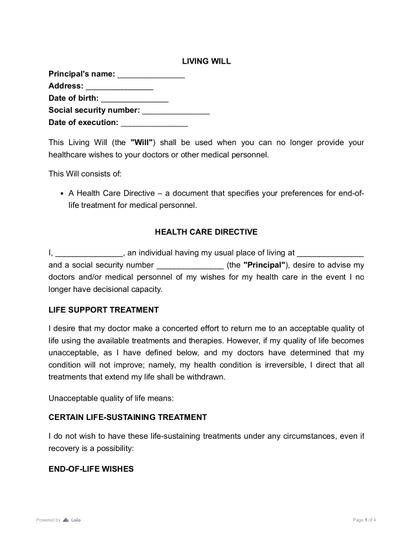
A Living Will presents medical professionals with rules that, however, cannot account for all of the situations that you can face. To protect yourself, you can draft and eSign a Medical Power of Attorney form (though several states restrict electronic signatures for healthcare directives). It will appoint a specific person to be your healthcare agent. They will advocate for your needs and decide on procedures and treatments you need while you’re unable to communicate and make choices on your own.
What is the role of an advance healthcare directive?
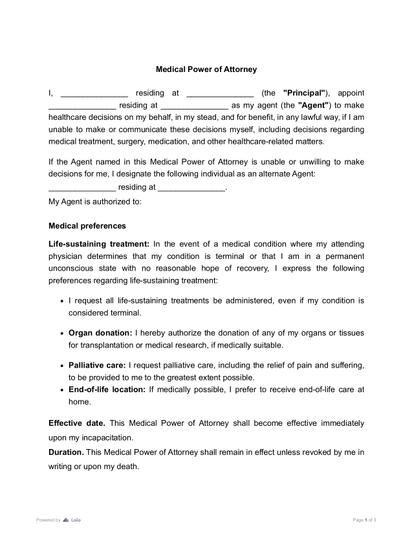
A Living Will can exist as a separate document, but it can also be a part of a larger form — an advance health directive. Rather than relying solely on pre-written rules, as is the case with a Living Will, an advance healthcare directive includes an additional (human) factor in safeguarding your rights. Depending on state law and the form used, an advance healthcare directive may contain the following instructions or work alongside separate medical and donation documents:
- Appointment of a power of attorney. A healthcare power of attorney appoints a specific healthcare decision-maker (often called a healthcare agent) to manage your care.
- Healthcare instructions. This is where the document covers life-sustaining treatment, palliative care and pain management, and end-of-life wishes.
- Do Not Resuscitate order. A DNR is generally a separate medical order completed with a healthcare professional, although some state advance directive forms allow you to record preferences concerning CPR.
- Anatomical donations. Some state forms include a section for anatomical gifts, but organ and tissue donation may instead be documented separately through a donor registry or anatomical gift declaration.
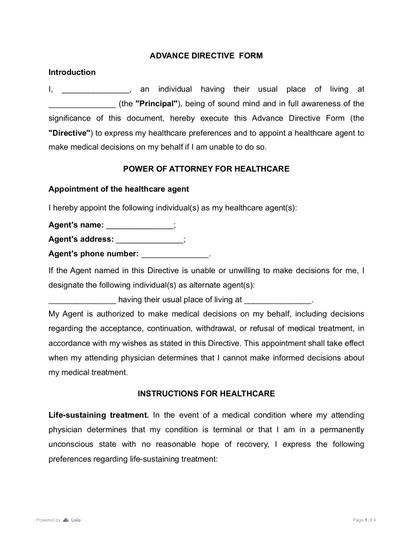
Although a decision not to proceed with measures such as ventilation or resuscitation might appear questionable to some, many older adults often include such a provision in a Living Will, a practice that was particularly common during the COVID pandemic. Some sources suggest that older people with fragile health were frequently changing their Living Wills. It was caused by relatively low efficiency, combined with patients’ belief that refusing ventilators would better preserve their dignity. While this wasn’t the case for everyone, this trend in the recent past helps explain why these decisions were made.
Last Will vs. Living Will: What Is a Last Will and Testament?
A Last Will and Testament is a document that distributes your property after death. It’s legally binding and explains in detail how a person wants their estate to be managed. Writing and signing such a form ensures that an individual’s physical assets, financial wealth, and sentimental belongings are passed down as they wish rather than being left to chance or state intervention.
Probate court and your last will
As a rule, people who didn’t have a Last Will allow the state to handle their property. Probate court will step in and distribute your estate according to intestacy laws. Many individuals would consider it unfair, especially if their relationships weren’t all equally close. Moreover, intestate laws aren’t typically open to giving property to people not directly related to the deceased. In most states, unmarried partners, step-children, close friends, or long-term companions will receive absolutely nothing, regardless of what you promised them during your lifetime. That’s why you have to be ready to change your will if you want those you love to inherit your property.
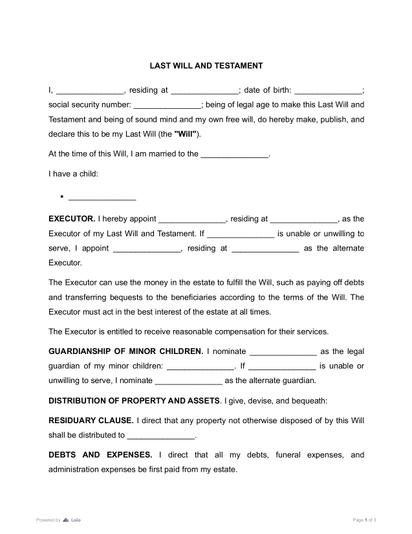
You can begin by drafting your Last Will and Testament and edit it in a PDF form as you decide on the following:
- Your executor. This document has an executor, usually a trusted person such as a partner, friend, or family member, to execute the last will. It’s the executor who will be responsible for paying final debts and distributing the property. Plus, they will manage and finalize all of your affairs.
- Your beneficiaries. Beneficiaries are people or organizations that will receive a portion of your estate. When deciding on beneficiaries, you must also specify how much of your estate each beneficiary receives.
- Guardians for minor children. This is probably the most important part of the document for any parent. It allows you to decide who will care for your children.
- Specific assets. If there are any specific items that you want someone special to inherit, make sure to include that here. For example, if you want a particular family member to get a special book, jewelry item, or something else, this must be clearly included in your last will and testament.
Difference Between a Living Will and a Last Will
A Living Will and a Last Will differ entirely in how and when they are implemented.
- Activation factor. A Living Will only takes effect while you are alive but physically or mentally incapacitated, and if the doctor certifies that you are in an irreversible state, such as a terminal condition. Its main purpose is to document the medical treatment you want. Organ and tissue donation is often documented separately, although some state forms allow anatomical-gift instructions to be included in a broader advance directive. The moment you pass away, a living will becomes void. On the other hand, a last will and testament does nothing while you are alive; it only activates upon your legal death.
- Subject of the document. The two are concerned with entirely different focus areas: a Living Will handles your bodily autonomy and medical choices, and a Last Will deals with your material legacy.
- Court involvement. A Last Will requires probate court involvement in most cases. Typically, a Living Will operates in the hospital setting and between your doctors and your appointed healthcare proxy — taking it to court isn’t a requirement for its execution. The Living Will only needs a court if a legal conflict occurs.
Difference Between a Last Will and a Living Will: Comparison

Standard Will vs. Living Will: Using Them Together
Your best strategy is to use a Last Will and a Living Will together. They can present a synchronized legal shield and cover the two most critical vulnerabilities of your adult life.

Long-term intensive care, mechanical life support, and extended vegetative state management are among the most expensive scenarios in modern medicine, especially so in the U.S. The high cost of assisted living or long-term supportive care remains an additional burden when choosing treatment options.
Nonetheless, even having a healthcare agent doesn’t always protect individuals from costly outcomes, because the patient’s survival is the ultimate goal. To illustrate, long-term use of ventilators, even for people with relatively stable health conditions, can present severe challenges. It can cost as much as half a million dollars to simply sustain a person on a ventilator for years.
Make Sure Your Estate Planning Documents Work Together
A Last Will and a Living Will serve different purposes, but they should still reflect one consistent plan. Your Living Will communicates your healthcare wishes if you cannot make medical decisions yourself, while your Last Will explains how your property and other affairs should be handled after your death.
When preparing these documents, think about the people you appoint to carry out your wishes. Make sure they understand their respective responsibilities, know where to find the documents and other essential information, and have an opportunity to ask questions in advance. Keeping your instructions clear and your documents up to date can reduce uncertainty for the people who may eventually need to act on your behalf.
Ultimately, you do not have to choose between a Last Will and a Living Will. Because they address different stages and decisions, having both can provide a more complete plan for protecting your wishes during your lifetime and after your death.
More guides
September 15
The Difference Between First, Second, and Third-Degree Murders
August 31
4 min read
Living Will vs Power of Attorney: Understand What You Need

September 1
7 min read
How to Provide Proof of Employment: Documents and Steps

September 13
11 min read
How to Hire a Nanny in 2026: The Full Legal Process Explained

July 24
5 min read
Do You Need a Counselor Recommendation Letter for College?

July 21
7 min read
Common App Document Requirements: Complete Checklist

One home for your
agreements
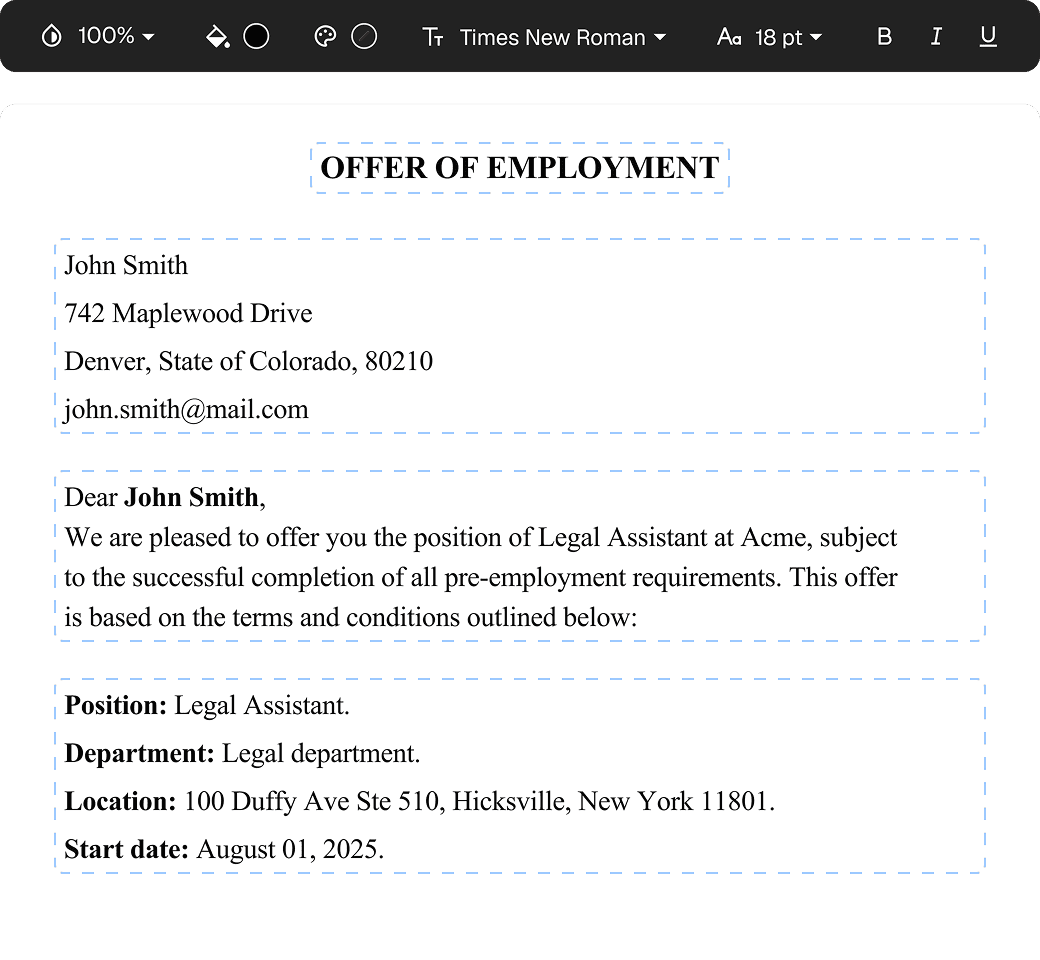
Edit PDFs seamlessly
Tweak agreements before signing or sending for signatures. Update details, add or remove clauses, adjust formatting, and redline changes instantly.
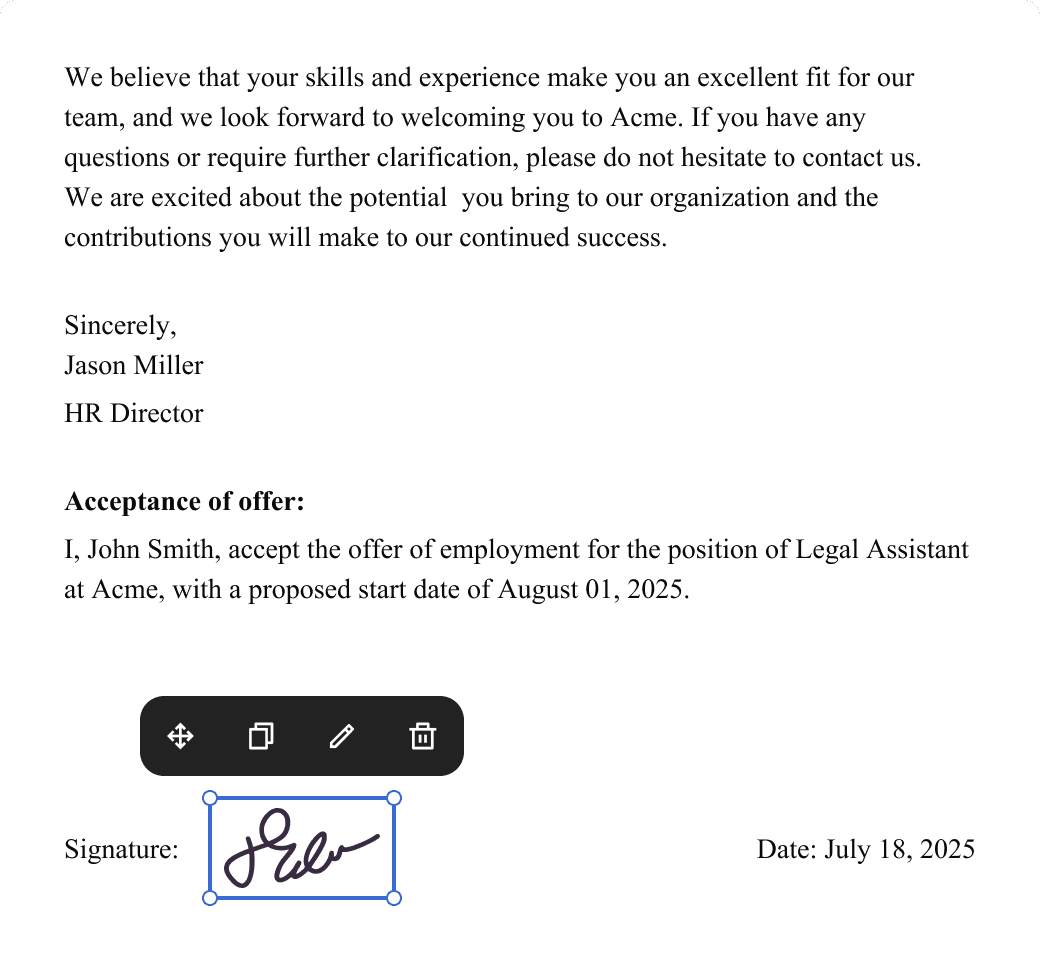
eSign legally and securely
Sign documents and collect legally binding signatures. Invite up to ten people to sign in any order, track the progress, and send reminders.
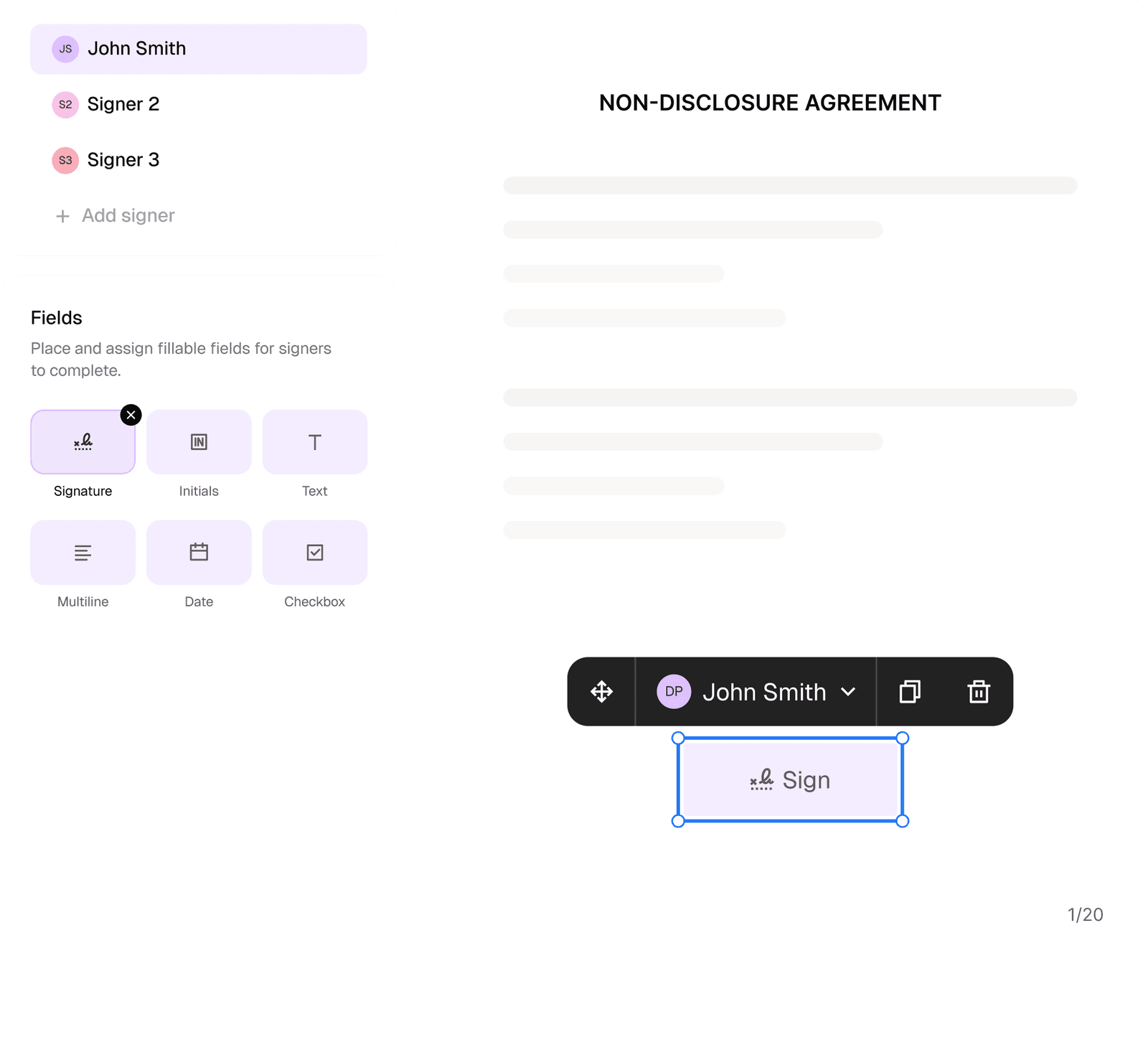
Request legally binding signatures
Invite up to ten people to sign your document in any order. Get a finalized, audit-ready copy without chasing signatures.
Skip the drafting.
Choose from 2,500+ templates
Browse templatesChoose a template
Fill in details

Sign and download