Updated August 31, 2026
4 min read
Living Will vs Power of Attorney: Understand What You Need

Living Will vs Power of Attorney: Understand What You Need
Content
It’s rarely appealing to consider how we want our treatment to proceed if we’re ever unable to decide for ourselves. And yet, expressing your wishes on the right form ensures that, if a moment comes, your choices are legally protected and your family isn’t left guessing. You probably hear these terms often: A Living Will and a Medical Power of Attorney. Do you need both of them, or just one, and do they have any hierarchy? This article explains the difference between a living will and a power of attorney, what happens if you use them together, and how they work in real life.
What Is a Living Will?
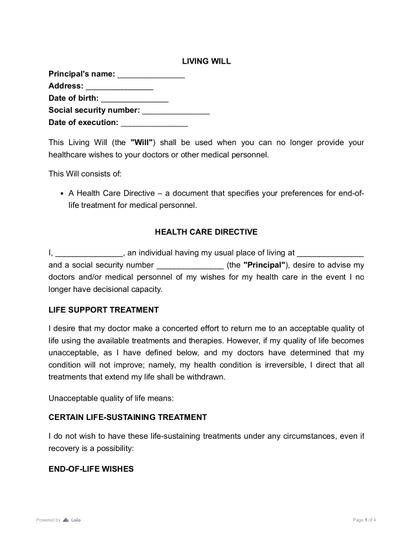
A living will states your medical treatment preferences. It is an advance directive that outlines your choices of how you want to be medically treated if you cannot communicate for yourself (e.g., long-term unconsciousness, etc). It guides your healthcare providers through high-stakes medical decisions and in specific medical conditions, such as whether to proceed with life-sustaining treatment, while respecting your personal autonomy and right to decide for yourself. A medical professional must act in accordance with the living will, provided they are aware of its existence.
DNR (Do Not Resuscitate). This order instructs medical staff not to perform CPR or advanced cardiac life support if your heart stops or you stop breathing. To many doctors and people considering this in their living will, it is a question of quality of life.
DNI (Do Not Intubate). This directive states that you do not want to be placed on a mechanical ventilator or breathing tube if you experience respiratory failure. Individuals who have chosen DNI tend to do so because of living with terminal and chronic illnesses or avoiding long-term dependence.
POLST (Physician Orders for Life-Sustaining Treatment). A living will provides your general preferences, but POLST turns all those wishes into actionable medical orders signed by your doctor. It is printed on highly visible paper and sticks directly to your medical file so emergency responders can act on it immediately. Organizations such as the National POLST Collaborative are invested in standardizing this form and processes.
What Is a Power of Attorney?
A Power of Attorney is a document that authorizes a trusted person to make decisions for you in real time. A Medical Power of Attorney establishes a new legal relationship and appoints your healthcare agent. You do not lose your right to make decisions when you sign a POA. This document just allows your agent to act in your interests when you’re not there to make these decisions, e.g., while you’re abroad or undergoing surgery.
Types of a Power of Attorney
There are different types of Power of Attorney that give your agent varying levels of authority based on what you need.
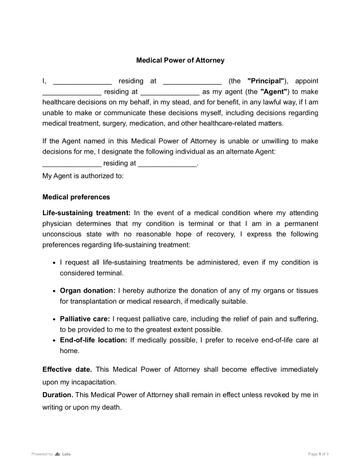
Medical Power of Attorney (MPOA). Most relevant to this article, this document gives your agent the specific legal authority to make healthcare decisions for you if you become mentally or physically incapacitated. Your agent can choose doctors, approve surgeries, and select different medical facilities based on your preferences.
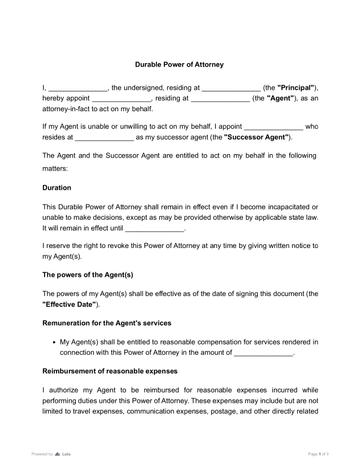
Durable Power of Attorney. A Durable POA that is formalized with a Durable Power of Attorney Form contains specific language stating that the agent’s authority remains active even if you lose capacity. This POA format is designed to ensure that a person’s financial and medical matters can be handled without the potential disruptions.
Special Power of Attorney. This POA type restricts your agent’s power to a single, specific task or a strict timeframe. For instance, you can authorize someone to sign a real estate deal on your behalf while you’re traveling and can’t be present — the power expires the moment the action is done.
Power of Attorney for a Child. This POA allows another trusted adult to handle parental responsibilities and decisions in a child’s best interests. Parents and caregivers who travel a lot or work long hours may give the POA to a nanny or another family member while they are away or can’t take care of a child for any other reason.
- Medical Power of Attorney (MPOA)
 4604 downloads
 - Durable Power of Attorney (DPA)
 4920 downloads
Power of Attorney vs. Living Will: Key Differences
Do you need to get a Living Will or a Medical Power of Attorney? These two differ in scope, timing, and the authority you give to the other person.

Living Will vs. POA: Scope of authority
A Living Will is far more limited. It is used in end-of-life choices and/or severe medical conditions. However, it isn’t used to manage routine healthcare choices and decisions. It can be used to enforce after-life decisions, such as organ donation, even against your family’s wishes, or refuse treatment.
A Living Will needs a signature — you can use an eSign tool to make it smoother. However, please check your local state regulations that you can use an electronic signature for a Living Will.
An MPOA is much more flexible and grants your agent the right to decide a lot of factors related to your health. Your agent can choose which hospital you stay in, access your medical records, and hire or fire specific doctors.
When they take effect
Both documents have entirely different triggers that put them in action.
Usually, a living will activates when you are terminally ill, permanently unconscious, or in a persistent vegetative state. Most states require one or two physicians to certify that you have such a condition, but it varies from state to state — make sure to check with your local laws.
In contrast, a medical power of attorney can activate the moment your doctor determines you are temporarily unable to make your own choices. Once you wake up and regain capacity, your agent’s authority instantly pauses.
Although you can change both documents, it takes time. Once you want to make changes to your living will or a medical power of attorney form, first edit it in PDF to have an updated draft, then:
- Revoke the old one
- Sign the new document and approve it legally
- Distribute the copies when needed.
Real-World Scenarios: Comparison

When discussing legal procedures, you may be dealing with a lot of complex paperwork. Using an AI contract reviewer helps you understand things more easily and in a far shorter time.
Medical Power of Attorney vs. Living Will: How Do They Work Together?
Although you can use just one of these documents, they can work together and provide you with the strongest protection.
When the agent executes the written wish
While doctors are legally obliged to follow your living will, medical situations are rarely that black-and-white. If your living will states that a person doesn’t want “unreasonable life support,” doctors will still need to decide what “unreasonable” means. In this case, a person with a MPOA can step in to interpret a living will and advocate for the patient’s comfort.
In 1990, 26-year-old Terri Schiavo suffered sudden cardiac arrest that left her in a persistent vegetative state. Her husband Michael Schiavo was given guardianship. After several years of treatment that was ultimately considered futile, Michael appealed to remove the feeding tube, petitioning his request to the Sixth Judicial Circuit Court, Pinellas County. Terri’s parents opposed this decision. The legal battle between the two sides lasted for 7 years.
This historic case shows why not having any documents (or having one too vague to interpret) leaves your care vulnerable to outside influence. A living will would have provided clear, written proof of Terri’s personal choices, while the MPOA would have designated an agent to act on her behalf — this way, the parents and husband wouldn’t have been engaged in such a conflict.
Imagined scenario
Let’s try a hypothetical case. Imagine you are injured in a severe car accident and experience temporary brain trauma. Your living will might state that you don’t want doctors to put you on permanent life-support machines if your condition is irreversible. But because your condition might improve with short-term treatment, doctors aren’t sure how to act.
If you have an MPOA, your agent can speak with the medical team, look at the prognosis, and make a decision. It’s an adaptation that considers initial expectations and accounts for new variables. By combining a living will and an MPOA, you have double protection that will ensure your dignity and life are respected.
Living Will vs. Health Care Power of Attorney: Can they conflict?
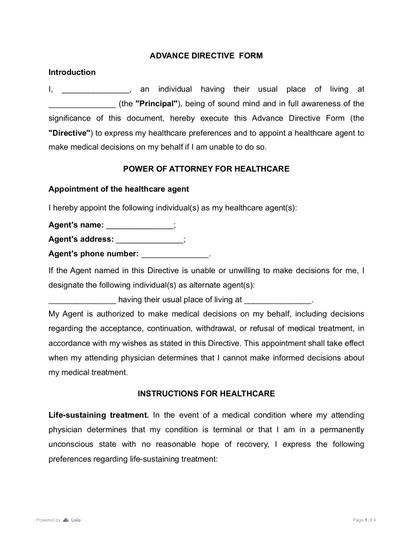
Situations in which a Living Will and an MPOA conflict do happen, though they are relatively rare. Typically, because they activate in rather different medical situations and points, they don’t contradict each other. But if such a situation occurs, every state has its own regulations (or some do not regulate that at all). To simplify this process, many states allow you to combine both instruments into an Advance Directive, which is considered with all decisions regarding your treatment and end-of-life care. An advance healthcare directive may combine living will and medical power of attorney. After consulting your state laws, you can use this form to ensure everything is in order.
Living Will vs. Medical Power of Attorney: Pros and Cons
In the end, both a Living Will and an MPOA have their pros and cons, and they are applicable in entirely different conditions.
A Living Will
- Total control over your decisions, with no one to override them
- Reduction of the family’s burden in complicated decisions
- Prevention of unwanted medical interventions.
- Limited by a set of potential hypotheticals
- Vague interpretations
- Only comes into motion under specific and strict circumstances.
A Medical Power of Attorney
- Adaptation to the situation regardless of its unpredictability
- Covering different types of decisions, not just emergencies
- A human advocate who can argue in your interests.
- High emotional pressure on the agent
- Potential for family conflict when a decision is controversial
- Risk of human error or reluctance.
More guides
September 15
The Difference Between First, Second, and Third-Degree Murders
September 4
Living Will vs Last Will: What’s the Difference?

September 13
11 min read
How to Hire a Nanny in 2026: The Full Legal Process Explained

July 24
5 min read
Do You Need a Counselor Recommendation Letter for College?

July 21
7 min read
Common App Document Requirements: Complete Checklist

July 22
6 min read
How to Get Strong Letters of Recommendation for College

One home for your
agreements
Edit PDFs seamlessly
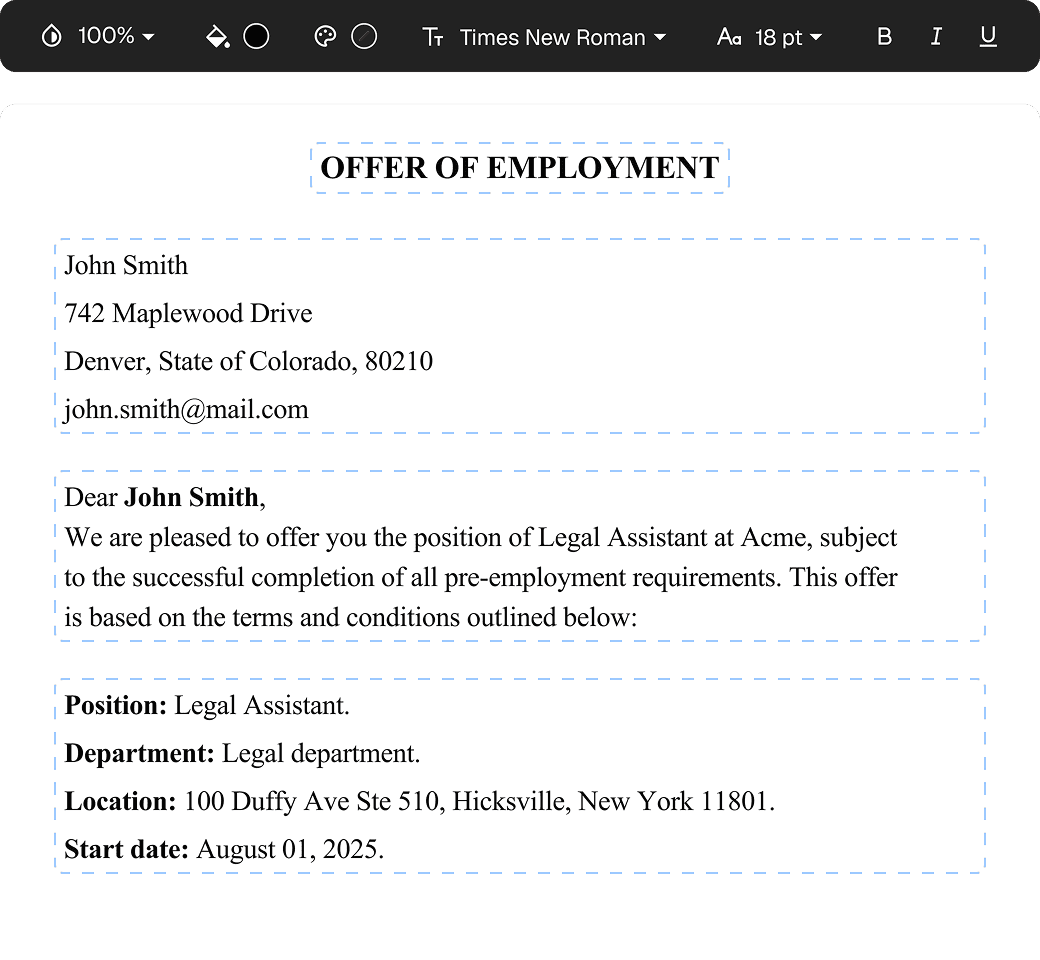
Tweak agreements before signing or sending for signatures. Update details, add or remove clauses, adjust formatting, and redline changes instantly.
eSign legally and securely
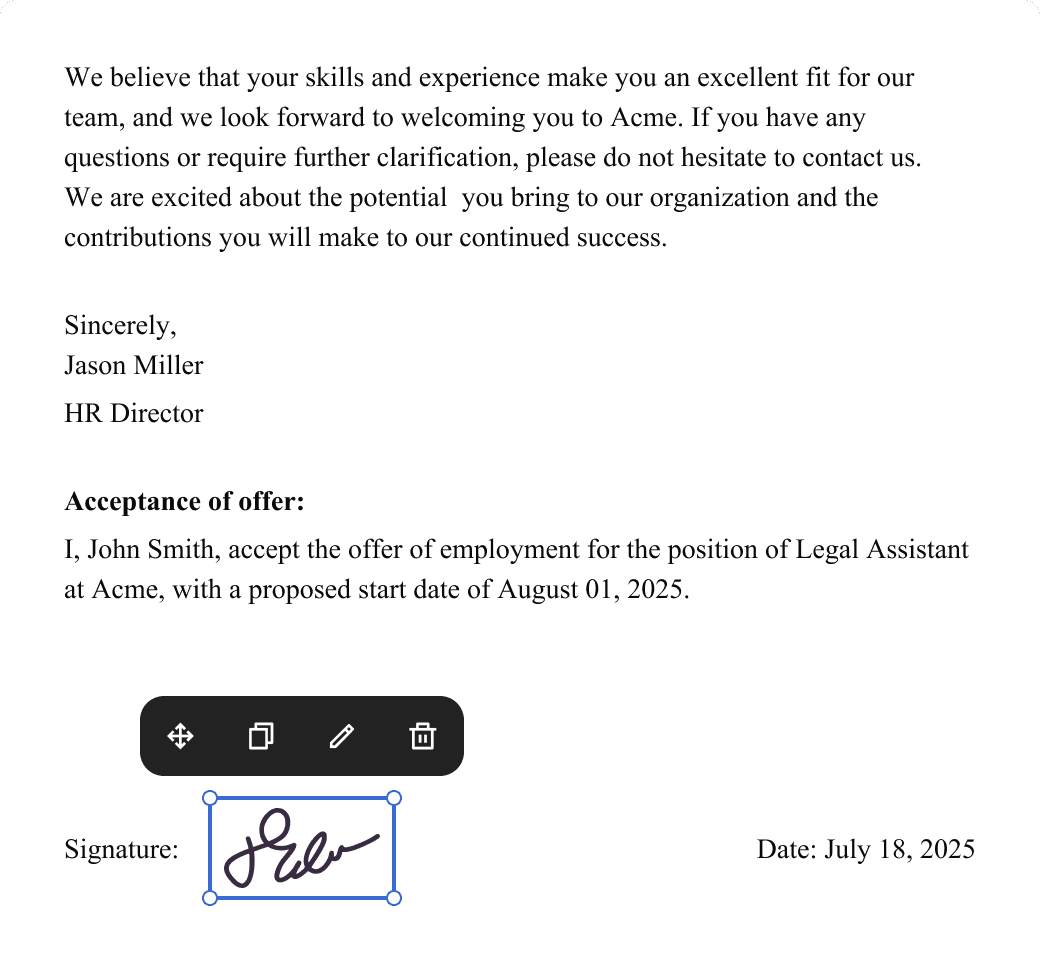
Sign documents and collect legally binding signatures. Invite up to ten people to sign in any order, track the progress, and send reminders.
Request legally binding signatures
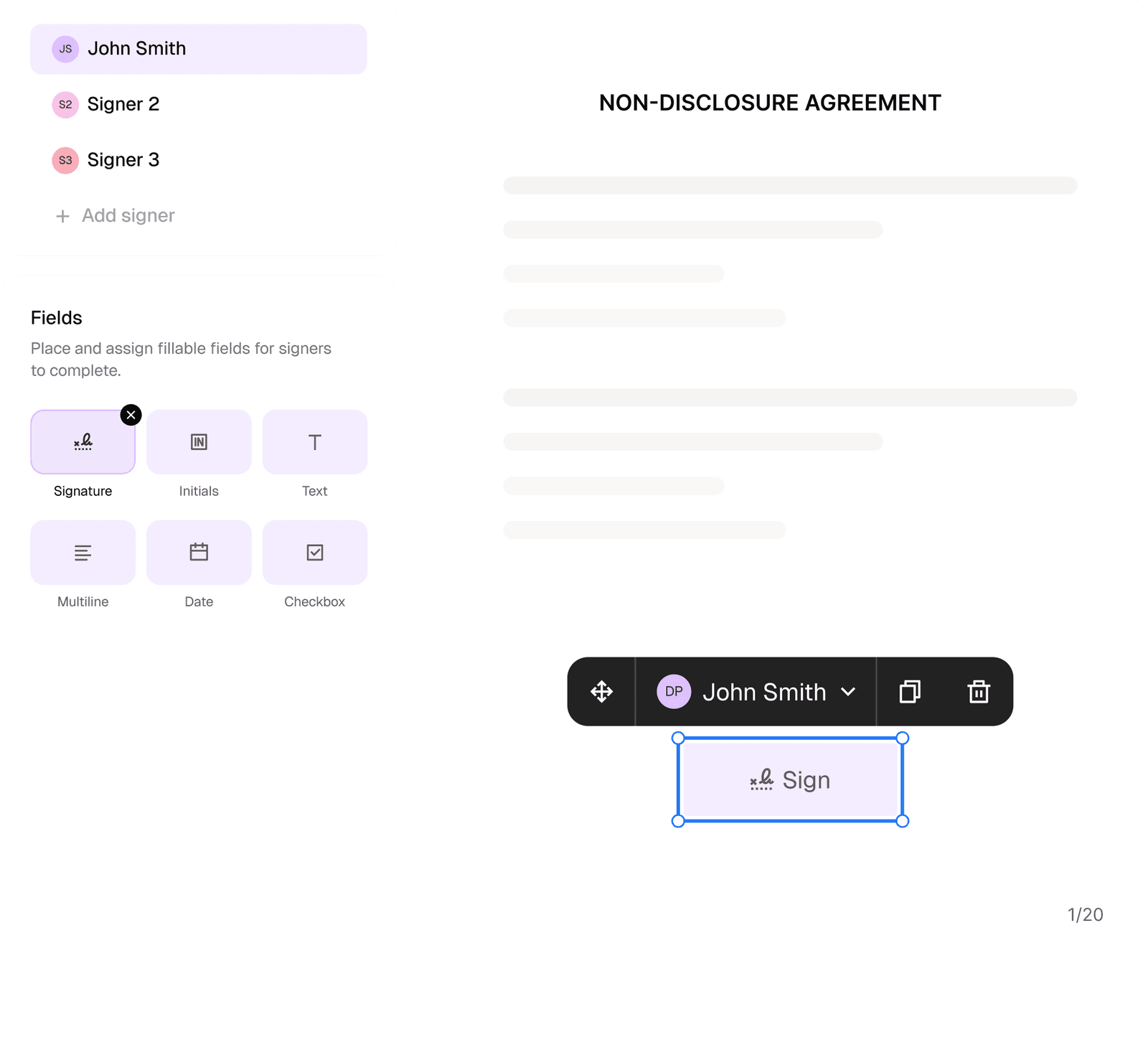
Invite up to ten people to sign your document in any order. Get a finalized, audit-ready copy without chasing signatures.
Skip the drafting.
Choose from 2,500+ templates
Browse templatesChoose a template
Fill in details

Sign and download