Free template
Free Contract Renewal Agreement Template

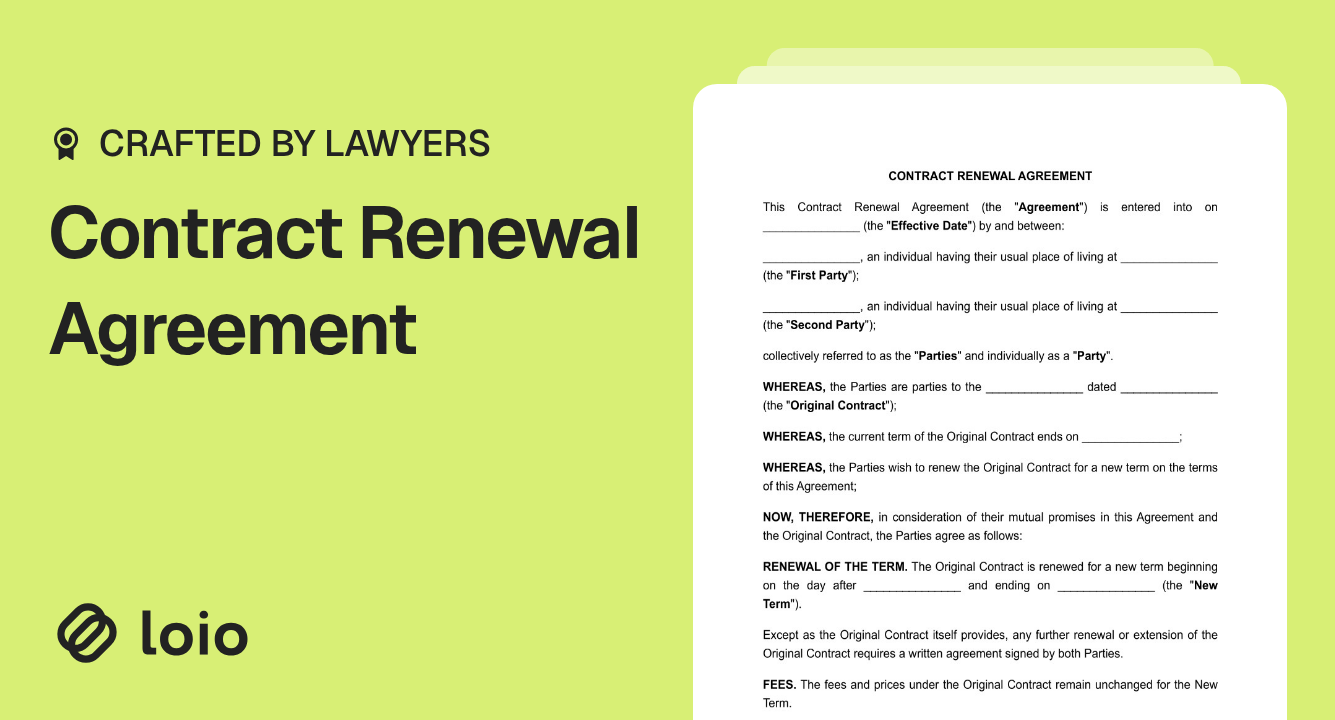
A contract renewal agreement is a short document that gives an existing contract a new term. The parties keep working under the same contract, on the same terms and fees, for a new period with a new end date. It is used when a contract that works well – for example, a service arrangement, a supply deal, a consulting engagement, or a maintenance contract – is about to run out.
Either party can prepare the renewal – most often, it is the side that wants to continue, usually the provider. Both parties sign the filled-out contract renewal template, ideally before the term of the original contract ends, so there is no gap in which nobody is sure which terms apply.
Is a Contract Renewal Agreement the Right Document?
Copy section linkA renewal agreement does one thing: it adds a new term to the original contract and keeps everything else, including the fees. It fits when both parties want the same deal, but longer. If anything besides the dates changes – a new rate, added services, or a different payment schedule – the renewal alone does not cover it.
A common mistake is to treat the renewal as the moment to fix the price too. A price or scope change goes into a contract amendment signed together with the renewal agreement, or into a new contract if most terms change. Here are a few examples to demonstrate what document is applicable and when:
| Situation | Document to use |
|---|---|
| A cleaning company’s one-year contract with an office ends on June 30, and both sides want to continue on the same terms. | Contract renewal agreement |
| An IT support contract is renewed, but the hourly rate goes up by 5%. | Contract renewal agreement + contract amendment for the new rate |
| The original contract requires the landlord’s consent for any renewal, or a guarantor’s guarantee covers only the original term. | Contract renewal agreement + written consent of that third party |
| The client’s business has been sold, and the buyer will continue the contract. | Assignment or novation agreement |
| The contract has already been terminated, or one side gave notice that it won’t renew. | A new contract, negotiated from the start |
Many contracts already renew themselves or give one party an option to renew by sending a notice. In that case, a signed renewal agreement is still useful: it confirms the new term in writing, so neither side can later argue about whether the renewal happened. When the parties only need more time to finish the current work, a contract extension agreement may fit better.
What to Check in the Original Contract First
Copy section linkBefore filling in the contract renewal form, the person preparing it should read the original contract for four things:
Exact title, date, and amendments. If the contract has been amended, the renewal refers to it “as amended,” so nobody renews a version that no longer exists.
Renewal clause and notice deadlines. The contract may renew automatically, give one side the right to renew by a certain date, or simply end. In some states, an automatic renewal clause cannot be enforced against the customer unless the provider sends a reminder.
In New York, for example, contracts for service, maintenance, or repair with a renewal term longer than one month need a written reminder 15 to 30 days before the customer’s deadline to cancel. Wisconsin has similar rules for business service contracts and equipment leases.
Price rules. If the original contract has a built-in price increase, such as a yearly percentage or an inflation adjustment, a renewal that keeps “fees unchanged” may be read as freezing prices at the current level. A provider who expects the scheduled increase agrees on it with the other party in an amendment signed with the renewal.
Parties and third parties. The first party and second party must match the parties in the original contract exactly, by legal names. If an insurance certificate or permit required by the contract expires with the current term, it needs renewal too.
A landscaping contract says prices go up 3% every year. The renewal agreement says the fees stay unchanged. The client can argue that the 3% increase no longer applies during the new term, because the renewal agreement usually takes priority over the original contract when they conflict. To keep the increase, the landscaper adds an amendment that confirms it.
Getting the Dates Right
Copy section linkA contract renewal uses three different dates:
The end of the current term. It is copied from the original contract, or from the last amendment or renewal, not from memory or an invoice.
The new term. It starts on the day after the current term ends and runs to the end date the parties choose.
The effective date. It is the day the parties actually sign the renewal.
A one-day mismatch between the first two dates can leave a day with no contract or two terms that overlap.
A maintenance contract ends on June 30. The parties renew it for one year and sign the renewal on June 15. The new term runs from July 1 to June 30 of the next year, and the effective date is June 15.
It is best to sign the contract renewal agreement template before the current term ends. After that date, there is no running contract to renew. If both sides keep working, a court may decide they have an implied contract on the old terms, but that depends on the facts, and nobody should count on it. If the term has already ended and the parties keep working, the new term can still start on the day after the old end date. The effective date then shows the real signing date. It should never be backdated.
The length of the new term depends on how long the current prices make sense for both sides, the budget cycle, and when the parties want to review the terms again.
What Carries Into the New Term
Copy section linkDuring the new term, the original contract stays in force exactly as it is, including its termination rules. Renewing does not automatically lock either side in until the new end date. If the original contract lets a party end it early with notice, that right still works during the new term.
Every clause measured from “the end of the term” also moves with the renewal, because references to the term now include the new term. These may include:
Confidentiality that lasts for a set period after the term;
A ban on hiring the other side’s employees;
A deadline to return materials or data;
A warranty tied to the term.
A consulting contract says the consultant keeps client information confidential for two years after the term ends. The contract ends in December 2026, and the parties renew it for one more year. Confidentiality now lasts until December 2029, not 2028.
Governing law and dispute resolution stay the same as in the original contract. If the parties agree on any other terms during the renewal, these terms become legally binding only if they are documented in a written amendment.
After the Renewal Is Signed
Copy section linkThe signed renewal is kept together with the original contract and any amendments, because together they make up the full contract. After signing, the parties update everything that depends on the end date:
Billing and purchase order references;
Insurance certificates and licenses that must stay valid while the contract runs;
The records of any third party whose consent was needed.
If the original contract renews automatically or requires notice of non-renewal, that notice window now falls before the end of the new term.
How Loio Helps With Contract Renewals
Copy section linkThe key information for a renewal is in the original contract: the end date, the renewal and notice rules, price changes, and deadlines tied to the term. Loio helps find these points quickly and get the renewal signed before the term ends:
Check the original contract.
Before filling in the renewal, upload the original contract to Loio’s AI contract review. It summarizes the document and identifies the timelines, key clauses, and payment terms – everything you need for a renewal agreement. No need to spend hours scanning a long contract.
Fill in and send.
Use the renewal contract template available on Loio Templates. Fill in the parties, the title and date of the original contract, and the new date, and then share the form with the other party and request their electronic signature.
Agree on changes.
If the other party proposes changes, they appear as redlines in the same document. Make corrections and prepare the final draft.
Track and remind.
Loio shows whether the other party has signed and sends reminders in one click, which helps you close the renewal before the current term ends.
Keep the record.
The signed renewal is saved in the account with a time-stamped record of who signed and when. You can download a PDF, print it, or share an electronic version of the document by email – anytime.
What is a renewal agreement?
A renewal agreement is a document in which the parties agree to continue an existing contract for a new term. The original contract stays in force on the same terms, and only the end date changes.
What do you call a contract that automatically renews?
It is called an auto-renewal or evergreen contract. Its renewal clause extends the contract for a new term unless one party gives notice by a set deadline. Some states require the provider to send the customer a reminder before that deadline.
What happens when your contract is not renewed?
The contract ends on the last day of its current term. Obligations meant to continue after the end, such as confidentiality or payment for work already done, still apply. If the parties keep working together without a renewal, a dispute about which terms apply can arise, so it is safer to sign a renewal agreement or a new contract.
Related documents
Also read