Free template
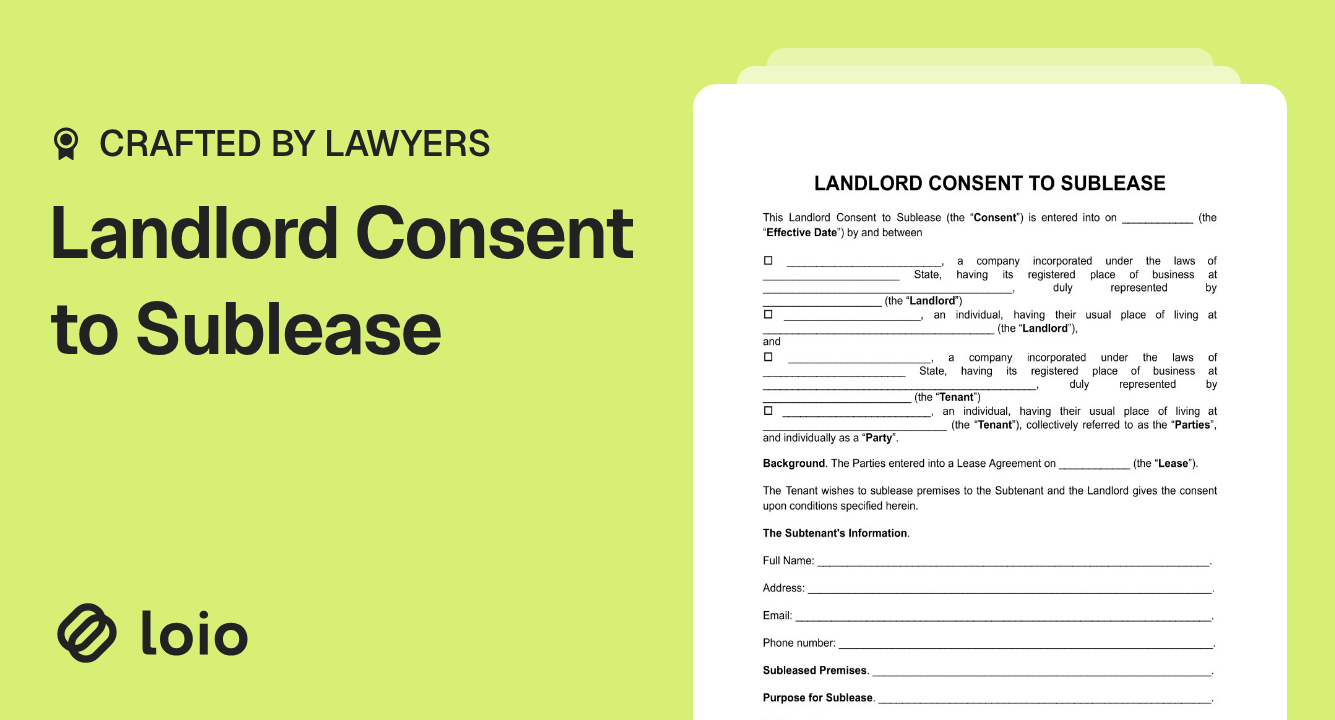
Free Landlord Consent to Sublease Template

Template Description
Copy section link
Understanding the intricacies of property leasing can be difficult. A crucial aspect of this process is when a tenant wishes to sublease their rented property to a third party. Often, this arrangement requires a landlord's consent to ensure a smooth transition and protect all parties involved. This is where a landlord's consent to sublease comes to the fore. Its role echoes the pivotal task of transferring rights, obligations, and interests from one party to a new one while preserving critical tenets of the original lease.
When to Use a Landlord Consent to Sublease
Copy section linkA landlord's consent to sublease is necessary under a range of circumstances, primarily when a tenant intends to sublet their rented property, either partially or entirely. Scenarios triggering such actions may include the tenant needing to relocate for work or personal reasons or desiring to share rental costs with an additional occupant.
The landlord's consent to sublease serves as an official assurance that the tenant has met their obligations under the initial lease agreement and received the landlord's approval to transfer a portion of their leasing rights to a new party. It is a vital document, ensuring that all commitments are formally recognized and the landlord maintains control over who occupies their property.
Parties
Copy section link-
Sublessor — This refers to the original tenant who entered into a lease contract with the landlord. The sublessor is responsible for complying with the terms of the initial lease agreement. The sublessor seeks to sublet part of or the entire property to the third party or sublessee. They are required to obtain the landlord's consent before proceeding with the sublease, and the terms must align with the existing original lease agreement. Once the landlord consents to the sublease, the sublessor transfers certain rights of the property to the sublessee based on the agreed terms.
-
Sublessee — This entity or individual is the party that accepts the sublease and its terms from the original tenant or sublessor. The sublessee is responsible for adhering to the terms stipulated not only in their sublease agreement but also in the original lease contract between the sublessor and the landlord. The sublessee must respect the terms of these agreements, as any breach could result in termination of their sublease agreement and potential legal repercussions.
-
Landlord — The landlord is the property owner and the initiator of the original lease with the sublessor. As part of the agreement, the landlord holds veto power over the sublease agreement and must issue their formal consent before the sublessor can proceed with the subletting. Once all parties agree on the terms of the sublease, the landlord issues a consent to sublease, effectively permitting the sublessor to pass specific rights and responsibilities to the sublessee.
Key Terms
Copy section link- Original lease: The original contract between the landlord and the primary tenant that outlines the lease's terms, conditions, and expectations.
- Sublease: This is the agreement that transfers rights, responsibilities, and interests from the original tenant to the third-party tenant.
- Consent to sublease: A document signed by the landlord indicating they permit the sublease arrangement and agree to the revised terms of the sublease.
- Term of sublease: This specifies the duration for which the sublease agreement is valid, and the rights of the original tenant are transferred to the new tenant.
- Obligations & Responsibilities: These terms detail what obligations and responsibilities fall on each party under the agreement.
How to Write a Landlord Consent to Sublease
Copy section linkWriting a landlord consent to sublease form must be handled with care and legality, as it involves formalizing the transference of specific rights and responsibilities to new parties. Here are the steps you should follow:
Identification of Parties:
Firstly, clearly state the names and contact information of all parties involved — the landlord, the sublessor, and the sublessee.Property Description:
Provide an accurate description of the leased property. This description should include the property's location and any distinguishing characteristics.Acknowledgment of the Original Lease:
Reference should be made to the original lease agreement between the landlord and the original tenant, including the date it was signed and the duration of the lease.Terms of the Sublease:
Outline the terms to which the sublessee will adhere. These terms should reflect the duration of the sublease, the rental amount, and any relevant details about property maintenance and usage.Consent Statement:
The landlord needs to provide a clear statement, consenting to the sublease arrangement between the sublessor and the sublessee.Signatures:
For the consent to sublease to be valid, it must be signed and dated by all parties involved — the landlord, sublessor, and sublessee.
A carefully crafted landlord consent to sublease letter offers an excellent platform to manage potential risks, ensure a smooth subleasing process, and uphold the properties and rights of all parties involved. The availability of a customizable landlord consent to sublease template at Loio makes it easier for tenants and landlords to create these agreements, reducing the need for complex legal procedures.
Related documents
Also read