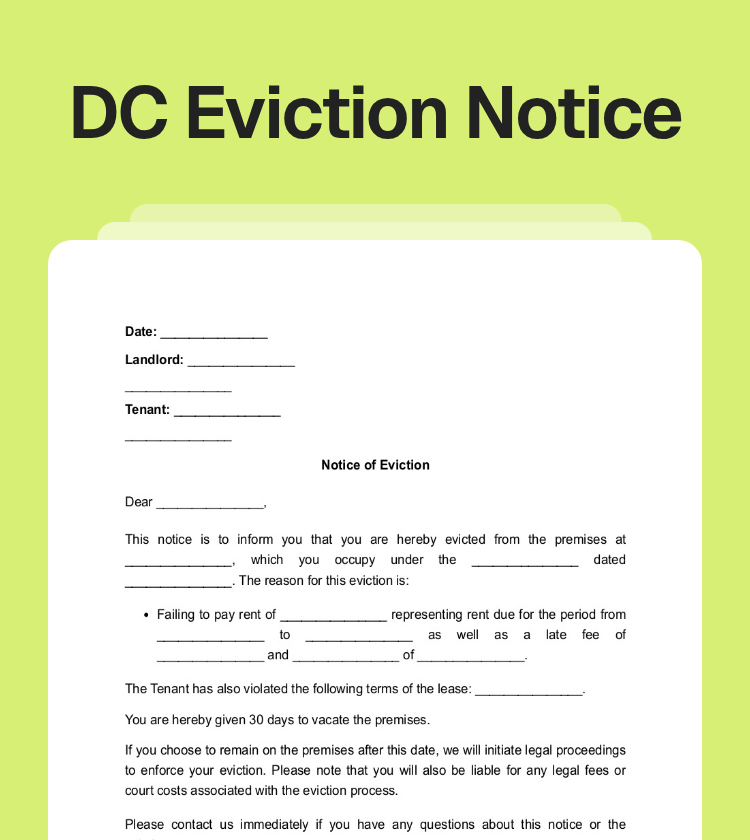
A D.C. Eviction Notice is a landlord’s official notice to a tenant within the District of Columbia ordering them to vacate or remedy a lease violation. It is used to fulfill legal notice requirements before filing for eviction in court.
The eviction process is a critical, though often challenging, aspect of property management. Utilizing an eviction notice DC not only ensures compliance with local laws but also clarifies roles and expectations between landlords and tenants. Here’s how you can navigate the complexities of eviction notices within the District of Columbia.
Property owners and managers may have to send a notice to vacate DC template for various reasons. Understanding these can help avoid unnecessary legal complications:
Missed Rent Payments. If tenants are skipping rent payments, landlords are justified in sending an eviction notice template DC.
Lease Violations. Ignoring the rules set out in the lease agreement can also prompt notice.
Property Misuse. Signs of damage or neglect to the property often necessitate action.
Illegal Activities. When activities that are illegal or against the lease are discovered on the property.
Expired Lease Terms. When the lease term ends without renewal, landlords may need to issue a DC eviction notice form.
Holdover Tenants. If tenants remain on the property after the lease agreement has concluded, an eviction letter DC becomes essential.
To comply with local regulations, use an effective eviction template DC that includes:
Issue Date. Clearly state when the DC notice to vacate form was issued.
Tenant Details. Include the tenant’s full name and address.
Lease Information. Reference the original lease and any relevant terms.
Reason and Rectification. State the reason for eviction and any options for remedying the breach.
Compliance Deadline. Define a clear timeline for the tenant to resolve issues or vacate.
Signature. Ensure the DC eviction letter is signed by the landlord or their representative.
Starting with a well-prepared eviction notice in DC template is crucial; however, should tenants not comply, further action may be needed through legal channels to enforce the eviction.