Schedule D

4.8 (14 reviews)
All states | 22 types
Updated Jan 30, 2025
~ 2 pages
PDF
2.5K downloads
Schedule D Page 1
Preview
Reviewed by Jonathan McGill

Template Description

Copy section link
Schedule D Template

What Is Schedule D?

Copy section link

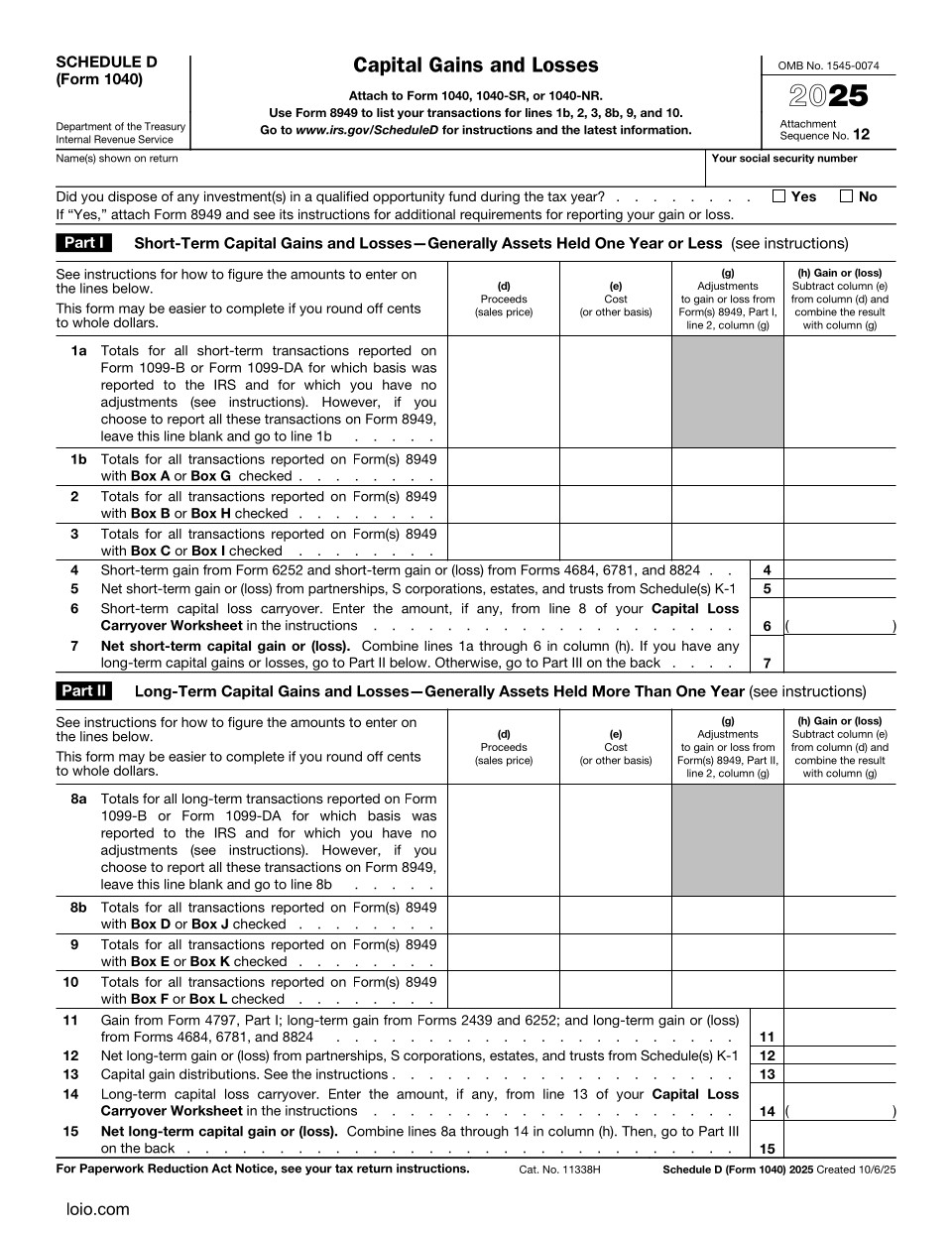
Schedule D (form 1040) reports capital gains and losses from the sale or exchange of certain types of property. This form helps calculate taxable gains or deductible losses, which are then reported on the main form 1040. The IRS requires the 1040 Schedule D to track taxable events involving investments or assets like stocks, bonds, real estate, or other types of property. It also allows taxpayers to take advantage of specialized rules, such as lower tax rates for long-term capital gains.

The deadline to file Schedule D tax form is typically the same as the tax filing deadline for Form 1040 — usually April 15th, unless otherwise extended.

Parties Involved

Copy section link

Several key parties are involved in managing capital gains and losses for the purposes of Schedule D 1040:

  • Taxpayer. The individual filing their tax return who has realized gains or losses from the sale of assets.
  • Broker or Financial Institution. Often provides documentation, such as a 1099-B form, summarizing the proceeds from sales of investments.
  • IRS. The Internal Revenue Service mandates the reporting of capital gains and losses for tax compliance.

To better understand Schedule D (capital gains form), familiarize yourself with the following terms:

1. Capital Asset: Typically, any property you own for investment or personal use, such as stocks, bonds, real estate, or collectibles.

2. Capital Gain: The profit earned when you sell a capital asset for more than its purchase price.

  • Short-Term Gain: Gain from the sale of assets held for one year or less, taxed as ordinary income.
  • Long-Term Gain: Gain from assets held for more than one year, subject to preferential tax rates.

3. Capital Loss: When you sell a capital asset for less than its purchase price. Capital losses can offset gains and, in some cases, reduce taxable income.

4. Adjusted Basis: The cost of the asset, adjusted for any improvements, depreciation, or other relevant factors.

5. Net Capital Gain/Loss: The total of all gains and losses after offsetting gains with losses.

Steps for Filing Schedule D

Copy section link

Filing IRS 1040 Schedule D requires methodical steps to ensure accuracy:

  • Gather Supporting Documents. Collect all relevant investment records, including 1099-B or similar forms detailing proceeds from the sales of capital assets.
  • Enter Gains and Losses. Report all short-term and long-term gains and losses in their respective sections of the form. Use IRS worksheets if necessary to calculate any adjustments.
  • Apply Capital Loss Limitations. Remember that the most you can deduct each year for a net capital loss is $3,000 ($1,500 if you are married and file separately). You can move expenses from one tax year to the next.
  • Transfer Totals to Form 1040. Once federal Schedule D has been completed, transfer the totals to the appropriate line on your form 1040.
  • Retain Records. Keep all related documentation, including tax form Schedule D, for any future inquiries or audits by the IRS.

Common Cases of When Schedule D Is Required

Copy section link

Some common scenarios when Schedule D is necessary include:

  • Offering shares in stocks, bonds, or mutual funds.

  • Putting up for sale real estate (usually not your main home).

  • Receiving distributions from partnership interests, estates, or trusts that involve capital transactions.

  • Reporting a capital gain or loss from the sale of collectibles like artwork or antiques.

Preparing 2025 Schedule D can be complex, especially if you have numerous transactions or special situations, such as inherited property or like-kind exchanges. Tax software, a professional tax advisor, or resources such as Loio can simplify the process. Loio provides easy-to-use form templates to assist with completing tax issues, along with clear resources and guidelines tailored to your needs.

Schedule D Preview