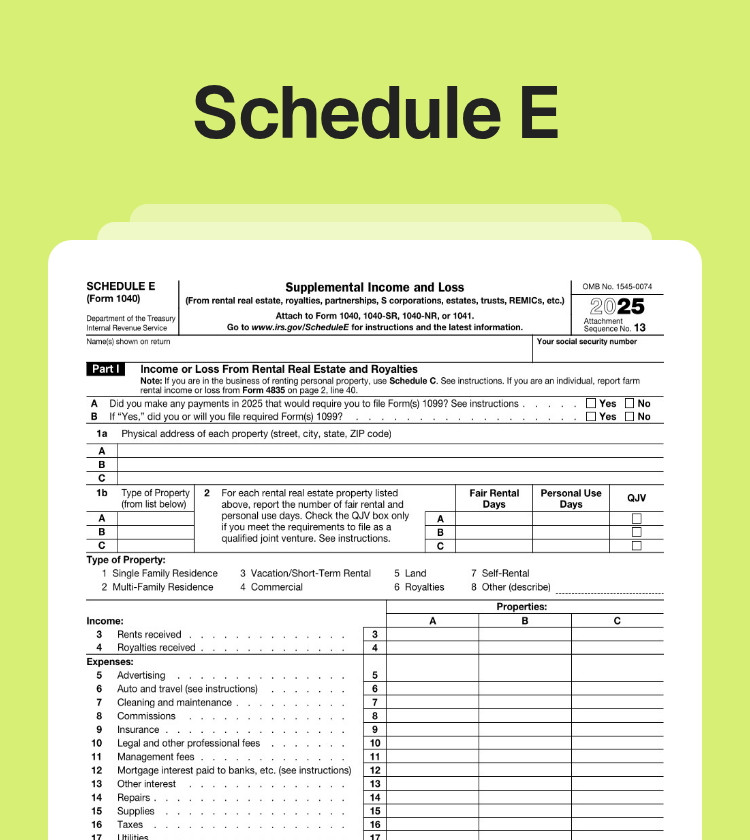
Schedule E is a tax form between a taxpayer and the IRS that reports income or losses from rental properties, partnerships, or trusts. It is used to declare passive income sources for accurate tax calculation.
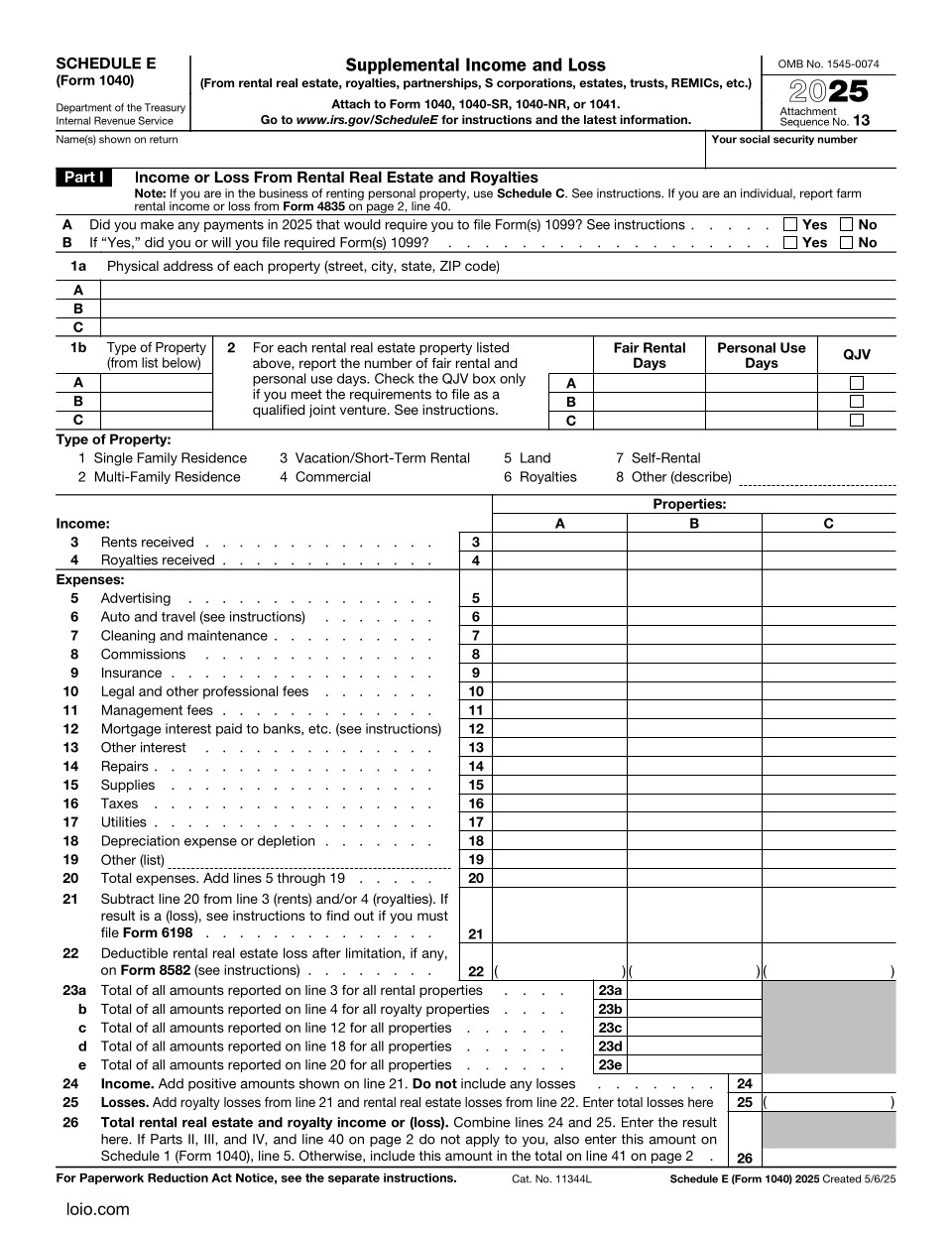
The government provides a form called Schedule E to taxpayers who earn income or incur losses from specific sources beyond regular employment. This form allows individuals to report supplemental income or losses from activities like rental properties, royalties, partnerships, estates, and trusts. Filing IRS Schedule E is essential for accurately calculating taxable income and ensuring compliance with tax regulations.
1040 Schedule E is a tax form used to report income or losses from supplemental sources, such as rental real estate, royalties, partnerships, S corporations, estates, trusts, and residual interests in Real Estate Mortgage Investment Conduits (REMICs). The information reported on Schedule E is transferred to a taxpayer’s main annual tax return (form 1040 or 1040-SR) and directly impacts their overall tax liability.
Several parties may play a role in preparing and completing rental income tax form:
Property owners or income recipients: Provide detailed records of rental income, royalty payments, or distributions from partnerships, estates, and trusts.
Business partners or S corporation shareholders: Contribute financial summaries such as K-1 forms (Partner’s Share of Income, Credits, and Deductions).
Tax professionals: Assist in compiling supplemental income details and ensure proper submission of Schedule E rental income.
Gather supporting documents: Collect records of rental income, property expenses, royalty payments, and financial distributions from partnerships, estates, trusts, or investments.
Download rental property tax form: Access and download the form from the official IRS website or trusted platforms like Loio.
Complete the form: Enter the amounts earned (or lost) in the applicable sections — divided by income type (e.g., rentals, partnerships, royalties). Ensure you include all allowable deductions for expenses, such as property maintenance or business expenses.
Submit by the deadline: File the completed rental income Schedule E along with your annual tax return to the IRS based on the annual filing deadline.