Schedule F

4.9 (22 reviews)
All states | 22 types
Updated Jan 30, 2025
~ 2 pages
PDF
2.6K downloads
Schedule F is a tax document between a farmer and the IRS reporting income and expenses from agricultural operations. It is used to determine farm profitability and claim relevant deductions.
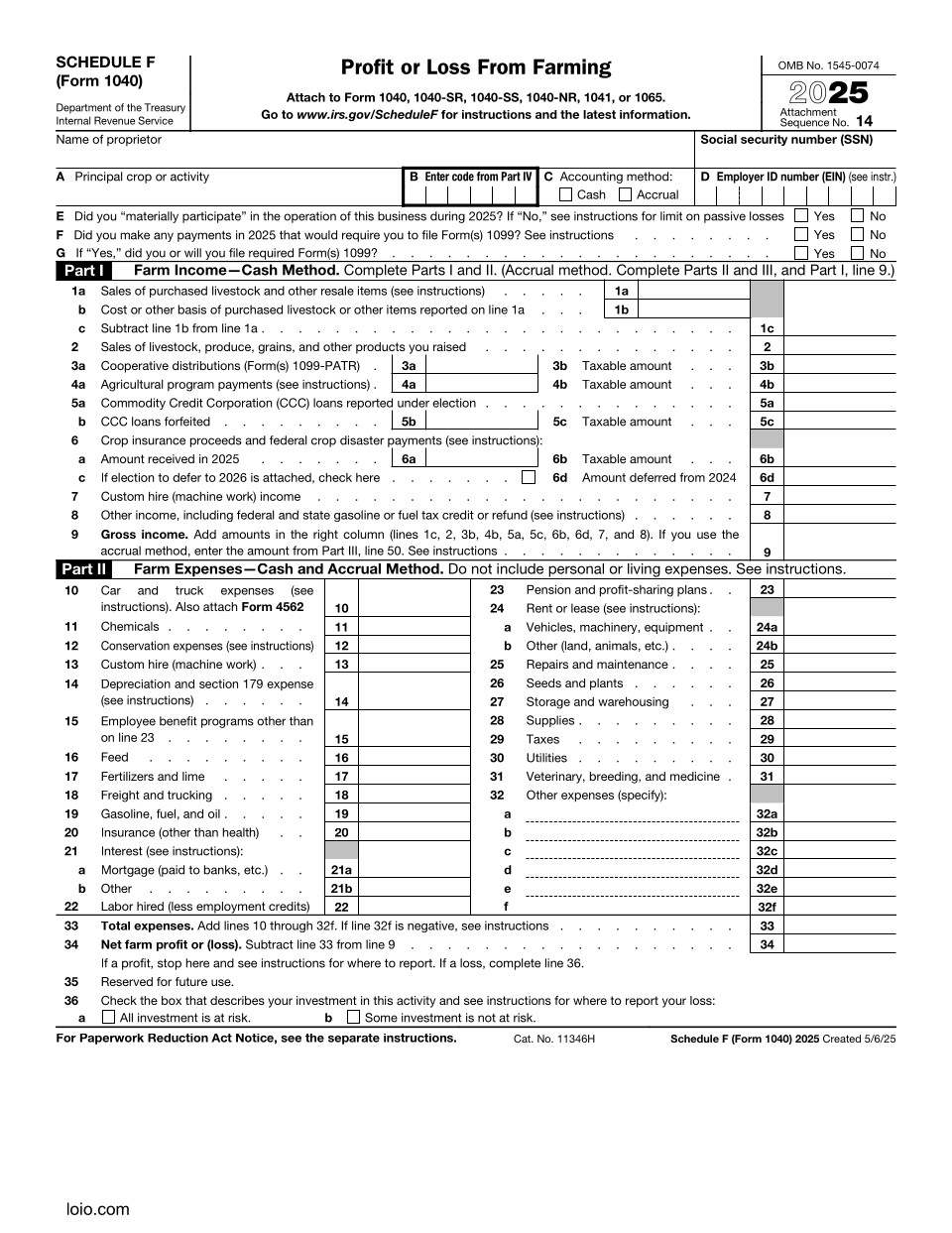
Schedule F Page 1
Preview
Reviewed by Jonathan McGill

Template Description

Copy section link
Schedule F Template

The government provides tax relief and financial benefits to individuals and businesses engaged in farming activities. To facilitate this, certain provisions allow taxpayers to account for their agricultural income and expenses accurately, thereby ensuring correct tax calculations and eligibility for specific deductions. To report this information, taxpayers must use a specialized document designed for agricultural activity.

What Is Schedule F?

Copy section link

IRS Schedule F is a tax form used by farmers and agricultural business operators to report income and expenses related to farming activities. It allows taxpayers to calculate profits or losses from operations like crop production, livestock farming, dairy farming, poultry farming, and more. The information from the Schedule F form is incorporated into a taxpayer’s primary tax return to determine their overall taxable income.

When To Use Schedule F

Copy section link

Farmers and agricultural business owners use Schedule F tax forms if they earn income or incur expenses from farming activities. Typical scenarios where farm tax form is required include:

  • Selling crops, livestock, or other agricultural products.
  • Receiving agricultural program payments or crop insurance payouts.
  • Reporting farming-related deductions, such as for seeds, feed, labor, and equipment.

Parties Involved

Copy section link

Several parties may contribute to the preparation and filing of Schedule F form 1040:

  • Farmers: Provide detailed records of transactions (income and expenses) related to their farming activities.
  • Suppliers and contractors: May offer receipts or invoices for purchases of supplies, equipment, and labor.
  • Tax professionals: Help ensure accurate reporting of farm income and expenses and identify eligible deductions.
  • Gross farm income: The total income earned from all farming activities, including sales of crops, livestock, and farm-related services.
  • Farm expenses: Costs incurred to run farming operations, such as seeds, fertilizer, machinery, labor, and repairs.
  • Depreciation: The reduction in the value of farm assets (like equipment and buildings) that can be claimed as an expense.
  • Agricultural program payments: Government support payments provided to farmers for participating in approved agricultural initiatives.
  • Net farm profit (or loss): The total income after subtracting all eligible farm-related expenses from gross farm income.

How To Create Schedule F Farm Income

Copy section link
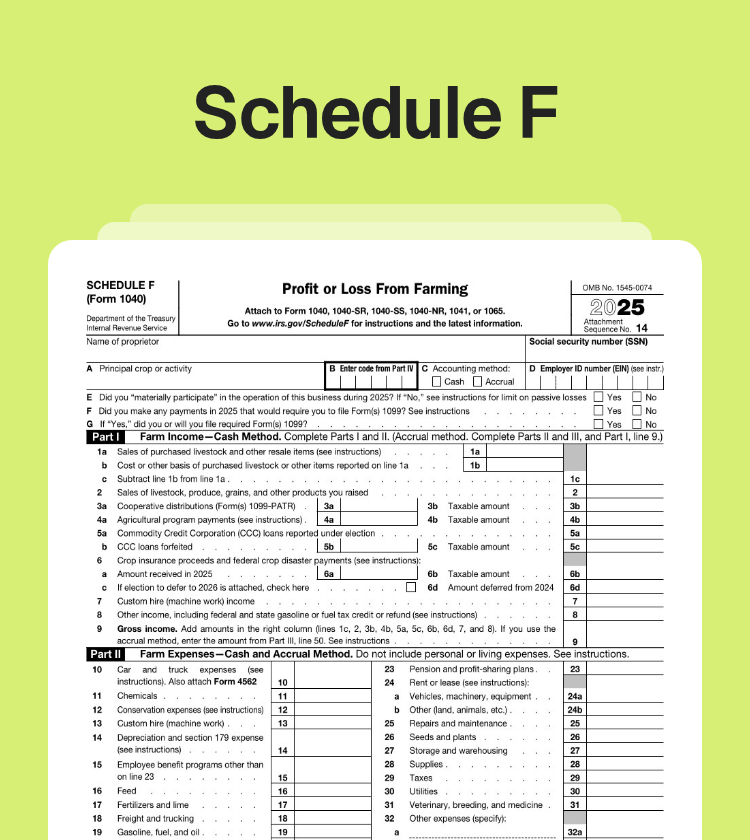
1. Gather records: Collect detailed records of income and expenses related to all relevant farming activities.

  • Examples of income: Crop sales, livestock sales, government payments.
  • Examples of expenses: Equipment purchases, seeds, fertilizer, utilities, and labor costs.

2. Download the 1040F form: Obtain the form from the official IRS website or Loio.

3. Fill out Schedule F: Complete the sections for farm income, expenses, and any improvements or depreciation.

  • Part I: List all farm income, including sales, rents, and payments.
  • Part II: Itemize deductible farm expenses, including labor, feed, insurance, and interest.

4. Calculate total profit or loss: Subtract total farm-related expenses from gross farm income.

5. Submit with your annual return: Attach the completed Schedule F taxes to your IRS form 1040 and file by the tax deadline.

Schedule F Preview