Updated July 26, 2026
9 min read
How to Sell a Car: A Comprehensive Guide
How to Sell a Car: A Comprehensive Guide
Content
Selling your car involves more than just posting a listing and waiting for responses. You need to prepare the vehicle, choose a fair price, communicate with potential buyers, and complete the transfer safely. Whether you're upgrading to a newer model or simply moving on from a car you’ve had for years, the goal is to make the sale smooth, confident, and clear for both sides.
Along the way, you’ll also need some basic documentation to finalize the transfer — including a vehicle bill of sale, which confirms when ownership changes hands. We’ll get to that part later, once the buyer is ready and the deal is set.
Understanding the Basics of Selling Your Car
Whether you're wondering how to sell your car quickly or trying to find the best way to sell your car privately, the first step is understanding what makes a sale legally valid.
Vehicle-transfer requirements vary by state, but a private sale commonly involves:
A properly assigned vehicle title.
Odometer disclosure when required.
Any state-specific title or transfer forms.
A release or notice of transfer when required.
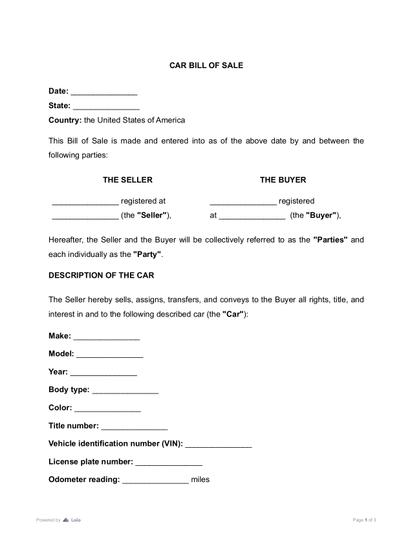
A bill of sale is also useful as a written record of the transaction and may be required by some states, but it should not be treated as a nationwide substitute for the title-transfer documents.
Preparing Your Car for Sale
Buyers often make decisions emotionally — first impressions matter. To get the highest possible price, take time to prepare your vehicle.
Clean and repair what you can
A simple cleaning can increase buyer interest. Fix small cosmetic issues where affordable. If major repairs are needed, decide whether to repair or disclose them honestly and price accordingly.
Gather maintenance records
Service history builds trust. If you have documentation of oil changes, brake work, or tire replacements, show it.
Consider a pre-sale inspection
A certified mechanic’s report builds confidence and helps justify your asking price. If you hire a mechanic to do a pre-sale inspection or detailing, consider documenting the work arrangement with an independent contractor agreement so responsibilities and payment are clearly defined.
Setting a Fair Price
Search for your car’s market value using reliable automotive pricing resources. Compare similar listings near your location.
Be realistic, if you overprice, your car may sit for weeks. If you underprice, you lose money unnecessarily.
Pro Tip: A clean car with a well-written listing can outperform higher-priced competitors with unclear descriptions.
Where to List Your Car
When choosing the best way to sell a car, consider:
- Online marketplaces (Facebook Marketplace, Craigslist, AutoTrader).
- Local classifieds or dealership resale programs.
- Your personal and community network.
Selling privately often gets you the most money, but requires more time and communication.
Writing an Effective Car Listing
Your listing should answer the main questions upfront:
- Make, model, year, and mileage.
- Condition (be honest).
- Recent repairs or upgrades.
- Reason for selling car (if comfortable sharing).
Example listing snippet:
2016 Honda Civic EX, 92K miles. Regular maintenance, no accidents, clean title in hand. New tires were installed in 2023, and the battery was replaced last year. Runs smoothly and gets great gas mileage. Selling due to an upgrade.
Clear descriptions reduce repetitive questions and help serious buyers respond faster.
Meeting Potential Buyers Safely
When learning how to sell your car privately, safety matters:
- Meet in a public place, preferably during daylight.
- Bring a friend or family member if possible.
- Let buyers test-drive only if you accompany them and hold their license.
- Never hand over keys before payment is secured.
Completing the Sale
Once a buyer is ready to purchase, follow these steps:
- Complete the title-transfer documents. Sign and properly assign the vehicle title as required by your state. In Texas, for example, the seller should provide the buyer with a properly signed title and a signed Application for Texas Title and/or Registration (Form 130-U) showing the sales price.
- Prepare a bill of sale if required or useful for your records. A bill of sale can document the vehicle, sale price, date, and buyer and seller information, but state requirements vary.
- Confirm Payment. Certified bank check, cashier’s check, or bank transfer are safer options than cash.
- Handle the license plates according to state law. Plate rules vary significantly. In a Texas private sale, the seller removes the plates and registration sticker. In California, standard license plates generally remain with the vehicle, while special or personalized plates may follow different rules.
- File any required notice of sale or release of liability on time. Deadlines vary by state. In California, the seller must submit a Notice of Transfer and Release of Liability within five calendar days, while the buyer generally has 10 days to transfer ownership into their name. In Texas, the seller should submit a Vehicle Transfer Notification within 30 days to receive statutory liability protection, and the buyer must title the vehicle in their name within 30 days of the sale.
If the buyer wants to pay in installments, document the schedule clearly in a payment agreement to avoid misunderstandings.
According to the Manheim Used Vehicle Value Index, the wholesale used-vehicle market experienced a 2.0% month-over-month price decline in October 2025, reflecting a cooling trend in used-car pricing.
This means clear documentation and agreed-upon pricing are especially important during periods when values fluctuate, so both the buyer and seller are aligned and protected.
What Non-US Residents Should Know When Buying/Selling a Car
Buying or selling a car in the U.S. as a non-resident is absolutely possible — but there are several legal and logistical rules that differ from what U.S. residents deal with. Because each state controls its own vehicle laws, requirements vary, but the core steps below apply almost everywhere.
- Valid passport + driver’s license. A foreign passport is widely accepted as ID. Many states also accept an international driver’s permit (IDP) along with your foreign license.
- Proof of address in the U.S. This can be a hotel, lease, friend’s address, or workplace address — the DMV needs a physical location for registration.
- Identification and registration documents. Requirements vary by state, so check the motor vehicle agency’s accepted documents before applying. Do not rely on an ITIN as proof of identity: the IRS states that an ITIN is issued for federal tax purposes only and is not valid identification outside the federal tax system.
- Financial responsibility. States set their own financial-responsibility requirements, which commonly involve liability insurance but are not identical nationwide. New Hampshire, for example, does not have a general mandatory auto-insurance law for all drivers, although drivers may be required to provide proof of financial responsibility in certain circumstances.
- Title and sale documentation. The buyer should receive a properly signed vehicle title and any transfer documents required by the state. A bill of sale is a useful additional record and may be required in some states, but requirements vary.
- State taxes and registration fees. Non-residents are responsible for the same taxes as U.S. residents — usually sales tax paid at the DMV.
Vehicle-registration eligibility for non-residents varies by state, so buyers should check the rules of the specific state before relying on an out-of-state address. Oregon generally requires the owner to be a resident of or domiciled in Oregon, although certain vehicles primarily used and housed in Oregon may qualify. Washington’s standard registration process applies to people moving to the state, who generally must obtain a Washington driver license and register their vehicle within 30 days.
- Provide a signed vehicle title. The buyer cannot register the car without it. If you have an out-of-state title, some states require notarization.
- Prepare a bill of sale when state law requires it, or keep one as an additional record of the transaction. It does not replace the properly assigned title or any required notice of transfer or release of liability.
- Provide accurate odometer disclosure. Under federal law, vehicles from model year 2011 and later generally require an odometer disclosure at each transfer of ownership until they become 20 years old. Model year 2010 and older vehicles remain subject to the previous 10-year exemption rule.
- Follow your state’s rules for license plates. Do not assume that plates always stay with the seller: Texas private sellers remove them, while California standard plates generally remain with the vehicle.
- File a liability release form (or Notice of Transfer). This is critical for non-residents leaving the U.S. — it ensures the DMV knows the car is no longer yours.
- Cancel your U.S. auto insurance. Do this only after the sale and transfer are complete.
If you are selling the car shortly before leaving the U.S., make sure you have stable communication with the buyer until all paperwork is filed — this avoids issues with title transfer delays.
Key Takeaway
The easiest way to sell a car privately is to:
- Prepare the vehicle well.
- Price it realistically.
- Communicate clearly with buyers.
- Use a proper bill of sale to document the transaction.
Start with the car bill of sale template — and you’ll have a clean, confident record of one of the most important parts of the sale process.
Selling your car doesn’t have to be confusing. With the proper steps and the right documents, it becomes straightforward — and even rewarding.
More guides
July 24
9 min read
How to Register a Vehicle in the U.S.: 5 Steps and State Rules
July 25
8 min read
How to Give a Car as a Gift: Title, Tax, and Registration Rules
July 24
7 min read
Buying a Car Without a Title: What You Should Know
September 1
7 min read
How to Provide Proof of Employment: Documents and Steps

September 8
11 min read
How to Sell Land by Owner: Complete Guide for Landowners

September 8
4 min read
Packing Slip vs. Bill of Lading: Learn How to Use Both

One home for your
agreements
Edit PDFs seamlessly
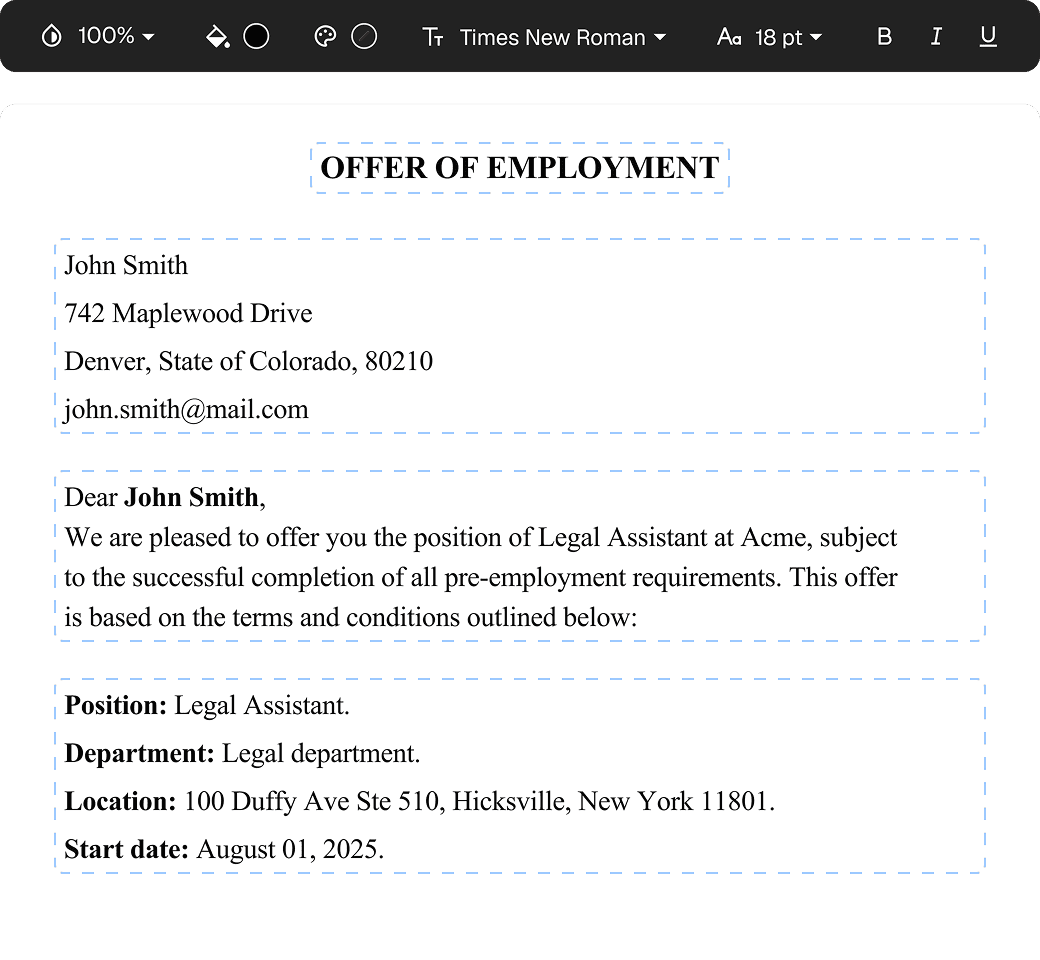
Tweak agreements before signing or sending for signatures. Update details, add or remove clauses, adjust formatting, and redline changes instantly.
eSign legally and securely
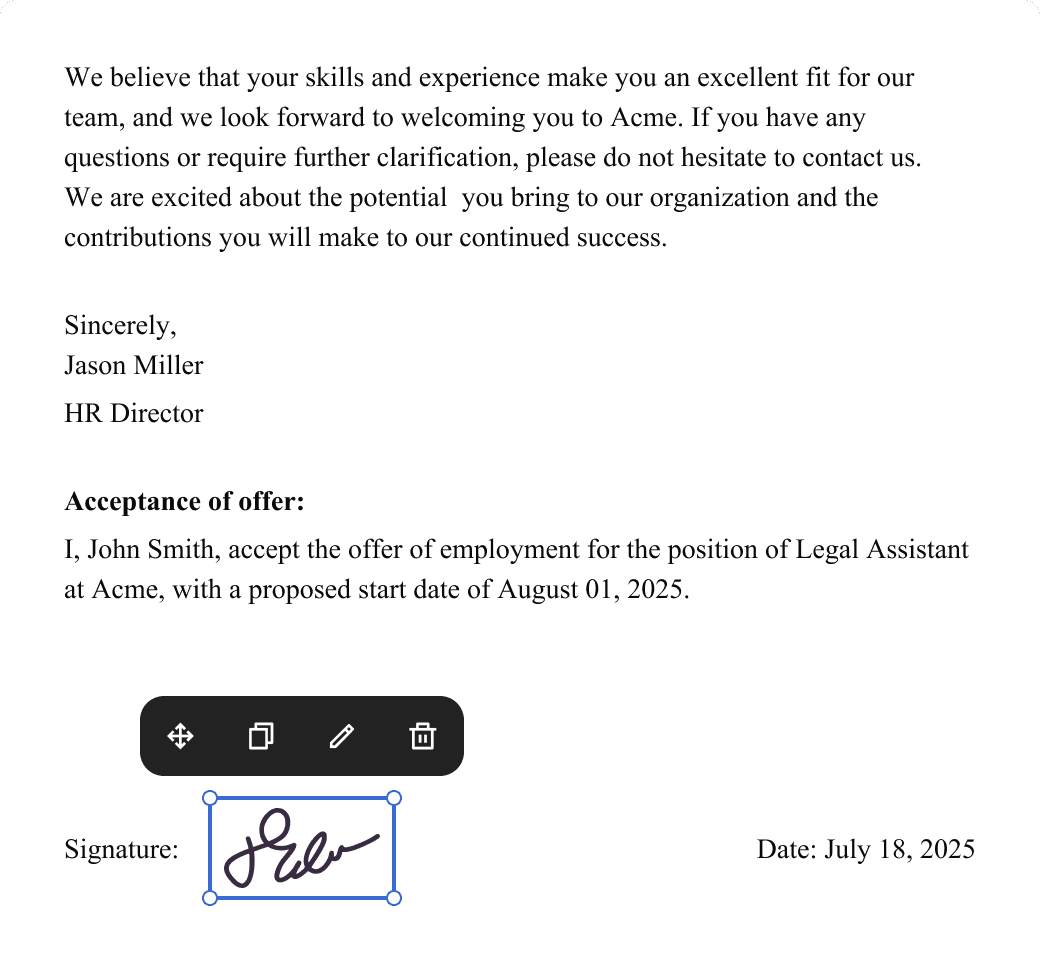
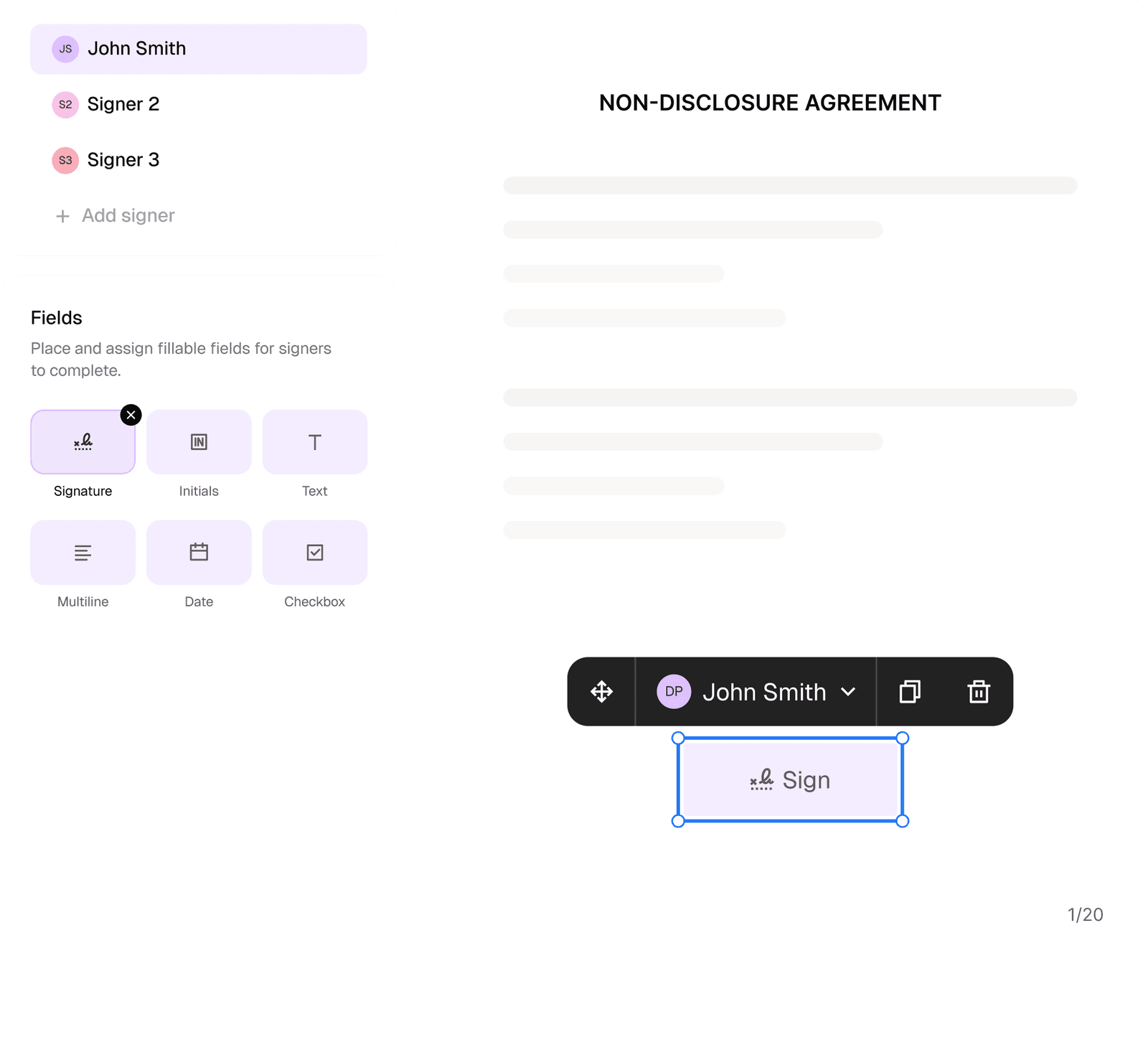
Sign documents and collect legally binding signatures. Invite up to ten people to sign in any order, track the progress, and send reminders.
Request legally binding signatures
Invite up to ten people to sign your document in any order. Get a finalized, audit-ready copy without chasing signatures.
Skip the drafting.
Choose from 2,500+ templates
Browse templatesChoose a template
Fill in details
Sign and download