Updated July 26, 2026
Employment Background Checks: What Employers Can and Cannot Review

Employment Background Checks: What Employers Can and Cannot Review
Content
Hiring your first employee can feel risky. You want to protect your business, customers, and team, but you may not know where the line is between a careful hiring process and a legal problem. Many small employers ask the same question: What can I check, and what gets me in trouble?
Legal background checks and employment rules involve background reports, criminal records, medical privacy, state restrictions, and anti-discrimination laws. Some information may legally appear in a report. Other information may be restricted, irrelevant, or unsafe to use in a hiring decision.
This guide explains what employers can legally check, what they should not check or use, what a background check can find, and how to keep the process fair, consistent, and job-related.
What Employers Can Legally Check in a Background Report
Employers can usually review background information that is connected to the job. A check should help the employer decide whether the person can safely and honestly perform the role, not collect private details “just in case.”
When an employer reviews a background report, the decision should focus only on information that is relevant to the job, legally allowed, and reviewed consistently for every candidate applying to the same role.
A background report may include information from different sources, including credit reports and criminal records, when an employer uses a consumer reporting agency. The FTC explains that employment background checks from third-party companies are often "consumer reports" under the Fair Credit Reporting Act, so employers must follow FCRA rules when using them for hiring, promotion, reassignment, or retention decisions.
Those rules cover four main obligations:
- 1
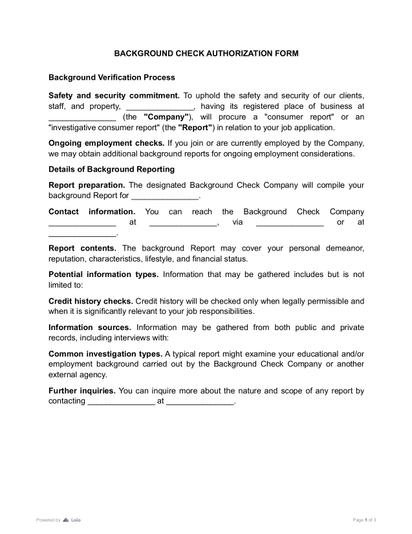
The employer must give the candidate a standalone written notice before ordering the report and getting written authorization.
- 2
The employer must certify to the reporting agency that they have a permissible purpose and will not misuse the information.
- 3
If the report may lead to a rejection, the employer must send a pre-adverse action notice with a copy of the report and the candidate's Summary of Rights under the FCRA before making a final decision.
- 4
If the decision stands, a final adverse action notice must follow. Skipping any of these steps can expose the employer to statutory damages of $100 to $1,000 per violation under the FCRA, as well as potential attorney's fees.
✅ Employment background check laws include federal rules for consumer reports, anti-discrimination guidance, ADA limits on medical questions, and state or local rules that may control when certain information can be requested or used.
Employers commonly check:
Employment history, to confirm past jobs, dates, or titles.
Education and credentials, to confirm degrees, certifications, or licenses.
Criminal records, but only with timing, job relevance, and state-law limits.
Credit history, usually when the job involves money, accounts, financial access, or fiduciary duties.
Driving records, mainly for drivers, delivery roles, field workers, or jobs involving company vehicles.
Professional licenses, when the role legally requires proof of qualification.
✅ The EEOC warns that employers cannot use background checks in a way that denies equal employment opportunity based on protected characteristics.
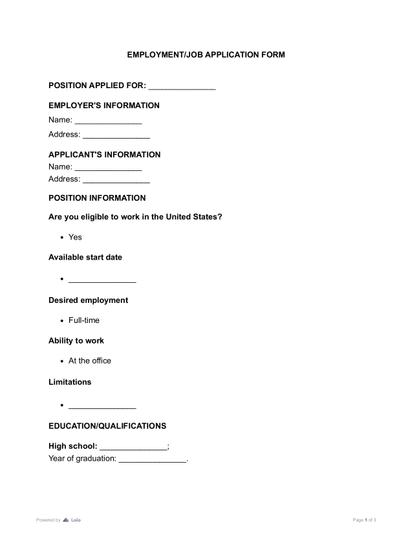
This is also why the hiring paperwork should match the screening plan. A clear job application form can help employers collect the same basic information from each candidate before deciding whether any extra checks are actually needed. For example, the form may ask about work history, education, licenses, and references, while excluding medical history and other restricted information from the pre-offer stage.
If the employer later needs written consent for a third-party background report, the process should be easy to track. With eSign, hiring teams can collect signed authorizations, offer letters, and screening acknowledgments in one place instead of managing scattered files and email attachments.

What Employers Should Not Check or Use
The biggest mistake is assuming that any information an employer can find is safe to use. That is not true. Seeing information is not the same as being allowed to use it.
Employers should be especially careful with:
Medical history or disability information before a conditional offer.
Protected characteristics include race, religion, national origin, age, disability, sex, pregnancy, genetic information, or family medical history.
Expunged or sealed records, where state law limits access or use.
Irrelevant credit history, especially for jobs that do not involve money or financial trust.
Social media information that reveals protected traits or personal details unrelated to the job.
Criminal history, when asked about too early, despite state or local ban-the-box rules that delay it.
✅ Medical information needs special care. The EEOC says employers may ask applicants whether they can perform the job. They may also ask how the applicant would perform it. However, medical questions and medical exams are generally limited until after a conditional job offer. Even then, they must be handled consistently for all entering employees in the same job category.
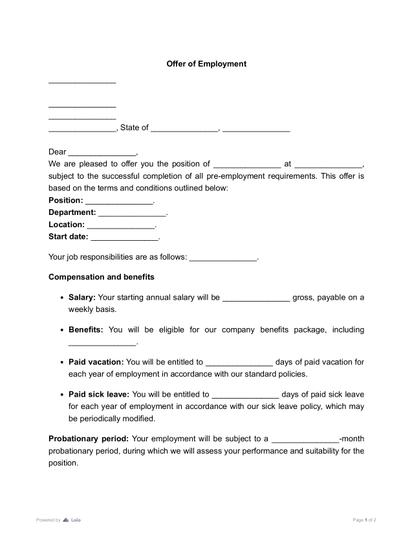
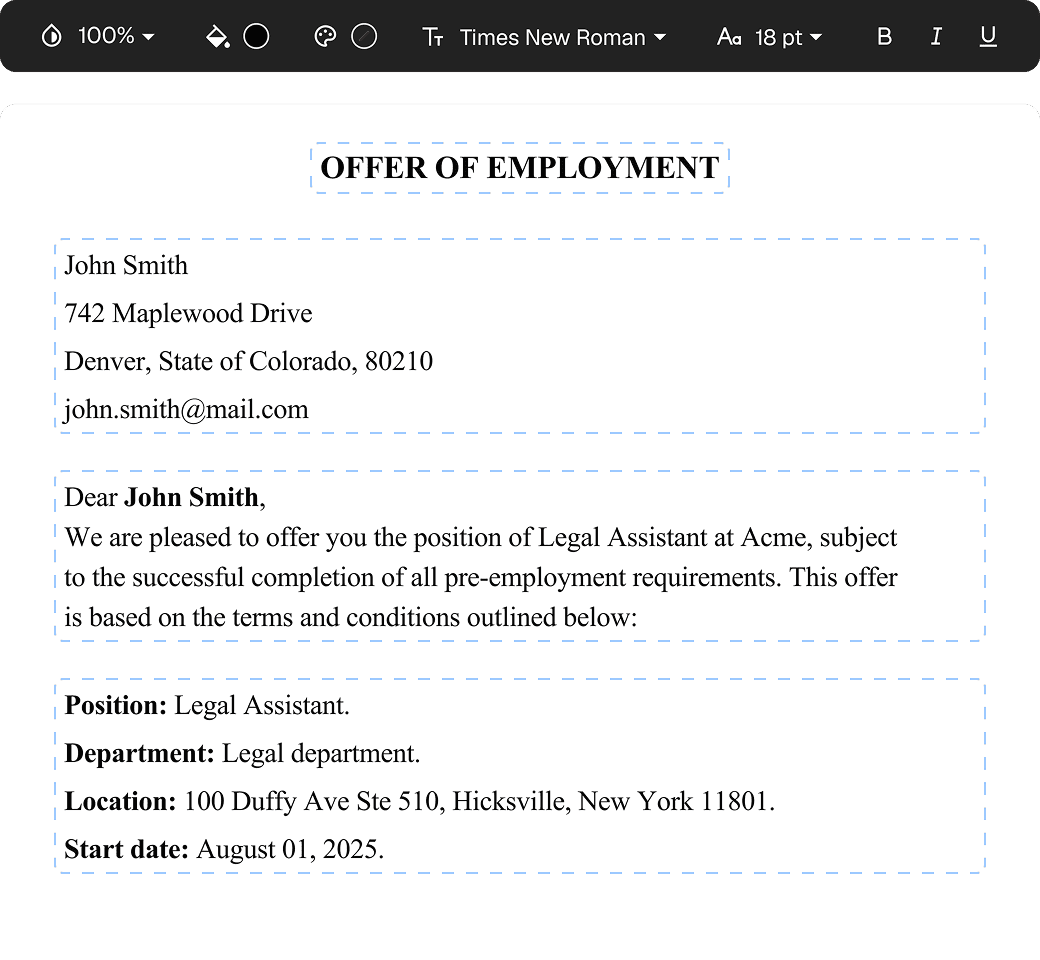
This is where the employment offer letter matters. If a background check, post-offer medical exam, or other screening step is part of the hiring process, the offer letter should make the condition clear before the candidate starts work or resigns from another job. The language should stay narrow: it should explain the condition without asking for diagnosis details, treatment history, or other medical information too early.
Do background checks include medical records, or does a background check show medical history? No. A standard background report does not give employers access to someone's medical records or full medical history. Medical information is restricted by employment background check laws, the Americans with Disabilities Act of 1990, and privacy limits. Employers should not treat medical history the same way they treat employment history or education verification.
✅ Social media is a common example of information that is easy to access but unsafe to use. A quick search may reveal a candidate's religion, pregnancy, disability, or family situation, all of which are protected characteristics under federal law. Even if the employer did not intentionally search for that information, using it in a hiring decision creates a risk of discrimination.
What Can a Background Check Find and What Can Jobs See?
There is no universal “full history” database that automatically shows every job, address, mistake, medical event, school record, and personal detail. A background check depends on:
The screening provider.
The type of check ordered.
The role.
The candidate’s information.
The jurisdictions searched.
The candidate’s consent.
Federal, state, and local limits.
A background report may verify facts the candidate provided. It may also search certain records, such as criminal databases, court records, driving records, education records, license records, or credit information. But the report is only as broad as the check ordered and legally allowed.
If an employer wants to confirm past employment, the process usually starts with the information the candidate provided, not a secret database of every job the person ever held. In some cases, an employment verification letter can help confirm job title, dates of employment, or income details when that information is relevant and properly requested.
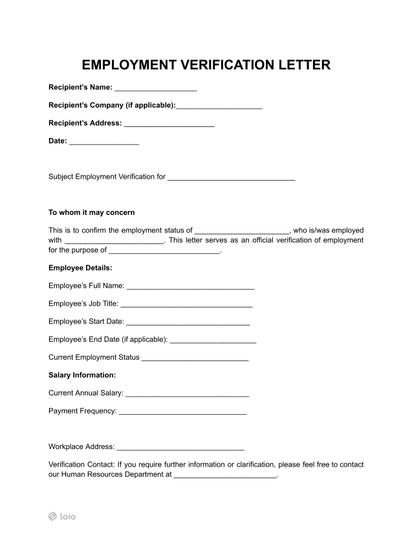
What can a background check find, and what can jobs see on a background check? The answer depends on the role, the screening provider, the candidate's consent, and the records legally available.
- Past employment verification.
- Education verification.
- Professional licenses.
- Criminal history, where allowed.
- Driving records, where relevant.
- Credit history, where legally allowed and job-related.
- Identity or address history used to support searches.
- Personal conflicts, disputes with neighbors, or reputation in the community.
- Social media posts or online activity; independent social media searches are strongly discouraged as they often reveal protected characteristics.
- Mental health history or therapy records.
- Prescription history or past medical treatments.
Reasons for leaving a previous job, unless the former employer volunteers that information. - Gambling habits, personal debt struggles, or lifestyle choices unrelated to finances.
- Family situation, marital status, or number of dependents.
- Political views or religious activity.
Criminal Records: What Actually Matters
A background check may include a criminal record. However, employers still need to decide whether that record is accurate, job-related, legally usable, and reviewed at the appropriate stage of the hiring process.
The EEOC's guidance on arrest and conviction records explains that employers can violate Title VII of the Civil Rights Act if criminal-record policies cause unlawful disparate treatment or disparate impact. Disparate treatment means applying criminal-history rules differently to candidates based on race, national origin, or another protected trait.
Disparate impact occurs when an employer implements a neutral policy, like a blanket rejection of any applicant with a criminal history, that disproportionately affects a protected group without a valid business justification.
When can employers ask about criminal history?
Timing depends on state and local law. Some jurisdictions require employers to wait until after a conditional offer before asking about criminal history. The rules governing what states prohibit pre-offer background checks typically delay criminal-history questions or criminal-record review until later in the hiring process, rather than banning all background checks outright.
What kind of record is it?
An arrest is not the same as a conviction. A pending case is not the same as a resolved case. A sealed or expunged record may be restricted. An old, unrelated record may raise different issues than a recent conviction tied to the job’s duties.
Job relevance matters more than fear. Examples:
A recent DUI may be relevant for a delivery driver who will operate a company vehicle.
A theft-related conviction may be relevant for a role handling cash, inventory, or customer property.
An old minor offense may be less relevant for a remote administrative role with no safety, money-handling, or customer-home access.
A conviction unrelated to the job should not automatically end the hiring process.
The safest approach is to link the concern to the role's actual duties. Avoid vague notes like “bad judgment” or “not trustworthy.” Use factual reasoning tied to job responsibilities.
What Background Check Requirements Apply in Your State?
State law adds another layer on top of federal rules, and it varies depending on where the candidate will work. State background check requirements can affect when employers can ask about criminal history, which records they can consider, and the process they must follow before rejecting a candidate based on a record.
If you are wondering what states prohibit pre-offer background checks or what states don't do background checks, the answer is that states generally do not ban them entirely. Instead, they restrict when employers can ask about criminal history and which records they can use.
New York City's Fair Chance Act, for example, delays criminal-history review and requires employers to weigh specific factors before making an adverse decision. Illinois, New Jersey, and Massachusetts each have their own version with different employer-size thresholds, timing rules, and notice requirements.
Some states also restrict which records employers can consider at all. Certain jurisdictions limit how far back a criminal-history search can go, prohibit the use of arrests that did not lead to convictions, or restrict the consideration of records that have been sealed or expunged.
The rule that applies usually depends on the candidate's work location, not the employer's headquarters. An employer based in Texas hiring a remote worker in California may still need to follow California's rules. Checking state-specific requirements before screening is part of running a legally compliant hiring process.
✅ State hiring laws can be long and technical. AI Summary can help you quickly identify the key rules that apply to your candidate's work location before you begin screening.
How Employers Do Background Checks Safely and Legally
If you are wondering how employers do background checks in practice, the process usually starts before the report is ordered. The employer decides what is relevant to the role, gives the candidate the required notice, gets consent when needed, and reviews the results consistently. A safe process does not need to feel like a legal manual. For most small employers, the goal is to keep the process relevant, documented, and consistent.
1. Decide what is relevant before you order the check
Start with the job duties. Ask:
Will this person drive?
Will they handle money?
Will they enter customer homes?
Will they work with children, patients, or vulnerable people?
Will they need a license or credential?
Will they access confidential company data?
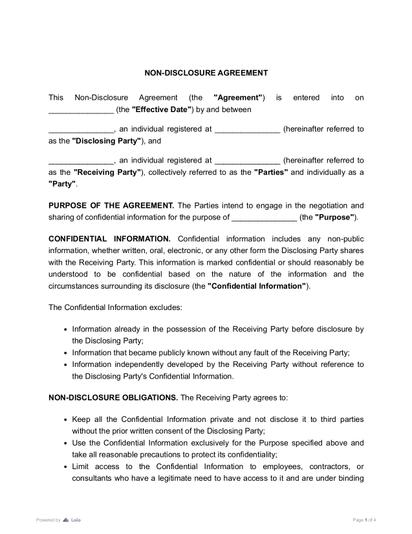
If the main concern is access to confidential information, a broader background check may not be the best solution. For some roles, an employee NDA may be more relevant because it establishes clear rules for protecting customer lists, financial data, trade secrets, and internal systems after a person is hired.
2. Get written consent before ordering the report
The candidate must receive a standalone written notice and sign an authorization before you order a background report from a third-party provider.
If your hiring documents are in PDF format, a PDF editor can help update candidate forms, checklists, or screening paperwork before sending them for signature. This is especially useful when you need to adjust job titles, screening steps, candidate details, or state-specific notices without recreating the whole document.
3. Review everyone consistently
Use the same review process for the same role. A hiring manager should not improvise based on personal impressions.
4. Keep medical information out of pre-offer screening
Before a conditional offer, focus on whether the applicant can perform the essential job functions. Do not ask about diagnosis, treatment history, prescriptions, past injuries, or disability details.
After a conditional offer, medical questions or exams may be allowed in limited circumstances if they are required for all entering employees in the same job category and handled consistently.
5. Review criminal records carefully
If a criminal record appears, slow down. Check state and local timing rules. Confirm whether the record is accurate and usable. Consider whether the conduct is job-related.
6. Give the candidate a chance to respond when required
Follow the required adverse-action process. This helps avoid decisions based on wrong-person matches, outdated records, or incomplete information.
7. Keep final hiring documents aligned
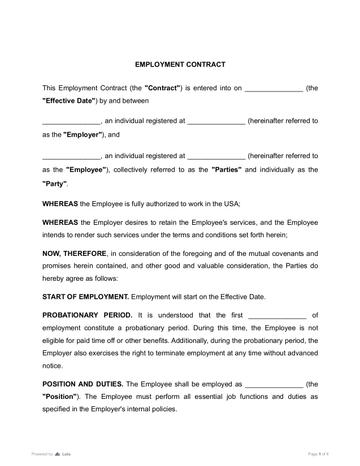
Once screening is complete, the final hiring documents should match the employer's actual approval. The employment contract can confirm the role, pay, schedule, duties, confidentiality terms, and any lawful conditions that still apply. This helps prevent a mismatch between what the candidate accepted, what the background-check process required, and what the employer expects after the start date.
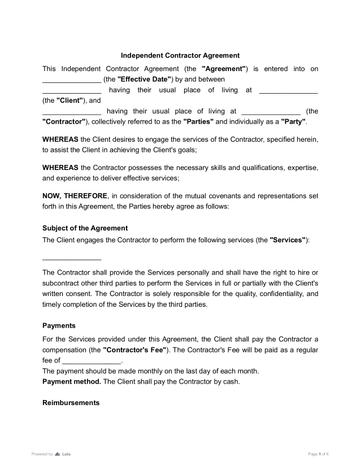
If the business is screening a freelancer or contractor instead of an employee, keep that workflow separate. An independent contractor agreement should focus on the project scope, payment terms, confidentiality, access rules, and contractor status. At the same time, any screening should remain limited to information relevant to the work.
- Employment Contract
 4433 downloads
 - Independent Contractor Agreement
 7278 downloads

The safest approach is simple: decide what information is relevant to the role, get proper consent, follow federal and state rules, avoid medical and protected-class information, review criminal records carefully, and apply the same standards to every candidate for the same job.
More guides
September 15
What Is Contract Redlining?

September 1
7 min read
How to Provide Proof of Employment: Documents and Steps

August 14
11 min read
Right to Work vs. At Will Employment Explained: What's the Difference?

October 15
How to Start a Staffing Agency: Licensing, Pricing, and Cash Flow

September 10
14 min read
How to Protect Your Small Business from Lawsuits

September 11
Offer Letter vs. Employment Contract: What Employers Should Know

One home for your
agreements
Edit PDFs seamlessly
Tweak agreements before signing or sending for signatures. Update details, add or remove clauses, adjust formatting, and redline changes instantly.
eSign legally and securely
Sign documents and collect legally binding signatures. Invite up to ten people to sign in any order, track the progress, and send reminders.
Request legally binding signatures
Invite up to ten people to sign your document in any order. Get a finalized, audit-ready copy without chasing signatures.
Skip the drafting.
Choose from 2,500+ templates
Browse templatesChoose a template
Fill in details
Sign and download