Free template
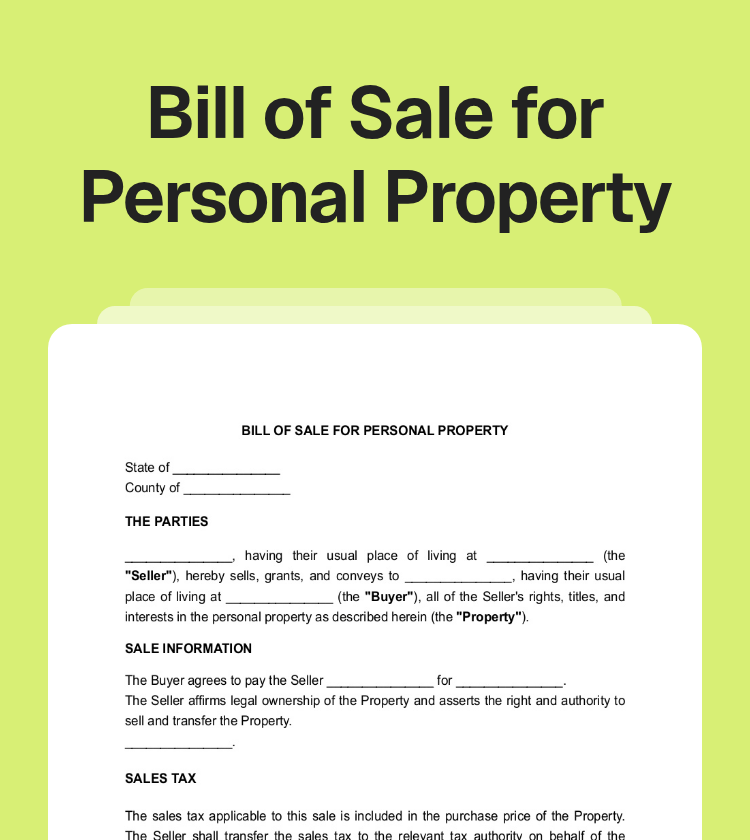
Free Personal Property Bill of Sale Template

Template Description
Copy section link
A bill of sale for personal property is a legal document that defines the terms and conditions regarding the transfer of ownership of personal assets. It acts as a written agreement that finalizes the sale and purchase of personal items. Property bill of sale is particularly crucial when dealing with high-value possessions as it provides an essential record of the transaction, offers security and clarity for both the buyer and seller, and can protect each party's interests in the event of any subsequent legal disputes.
When To Use Bill of Sale for Personal Property
Copy section linkThere is a need for a personal property bill of sale anytime a transaction of valued goods takes place. This might happen when you are selling or buying a second-hand car, trading expensive artwork, or even disposing of your antique furniture collection.
The contract for the sale of personal property becomes exceedingly necessary in scenarios where the item has significant worth or carries sentimental value — it assures both the buyer and seller of the fairness of the exchange, and it could be used to resolve any potential conflicts that might emerge in the future.
Parties of the Bill of Sale for Personal Property
Copy section link- Seller — This is the individual or entity who owns the personal property in question and wishes to transfer ownership to another party. It's this individual or entity’s responsibility to provide accurate information about the property, agree on a price, and deliver the property once paid. Once the transaction is completed, the seller should provide a personal bill of sale. This document signifies that the seller has transferred ownership rights to the buyer.
- Buyer — This would be the individual, organization, or any other entity looking to acquire the seller's property. In the course of this transaction, the buyer is responsible for making the agreed payment and accepting the property "as-is." Upon doing so, they receive a personal property purchase agreement from the seller. This legal document serves as proof of ownership, confirming this transfer of property. In most cases, it's the buyer's responsibility to store the bill of sale for future reference, as it might be instrumental in any legal matters related to the property that may arise later.
Key Terms
Copy section link- Personal property: This term refers to any item that is movable and is not attached to real property (like land or a building). For example, cars, electronics, and furniture are personal properties.
- As-is: This term implies that the buyer is accepting the item in its current state, with any faults or issues, and the seller takes no responsibility for any future problems.
- Consideration: Commonly referred to as the purchase price, the consideration is the agreed-upon value in exchange for the personal property in the personal property sales contract.
- Warranty: The warranty clause describes any guarantees the seller offers with the personal property. An absence of warranty is often referred to as "no warranties," meaning the item is sold "as-is."
- Effective date: This term refers to the date when the sales transaction is completed, and ownership is transferred from the seller to the buyer.
How To Write a Bill of Sale for Personal Property
Copy section linkWriting a personal property bill of sale form involves clearly defining the item that is being sold, the terms of sale, and the identifiable information about the buyer and seller. Also, a personal property bill of sale template can form the basis for safeguarding your assets, giving credence to the transaction.
Here are the basic steps you should follow to create a personal property agreement:
Identify the parties:
This section should accurately identify the seller and the buyer by their legal names and contact details. The inclusion of a physical address and a phone number can be beneficial.Describe the property:
Provide a detailed description of the personal property being sold. If applicable, include model numbers, serial numbers, sizes, colors, and any other specific details about the property that would help identify it.State the sale price:
The sale price, also known as consideration, should be clearly stated, and both parties should agree on it.As-is clause:
If the personal property is being sold "as is," include a statement to this effect. This absolves the seller from liability related to any future issues with the item.Date of Sale:
Document the date when the transaction took place. This is referred to as the "effective date," and it's when the ownership transfer occurs.Signatures:
Both the buyer and the seller need to sign and date the bill of sale. In certain cases, you might need a witness or notary public to validate the signatures.Keep copies:
Both the buyer and the seller should keep copies of the completed bill of sale for their records. This purchase agreement for personal property can serve as proof of transaction and can be particularly useful in the case of disputes or for tax purposes.
By following these steps, you can effectively draft a bill of sale for personal property that protects the rights of both the buyer and the seller and ensures legal compliance. Utilizing a property bill of sale template is undeniably crucial when conducting any transactions involving goods of significant value. A comprehensive template ensures that the details of the transaction are clearly recorded and agreed upon by both buyer and seller.
Even in the digital age where transactions are often conducted online, using a digital version of this document like a bill of sale personal property PDF can provide the same level of security and clarity. These digital templates are not only convenient but also customizable, fitting perfectly into the ever-evolving digital business landscape.