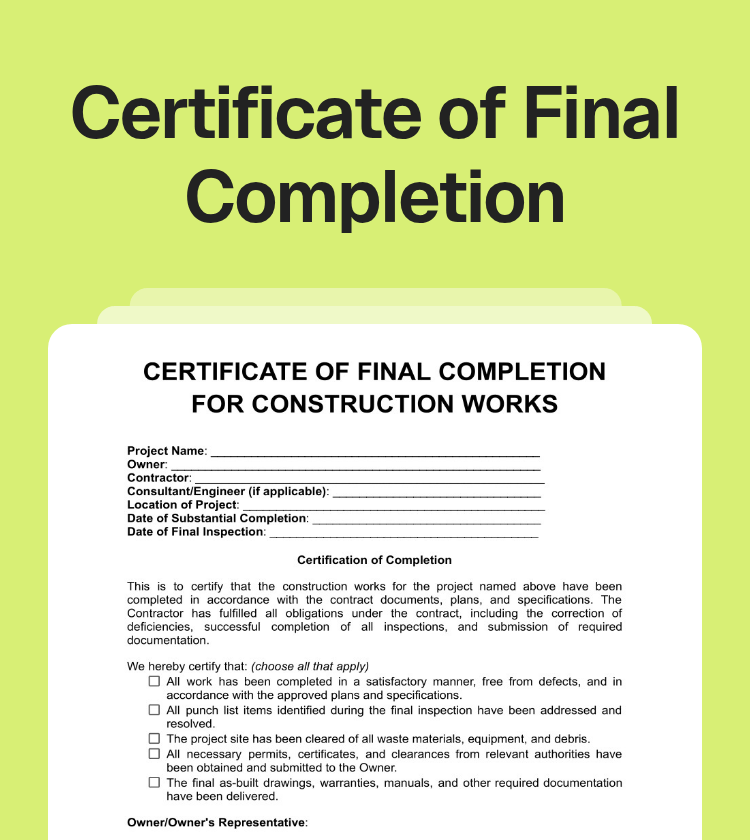
A Construction Certificate is an official document between a contractor and a regulatory authority confirming that a project complies with building codes. It is used to obtain approval before or after construction, ensuring the project meets legal safety standards.
A certificate of completion construction signifies the successful conclusion of a construction project. Issued by an architect or other authoritative figure associated with the project, this legal document confirms that all project tasks have been completed to the client's satisfaction in accordance with the agreed contract.
As an example, let's consider the construction of a new corporate office. The architect responsible for the project would issue the contractor certificate of completion only after ensuring that the electrical work has been expertly accomplished, that the painting is complete on all walls, and that appropriate safety measures are in place. This certificate serves as an effective shield for the contracting parties from unfulfilled obligation-related claims.
Before a contractor gets the last payment for a construction project, they need to have a construction certificate of completion. This handy document says that the job is done, everything is as it should be with no unwanted defects, and also everything agreed upon in the contract has been taken care of.
In order to fully grasp the concept, it is important to understand some key terms related to the final completion certificate of completion construction:
Practical Completion This refers to when all construction work is finished and the project is fit for use.
Substantial Completion This is when a building is mostly ready and can be used for its main purpose.
Contract Administrator This is the person, often the architect, who oversees the certificate of final completion procedures and certifies the final completion.
Defect Liability Period This is a specific duration after the project's final handover, during which the contractor bears the responsibility for any repairs or replacements necessary due to construction issues or defects in the certificate of completion contractor.
Retainage This is a portion of the contract price intentionally retained until the work is complete to ensure the contractor will correct any discovered defects or deficiencies.
How To Create a General Contractor Certificate of Completion
Crafting a certificate of completion for construction is quite straightforward and can be even simpler with a reliable template at hand. There's also a step-by-step guide on how to go about creating a document:
Identify Project Details Begin by listing the project name, address, owner’s name, and contractor’s name.
Specify the Completion Describe what was accomplished in the contractor certificate of completion construction, including the structures built, renovations made, and other specific work outlined in the contract.
Certify the Completion As a contract administrator, your contractor completion form verifies that you have inspected and evaluated the work and that it meets the contractual specifications.
Legal Concerns The certificate of completion from contractor statement should also affirm that all legal obligations, codes, and standards have been met without any violations.
Signature & Date Lastly, the certification of completion construction must be signed and dated to make it official.
It is important to remember that hastening free certificate of completion construction templates without careful scrutiny might lead to potential lawsuits and damage to professional reputation.
If you haven’t caught up on the importance of a certificate of completion construction template yet, it is time to do so. This critical document not only draws a full stop to the project but also triggers the closeout process, including final payments and transfers of ownership. Breathe easy knowing you're using this comprehensive tool to bring a smooth transition to your construction projects.