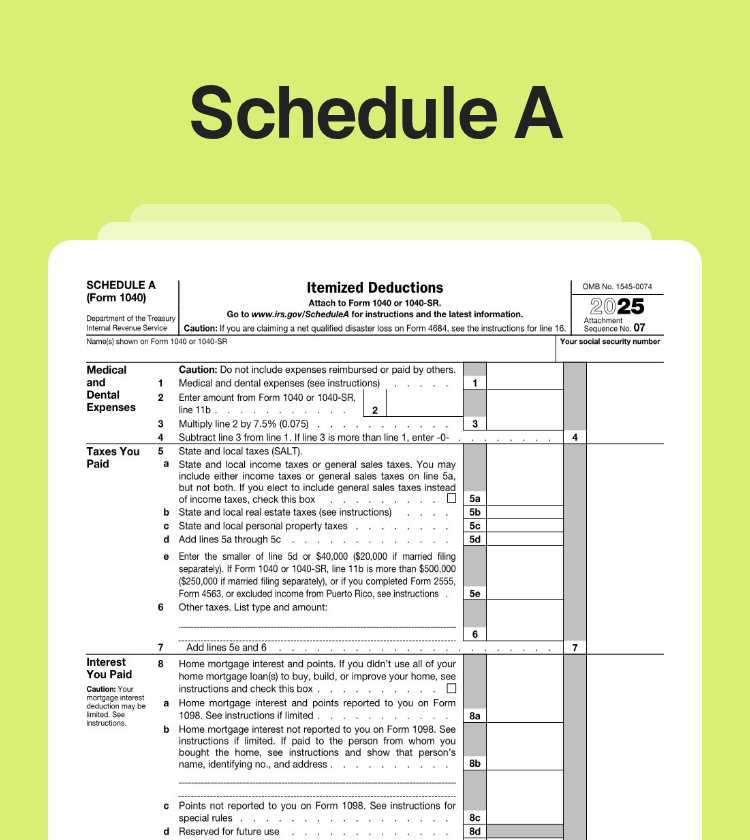
Schedule A is a tax form between a taxpayer and the IRS that reports itemized deductions such as mortgage interest and medical expenses. It is used by individuals who choose to itemize instead of taking the standard deduction.
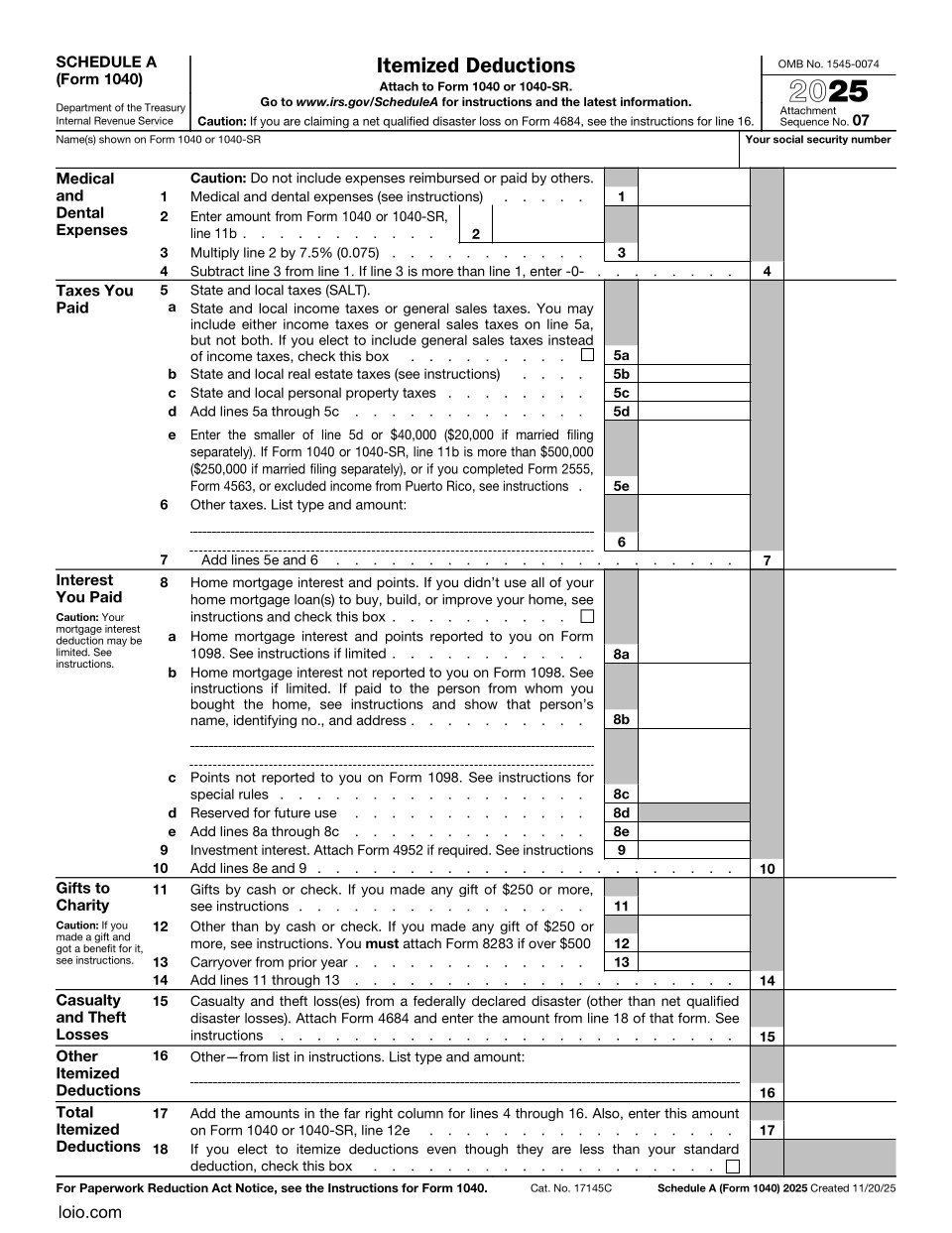
Schedule A — a form that many taxpayers come across when dealing with itemized deductions on their 1040 tax return. This key tax form is significant for many, helping them list various itemized deductions. Let's dive into understanding 1040 Schedule A, along with its usage, benefits, and creation process.
You can use Schedule A if your allowed costs are more than the standard deduction. You can name costs on this form, such as mortgage interest, medical and dental bills, interest on investments, and donations to charity. When you add these up, your taxable income goes down, which means you pay less in taxes.
Constructing a Schedule A form 1040 primarily involves organizing each expenditure under the appropriate category. Here are some steps to follow:
Assemble Your Records. Accumulate all documents and bills related to possible deductions.
Classify Your Expenditures. Divide expenses according to the categories on the Schedule A form.
Fill Out the Form. Begin filling out the form, noting down the total of each category in the designated sections.
Complete Your Form 1040. Attaching the filled Schedule A with your 1040 tax return is crucial.
Ensure Accuracy. Review each entry for correctness before submitting your Schedule A 1040 to the IRS.
Despite appearing lengthy, the form can significantly decrease your tax liability. Remember, accurate record-keeping is the key to completing your Schedule A properly.
Always remember that the focus is not only on fulfilling a legal obligation but also on finding paths to reduce your financial burdens. Armed with 1040 Schedule A instructions and good organization, making sense of the world of taxes is not as daunting as it seems.