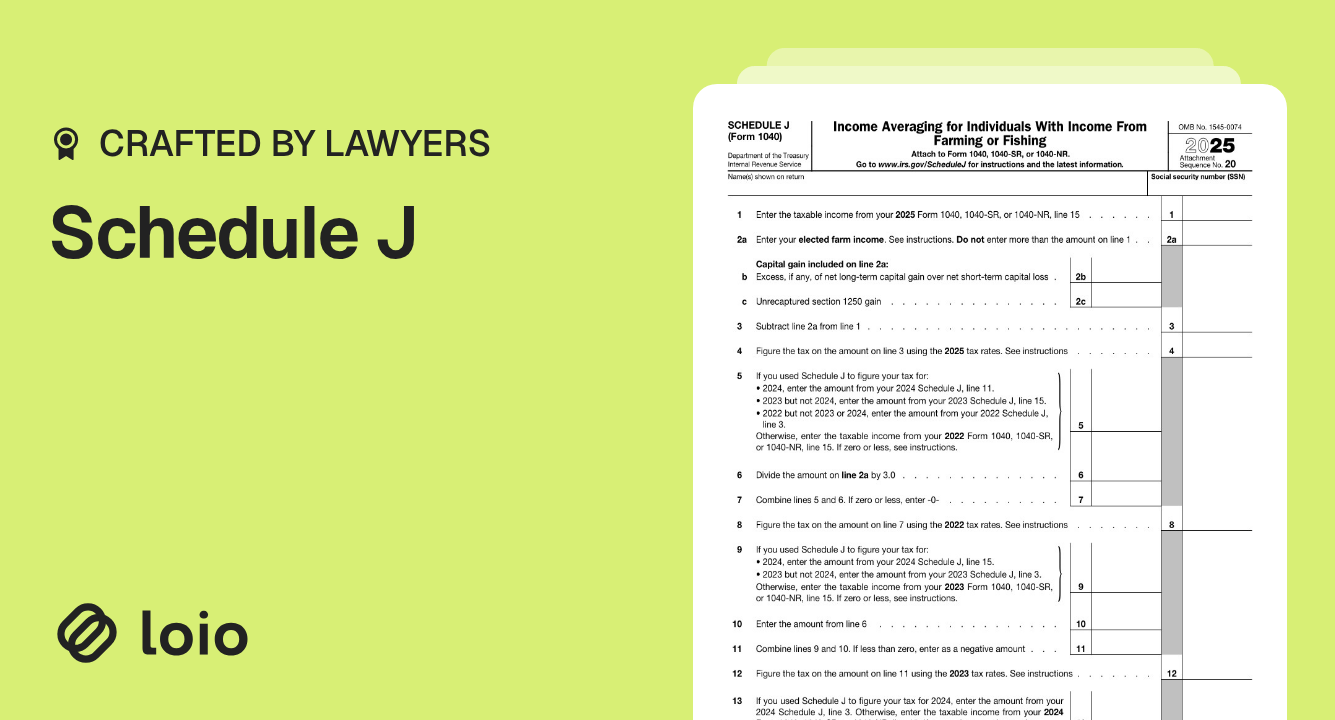
Schedule J is a tax form between farmers or fishermen and the IRS that allows income averaging over multiple years. It is used to reduce tax fluctuations caused by inconsistent annual earnings.
The government offers a special option for those who experience fluctuating earnings due to unpredictable work conditions. This option, called income averaging, allows individuals to spread a portion of their current year’s earnings over the previous three years. This helps lower their overall tax rate if their income varies significantly from year to year.
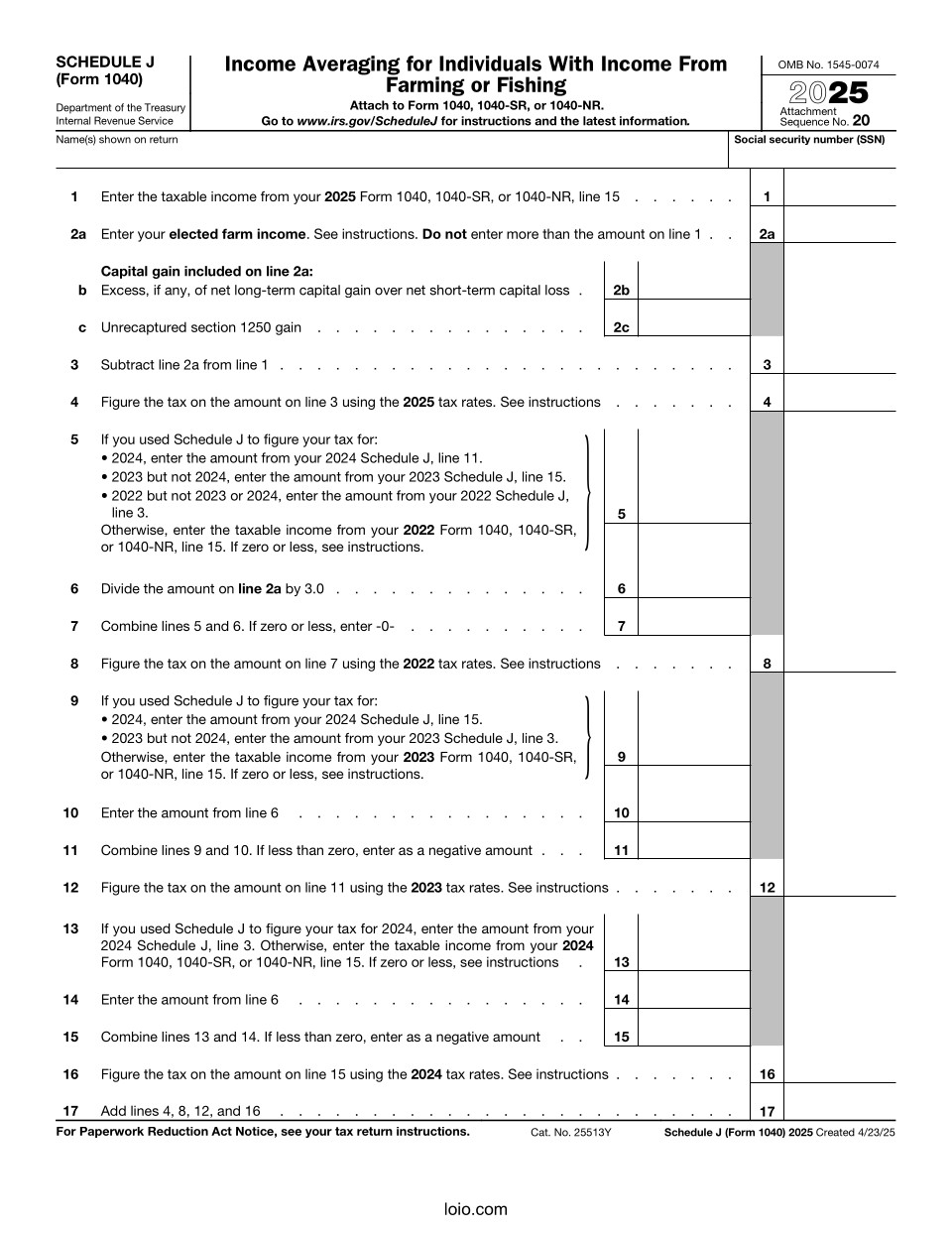
Schedule J is a document used to calculate income averaging for those in farming or fishing industries. It allows eligible individuals to divide part of their earnings over three prior years to potentially reduce the taxes owed.
Individuals in the farming or fishing industries use the Schedule J tax form when their yearly earnings are higher than usual and vary significantly from previous years. This option helps lower their taxes if averaging income tax provides better results under federal rules. Filing the Schedule J form is important to take advantage of this special provision offered by the tax code.
Gather income records for the current year and tax returns for the three previous years.
Obtain the Schedule J form online through official sources or your tax advisor.
Carefully complete the form Schedule J by entering the eligible earnings to be averaged over prior years.
Attach the federal income tax J form to your annual tax filing and submit it by the deadline set by federal authorities.
Schedule J is a helpful document for those whose incomes from fishing or farming fluctuate significantly. It allows their earnings to be spread over several years to lower tax rates and reduce financial burdens. Properly completing and submitting the Schedule J form ensures eligible individuals make the most of this special option. Filing it on time and with accurate details is essential to meet legal requirements and save money.