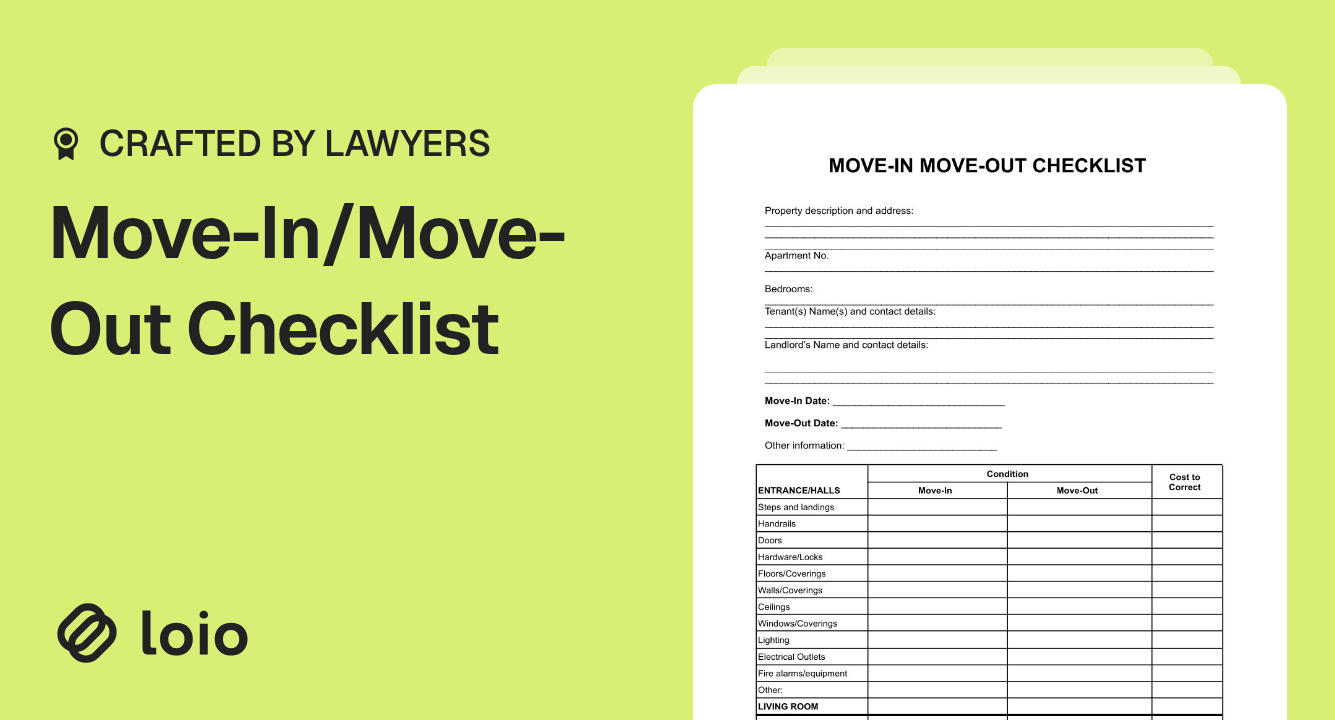
A move-in checklist form — also called a move-in/move-out checklist, move-in inspection form, or move-in inspection checklist — guarantees that both the tenant and landlord agree on the condition of the property from the beginning when renting it. This legal document protects the tenant's security deposit. Also, it reduces the probability of future problems by maintaining a detailed record.
To complete a move-in/move-out checklist effectively:
Record Property Details: Begin with basic information, such as the location and the names of the tenant and landlord. Also, it should include the date the lease starts and the type of rental agreement.
Photograph Any Damages: Take dated photos of any existing damage or wear and tear. Attach them to the checklist or upload to a digital app (many available on Google Play).
Conduct a Room-by-Room Inspection: Use the move-in inspection checklist to walk through each space, such as the kitchen, bedroom, bathroom, and common areas. Document the condition of walls, floors, appliances, lighting, and plumbing. Be detailed and objective.
Landlord and Tenant Signatures: Both parties must sign and date the completed form. This final step makes the move-in/move-out inspection form enforceable under your lease agreement.
If you don't know how to make a move-in checklist, start by taking photos and writing down in depth what the property looks like. Make sure all parties sign the document to confirm the agreement.
A detailed move-in checklist for tenants should include the following categories:
General Property Overview.
Room-by-Room Condition Reports.
Appliance Functionality.
Exterior Elements (garage, yard, balcony).
Utilities Status (water, electricity, HVAC).
Notes on Pre-Existing Damage.
Additional Comments (custom clauses or landlord instructions).
Each of these categories helps outline who is responsible for damages, repairs, or maintenance.
A move-in/move-out form is most effective when used at three key moments.
Tenant Move-In: To document property condition and protect security deposits.
Tenant Move-Out: To compare with the original checklist and determine deductions.
Sublease Scenarios: When a sub-tenant joins under a sublease agreement, both parties need clear records.
Do landlords and tenants both sign a move-in checklist? Yes. To guarantee legal validity, both the landlord and the tenant should sign and retain a copy.
Understanding your rental agreement is just as crucial as completing your move-in checklist. The lease spells out the formal relationship between the landlord and tenant, while the checklist helps keep track of the property's physical state.
A well-drafted rental agreement outlines:
Lease Terms: Duration of tenancy, renewal options, and notice periods. This includes whether you’re on a fixed-term lease or a month-to-month arrangement.
Security Deposit Details: How much money is held, where it is kept, and when it can be denied. The security deposit serves as a financial safeguard for the landlord and motivates tenants to keep the property in good condition.
Tenant Obligations: These typically include paying rent on time, keeping the property clean, and abstaining from causing damage beyond normal wear and tear. Also, it includes promptly notifying the landlord of any necessary repairs.
Tenants can avoid legal problems and make sure they know what their responsibilities are by carefully going over these parts with their move-in checklist form.
Landlord-tenant laws and housing legislation vary from state to state. Understanding these laws is crucial for avoiding legal disputes. You can prevent misunderstanding and make sure you follow the rules if you know the laws about landlords, tenants, and homes.
Move-in and move-out forms must be filled out according to the law, especially when the security fee is being taken out. For example, in California, landlords are required to offer tenants a pre-move-out inspection.
It’s essential to review your state’s regulations before signing or completing any checklist. Loio’s move-in checklist template can be adjusted to meet local legal standards. Also, it includes clear guidance on what sections are required per jurisdiction.
Here’s an example of what a simplified move-in checklist might include.
Kitchen: Condition — Good. Notes — Minor scratch on the fridge door.
Bedroom: Condition — Fair. Notes — Visible stain on the carpet.
Bathroom: Condition — Good. Notes — No visible issues.
Living Room: Condition — Excellent. Notes — Walls have been newly painted.
You can access a professional version via Loio’s move-in checklist template, available in fillable PDF or Microsoft Word formats. It includes pre-written clauses, signature fields, and space for custom notes, providing an easy inspection and proper documentation.