Free template
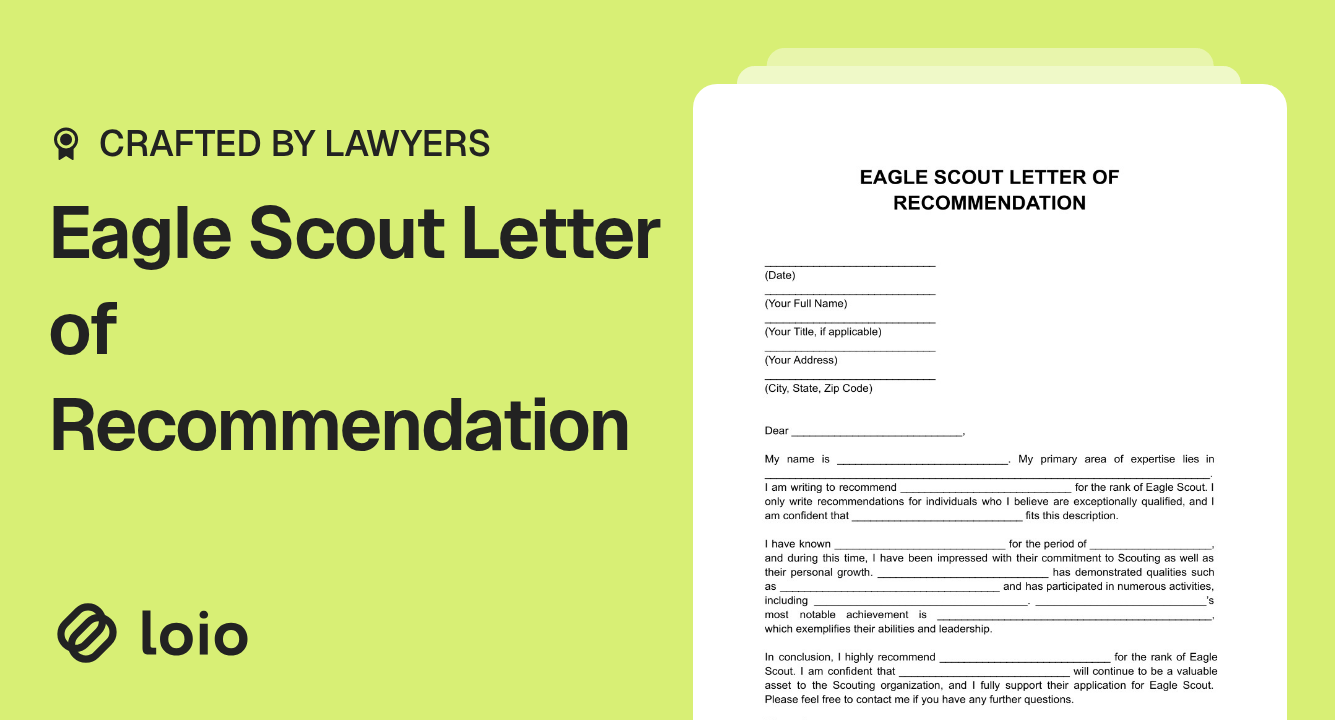
Free Eagle Scout Letter of Recommendation Template

What Is the Importance of My Reference for an Eagle Scout Candidate?
Copy section linkThe journey to becoming an Eagle Scout is a long and demanding one. It requires years of dedication, leadership, and service. The recommendation letters are a final step in this rigorous application process, serving as a character testament. The BSA's review committee reads these letters to gain a holistic view of the candidate beyond their list of earned merit badges and leadership roles. Earning the rank of Eagle Scout is the highest advancement in Scouting America, and your contribution helps validate that a scout is truly worthy of this prestigious award.
What is an Eagle Scout letter of recommendation?
An Eagle Scout letter of recommendation is a formal character reference required for a Life Scout to achieve the Eagle Rank. Its purpose is to provide the Eagle Scout Board of Review with evidence that the scout lives by the principles of the Scout Oath and Scout Law in their everyday life. Your letter helps the committee confirm that the candidate embodies the values of Scouting, not just during troop meetings, but also at school, at home, and in their community.
Who should write this letter?
A scout is expected to obtain references from a variety of adults who know them in different capacities. The official Eagle Rank Application requires letters from:
Parents/guardians;
Religious leader;
Educational leader;
Employer (if they have one).
The requirement also includes letters from two other people who know the scout personally.
As a letter writer, you should have sufficient personal interactions with the Eagle candidate to speak genuinely about their character, work ethic, and leadership skills. You cannot write this letter effectively if you don't know the scout well.
How to Respond When a Scout Asks for a Letter of Recommendation
Copy section linkWhen a scout approaches you, they are placing a great deal of trust in you. Here’s how you can respond and prepare to set the stage for a meaningful letter of recommendation.
The scout's request and your "packet"
Ideally, a scout should request in person that you write a letter for them. A well-prepared Eagle Scout candidate will provide you with a packet of information to make your job easier. This packet should contain:
A summary of their scouting journey, highlighting key leadership roles and achievements.
A description of their Eagle Scout Service Project (often called the Eagle Project).
A pre-stamped and addressed envelope for mailing the letter. The address of a council member or committee chair should be on the envelope.
The name and email address of a council contact if electronic submission is preferred.
A clear deadline for when the response is needed to avoid delaying their advancement.
Their list shows that at least 21 merit badges have been earned.
Accepting the privilege
Writing this letter is a privilege. If you can write a strong, supportive letter, you should graciously accept. The scout might ask, "Would you be willing to write a letter for me?"
However, if you cannot provide a positive reference or do not know the candidate well enough, it is better to politely decline. You can discourage them by saying something like, "I am honored that you asked, but I don't think I know you well enough to write the strong letter you deserve." This is more helpful to the scout than a weak or unenthusiastic letter.
How to Structure Your Eagle Scout Letter of Recommendation
Copy section linkYour letter should be structured clearly and professionally. The content should focus on specific examples that demonstrate the scout's character.
Essential components of your letter
Introduction: State your name, your relationship to the Eagle Scout candidate, and the length of time you have known them.
Body paragraphs: This is the most important part of the letter.
- Provide specific anecdotes that exemplify the candidate’s character. Connect your stories to the 12 points of the Scout Law: Trustworthy, Loyal, Helpful, Friendly, Courteous, Kind, Obedient, Cheerful, Thrifty, Brave, Clean, and Reverent.
- Did you witness their follow-through on a difficult project?
- Did you see them lead their peers at summer camp? Mention their Eagle Scout Service Project if you have knowledge of it.
- Use your letter to demonstrate how the scout is "physically strong, mentally awake, and morally straight," as stated in the Scout Oath and Law.
Conclusion: End by offering to provide more information. The committee may want to contact you via phone or email, so include your contact details.
What Is the Submission Process?
Copy section linkThe logistics of getting your letter to the review board are just as important as the letter itself.
Confidentiality is key
Your Eagle Scout letter of recommendation is a confidential document. It should never be shared with the Eagle candidate. You should not allow the candidate to receive a copy, and you should not give it to them to submit directly. This policy protects the integrity of the process and allows you to be candid in reviewing the scout’s performance. The letter must be returned to the council or committee chair directly.
Mail or email? Following the instructions
You can typically submit your letter via mail or email. If mailing, use the pre-stamped and addressed envelope the scout provided. If you choose to email the letter, save it as a PDF and send it directly to the email address provided. Be sure to meet the deadline, as a late letter can delay the candidate's Eagle Board of Review.