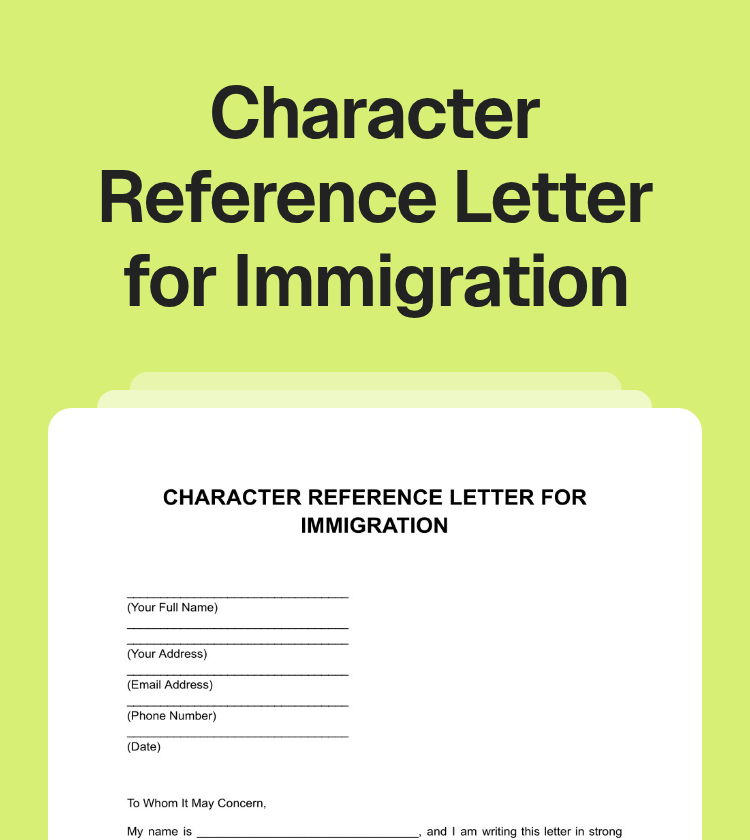
Free template
Free Immigration Letter of Support

What Is an Immigration Recommendation Letter and Why Does It Carry So Much Weight?
Copy section linkAn immigration recommendation letter is a formal letter of support written on behalf of an individual and submitted to the United States Citizenship and Immigration Services (USCIS) or, in some cases, an immigration judge. The primary purpose of an immigration recommendation is to attest to the applicant's character, credibility, and ties to the community.
Many types of immigration benefits, including the path to citizenship, require the applicant to prove they possess good moral character. While an applicant can submit documents and records, reference letters provide personal testimony.
An immigration officer or judge reads these letters to understand the applicant as a person: their integrity, their work ethic, and their role in society. A compelling letter for immigration provides context and personal evidence that official forms cannot convey.
Who Is the Best Person to Write a Letter of Recommendation for Immigration
Copy section linkThe credibility of an immigration letter depends heavily on the credibility of the writer. The best person to write an immigration letter is someone who knows the applicant well and has known them for a significant period. USCIS and immigration officials value sincerity and detailed knowledge.
Potential writers include:
Employers, supervisors, or mentors who can speak to the applicant's work ethic, skills, and professional integrity.
Long-time friends who can provide personal anecdotes about the applicant's character traits and honesty.
Family members who can attest to the applicant's role within the family, especially for a family-based immigration case.
Community leaders, such as religious figures or heads of volunteer organizations, who have witnessed the applicant's contributions to the community.
Professors or teachers who can comment on the applicant's academic achievements and character.
It is essential that the writer clearly states their relationship to the applicant. If the applicant is working with an immigration attorney, the lawyer can often help identify which individuals would be the most effective writers for their specific immigration case.
What Are the Key Components of an Effective Immigration Letter?
Copy section linkTo ensure your letter of recommendation is clear and professional, you should use a standard business letter format. An effective immigration letter is well-organized, specific, and sincere.
Section 1: The introduction. Start by clearly stating who you are, your citizenship or legal status in the United States, and your relationship to the applicant. Include how long you have known them. State the letter's purpose directly, for example: "I am writing this letter in support of [Applicant's Name]'s immigration application for a Green Card."
Section 2: The body paragraphs are the most critical part of the letter. Provide specific, anecdotal evidence of the applicant's character. Don't just list positive adjectives. Instead of saying, "Maria is a kind person," describe a specific instance where you witnessed her kindness. Dedicate separate paragraphs to different character traits you want to highlight, such as:
- Honesty and Integrity: Describe a situation where they demonstrated trustworthiness.
- Work Ethic: Share an example of their dedication and professionalism.
- Contributions to the Community: Mention any volunteering or community activities you know they participate in.
- Compassion and Family Values: For a letter to a family member, describe their commitment to their loved ones.
Section 3: The conclusion. Indicate your strong recommendation for the applicant without reservation. Provide your contact information, including your full name, address, email, and phone number, and state your willingness to be contacted if further information is required. A simple "Please feel free to contact me if you wish to discuss my recommendation further" is effective.
Section 4: Signature. End with a professional closing like "Sincerely," or "Respectfully." You must physically sign and date the letter. An unsigned letter holds little to no weight.
What Are the Types of Immigration Letters and How Will They Affect Your Message?
Copy section linkWhile the basic structure remains the same, the content of your immigration reference letter should be tailored to the specific type of immigration benefit the person is applying for. Generic reference letters are far less effective.
Support letter for a family member (e.g., for Form I-864, Form I-130, or Green Card)
When writing a support letter for a family member, the goal is often to prove the authenticity of a relationship, such as a marriage. The letter of support should focus on your personal observations of them as a couple. Describe their shared life, their commitment to one another, and their role in the family and community. This helps an immigration officer see the relationship is genuine.
In cases involving form I-864, also known as the Affidavit of Support, the letter can complement the financial evidence by showing the personal and relational context behind the commitment to support the immigrant, reinforcing that they will not become a public charge.
Character reference for employment visas (H-1B, O-Visa, EB-1)
For an employment-based immigration letter of recommendation, the focus shifts to professional attributes. The letter should highlight the applicant's unique skills, valuable experience, leadership qualities, and contributions to their field. Explain why they are an asset to their company and, by extension, to the United States. This type of recommendation letter is crucial for visas like the H-1B visa, O visa, or in petitions for a National Interest Waiver.
Letter for bond release or removal proceedings
This is perhaps the most critical type of recommendation letter. A letter for bond release is submitted to an immigration judge to argue that the individual should be released from detention by Immigration and Customs Enforcement (ICE). The letter must strongly emphasize the person's ties to the community, their lack of flight risk, and their good moral character. It serves as evidence that they are not a danger and will appear for future court dates.
A compelling immigration recommendation letter provides support for individuals navigating the complex immigration process. By being specific, honest, and personal, you provide invaluable evidence of the applicant's good moral character and suitability to become a permanent member of U.S. society. A well-written immigration letter of support is a powerful tool that can make a real difference in helping a deserving individual achieve their dream of a future in the United States.
Frequently Asked Questions (FAQ)
Copy section linkHow long should the letter be?
An immigration letter should be concise and to the point, typically one page long.
Does the letter need to be notarized?
While not always required, having the letter notarized can add weight and authenticity. It acts as a sworn statement or affidavit. It's best to check with the applicant or their immigration lawyer.
What if I don't speak the English language?
The letter must be submitted in English. If you write the letter in another language, it must be accompanied by a full, certified English translation.
Also read