Free template
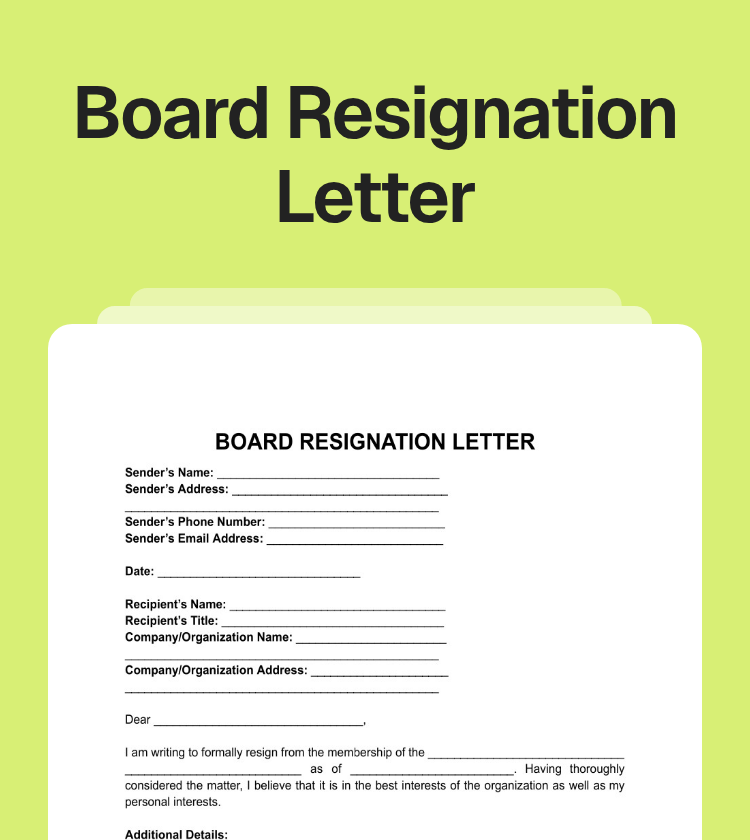
Free Board Resignation Letter Template
Template Description
Copy section link
What Is a Board Resignation Letter?
Copy section linkA board resignation letter, which is also often called a letter of resignation from the board, is a formal paper that a board member writes to tell the organization they are leaving their position. This document includes the date the resignation will take effect and explains the reason for leaving. Though often viewed as formal, the letter shows the person's respect for the organization and helps keep relations with its members professional and clear.
When to Use a Board Resignation Letter
Copy section linkIf you decide to step down from your role on a board of directors, submitting a board member resignation letter is the only proper and professional way to communicate the decision. This document serves as your official notice, helps to avoid any misunderstandings, and allows the organization to begin planning for your departure.
The reasons why board members may want to leave their position differ. Here are the most common ones:
A busy personal schedule or new business projects that require much time.
Health-related problems.
A change in career direction or job responsibilities.
Conflicts with the organization's mission, values, or leadership.
Structural changes or shifts in the organization's strategy.
Legal obligations or conflicts of interest that make further cooperation inappropriate.
How to Write a Board Resignation Letter
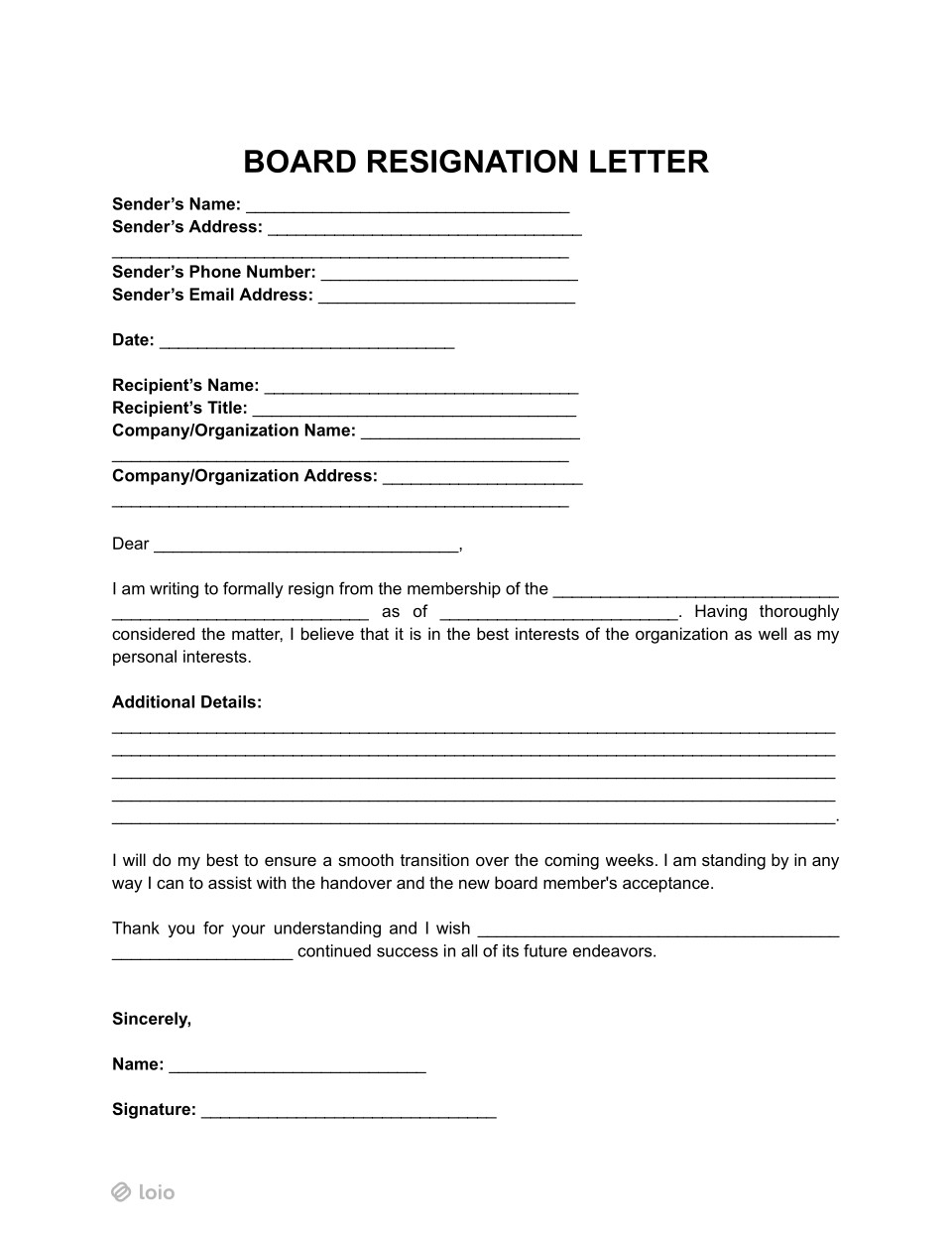
Copy section linkThe simplest way to create a well-structured document is to fill out a board resignation letter template provided by Loio.
Start with your name, address, and the date.
Provide the recipient's name and title. Usually, this is the board chairperson or executive director.
Add the company's name and address.
State your resignation clearly. Mention that you are stepping down from your role on the board and the date your resignation will take effect. It is recommended to include a brief, non-detailed reason, such as personal circumstances or a change in responsibilities.
Express gratitude. Thank the organization and your fellow board members for the opportunity to serve.
Offer help with the transition. If possible, mention that you are willing to support the process and teach a person who will take your position.
Add your name and signature with Loio Sign.
Keep the sample board resignation letter short, polite, and professional.
Parties in a Board Resignation Letter
Copy section link- Resignor — The person who leaves their role on the board and writes the letter of resignation from board.
- Board — The head of the board or an executive director who receives, approves the letter, and informs the rest of the board about the resigning member's decision.
Key Terms in a Board Resignation Letter
Copy section linkIn a board resignation letter example, you may come across the following terms:
- Board of directors — A group of people responsible for leading and making important decisions for the organization.
- Resignation — A formal way to say you're stepping down from your board position.
- Effective date — The exact day your resignation officially begins.
- Bylaws — The organization's written rules that explain how the board works and how resignations should happen.
- Transition — The period when you help the board adjust to your departure, like sharing updates or handing over tasks.
- Service term — The time period you agreed to serve on the board (e.g., 1 year, 3 years).
How to Resign from a Board of Directors
Copy section linkIf you plan to step down from a board position, it's important to do it correctly. Follow these steps to exit professionally:
Read the organization's bylaws.
Start by checking the board's bylaws. These are the rules that explain how things work. Look for any guidelines on resigning, like how much notice you need to give or who you should inform.Write a resignation from board letter.
Use a resignation letter template, include the date you plan to leave, and, if you want, a short reason. Express your gratitude for the opportunity to be a part of the board and keep the tone professional.Deliver the document.
You can send your letter of resignation from a board in a few ways:- By email (attach your letter as a PDF file).
- By mailing or delivering a printed copy. In this case, you should additionally check if the addressee has received the letter.
- By giving it in person at a meeting or scheduled appointment.
Help with the transition.
Try to make your departure smooth. You can offer to finish any urgent tasks, introduce someone to take over your role, or provide useful information for the next board member. Giving this extra help shows professionalism and care for the organization.
What not to say when you resign?
No matter why you're leaving, it's important to stay respectful and professional in your resignation letter. Saying the wrong thing can damage your relationships and harm your reputation.
Here are a few things to keep in mind:
Do not criticize board members, the leadership, or the organization, even if you have faced challenges.
Avoid mentioning arguments or past conflicts. A resignation letter is not the place to settle personal issues.
Never use harsh language or make demands.
Instead, write a humble board resignation letter sample. You can explain your reason for resignation without blaming or criticizing anyone. For example, you might say, "Due to new professional responsibilities, I need to step away from my board duties at this time."
Can a board member resign at any time?
Yes, in most cases, board members can resign when they want. However, the organization's bylaws may ask for advance notice or for the resignation to happen at a scheduled time, like the end of a board term.
If an immediate resignation is needed due to an emergency or legal matter, the board should accept it once it receives the resignation letter from a board. Still, offering a reasonable notice period — like two to four weeks — is considered polite and helpful.