Free template
Free Job Order Form Template
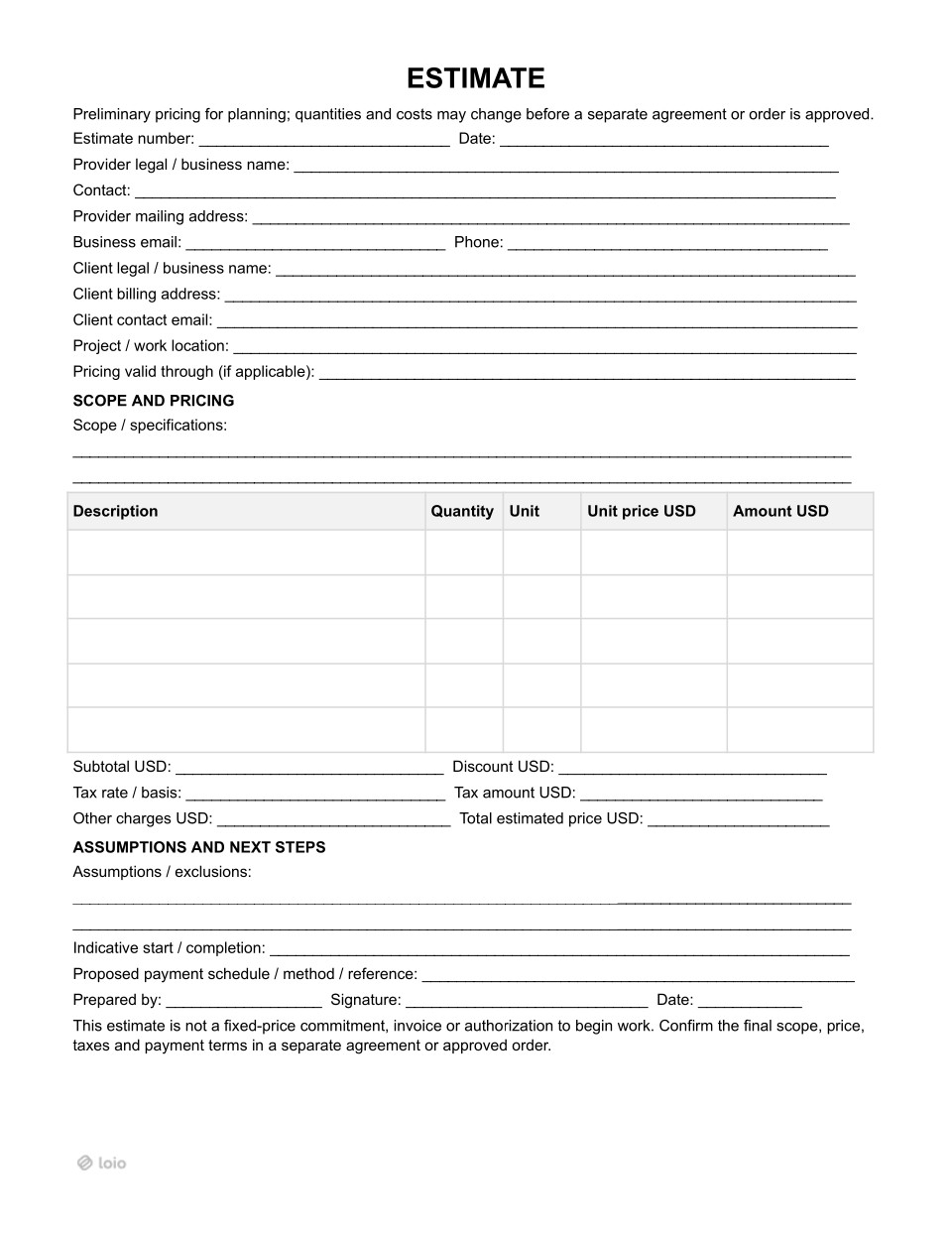
A job order is a document that turns a company’s hiring need into a clear, written description of one role. The client company fills it in, or gives the details to the agency’s recruiter, before the agency starts looking for candidates. It records the job title, number of openings, placement type, worksite, schedule, duties, requirements, pay range, and who handles interviews and screening.
With a job order form template, the agency recruits against a clear written spec, not against notes from a phone call. Later, if there is a question about what was requested, both sides can check the same document.
Is a Job Order the Right Document?
Copy section linkA job order describes one role. It is not an employment offer and not an agreement between the client company and the agency. Bill rates, placement fees, replacement guarantees, and temp-to-hire conversion fees are set in the contract with the agency, such as a recruitment agreement. The job order form can point to those terms, but it does not create new ones. It is a mistake to assume that once the order is signed, the fees are settled.
| Situation | Document to use |
|---|---|
| A dental clinic already works with an agency and needs two front desk assistants. | One job order, with 2 openings |
| A warehouse needs forklift drivers, packers, and a shift lead from the same agency. | Three job orders, one for each job title |
| A software startup wants an agency to find a project manager, but they have never worked together. | The agency agreement first, then the job order |
| The client has chosen a candidate and wants to make an offer. | An employment offer letter or employment agreement |
| The company hires without an agency. | Its own job description and posting |
On the client company’s side, two people usually take part:
The manager who will supervise the worker knows the duties and schedule best.
The person who signed the agency agreement confirms the placement type and the fee terms.
Placement Type, Location, and Schedule
Copy section linkThe placement type decides whose employee the worker is and how the agency gets paid:
| Placement type | Who employs the worker | How the agency is paid |
|---|---|---|
| Temporary | The agency, during the assignment | Bill rate for hours worked |
| Temp-to-hire | The agency first, then the client company if it hires the worker | Bill rate, plus a conversion fee if the agreement has one |
| Direct hire | The client company, from day one | A placement fee |
The type chosen in the job order should match the agency agreement, because conversion and placement fees depend on it.
The worksite matters even for remote jobs. The place where the work is actually done decides which state and city rules apply, including pay, overtime, leave, and pay range disclosure. For a remote role, the job order should name where the work may be done, not only the client’s office. For example, a Chicago company hiring a remote bookkeeper who lives in New York City may need to follow New York City’s rules for that role.
For temporary workers, the agency pays based on the hours the client company confirms. So the job order should name a worksite supervisor and a scheduling contact who will actually confirm hours, and note the expected overtime. It also helps to agree on how extra time requested on site reaches the agency. Approval rules do not change one thing: if the worker works extra time, it must be paid, even if no one approved it in advance.
Describe the Job, Not the Person
Copy section linkThe main duties come first, and the requirements follow from them. Skills, experience, education, and licenses should include only what the duties actually need.
Some requirements sound neutral but can screen people out unfairly. “A recent graduate” can exclude candidates by age, and “a native English speaker” – by national origin. A job-related alternative works better: “Writes clear customer emails in English.”
An agency that follows a client’s discriminatory request is liable together with the client. “The client asked for it” is not a defense. If a client asks for something like “no one over 40,” the agency and the client should agree on a job-related standard instead. Protected characteristics, such as age, race, religion, or disability, do not belong in a job order.
The physical tasks listed in a job order matter after hiring, too. If a worker with a disability later asks for changes to their job, the written job order can be used to show which tasks are really part of the job. If a task that happens only once in a while is listed as a main task, it becomes harder to adjust the job for that worker.
Hazards, Safety Gear, and Training
Copy section linkA common belief is that safety is only the agency’s job because the agency employs the temporary worker. In practice, the client company and the agency usually share responsibility for a temp’s safety. The client controls the worksite, so it is expected to provide site-specific training and protective equipment. Neither side can pass its core safety duties to the other by agreement.
The job order should list the physical tasks, working conditions, hazards, and required protective equipment the worker will face, for example, “Works in a cold storage area at 35°F; steel-toe boots and insulated gloves required.” With this information, the agency can look for candidates with the right experience and plan training. Workers cannot be required to buy the protective equipment the job requires or have its cost taken from their pay.
Some states make this information a legal requirement. In Illinois, for instance, the client of a day and temporary labor agency must inform the worker about expected job hazards and provide site-specific training. Before the first day, the client company and the agency agree on who supplies the equipment and training, and the client names a contact for safety questions at the worksite.
Pay Range, Fees, and Screening
Copy section linkA job order has two different money fields, and they should not be mixed up:
The pay range is what the worker earns.
The bill rate or fee is what the client company pays the agency. It never appears in job ads or messages to candidates.
The pay range often ends up in job ads, so it has to be a range the client would really pay. Several states and cities require a good-faith pay range in job postings, and some of these rules also apply to agencies. In New York City, for example, employment agencies must include the range in the listings they publish, including for jobs done partly in the city or from a home there. A real minimum and maximum, such as “22–26 per hour,” works; “competitive pay” does not.
The job order should not include a candidate’s salary history. Many states also ban salary-history questions asked through an agent, so recruiters working on the order do not ask for it either.
Screening and onboarding steps need a clear owner, for example, “Agency: background check and drug test; client company: skills test and final interview.” Whoever orders a background check must first give the candidate a separate written notice and get a background check authorization form.
After the Job Order Is Signed
Copy section linkOnce the job order is signed, the agency starts recruiting and sends candidates to the named interview contact, using the agreed submission method, such as email or the client’s hiring system.
A job order is not a one-time document. It should be updated whenever the duties, pay, location, number of openings, or start date change. Otherwise, the agency keeps recruiting against old terms, and both sides lose time on candidates who no longer fit.
A dental clinic orders a front desk assistant for full-time work. Two weeks later, the clinic decides it needs only 25 hours a week. If the job order is not updated, the agency keeps sending candidates who want full-time jobs.
How Loio Helps With Job Orders
Copy section linkIf you’re a business owner needing people for similar positions regularly or a recruiter, you do not have to keep notes and create a separate folder for every position or candidate. In Loio, you can manage job orders – from the first draft to the final version – in one place. Here’s how it works:
Open the job order template in Loio Templates and fill in the role, pay, and contacts.
If you’re the agent preparing the order from the client’s words, send the final version to the client and request their signature. If you’re the client and prepare the order yourself, add your electronic signature to demonstrate you agree on the requirements and terms described in the job order.
If any party needs to clarify something, they can redline the text directly in the file, make changes, and approve the final version quickly.
What is a job order in recruitment?
A job order is a written description of a role that a client company asks an agency to fill. It includes the job title, number of openings, placement type, duties, requirements, pay range, schedule, and contacts. The agency uses it as the brief for its search.
Who fills out a job order form?
Either side. Often, the agency’s recruiter fills it in during a call with the client company, and the client confirms the details. The manager who will supervise the worker should check the duties and schedule.
Is a job order a contract?
No, a job order only describes the role, but the business terms, such as fees, bill rates, and guarantees, come from the agreement between the client company and the agency. The job offer to the chosen candidate is a separate document, too.