Free template
Free Landlord Recommendation Letter

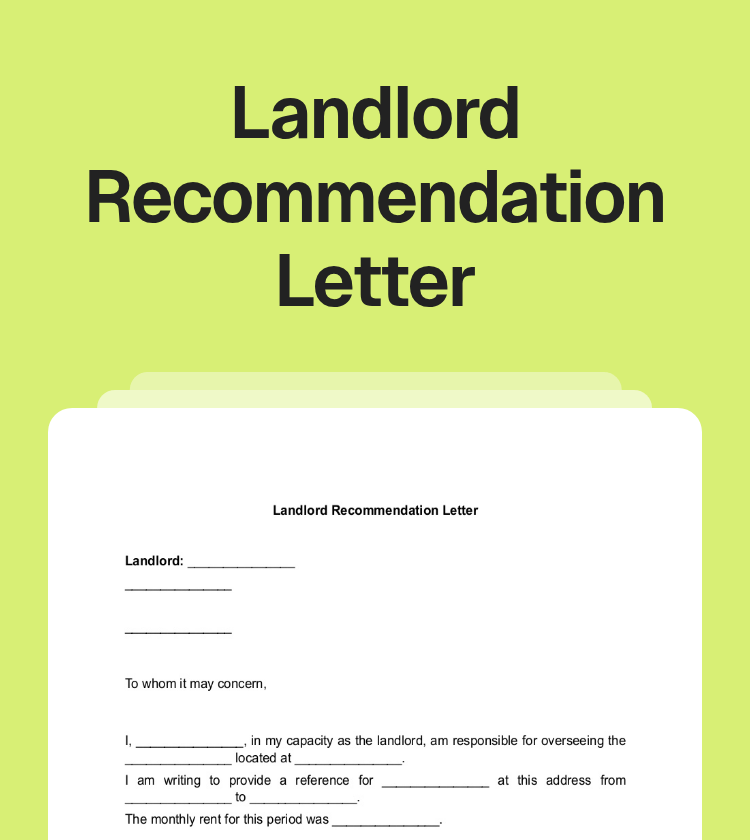
Sample Landlord Reference Letter
Copy section linkWhen using a template, make sure every piece of information is accurate. Review your landlord letter before you send it to ensure the dates, names, and your assessment are correct. Customizing it slightly can add a personal touch, but sticking to this structure ensures you cover all the bases professionally.
Here, you will find a comprehensive guide to help you understand everything you need to know about a landlord reference letter. We'll cover what to include, what to avoid for legal reasons, and provide a free landlord reference letter template you can use right away.
What Is a Landlord Reference Letter?
Copy section linkA landlord reference letter, also known as a landlord recommendation letter, is a document written by a property owner or manager that details their experience with a current or former tenant. Think of it as a character and financial reference rolled into one, specifically for the rental world.
The primary purpose of these reference letters is to give a prospective landlord insight into an applicant's reliability. A new landlord will use this letter of recommendation to verify a tenant's rental history and assess their suitability. It helps answer critical questions: Did they pay rent on time? Did they take care of the property? Were they a respectful neighbor? This information helps a landlord make a more informed decision beyond the numbers on a credit report.
Why Should I Write a Recommendation Letter for a Tenant
Copy section linkWriting a recommendation for a tenant is a professional courtesy that benefits everyone involved in the rental process.
For the landlord:
- It’s a simple act of goodwill that helps a great tenant you valued find their next home.
- It fosters a positive and professional relationship, even after the tenancy has ended. A former tenant who had a good experience is more likely to speak highly of you as a landlord.
For the tenant:
- A positive landlord reference letter can significantly strengthen a rental application, especially in a market with many applicants for the same property.
- It provides tangible proof of a positive rental history. This can be particularly helpful if a renter has a less-than-perfect credit score or is new to renting. A good reference can show they are a low-risk tenant despite other factors.
What to Include in a Landlord Reference Letter
Copy section linkTo be effective, a landlord reference letter needs to be clear, concise, and factual. Here is a walkthrough of the essential information to include in a landlord reference.
Landlord's contact information
Start with your details at the top. Include your full name (the landlord’s name), the address of the property you manage or own, your phone number, and your email address. This allows the new landlord to contact you for follow-up questions.Tenant and tenancy details
Clearly identify the person the letter is for. State the tenant's full name and the address of the rental property they occupied. You must also include the dates of the tenancy, specifying the start and end of the rental period under the lease.The core recommendation: tenant's rental history
This is the most important part of the letter. Stick to the facts of the tenancy.- Rent payment record: State clearly whether the tenant was timely in their rent payments. You can say something like, "During their tenancy, [Tenant Name] always paid rent on time." If there were occasional, minor late payments that were quickly resolved, you might choose to omit them, but you should never be untruthful. Honesty is key.
- Property care: Describe the tenant's upkeep of the property. Did they adhere to the terms of the lease regarding maintenance? Mention if they kept the property in good condition and respected the property. A comment about the state of the apartment after the final walkthrough can be very powerful, for example, "The unit was left in excellent condition, requiring minimal cleaning."
- Lease compliance: Confirm that the tenant followed the rules outlined in the lease agreement. Note whether there were any significant lease violations or recurring complaints from neighbors.
- Overall character: Conclude this section with a brief, honest summary. A simple but effective line is, "I would gladly rent to [Tenant Name] again in the future."
Closing and signature
End the letter with a professional closing. A statement like, "Feel free to contact me if you have any further questions," is appropriate. Finish with your signature and printed name.
How to Request a Landlord Reference Letter (for Tenants)
Copy section linkIf you're a renter, getting a strong letter of reference from a former landlord can make your search for a new apartment much easier.
Give notice: Contact your previous landlord well in advance. Don't wait until the day your new application is due.
Ask politely: Send a polite email or make a phone call. Remind them of who you are and the dates you rented from them.
Provide information: Make it easy for them. Tell them who to address the letter to and where to send it (an email address for the prospective landlord is common).
Follow up: Once they've sent the letter, a quick thank-you email is a nice gesture that maintains a positive relationship.
What to Avoid in the Landlord Recommendation Letter
Copy section linkWhen you write a landlord recommendation letter, you must be aware of certain legal boundaries to protect yourself and be fair to the tenant.
Fair housing laws and discrimination
This is the most critical legal point. The federal Fair Housing Act makes it illegal to discriminate in housing-related activities based on race, color, religion, sex (including gender identity and sexual orientation), familial status (e.g., having a child or children), national origin, or disability.
When writing a letter, stick strictly to facts about the tenancy. Do not include any personal information or observations about the tenant that could be related to these protected classes. Your focus should only be on their performance as a tenant.
Defamation and honesty
You must be truthful in your letter. If you provide false negative information that prevents a tenant from securing housing, you could potentially face a lawsuit for defamation.
Conversely, providing a glowing reference for a problematic tenant could cause issues as well. If the new landlord relies on your misleading letter and suffers financial damages (e.g., from unpaid rent or property destruction), they could potentially hold you liable. If you had a negative experience with a tenant, it is often best to either decline to write a letter or provide a very basic, factual reference confirming only the tenancy dates and rent amount. If you are unsure, it may be wise to consult a lawyer familiar with landlord-tenant law.
Landlord Recommendation Letter FAQ
Copy section linkCan a landlord refuse to give a reference?
Yes. In most jurisdictions, a landlord is under no legal obligation to provide a reference letter, positive or negative.
What if my previous landlord gives me a bad reference?
If you suspect a prior landlord might give you a negative reference, it's best to be upfront with a potential landlord. You can try to mitigate it by providing other positive references, such as from an employer or another former landlord.
Is an email acceptable as a letter of reference?
Absolutely. In today's digital world, an email is a perfectly acceptable and common format for a rental reference letter.
Related documents
Also read