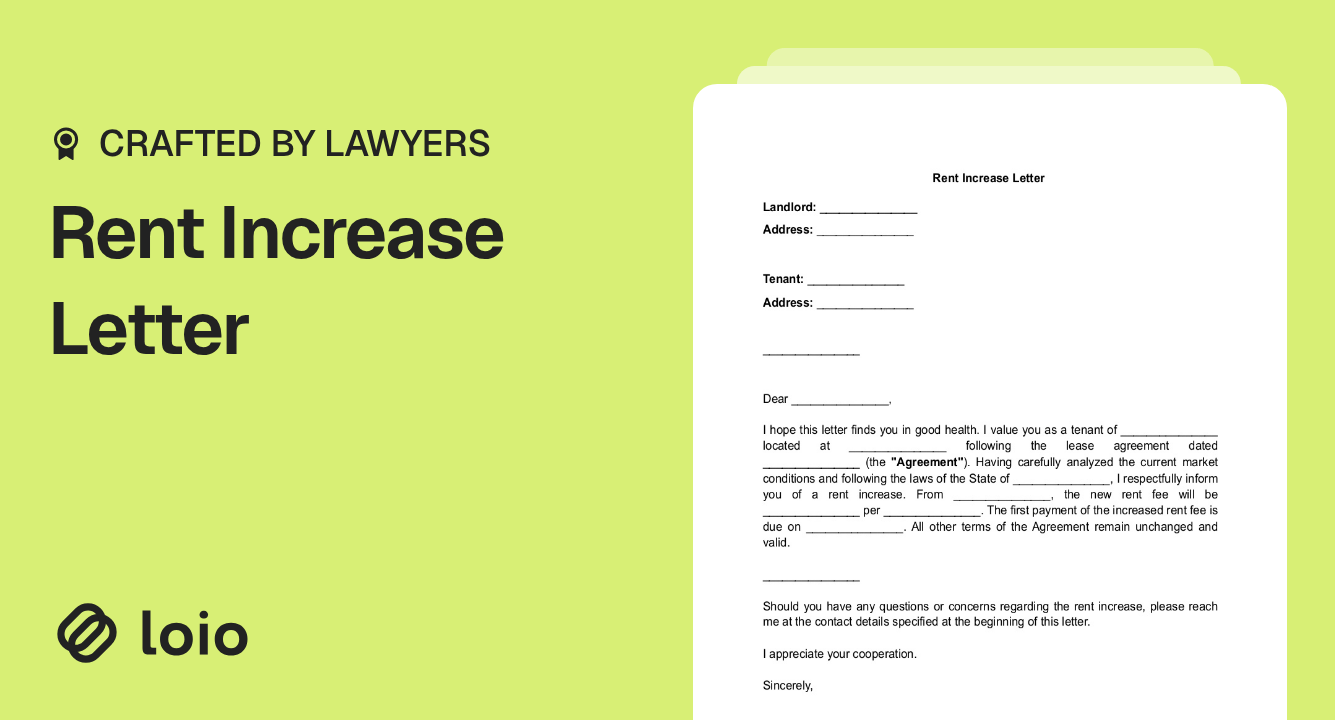
Free template
Free Rent Increase Letter Template

What Is a Rent Increase Notice?
Copy section linkA rent increase notice is a formal document that informs tenants of a change in their rental rate. This document sets out the new rent amount and the effective date.
It is the law in most places that you have to give a rent rise notice before decreasing the rent. This applies to both fixed-term leases and month-to-month rental agreements. Without it, landlords risk legal disputes or even eviction complications.
What to Include in Your Rent Increase Notice
Copy section linkA rent increase notice is a formal letter, and it must contain specific information to be considered valid. It must be clear, concise, and provide all the necessary data your tenant needs.
Key information for a legally compliant letter
Your rent increase letter must include the following details to be legally sound:
The tenant's full name and the property address.
Your name and contact information as the landlord or property manager.
The date the letter is written.
The current rent amount.
The new rent amount.
The date the new monthly rent will take effect.
How to explain the reason for the rent increase
While not always legally required, a brief reason for the rental increase can help maintain a good relationship with your tenant. You can mention factors like rising utility costs, increased property taxes, or investments made in property maintenance. A short, professional explanation can make the upcoming rent increase feel less arbitrary.
How to Write a Rent Increase Letter
Copy section linkWriting a rent increase letter template involves clear communication and legal compliance. Here’s a process:
Identify the parties: Include the landlord’s and tenant’s names, addresses, and contact details.
Reference the lease agreement: Note the lease start date, type (fixed-term or month-to-month), and any relevant clauses.
State the rent change: List the present rent, the new rent, and the practical date of change.
Explain the reason (optional but recommended): Landlords often cite rising property taxes, insurance costs, or market conditions like inflation.
Include the legal notice period: Specify when the notice was given, ensuring it meets state-specific legal requirements (commonly 30 or 60 days).
Provide contact information: Invite the tenant to reach out with questions.
Landlord signature and date: To validate the notice, the landlord’s signature is essential. With Loio Sign, landlords can securely sign rent increase notices and other legal documents online, ensuring the process is fast, compliant, and legally binding.
Using a rent increase notice template can help landlords guarantee that they cover all key components.
Understanding the Legal Requirements for a Rent Increase
Copy section linkBefore you increase the rent, it's crucial to understand your legal obligations as a landlord. Landlord-tenant law varies significantly by jurisdiction, so what's required in one city or state may not apply in another. Failing to follow the correct procedure can invalidate your rent increase notice.
Check local and state laws before you raise the rent
The first step is to research the specific laws governing your property. Many areas have rent control laws or rent control regulations that limit how much and how often you can raise the rent. These statutes exist to protect tenants from drastic and frequent increases. If you are unsure about the local laws, it may be wise to consult with a lawyer who specializes in landlord–tenant law. Ignoring these rules can lead to legal disputes. You cannot raise the rent and violate a fixed-term lease unless the lease agreement itself allows for it.
Providing the required notice period to your tenant
Nearly every jurisdiction requires landlords to provide tenants with a required notice period before a rent increase takes effect. This means you must deliver a rent increase letter a certain number of days before the new rent is due. A common requirement is 30 days' notice, but for a larger rent increase, some state laws may require up to 90 days. Giving enough notice is not just a courtesy; it's a legal mandate. This gives the tenant time to budget for the new payment or, if they cannot afford the increase in rent, to provide a notice to vacate.
How Much Notice is Needed to Increase Rent?
Copy section linkThe legal notice period to increase rent varies by state and local law. In many places, a landlord has to give at least 30 days' written notice. In some places, you may need at least 60 days, especially if the rent is going up by more than a certain amount.
If the rent increase form is sent by mail, e-mail, or hand delivery, the tenant is officially informed. This is called "service of process." Skipping this step can invalidate the notice and lead to potential disputes or delays.
Key steps to legally increase rent
To legally increase rent, landlords should follow these steps.
Review local rent control and rent regulation laws to check if restrictions apply.
Confirm lease terms. Many lease agreements are drafted when rent can be adjusted. Particularly for month-to-month leases versus fixed-term leases.
Use a rent increase notice form that includes all required elements. These elements are tenant details, old and new rent, effective date, and landlord signature.
Serve the notice properly. Document delivery, especially through registered methods, to guarantee compliance.
These steps lower the chance of legal problems and make sure that the landlord-tenant relationship is clear.
How to Deliver a Rent Increase Letter to Your Tenant
Copy section linkHow you deliver a rent increase notice is just as important as what it says. Your local laws may specify an approved delivery method.
Options for delivery: mail, email, or in-person
You can typically deliver a rent increase notice in person, send it via mail, or use email if your lease allows for electronic communication. Each method has its pros and cons. In-person delivery is direct, but it can be awkward. Email is fast, but it can get lost in an inbox.
The importance of a receipt and certified mail
Regardless of the method, you need evidence that your tenant received the increase notice. The best way to do this is to use certified mail. This service provides receipt and tracking information, proving when the letter was delivered. This documentation is invaluable if a dispute arises over whether the tenant was given enough notice.
What to Do After You Send a Rent Increase Notice
Copy section linkYour job isn't over once you send a rent increase. A good landlord will be prepared for the tenant's response.
Handling tenant questions and concerns
Your tenant will likely have questions about the upcoming increase. Be prepared to discuss the new rent and listen to their concerns. Clear and respectful communication can prevent misunderstandings and preserve the landlord-tenant relationship. The ultimate goal is to retain a good tenant while ensuring your rental business remains profitable.
Next steps if a tenant decides to vacate
If the rent increase is more than the tenant can afford, they may choose to vacate the property at the end of the lease term. If this happens, they must provide you with a formal notice to vacate. You will then need to follow the standard procedures for move-out, including handling their security deposit and preparing the rental for a new tenancy. If the tenant has a month-to-month tenancy, the rent increase notice may function similarly to a non-renewal notice if they decide not to stay.