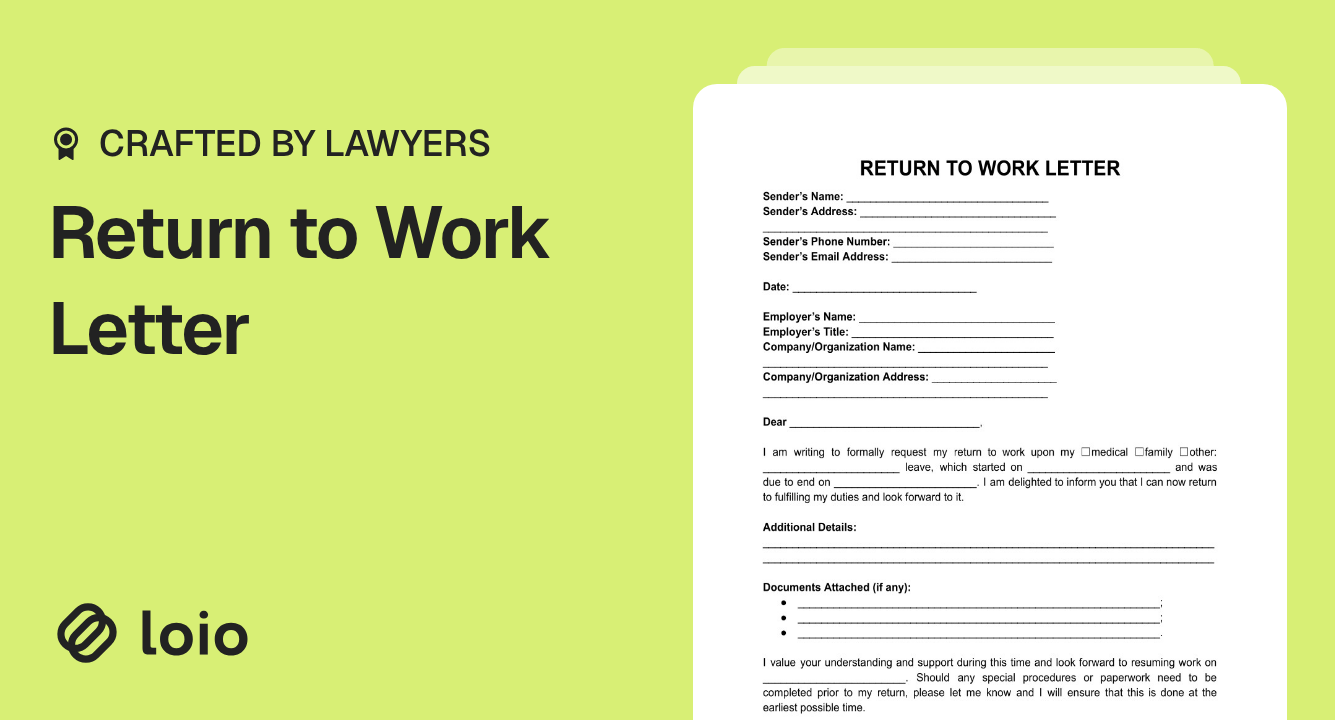
A Return to Work Letter is a communication between an employee and an employer notifying the intent to resume work after leave. It is used to confirm return dates and ensure compliance with workplace policies.
A return to work letter is a formal document an employee provides to their employer when they are ready to come back to work after an extended absence. It can be due to many reasons, such as:
Medical leave;
Pregnancy;
Parental leave;
Military leave;
Recovery from a workplace injury;
Family reasons;
Another reason that kept you away from work.
A return to work letter from an employee is not a legally binding document. Its main purpose is to inform your employer that you are ready to return to your duties, give them time to prepare, and help you both agree on your day back. In some cases, employees may be able to perform only part of their usual duties or need special workplace accommodations.
What You Should Know Before You Use a Return to Work Letter
Depending on the reasons for your absence, your employer may expect you to provide certain documents together with the return-back-to-work letter.
If you have been absent from work due to medical reasons, like severe illnesses, major surgeries, or a serious injury, or if your company policy requires it, you should attach a medical clearance. It can be one of two types:
A "fit-for-full-duty" certification from your doctor that confirms you can get back to your usual duties without restrictions.
Modified duty / Restrictions form where your doctor lists your limitations (e.g., "cannot lift over 15 lbs," "requires a sit-stand desk," or "limited to 20 hours per week") if you cannot do your full job yet.
None of these forms reveals your diagnoses or illness history details. Under the Family and Medical Leave Act, it should just inform the employer that it is safe for you to perform your job-related duties.
If you work in healthcare, childcare, or food service, you may also be required to attach negative test results or clearance screens for infectious illnesses.
It is recommended to submit a letter 1–2 weeks in advance of the date when you’re ready to return to work so that you and the employer have enough time to discuss all the details.
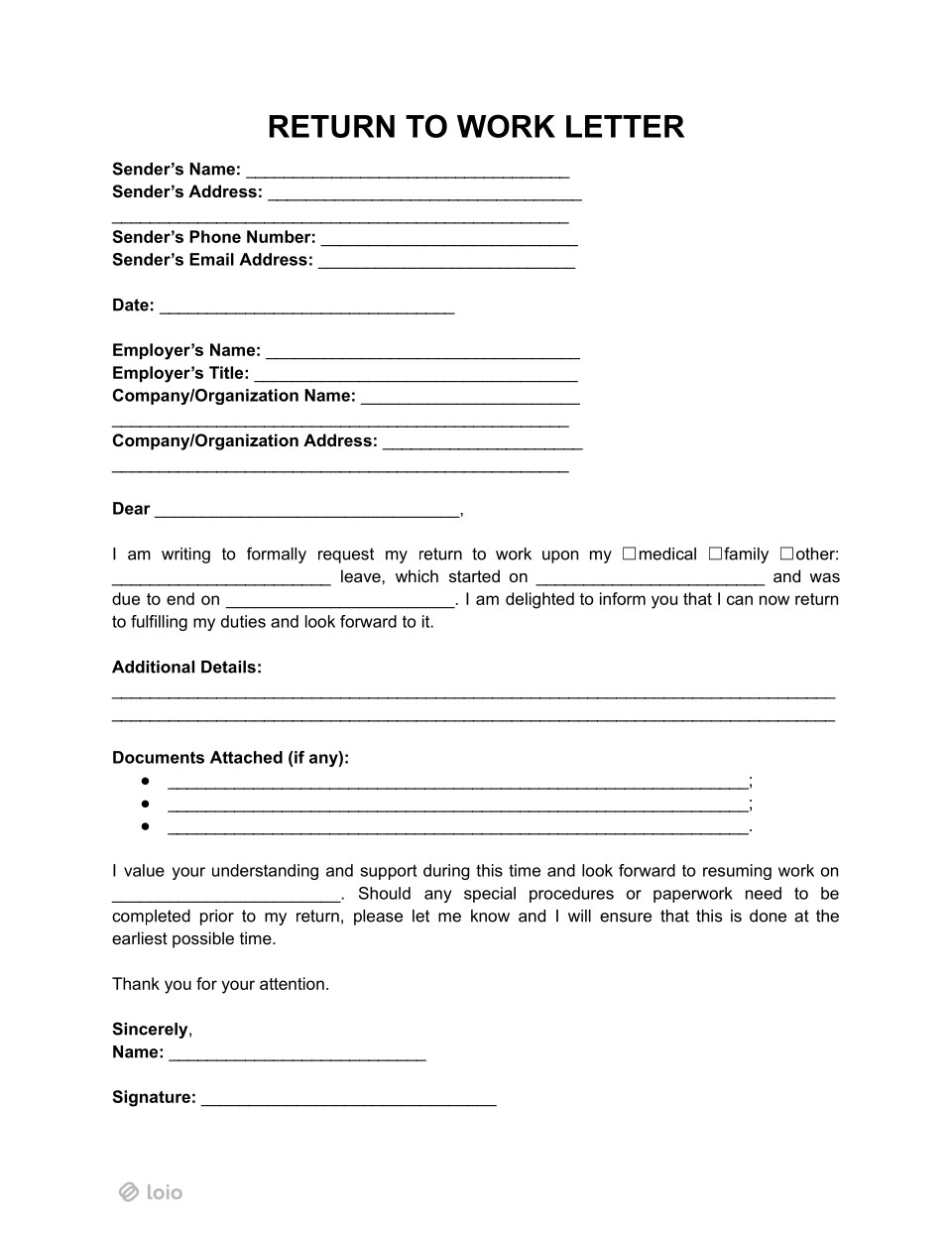
There is no fixed format for a letter to return to work. You can add any information you consider appropriate and useful. Generally, to fill out the return to work letter template or draft the document yourself, you need to follow these steps:
Step 1: Provide the sender’s (employee’s) details and date
Write your full name, address, phone number, and email address so that the employer knows how to contact you in case they want to discuss any details of your return.
Add the date when you send the letter to the employer.
Step 2: Provide the employer's details.
Include the employer’s name and title. It can be the head of the company, your manager, or the head of the HR department.
Add the full company name and address.
Step 3: State the purpose of your letter
Address the employer by name.
Clearly state your intention to return to work. Specify the reason for your absence – medical, family, or other. Don't include private details; a general statement is enough.
Step 4: Add important details
Mention if you will need schedule adjustments, special accommodations, or have work-related restrictions.
Step 5: List documentation attached
If you add any files to the back-to-work letter, such as medical clearance, mention them in the document.
Step 6: Express your readiness to work
Specify the date when you are ready to return to your duties.
Step 7. Sign the letter
Add your name and handwritten or electronic signature at the end of the document.
Disclaimer
Requirements for this document vary by state. Review your state's laws and procedures — or consult a licensed attorney — before using this template to ensure it's valid and enforceable where you live.