Free template
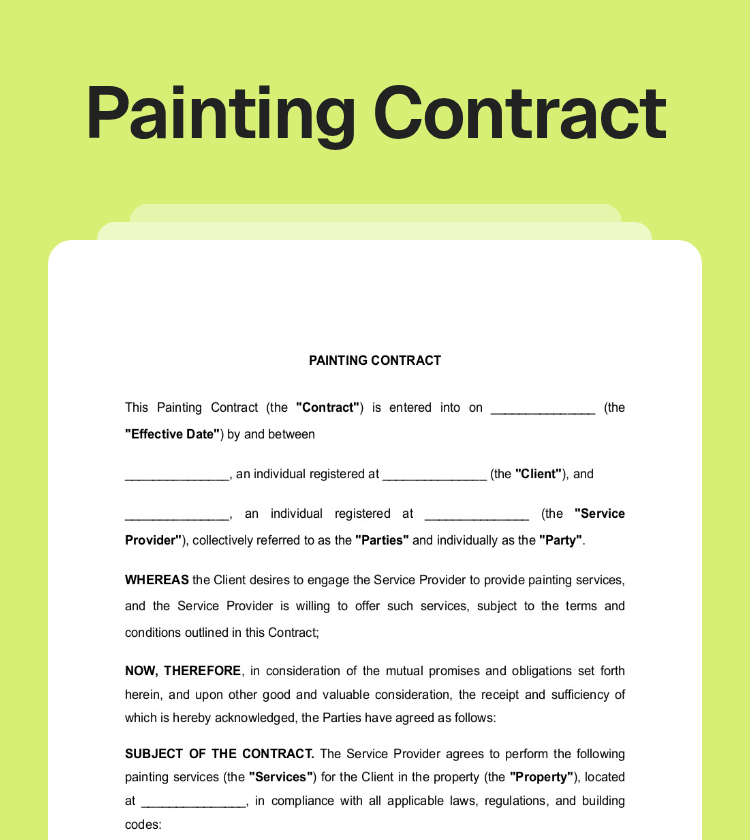
Free Painting Contract Template

What Is a Painting Contract?
Copy section linkA painting contract is a written agreement between a painting contractor and a client that defines the work to be completed, the price, payment schedule, materials, timeline, and each party’s responsibilities.
A contract for painting services can cover interior painting, exterior painting, or specialized work such as cabinets, trim, decks, staining, or decorative finishes. It should identify the surfaces being painted, preparation work, number of coats, paint brand or product specifications, materials, colors, or finishes.
Putting these details in writing helps prevent disputes over issues such as extra preparation, material substitutions, delays, cleanup, or whether additional work is included in the original price. The agreement can also establish:
the deposit and installment schedule;
who purchases paint and other materials;
how additional work is approved and priced;
cleanup and property-protection requirements;
warranties for labor or materials;
responsibility for permits or licenses, where required;
the process for handling cancellations, delays, damage, or disputes.
For larger projects, an estimate, bid, scope of work, or product schedule can be attached to the painting contract and incorporated into the agreement.
Loio’s Painting Contract Template can help document the project scope, materials, payment schedule, and change-order process. The completed contract should still be checked against licensing, notice, payment, and other requirements that apply in the project’s state.
Parties to a Painting Contract
Copy section linkA painting contract usually identifies the following parties:
Painting Contractor. The individual or company hired to perform the painting services. The contract should include the contractor’s legal or business name, contact information, and contractor license number where state or local law requires one.
Client or Property Owner. The person or business hiring the contractor. The contract should separately identify who has authority to approve the work and who is responsible for payment, particularly when a tenant, property manager, agent, or other representative signs on behalf of someone else.
Subcontractor. A subcontractor may perform part of the project, such as cabinet finishing, pressure washing, drywall repair, or another specialized task. The contract should explain whether subcontractors may be used and what work they may perform. Using subcontractors does not eliminate the painting contractor’s own contractual or legal obligations to the client.
Clearly identifying the parties helps establish who can approve change orders, authorize access to the property, receive invoices, and make decisions about materials or additional work.
Key Terms in a Painting Contract
Copy section link- Bid vs. estimate. An estimate generally provides an expected cost based on available information and may change if the scope or conditions change. A bid is usually a more definite price offered for a defined scope of work. Whether either becomes binding depends on its wording, acceptance, and applicable state law.
- Punch list. A list of minor corrections, touch-ups, or unfinished items identified near the end of the project. The contract can require completion of the punch list before final payment is due.
- Primer. A preparatory coating applied before paint to improve adhesion, cover stains, seal porous surfaces, or prepare a surface for a new color. The contract should state when primer is included because it can affect labor and material costs.
- Mildew treatment and moisture conditions. Cleaning or treating surfaces affected by mildew before painting. The contract should distinguish ordinary surface preparation from mold or moisture remediation that may require additional work or a qualified specialist.
- Lead-safe RRP. The EPA’s Renovation, Repair and Painting requirements apply to many paid projects that disturb painted surfaces in pre-1978 housing and child-occupied facilities. Covered firms and renovators must meet applicable certification, training, and lead-safe work-practice requirements.
- Drop-cloth protection. The use of drop cloths, plastic sheeting, masking materials, or similar coverings to protect floors, furniture, landscaping, fixtures, and other property from paint, dust, and debris. The contract should state what the painter will move or protect and what the client must remove before work begins.
Know Before You Use a Painting Contract
Copy section linkPainting contractors may be subject to state licensing, home-improvement contract, deposit, notice, cancellation, and change-order rules, so the same contract should not automatically be used in every state.
Arizona, for example, has Painting and Wall Covering contractor classifications. Arizona law generally prohibits acting as a contractor — including submitting a bid — without the required contractor license unless an exemption applies.
California requires a written contract for home-improvement projects over $500 in combined labor and material costs. The contract must satisfy specific requirements concerning project terms, payment schedules, changes to the work, contractor information, and cancellation rights. California also generally limits a home-improvement down payment to $1,000 or 10% of the contract price, whichever is less.
Federal requirements can also affect painting work:
EPA Lead Renovation, Repair and Painting (RRP) Rule. Paid work that disturbs painted surfaces in many pre-1978 homes and child-occupied facilities is subject to EPA lead-safe requirements. Minor repair and maintenance that disturbs 6 square feet or less of interior painted surface per room or 20 square feet or less of exterior painted surface can fall outside the RRP Rule, provided the work does not involve window replacement, demolition of painted surfaces, or prohibited work practices.
OSHA fall protection. OSHA construction standards generally require fall protection for employees exposed to unprotected sides or edges 6 feet or more above a lower level. Separate scaffold rules generally require fall protection for employees on scaffolds more than 10 feet above a lower level.
State contractor licensing. Licensing requirements depend on the state, locality, type of property, and scope of work. Contractors should check the applicable licensing authority before bidding or beginning regulated painting work.
The contract should leave room for required license numbers, statutory notices, cancellation rights, deposit restrictions, and other state-specific provisions.
How to Fill Out a Painting Contract on Loio
Copy section linkThe process of creating painting contracts templates from Loio involves a few straightforward steps:
Choose the template: Start by navigating the Loio website and selecting the template for a painting сontract.
Give details: You need to answer the question to customize the document. The points you provide will be automatically added to the respective sections of the contract.
Review the document: Once you've added all the details, check this document carefully, ensuring the provided information is accurate and complete.
Save the document: Your sample painting contract will be saved on your Loio account. Your information will be stored so that you may amend, sign, or finish the document later.
Sign the contract: If you want to use a digital copy – a painting contract PDF – use Loio Sign feature to add signatures.
What makes a painting contract legally binding?
A contract generally requires parties with legal capacity, agreement on sufficiently definite terms, consideration, and a lawful purpose. State law may impose additional requirements. For example, some home-improvement laws require written and signed contracts containing prescribed terms, disclosures, or notices.
Where can I get a painting contract?
You can customize a painting contract template, draft your own agreement, or have an attorney prepare or review one. State contractor agencies may also publish mandatory contract provisions, notices, or consumer disclosures that should be incorporated where applicable.
Do I need to notarize a painting contract?
Usually, a standard painting contract does not need notarization merely to be enforceable. However, separate requirements may apply to related construction documents, public projects, mechanics liens, or particular transactions under state law.
How much should I charge to paint a 2,000-square-foot house?
There is no standard price based only on a home's floor area because the actual paintable surface can vary significantly. A quote should account for paintable walls and exterior surfaces, labor, paint and primer, preparation, repairs, number of coats, trim, ceilings, equipment, accessibility, cleanup, overhead, taxes, and profit.
Does a painting contractor need a license?
It depends on the jurisdiction, project, and scope of work. Arizona, for example, has residential, commercial, and dual Painting and Wall Covering contractor classifications and generally prohibits bidding or acting as a contractor without the required license unless an exemption applies.
Sources
Related Documents
Also Read