Updated September 11, 2026
6 min read
Employment Contract Mistakes Small Business Owners Often Make
Employment Contract Mistakes Small Business Owners Often Make
- When Hiring Outside Your Home State
- Forgetting a Mandatory Notice Period
- Mixing “Exempt” and “Non-Exempt” Language
- Overlooking the Impact of Side Hustles
- Ignoring Modification Clauses
- Informal Promises vs. Contract Language
- How to Update a Contract Without Ruining the Relationship
- Before You Hire: The Wider Checklist
Content
It's time to hire your first employee. You've gone through the hiring process, and now you're drafting a contract. When you draft your first employment contract as a small business owner, you hardly know what to do. Since you don't have an entire HR team to handle your business, you have to learn to create and manage a lot of paperwork—which is stressful; we get that. Some employment contract mistakes can cost you a lot, and it's far more difficult to resolve the issue once both of you sign.
This guide covers the five contract mistakes small business owners make most often, what each one leads to, and what to write instead. It starts with something that isn't a mistake — it's the fact most first-time employers get wrong before they write a single clause.
When Hiring Outside Your Home State
Let's start with the point most owners miss when hiring someone outside their home state — plenty of employers do that today, and it shapes how you write a contract. Many new employers think that the employment contract is ruled by the regulations of their own state. After all, that is where your business is registered.
In practice, employment law follows the employee's place of work. The state where your employee sits generally governs minimum wage, overtime, leave, pay transparency, final pay, expense reimbursement, and payroll withholding — and a governing-law clause naming your home state doesn't displace those mandatory protections. So if your business operates out of Ohio but your new marketing manager works from their apartment in California, Colorado, or New York, those are the rules your contract has to meet. Which state's law applies to which term still depends on the specific issue, how closely each state is connected to the job, and public-policy limits, so this is worth getting right before you draft. You can consult the U.S. Department of Labor Directory of State Labor Offices to check state-specific employment laws.
Multistate requirements many businesses miss
Hiring across state lines introduces operational and legal traps that catch first-time employers completely off guard:
Mandatory paid leave and payroll programs
Some states require employers to register for and contribute to state-administered Paid Family and Medical Leave programs, even if you only employ one person in that state. The Bipartisan Policy Center's state-by-state explainer shows which states run one and how each is funded.
Pay transparency and job posting rules
If your hire lives in a state with active pay transparency laws, the disclosure usually belongs in the job posting, not in the signed contract. Colorado's Equal Pay for Equal Work Act, for example, requires the pay rate or range, a general description of benefits, and how to apply — in the job posting and in internal notices of job opportunities, before you select anyone (CDLE INFO #9A). Putting a number in the offer letter doesn't satisfy it, and the posting is the part that gets enforced. Requirements and coverage vary by state and even by city, so check the posting rules where you're hiring rather than copying one state's approach everywhere.
Final paycheck timelines
Pay frequency and final paycheck rules vary a lot. When paying employees, remember what their state requires.
If you and your employee are in different states, the safest and easiest way to sign a contract is to use an eSign tool — it's secure and fast, saving both of you travel time.
Forgetting a Mandatory Notice Period
It's natural to expect that a two-week notice is a standard of employment law, but it's not. A typical courtesy notice is essentially just that: a courtesy. If your contract doesn't require written notice, at-will employment means either party can generally end the relationship at any time and without notice — you can let an employee go, and they can also walk out mid-project on a Monday morning with zero notice.
"Generally" matters here. At-will doesn't lift anti-discrimination, anti-retaliation, protected-leave, or public-policy limits on why you can let someone go. What it does mean is that with nothing in the contract, timing is a courtesy on both sides. It's a double-edged sword. And when you're a small business, a courtesy notice is dangerous — you can wake up without a key worker.
What you can do
You can address this risk via a contract:
- Ask for a clear 14- to 30-day written notice period for voluntary resignations.
- Allow yourself a garden leave option. This means the employee stays on your payroll but loses access to current work, systems, and business secrets. Whether paid garden leave is permitted, and on what terms, depends on state law — so check before you write it in. If you use it, spell out the duration, the pay, whether benefits continue, which duties the employee still has, and exactly what access ends.
- Define the handover rather than a finish line. You cannot make someone's resignation conditional on completing tasks — "you can't leave until the project ships" isn't something you can hold an employee to. What you can require: return of company property, a secure handover of company-controlled credentials and records, and reasonable cooperation for the rest of their employment. Route credential handover through your own IT process; never ask an employee for personal passwords.
Managing contracts is a critical responsibility of every company — read our guide to know what trends might appear in your own business.
Mixing “Exempt” and “Non-Exempt” Language
You hire an administrative assistant for $40,000 a year, label them "salaried exempt" in their contract, and have them log 50-hour weeks managing inventory and answering emails. When they leave a year later, they file a wage claim.
Now the label in the contract stops mattering. What matters is whether their actual duties and pay meet the tests for a specific exemption. Some office work does qualify — the administrative exemption can cover non-manual work involving real discretion and judgment on significant matters. Routine execution usually doesn't. There's no instant ruling either way: what you face is a wage claim or an investigation, with the burden on you to show the classification holds up, and unpaid back overtime, penalties, and legal fees if it doesn't.
When you're just starting your hiring process, it's easy to think that you'll just hand over a lump sum to your employee, and they'll be doing whatever you want. It sounds straightforward, but under the law, paying someone a fixed salary does not automatically mean they are exempt from overtime pay.
Let’s talk definitions first.
Exempt means the employee meets every element of a specific FLSA exemption. For most exemptions, that means a duties test plus payment on a salary basis at or above the federal minimum, though not always — doctors, lawyers, teachers, and outside sales employees can be exempt with no salary requirement at all (DOL Fact Sheet #17A).
Non-exempt means entitled to overtime pay — 1.5 times the regular rate for any hours worked over 40 in a workweek. It doesn't mean hourly. You can pay a non-exempt employee a salary; you still have to track their hours and pay the overtime they earn.
Under the Fair Labor Standards Act (FLSA), employees are non-exempt by default unless they meet strict federal and state tests based on salary level and actual daily job duties. Job titles don't decide it.
What you can do
Rather than risking it all or getting lost in complex paperwork, classify against the tests — not against how the job is shaped or what you call it:
- For a position you're treating as non-exempt. State the pay rate and how it's calculated, require the employee to log all working hours, and explain the overtime approval process. Write pre-approval as an expectation, not a condition of payment: all hours worked get paid even when overtime wasn't approved in advance, and you handle the process breach separately.
- For a position you believe is exempt. Identify the specific exemption you're relying on, and only after comparing the actual duties and compensation against the real federal and state tests — a manager title on its own doesn't establish anything. State that the salary covers all hours worked, and revisit the classification whenever the role materially changes.
One rule catches new employers out: you generally can't dock an exempt employee's salary for a partial-day absence without putting the exemption at risk (29 CFR § 541.602). So don't cut their pay for a couple of hours off at the doctor's. You can deduct that partial day from their accrued PTO or leave balance, as long as you still pay the guaranteed salary in full—DOL confirmed this in opinion letter FLSA2005-7.
Overlooking the Impact of Side Hustles
When you hire a worker, you don’t immediately get 100% of their professional energy. That’s not how it works, and it’s normal for an employee to have their side hustles and passion projects.
There’s no need to play the villain or ban hobbies in your contract. A good employer doesn’t have to police what your team does on Saturday morning; you just need to make sure that while they are on the clock and using your tools, their focus is on doing the job you pay them for.
What you can do
To maintain a positive relationship with your employee while protecting your business, do the following:
- Be upfront that side work can never happen during work hours, on company laptops, or using software subscriptions you pay for. That’s a pretty standard and reasonable clause.
- Block the conflicts you can actually block. Protect your confidential information and trade secrets, bar solicitation of your clients and staff, and prohibit outside work that interferes with their duties or uses your resources. A blanket ban on working for competitors is the part that breaks: several states, California most of all, restrict or void that kind of restriction outright, so check state law before you write anything broader.
Essentially, you can say something like, "Do your thing on your own time, with your own laptop, for your own clients. Then bring your best energy to our work when you're on the clock." If you want a second read on the clause before you send it, run the draft through AI Contract Review — it surfaces the terms and obligations worth a closer look.
Ignoring Modification Clauses
When you’re trying to win over a great candidate during interviews, it’s easy to make casual promises: “We usually review pay after six months,” or “We’re super flexible on hybrid days.”
Then, once they start, you work and communicate over Slack and quick phone calls. You drop a message saying, "If we do X, I'll bump your bonus." Things go according to plan, but money's tight, so you can't immediately deliver on the promise. The developer resigns and demands the bonus immediately, citing the Slack message as a binding promise. Without a modification clause in the original contract, you're arguing about whether that message changed their compensation from a much weaker position.
This is why you can't ignore a modification clause. A modification clause is a rule in your contract that dictates how changes to the agreement can happen — typically, only in writing and signed by both parties. It doesn't make informal promises impossible to enforce: depending on the state, waiver, later conduct, reliance, or even a written electronic message can still support a claim. What it does is reduce the risk by establishing a documented process and making it far harder for a random Slack message to count as an official contract update.
Pair the clause with a habit: nobody with a manager title commits to pay, title, or other employment terms in any medium without approval, and real changes go through the documented process.
What you can do
Aside from adding the clause and explaining why it's there to your employee, make sure to use a formal amendment. Draft a quick 1-page contract amendment, edit its PDF as needed, sign it together, and save it in their file.
- Post-hire modifications — This happens after an employee is hired. The risk: you accidentally create new binding legal obligations without realizing it. That can cost you compensation you never budgeted for, argued after the fact. The fix: add a clause that requires a written, signed amendment for any contract changes.
- Pre-hire promises — This happens before an employee is hired. The risk: your promises encourage a candidate to quit their old job, then don't appear in the contract. That can cost you a promissory estoppel claim and a hire who distrusts your paperwork from week one. The fix: keep your offer letter and your contract consistent with each other.
Informal Promises vs. Contract Language
This error differs from the one above because it concerns promises you make before both sides sign the employment contract.
When you’re pitching your business to a candidate, you can be excited and talk a lot about where the company is headed and what opportunities can appear soon. But that might be a problem if the promises you made conflict with the rigid language of the contract you give them a few days later.
This is problematic for two reasons. First, you immediately make your employee mistrust you. Second, under promissory estoppel, an employee who quits a stable job based on your verbal promises can sometimes hold you legally accountable for those statements. Yes, even if it’s not formal.
What you can do
It’s okay to stay excited about your business and the job offer; just prepare your paperwork properly:
- Make sure your offer letter doesn't contradict the contract. For more information, explore our article on offer letter vs. employment contract.
- Don't make a promise the business hasn't approved or can't honor — in writing or out loud. Staying verbal doesn't remove the exposure; it just removes the record of what was said. Anything you've actually agreed belongs in the offer letter and in the employment agreement, so both documents match what was said in the room.
- Describe compensation accurately instead of relabeling it. Calling a bonus "discretionary" doesn't make it discretionary if you've already tied it to a target, a formula, or a commission plan. If it's genuinely up to you, state what stays within your discretion and when you decide it. If it's formula-based, write the criteria, the measurement period, the payment timing, and what happens if the employee leaves mid-period.
How to Update a Contract Without Ruining the Relationship
Okay, so you've made a mistake on the contract: a typo, a missed protection, an illegal clause. This stuff happens. Now you need to update a contract, and an awkward conversation usually follows. If, for some reason, some time has passed and you bring them a contract, they might feel like they're about to get fired or that something has happened without their knowledge.
When fixing a contract, you face a dual challenge: updating it legally while staying on good terms with your employee.
First, check what the change actually requires.
An existing employee doesn't have to accept new terms just because you'd like them to. Before you draft anything, work out whether the change needs mutual agreement, advance notice, or additional consideration — something of value in exchange, such as a bonus, a raise, or continued employment where your state accepts that. The answer varies by state and by what you're changing: correcting a typo isn't the same as adding a confidentiality obligation. And never apply a pay reduction or another material adverse change retroactively — changes to pay run forward from the date the employee agrees.
What you can do
Rather than just thrusting a huge document in their hands, go with this approach:
- Talk to your employee honestly and more or less informally. Schedule a call or meet them in person if it's convenient. Say plainly what you're proposing and why: "I had our employment contracts reviewed and found a few gaps in yours. Two of the changes affect your side of the agreement — I'd like to walk you through those, and I want to know whether any of it changes something that matters to you." Don't claim a legal team you don't have, and don't say nothing is changing unless nothing is.
- Give them room to decide. A few days to read it, questions welcome, and no pressure to sign in the meeting. If they want their own lawyer to look at it, that's a fair request.
- Follow up your meeting with an email — this keeps everything in writing. Here, you can be more formal, as the case requires. Refer to your meeting and don’t add anything new.
- Stay available for explanations and questions. If you're not sure about something, loop in an employment attorney before you present the amendment, especially if it touches restrictive covenants, classification, or how pay is structured.
Before You Hire: The Wider Checklist
This article is about the contract itself. A few things sit outside it and still land on you as the employer:
Background checks. A third-party screening report brings its own Fair Credit Reporting Act duties — standalone written notice, written authorization, and a two-step adverse-action process — separate from anything in the contract. See what employers can and cannot review.
At-will or fixed-term. Both are valid. Pick deliberately and make the contract say which.
Employee or independent contractor. Misclassification here is a costlier problem than exempt vs. non-exempt. Settle it before you draft.
Required notices at hire. Many states require written notice of pay rate and payday on or before day one, often with separate notices for sick leave and workers' comp.
Leave and payroll registration. Register for payroll tax and any state paid-leave program in the employee's state before the first paycheck. Our guide on setting up payroll for the first time walks through it.
Anti-discrimination and accommodation duties. State thresholds often start well below the federal ones, so these can apply from your first hire.
IP and confidentiality. Decide who owns work product and write the confidentiality terms at hire — adding them later means renegotiating.
Non-compete restrictions by state. Enforceability is a state question before it's a drafting question. Check our 50-state non-compete tracker before writing the clause.
Governing law and dispute resolution. Name the law and the forum, knowing that the work-state protections above apply either way.
Your first employment contract won't be perfect, and it doesn't have to be. It has to be honest about what you promised, accurate about how you classified someone, and clear about how it can be changed.
More guides
August 27
4 min read
Forms W4 vs W2 vs 1099: What’s The Difference?

September 1
7 min read
How to Provide Proof of Employment: Documents and Steps

August 14
11 min read
Right to Work vs. At Will Employment Explained: What's the Difference?

July 24
19 min read
Pay Transparency Laws by State: The 2026 Tracker

September 10
14 min read
How to Protect Your Small Business from Lawsuits

September 15
What Is Contract Redlining?

One home for your
agreements
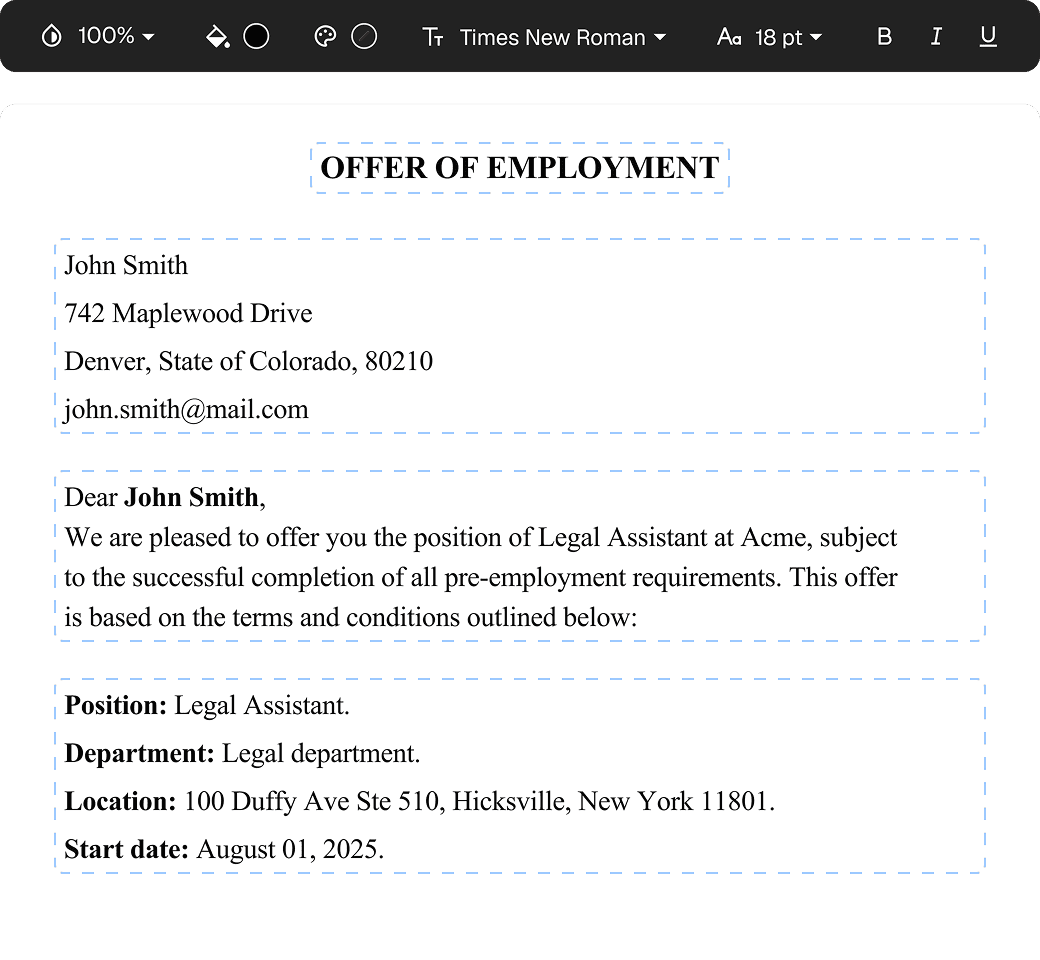
Edit PDFs seamlessly
Tweak agreements before signing or sending for signatures. Update details, add or remove clauses, adjust formatting, and redline changes instantly.
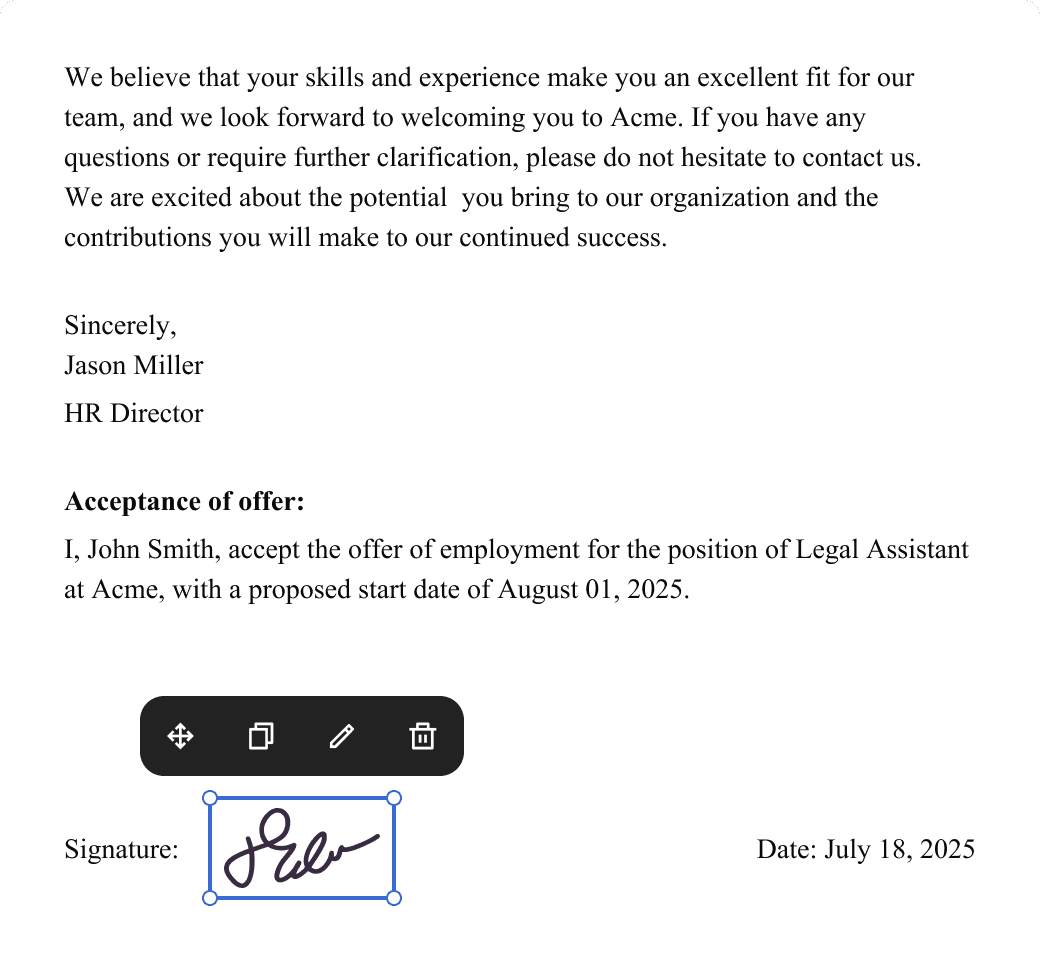
eSign legally and securely
Sign documents and collect legally binding signatures. Invite up to ten people to sign in any order, track the progress, and send reminders.
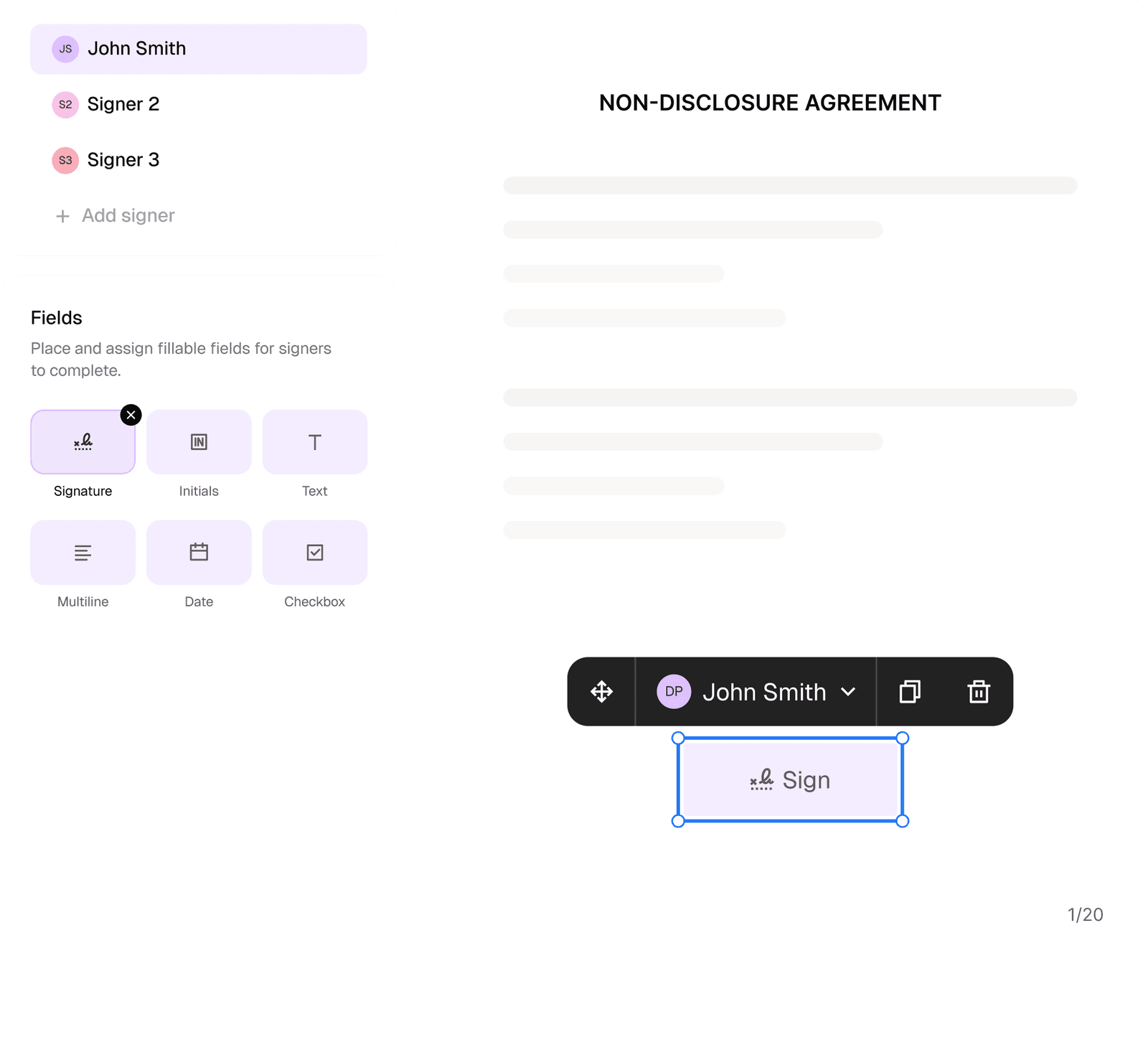
Request legally binding signatures
Invite up to ten people to sign your document in any order. Get a finalized, audit-ready copy without chasing signatures.
Skip the drafting.
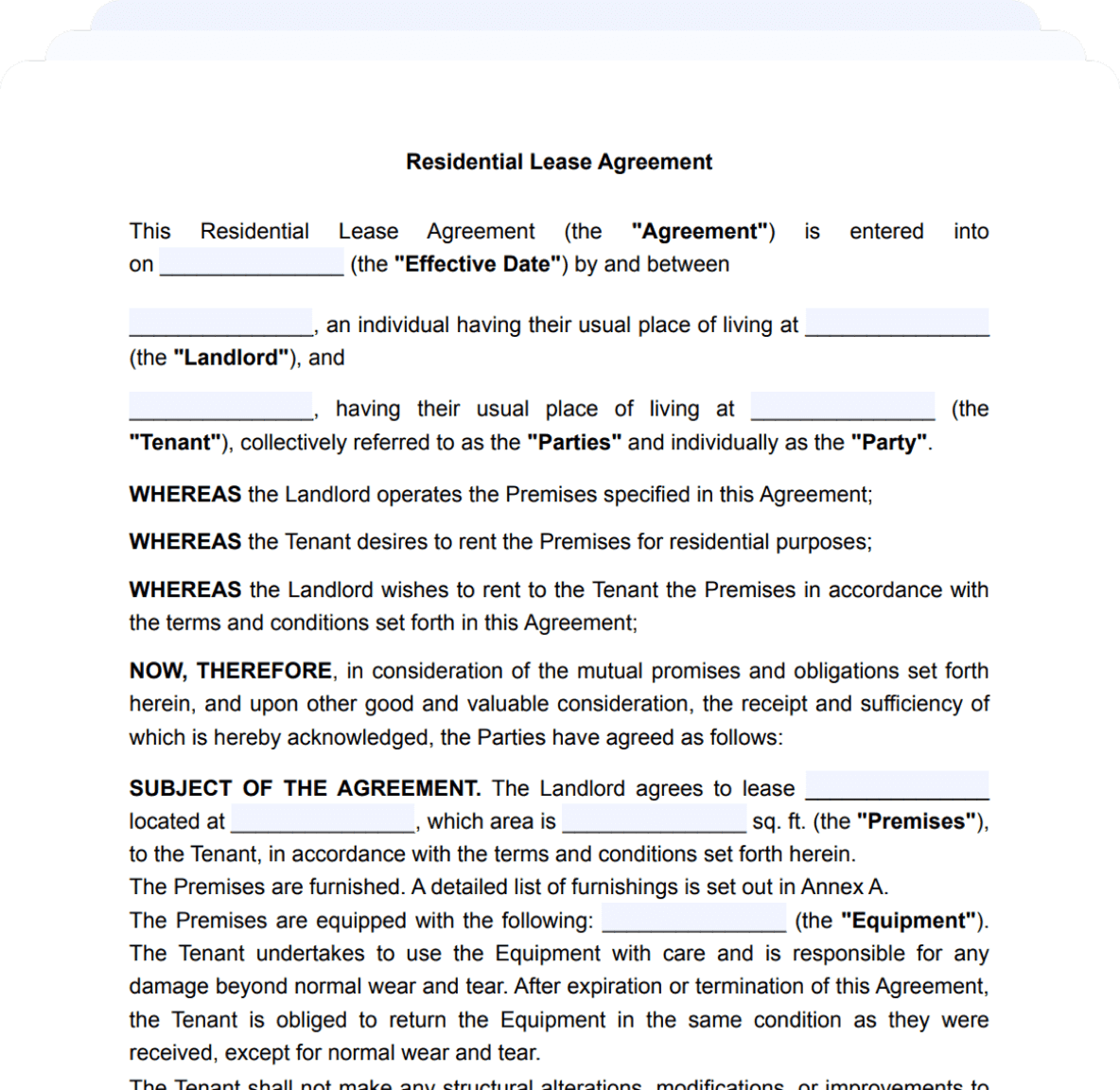
Choose from 2,500+ templates
Browse templatesChoose a template
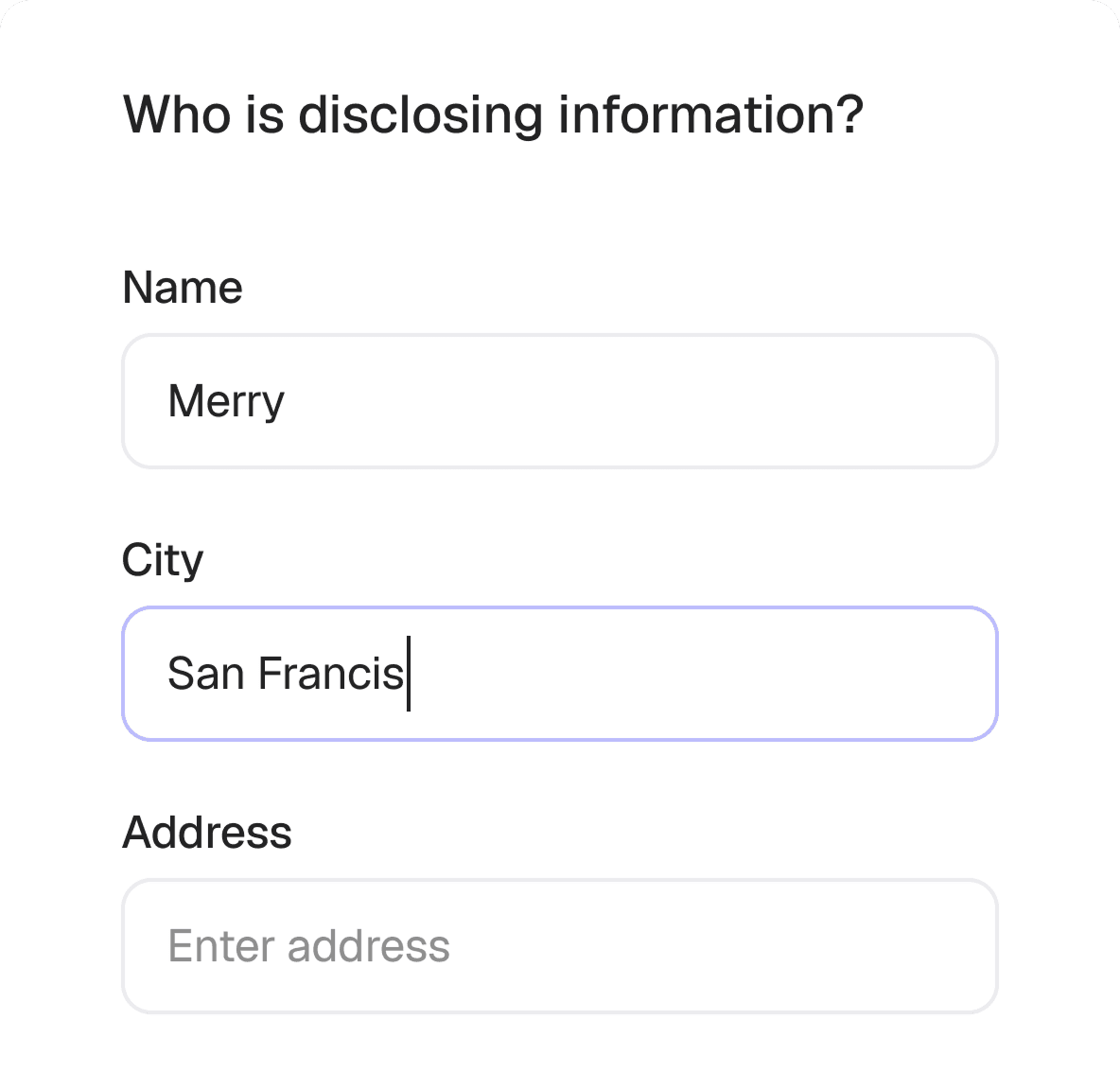
Fill in details
Sign and download