Updated September 8, 2026
11 min read
How to Sell Land by Owner: Complete Guide for Landowners

How to Sell Land by Owner: Complete Guide for Landowners
Content
Planning to sell your land but do not want to pay a real estate agent a 6% commission? Here's what many landowners don't know: you have every legal right to sell your land yourself, without an agent, and keep the full sale price in your pocket. This guide explains how to sell land by an owner in all detail – from how to set the price to what documents are needed for the deal – so you can complete the transaction smoothly without external help.
Selling Land By Owner: Legal Requirements
The type of deal in which a landowner sells the land without involving an agent is called FSBO – short for "For Sale By Owner." By cutting out the middleman between the seller and the buyer, the landlord takes on everything the agent would normally do in a sales process: marketing, negotiations, paperwork, and closing. You can hire an attorney or title company to help with specific tasks, but the outcome always depends on you.
"How do I sell my land without an agent if I have no legal background?" you may ask. When a landowner lists land for sale without the help of trained professionals, they must think of:
Accurate property representation. Describe the land the way you would describe a car: acreage, boundaries, road access, utility availability, flood zone status, and soil conditions. People want to know what exactly they’re buying.
Risk disclosure. CERCLA obliges the seller to inform buyers about known defects, environmental hazards (contamination, wetlands), easements that cross the property, and restrictions that limit the land’s use.
Fair housing compliance. The Fair Housing Act prohibits discrimination based on race, color, religion, sex, national origin, familial status, or disability. You cannot refuse to sell or offer different terms based on these factors.
Contract preparation. You must provide a legally valid land purchase agreement that covers price, contingencies, closing date, and all terms both parties agreed to.
Title verification. Confirm you have a clear title, free of liens, boundary disputes, or unclear ownership. If any, resolve them before the deal is closed.
Tax compliance. Report the sale to the IRS and pay applicable capital gains taxes.
Stage 1. Preparation
Before listing the land for sale, you need to get everything ready for the deal so the buyer does not have to wait until you collect all the necessary documents and permissions. Here are the key steps you, as a seller, should take:
1. How to set the price for the land
The price you ask shapes everything: how fast you sell, who responds to your listing, and how much money you get. To estimate the value of your land, you can apply the following methods:
- 1
Comparable sales analysis. Search recent sales of similar parcels on county assessor websites, Zillow, LandWatch, or local MLS. Calculate the price per acre, then apply it to your property.
- 2
Professional appraisal. You can hire a licensed appraiser ($300-$500) to evaluate your estate. They will also give you a written report that can help to justify your price to buyers.
- 3
Market timing check. See how long similar parcels sit on the market. Under 60 days means strong demand and a good price. Over 6 months means the owners want too much.
Apart from the market tendencies, the price for the land may vary depending on:
- Acreage and lot shape;
- Zoning classification (commercial land can be worth 3-5x agricultural);
- Road access;
- Utility availability (water, electric, sewer);
- Topography and soil quality;
- Flood zone status;
- Proximity to towns and amenities.
In such a way, a small area in the suburbs of a huge city with access to water and electricity may cost twice as much as a much bigger piece of land in the distant wild area. To better understand how much your land could cost, consider average prices by state in 2026.

2. What documentation to prepare
Land is not just an area with soil and grass. It is an estate with its potential, restrictions, and peculiarities, and buyers need to know about all of them. So, before you list your land, collect these documents:
A deed that proves you own the property and have the right to sell it.
A survey shows the boundaries and total acreage of your land.
A title report lists any debts attached to the property, easements, and previous owners. If your deed, survey, or title report is an old scanned county record, make the scanned PDF searchable before sharing it with your buyer or title company.
Tax records show how much property tax you pay each year. Buyers need these to understand their future annual costs.
A zoning certificate from your local planning department states what the land can be used for (residential, farming, commercial).
A perc test is a soil examination that shows whether the ground can support a septic system. You need it if your land has no public sewer connection.
CC&Rs are the rules set by a subdivision or homeowners association that limit what owners can do on their land.
Utility documentation with all available services (water, electricity, gas, internet) and connection costs.
Different states may have local requirements for residential land sales. For instance, California, Texas, and Ohio oblige sellers to provide disclosure forms, while Georgia, South Carolina, and Massachusetts require the deal to be notarized by an attorney. So, check your local laws before the sale.
3. How to prepare the land for sale
Land that looks accessible and well-maintained attracts more buyers and higher offers. And the landowner should help it look like this before the sale.
- 1
Clean the land: Remove trash, debris, abandoned vehicles, and old equipment. Clear dumped materials. Put away anything that makes the land look neglected.
- 2
Clear access: Make sure buyers can reach and walk the property. Cut back overgrown brush from the entrance and main access paths. Mark the driveway or access point.
- 3
Mark boundaries: Flag or stake the corners if survey markers are hard to find. Buyers want to see exactly what they're getting.
- 4
Address safety hazards: Fill in holes, mark wells, and secure any dangerous areas. You don't want a buyer injured during a site visit.
- 5
Take quality photos: Photograph the land from multiple angles or hire a professional protographer. Capture the entrance, notable features (creek, trees, views), road frontage, and overall terrain. Drone photos or video will increase your chances for a successful deal.
- 6
Create a property information sheet: Prepare a one-page summary that describes the land: acreage, zoning, utilities, access, price, and contact information.
Stage 2. Marketing
Once all preparations are complete, your land is ready to be sold to a new owner. At this point, it is important to find a buyer who not only offers you the best price but also does not bring problems.
1. How to list land for sale
People looking to buy land search for it through different channels – from online platforms to asking neighbors. So, here is how to list land for sale everywhere your offer can be noticed:
- Land-specific sites (LandWatch, Land.com, LandFlip): best for reaching serious land buyers. Fees vary from free to $100+/month.
- General real estate sites (Zillow, Realtor.com): high traffic, good for any property type. FSBO listings accepted.
- Craigslist and Facebook Marketplace: free, work well for lower-priced parcels.
- FSBO websites (ForSaleByOwner.com): Built specifically for sellers without agents.
Yard signs: A simple "For Sale By Owner" banner on the property still works. Place it where drivers can easily see it from the road.
Direct mail to neighbors: Send postcards to landowners nearby. They might want to expand their property or know someone looking to buy.
Local newspapers: Older buyers still read print.
Word of mouth: Tell friends, family, coworkers, and local business owners that you're selling. Personal connections are wider than you may expect.

How to choose buyers
How can I sell my land to the first person I meet? you may ask. Not every interested person is a buyer; your task is to identify and sort out only those who really are. Here are a few questions you can ask potential buyers:
- 1
“How are you planning to use the land?” to ensure they understand zoning and restrictions.
- 2
“How will you pay?” to see if they need a loan and whether they are likely to face approval issues.
- 3
“What is your timeline?” to see if they should sell another property first.
- 4
“Have you purchased land before?” to understand if they are first-time land buyers.
- 5
“Can you provide proof of funds or pre-approval?” Serious buyers can document their ability to pay. Request proof before you accept an offer or take the property off the market.

3. How to negotiate land sale offers
Be ready for most of the offers you receive to be below your price. However, a good business deal is one in which a buyer and a seller find the best solution for both. Here are a few tips for the negotiations:
- 1
Before you talk to any buyer, calculate the minimum price you can accept after you pay off loans, closing costs, and taxes.
- 2
Respond to every offer, even the low ones, because buyers often have more room than their first number suggests.
- 3
Put every counteroffer in writing with a response deadline – verbal agreements won't protect you. The best way is to send them by email, with an e-signature and a timestamp.
- 4
Wait a day or two before you respond, since a pause often makes buyers raise their offer.
- 5
While discussing the price, point to specific features that add value, such as road access, available utilities, and favorable zoning.
- 6
If a buyer won't move on price, negotiate other terms, such as a faster closing date, a larger down payment, or having them cover closing costs. Still, do not agree to offers below your minimum.
Stage 3. Finalizing the Deal
Now it’s time to make all your verbal agreements legally binding and transfer the land to the buyer. Here’s how to sell land by the owner and complete the deal:
1. How to sign the land purchase agreement
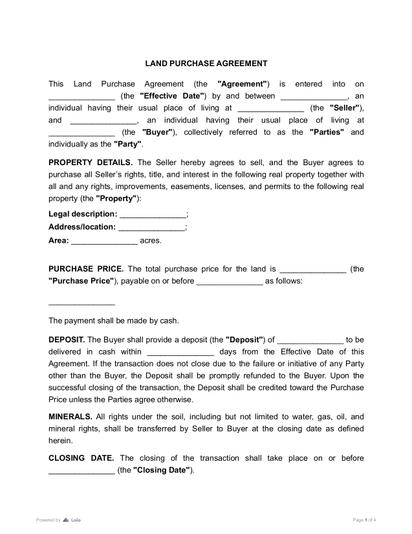
The land purchase agreement is the binding contract between you and the buyer that legalizes the transfer of ownership rights for the land. It typically contains such information:
Full legal names of buyer and seller.
Legal description of the land: parcel number, property address.
Total purchase price and how the buyer will pay (cash, financing, seller financing).
Amount of deposit, who holds it, and conditions for refund or forfeiture.
Condition of the property.
Closing date.
Which party pays title insurance, recording fees, transfer taxes, and other costs.
Seller's disclosure of known defects, easements, and restrictions.
Signatures of both parties and the date.
The most important step before the deed is officially recorded with the local county and the ownership is transferred, is the seller sending the buyer a completed contract for signature. In this case, using a land purchase agreement template from a trustworthy contract management platform is the best way to protect yourself from mistakes. To ensure the template you use is reliable and relevant, you can scan it with special contract reviewing tools that detect red flags and suggest document improvements.
2. How to protect your interests
When you sell land, there's a risky moment: you need to hand over ownership, and the buyer needs to hand over the money. But who goes first? If you sign the contract before you get paid, you could lose your land and receive nothing. If the buyer pays before the title is clear, they could lose their money on a property with hidden problems.
Escrow solves this problem. An escrow agent – usually a title company or an attorney – acts as a middleman, holding both the money and the documents until everything checks out. Neither side has to trust the other because a third party controls the process. Here's how it works:
- 1
The buyer sends the deposit to the escrow agent.
- 2
The title company checks your ownership, debts, and claims attached to the land.
- 3
The seller and the buyer sign the required documents.
- 4
The buyer sends the remaining payment to the escrow agent.
- 5
The escrow agent sends you the money and records the new deed with the county.
Escrow fees typically run $500-$2,000, and you can split the sum with the buyer.
3. How to transfer the ownership
It is the final stage where you officially stop being the owner, and the buyer takes over. It includes the following steps:
The landowner signs all closing documents at the title company or attorney's office.
The escrow agent collects the buyer's final payment.
The deed gets recorded with the county recorder's office.
The landowner receives their funds.
The buyer receives the recorded deed as proof of ownership.
To transfer the ownership correctly and avoid problems, you also need the following documents ready:
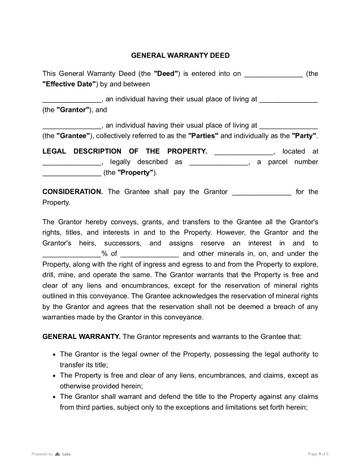
- A general warranty deed form that guarantees you're passing on a clear title with no hidden claims.
- Transfer tax declaration that reports the sale price so the county can calculate any transfer taxes you owe.
- A settlement statement that shows the purchase price, closing costs, and exactly how much money goes to each party.
- Affidavit of title that states you fully own the property and haven't hidden any debts or claims against it.
- FIRPTA affidavit that confirms you're a U.S. citizen or resident and determines whether the buyer must withhold taxes from your payment.
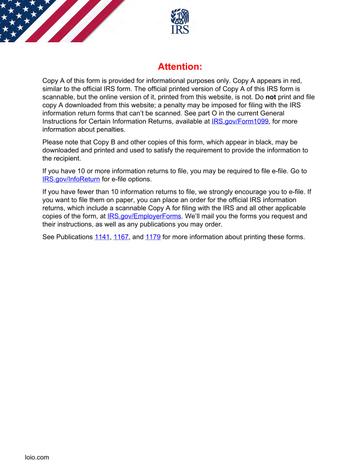
- The 1099-S form sent to the IRS to report your sale.
- General Warranty Deed Form
 5432 downloads
 - Form 1099-S
 5117 downloads
Risks to Consider When You Sell Your Own Land
Without an agent, a landowner takes on risks that they need to manage themselves:
Underpricing. You might sell for less than your land is worth. Do not be afraid to ask more – the actual offers will correct it.
Contract mistakes. Errors in legal documents can void the sale or get you sued. Use state-approved forms from reliable platforms and consult an attorney if you hesitate.
Disclosure problems. If you conceal the information about any problems related to the land, buyers can sue you.
Title issues. If you have liens or legal disputes on the land, solve them before the sale.
Unreliable buyers. Some of the people who show interest in your land will not be able to pay for it. Ask for proof of funds or loan pre-approval before you accept any offer.
Fraud. Fake checks are common in real estate. Always verify wire instructions by phone, and never sign the deed over until you receive the money.
So, if you’re the one asking “How do I sell my land without an agent?”, know that it is not that complicated. The process may look tricky for someone doing it for the first time, but it's completely manageable. If any step feels uncertain, consult a real estate attorney – a few hundred dollars in legal fees is far cheaper than a lawsuit or failed sale.
More guides
September 1
7 min read
How to Provide Proof of Employment: Documents and Steps

September 16
9 min read
Lease vs. Rent: What’s the Difference and What to Choose
September 11
10 min read
Rules for Renting a Room in Your House: How to Become a Landlord
September 4
How To Break a Lease in Florida Without Penalties
September 4
Can a Neighbor Claim My Land by Mowing It?
September 3
12 min read
The Biggest Red Flags on a Rental Application Explained
One home for your
agreements
Edit PDFs seamlessly
Tweak agreements before signing or sending for signatures. Update details, add or remove clauses, adjust formatting, and redline changes instantly.
eSign legally and securely
Sign documents and collect legally binding signatures. Invite up to ten people to sign in any order, track the progress, and send reminders.
Request legally binding signatures
Invite up to ten people to sign your document in any order. Get a finalized, audit-ready copy without chasing signatures.
Skip the drafting.
Choose from 2,500+ templates
Browse templatesChoose a template
Fill in details
Sign and download