Updated September 11, 2026
10 min read
Rules for Renting a Room in Your House: How to Become a Landlord

Rules for Renting a Room in Your House: How to Become a Landlord
- Is It Legal to Rent a Room in Your House?
- How to Rent a Room in Your House Legally: Rules Before You List
- How Renting Out a Room in Your House Makes You a Landlord
- How to Prepare and Price a Room in Your House
- How to Screen a Tenant Renting a Room in Your House
- What a Room Rental Lease Agreement Should Include
- How to Manage and End a Room Rental Legally
- Can You Rent Out a Room If You Are Renting?
- Final Checklist for Renting Out a Room in Your House
Content
Renting out a spare bedroom can lower housing costs and put unused space to work. It also changes how your home functions. Once another person pays for the right to occupy a room, questions about guests, privacy, repairs, and kitchen access can become landlord-tenant issues rather than casual household arrangements.
If you are asking, “How can I rent a room in my house?” start with permission, not an online listing. The rules for renting a room in your house may come from state law, local zoning and occupancy codes, mortgage documents, HOA rules, and insurance requirements. Renting a room in a house can also create tax and recordkeeping duties.
A homeowner should still verify that the rental is allowed, screen consistently, and put the deal in writing. A room rental agreement documents the room, rent, term, shared areas, house rules, and responsibilities, so both parties have a single reference when expectations differ.
Is It Legal to Rent a Room in Your House?
It is generally possible to rent out one room, but the room and the arrangement must comply with all applicable rules where the property is located. A lease cannot make an unsafe bedroom, prohibited occupancy, or unauthorized sublet legal.
People often ask, “Can you rent rooms in your house?” or “Is it illegal to rent a room in your house?” The answer depends on the property. One city may permit a long-term renter without a special license, while another may require registration, inspection, or safety upgrades.
Check local zoning, housing, building, and fire-safety rules. Confirm occupancy limits and whether the proposed bedroom meets applicable standards for size, heat, ventilation, alarms, and emergency escape.
Check whether the room itself qualifies
Imagine Maya has a finished basement with a bed, desk, and private bathroom. It looks like an ideal rental. The local inspector, however, finds that its only window is too small to serve as an emergency exit. Calling the space a “guest room” in the agreement would not solve the problem. Maya must bring it into compliance or rent a different room.
The same principle applies to converted garages, windowless rooms, and spaces reached only through another bedroom. Before calculating potential income, confirm that the space may legally be used for sleeping.
Federal lead-based paint disclosure rules generally apply to most pre-1978 housing, but individual room rentals may fall under the federal ‘zero-bedroom dwelling’ exemption because the definition includes rentals of individual rooms in residential dwellings. However, EPA guidance notes that zero-bedroom units are not exempt when a child under 6 lives or is expected to live there, and state or local lead rules may still apply.
Do not treat a long-term room rental like Airbnb
A long-term tenant is not the same as a short-term guest. Vacation rentals may face separate permits, taxes, caps, or bans. Therefore, “What happens if you Airbnb a rental?” is a different question from how to rent a room in your house legally. Do not assume permission for one arrangement covers the other. If you rent out the room through Airbnb, you may face short-term rental licensing rules, local occupancy taxes, HOA or lease violations, insurance gaps, fines, or removal from the platform if the listing is not permitted.
How to Rent a Room in Your House Legally: Rules Before You List
Before publishing a listing, review every document that controls the property. Do not collect a deposit and then discover that the arrangement violates a loan, association, or insurance condition.
Check your mortgage, HOA, and insurance rules
A common question is, “Can I rent out a room in my house without telling my mortgage lender?” Check the loan documents for owner-occupancy promises, rental restrictions, and notice or consent terms. Renting one room while remaining in the home may differ from leasing the entire property, but the documents and lender requirements control.
Review HOA or condominium rules for occupancy, parking, tenant registration, lease duration, and move-in procedures. Contact the homeowners insurer before move-in and ask what coverage is appropriate. The tenant may also need renters insurance for personal property and liability.
Understand fair housing and advertising restrictions
The federal Fair Housing Act generally prohibits housing discrimination based on race, color, national origin, religion, sex, familial status, and disability. State and local laws may protect additional characteristics. This affects how a room is advertised, which questions are asked, how applicants are compared, and what terms they receive.
Federal law contains narrow exemptions for certain owner-occupied housing. For example, the current federal regulation addresses rooms or units in dwellings occupied by no more than four families when the owner lives in one of the living quarters. Even when the owner-occupied exemption applies, it does not cover discriminatory housing ads or statements; the ban on discriminatory advertising still applies. Separate federal law also protects equal rights to lease property regardless of race.
Use neutral advertising that describes the room, price, term, amenities, and objective requirements. “Furnished room with one parking space; income verification required” describes the offer. Wording that expresses preferences based on protected traits may violate applicable law.

How Renting Out a Room in Your House Makes You a Landlord
Accepting rent and granting someone the right to occupy part of your home may create a landlord-tenant relationship under state law. Calling the person a “roommate,” “guest,” or “lodger” does not necessarily control their legal status. The definition and rights attached to each term vary by jurisdiction.
A homeowner who becomes a landlord may have duties involving habitability, repairs, privacy, entry notice, security deposits, rent records, disclosures, and termination. Living under the same roof may change some local rules, but it does not mean the occupant has no rights. The Loio guide to landlord and renters’ rights explains common limits on landlord conduct and why state-specific procedures matter.
“Is renting out a room a good idea?” is also a personal question. Consider privacy, noise, bathroom schedules, guests, parking, pets, security, and the possibility of a difficult ending. A tenant may pay on time yet be a poor fit if the parties never discuss daily routines.
Jordan chose an applicant with a stable income but did not ask about work hours. The tenant worked nights and cooked after midnight; Jordan started work calls at 8 a.m. Neither was unreasonable, but their agreement said nothing about quiet hours.
Treat rent as income and keep records
Rental payments are generally taxable income. When a homeowner rents out only part of a property, the IRS explains that certain shared expenses must be divided between rental and personal use. Reasonable allocation methods may include the number of rooms or square footage, depending on the expense.
Keep records of rent, deposits, repairs, insurance, utilities, and rental dates. A tax professional can explain deductions, depreciation, and the effect of below-market rent. Do not assume payments from a friend are automatically tax-free.
How to Prepare and Price a Room in Your House
The best way to rent out a room is to define the offer before meeting applicants. “Shared use of the house” is too vague: the tenant may expect daily laundry and kitchen storage, while the homeowner expects them to remain mainly in the bedroom.
Define private, shared, and restricted spaces
Decide which room is private, which bathroom the tenant will use, when lawful entry is permitted, and where they may store food, dishes, bicycles, and other belongings.
Space Category: Private
Examples: Rented bedroom, assigned closet
What to Define in Writing: Keys, entry notice, furniture, maintenance access
Space Category: Shared
Examples: Kitchen, bathroom, laundry, hallway, yard
What to Define in Writing: Hours, cleaning, storage, supplies, guest access
Space Category: Restricted
Examples: Owner’s office, other bedrooms, locked garage area
What to Define in Writing: No-entry rule and any emergency exception
Also define access to the living room, patio, garage, mailbox, and security system. If the home has one bathroom, agree on storage and cleaning before the first rushed Monday morning.
Determine how much to charge for the room
The cost of renting a room in a house depends on local comparable listings and the value of what is included. Compare rooms with similar locations, sizes, bathrooms, furnishings, parking, utilities, and lease terms. A private bathroom or dedicated parking may justify more rent; limited kitchen access may justify less.
Then calculate the added cost of utilities, internet, supplies, cleaning, insurance, applicable taxes, and vacancy. State whether utilities are included, split by a percentage, or charged as a lawful fixed amount.
The “2% rule” used in some property-investment discussions is not a sound way to price one bedroom. Use the local room market and the access offered, not a formula based on the value of the whole property.
Prepare a truthful listing and safe showing process
Use current photos and describe the exact room, shared areas, rent, deposit, term, utilities, parking, furnishings, pets, and smoking policy. State objective screening criteria without promising approval. Do not hide limitations such as street parking, shared bathrooms, or restricted laundry hours.
To reduce scam and safety risks, document communications, verify identity before signing, and reject overpayments that must be refunded to a third party. Secure valuables during showings and arrange for another adult to be present when practical.
Use the same process for each applicant, protect personal information, and do not collect more sensitive data than you reasonably need for screening.
How to Screen a Tenant Renting a Room in Your House
Screening should answer two separate questions: Can the applicant meet the rental obligations, and can both people realistically share the home? Use consistent written criteria for every applicant. Criteria may address income, rental history, move-in timing, occupancy, references, and lawful background or credit checks.
Avoid blanket bans on anyone with a criminal record; a safer policy distinguishes arrests from convictions and considers the nature, severity, and recency of the conduct.
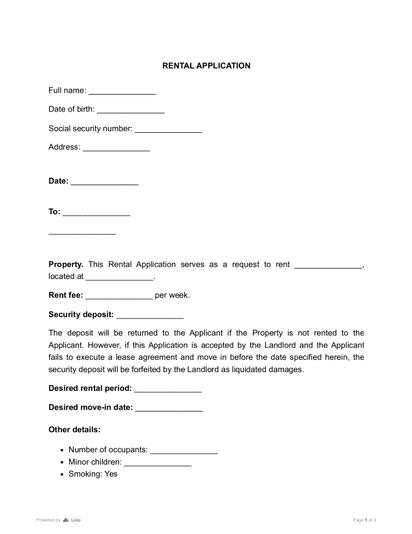
A Rental Application Form gives applicants the same place to provide identity, employment, income, rental history, references, and consent-related information. Using the same form and process for each person makes decisions easier to document and less likely to depend on impulse.
Verify information instead of relying on first impressions
Check identity, income documents, employment where appropriate, and previous landlord references. Ask references specific questions: Did the tenant pay as agreed? Did they provide proper notice? Was there documented damage beyond ordinary wear? Would the housing provider rent to them again?
Potential red flags include major contradictions in the application, unverifiable references, pressure to skip the agreement, refusal to complete a screening step required of all applicants, or unusual third-party payments. A concern should prompt verification, not an automatic accusation.
Before ordering a tenant-screening report, a landlord needs a permissible purpose; screening companies may ask the landlord to certify that purpose, and written applicant permission is a practical way to document it.
If a consumer report influences a denial, higher rent or deposit, co-signer requirement, or another unfavorable decision, the Federal Trade Commission says the landlord must provide an adverse-action notice with specified information. The duty can apply even when the report was only part of the reason.
The notice should identify the reporting company, explain that the company did not make the rental decision, and tell the applicant about the right to dispute inaccuracies and request a free copy within 60 days.
Discuss compatibility without discriminating
An owner-occupied rental requires a practical conversation about daily routines. Ask every finalist the same neutral questions about quiet hours, remote work, cooking, cleaning, overnight guests, parking, smoking, pets, shared supplies, and expected length of stay. Explain your own routines just as clearly.
Do not use “compatibility” as a cover for protected-trait questions. Focus on conduct: “Can you follow quiet hours from 10 p.m. to 7 a.m.?” is relevant and can be asked consistently.
A completed rental application creates a useful screening record before the parties move to a lease.
What a Room Rental Lease Agreement Should Include
A lease agreement for renting a room in a house should do more than record the price. A new reader should understand what the tenant rents, what remains shared, and what happens after a breach.
Include:
- The landlord’s and tenant’s legal names and contact details;
- The property address and exact room description;
- The fixed term or month-to-month arrangement;
- Rent, due date, payment method, grace period, and lawful late fees;
- Security deposit terms required by state law;
- Utilities, internet, parking, furnishings, and storage;
- Private, shared, and restricted areas;
- Rules for guests, quiet hours, cleaning, pets, smoking, food, and remote work;
- Repairs, damage reporting, landlord entry, and emergency access;
- Renewal, notice, breach, termination, and move-out terms; and
- Required disclosures and signatures.
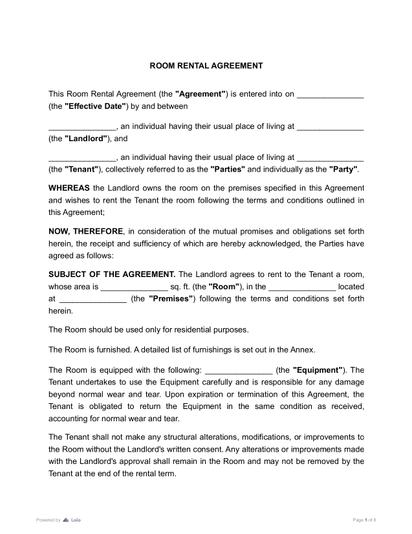
The Room Rental Agreement Template is designed for a private room within a shared property and can document rent, shared-space access, house rules, utilities, privacy, and move-out terms. It differs from a whole-property lease and from a roommate agreement used mainly to divide responsibilities among people who are already co-tenants.
- Room Rental Agreement
 4653 downloads
 - Roommate Agreement
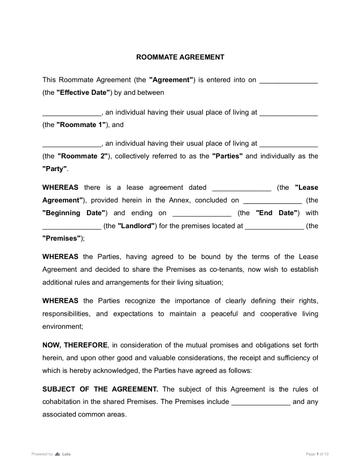 5313 downloads
Write practical house rules, not vague expectations
“Keep the kitchen clean” means different things to different people. A clearer rule may require each person to wash dishes after use, wipe counters, label personal groceries, and follow a weekly cleaning schedule. The same level of detail can help with bathroom storage, laundry hours, thermostat settings, shared purchases, and guest stays.
Suppose Daniel tells his cousin, “Just pay me something toward the bills.” Later, one thinks the payment includes utilities and groceries; the other thinks it covers only the room. A clear expense split could protect both the budget and the relationship.
House rules should remain reasonable and lawful. They cannot erase nonwaivable rights or authorize entry whenever the homeowner wishes.
Even when you are renting to a friend or family member, putting the terms in writing can prevent misunderstandings and preserve the relationship. A pop-culture example is Sheldon and Leonard’s Roommate Agreement in The Big Bang Theory — although intentionally exaggerated for comedy, it illustrates how clearly defining expectations about shared living can reduce disputes over everyday issues such as guests, cleaning, noise, and shared spaces.
If all residents are already tenants under the same main lease, a Roommate Agreement can supplement that lease by allocating chores, bills, shared items, and daily living expectations. It does not replace the document that gives the occupants their rights against the landlord.
House rules and pet restrictions may also need reasonable modifications or exceptions when disability-related accommodation rules apply, including for assistance animals.
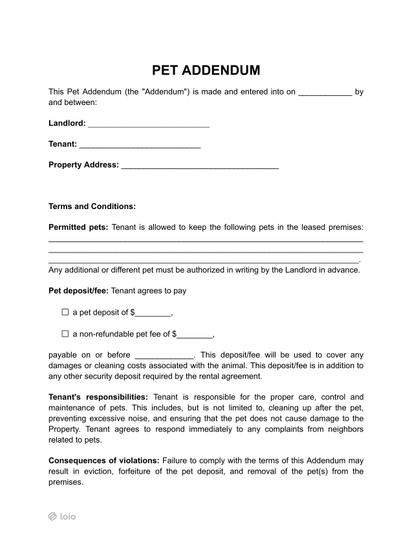
If the tenant is allowed to keep an animal, a Pet Addendum can document approved pets, care duties, property rules, and any lawful pet-related charges. Assistance animals may be governed by different legal rules and should not automatically be treated as ordinary pets.
Document the condition before handing over the keys
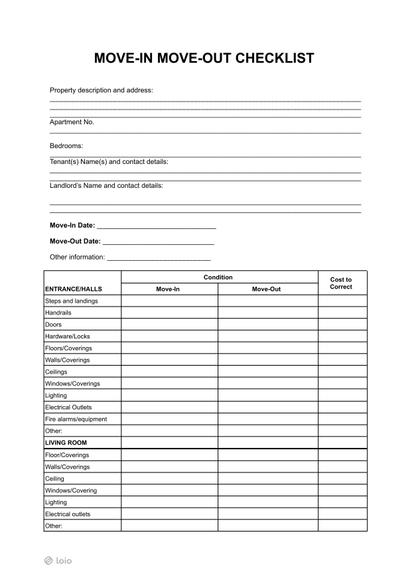
Photograph the bedroom, furniture, bathroom, and relevant shared areas. Record existing damage and keys, then give both parties the same dated record.
A Move-In/Move-Out Checklist provides a structured record of property condition at the beginning and end of the tenancy. This can reduce later arguments about whether damage was pre-existing or occurred during the rental.
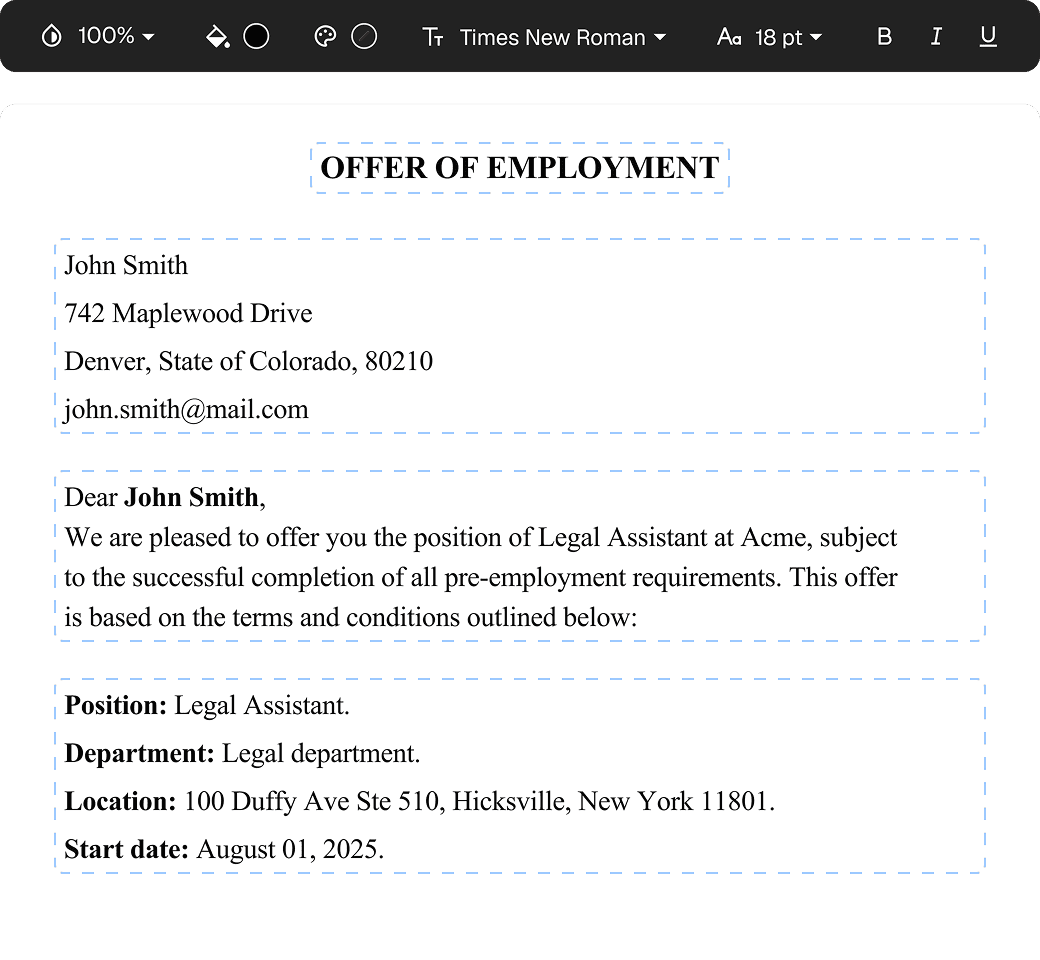
After customizing the agreement, use Loio’s online PDF editor to correct details, add text or annotations, and prepare the final copy without rebuilding the document. The parties can then request electronic signatures and retain the completed copy and any available signing record or audit trail.
How to Manage and End a Room Rental Legally
Good management is consistent: collect rent, issue required receipts, answer repair requests, give proper entry notice, and document important changes. Do not rely on hallway conversations for rent, utilities, or move-out dates.
If a new rule or policy must be added after signing, a Lease Addendum can document the added term without rewriting the entire agreement. Both parties should agree to and sign it; a landlord generally cannot use an addendum to impose unlawful or retroactive terms.
Address missed payments and conflicts early
When rent is late, start with the agreement and local law. Send the required notice, keep communication factual, and record payments or payment plans. Loio’s guide on legal ways to handle rent arrears explains why landlords should follow the lease and state notice requirements rather than improvise.
For shared-home conflicts, cite the exact rule and event. “The agreement limits overnight guests to two nights, and a guest stayed five” is more useful than “You are inconsiderate.” The guide on resolving landlord-tenant disputes offers further steps.
Do not use self-help eviction
“How to evict someone renting a room in your house” is one of the most important questions to research locally. A homeowner should not assume that sharing the house permits an immediate lockout. Changing locks, removing belongings, shutting off utilities, or using threats may violate state or local law.
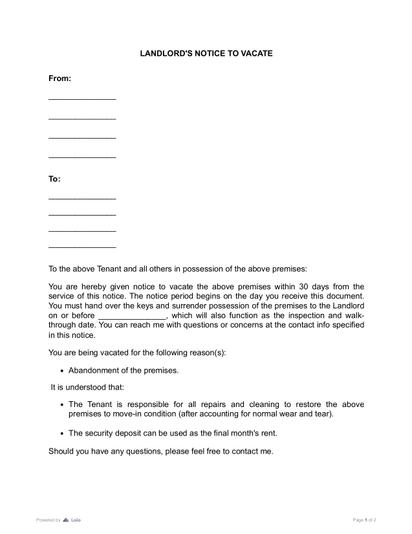
The process depends on the occupant’s status, the reason, the agreement, and local notice rules. A Notice to Vacate Letter can document an intended end date, but it is not automatically every notice required before an eviction case. Loio’s guide to legally evicting a tenant explains the general sequence and state-law variations.
Can You Rent Out a Room If You Are Renting?
The primary tenant and subtenant can create their own contract, but they generally cannot give the subtenant greater possessory rights against the property owner than the primary tenant has.
Check the original lease for clauses on subletting, additional occupants, guests, assignment, and landlord consent. Some leases prohibit subletting; others allow it only with written approval.
Renting out a room in your apartment without permission can place the main tenancy at risk. Even with consent, the original tenant generally remains responsible under the main lease, and the subtenant cannot receive more rights than the original tenant has.
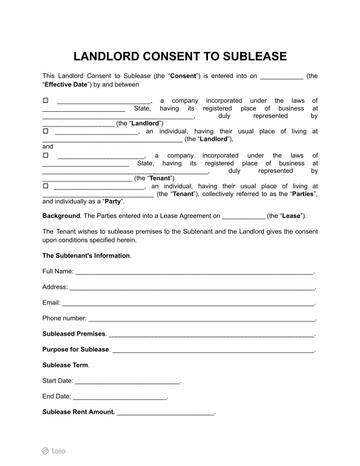
Ask the property owner to put permission in writing. A Landlord Consent to Sublease records the owner’s approval and identifies the proposed subletting arrangement. It should be read together with the original lease rather than treated as a replacement for it.
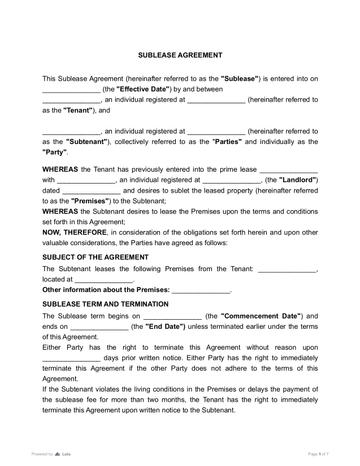
Once permission is secured, a Sublease Agreement can define the room, rent, term, utilities, shared spaces, and responsibilities between the primary tenant and subtenant while the original lease remains in effect.
- Landlord Consent to Sublease
 8095 downloads
 - Sublease Agreement
 5333 downloads
Final Checklist for Renting Out a Room in Your House
Use these steps to rent out a room without skipping the legal or practical groundwork:
- Confirm permission. Check zoning, occupancy, building, fire-safety, licensing, and short-term rental rules.
- Review controlling documents. Read the mortgage, HOA rules, insurance policy, and — if you are a tenant — the main lease.
- Prepare a legal bedroom. Fix safety issues and complete required inspections or disclosures.
- Define the offer. Identify private, shared, and restricted spaces, plus utilities, parking, furnishings, and house rules.
- Set a supportable rent. Compare similar local rooms and calculate added household costs.
- Screen consistently. Use objective criteria, verify information, follow fair housing rules, and provide required consumer-report notices.
- Sign before move-in. Complete the room rental agreement, condition checklist, disclosures, and any approved addenda.
- Manage like a landlord. Keep records, respect privacy, address problems early, and follow lawful notice and eviction procedures.
Renting out a room in your house should not be treated as a casual favor. The tenant is entering your home, and you are entering a regulated relationship. Permission, consistent screening, and specific written terms give both sides the best chance of avoiding disputes.
More guides
September 1
7 min read
How to Provide Proof of Employment: Documents and Steps

July 24
4 min read
What Is a Fixed-Term Lease, and How Is It Different From an Automatic Renewal Lease?

September 4
8 min read
Buying vs. Leasing Commercial Property in 2026: Which Is Better for Your Business?
July 26
10 min read
Commercial Real Estate Leasing Process: 2026 Guide

July 23
7 min read
How to Resolve Landlord-Tenant Disputes

July 20
12 min read
How to Sublease Your Office Space: 5 Steps to Protect Your Business

One home for your
agreements
Edit PDFs seamlessly
Tweak agreements before signing or sending for signatures. Update details, add or remove clauses, adjust formatting, and redline changes instantly.
eSign legally and securely
Sign documents and collect legally binding signatures. Invite up to ten people to sign in any order, track the progress, and send reminders.
Request legally binding signatures
Invite up to ten people to sign your document in any order. Get a finalized, audit-ready copy without chasing signatures.
Skip the drafting.
Choose from 2,500+ templates
Browse templatesChoose a template
Fill in details
Sign and download