Updated September 3, 2026
12 min read
The Biggest Red Flags on a Rental Application Explained

The Biggest Red Flags on a Rental Application Explained
Content
Many landlords only start researching tenant red flags after a problem tenant has already moved in. By then, removing a tenant is usually much harder and more expensive than screening one properly. Unpaid rent, property damage, and removal proceedings can cost thousands of dollars and months of lost time. At the same time, rejecting a good applicant because of one misunderstood warning sign can leave a property vacant longer than necessary.
Let’s look into the biggest red flags on rental application forms in 2026, how to spot common rental scams, and which warning signs deserve additional investigation before you approve an applicant.

Income and Employment Red Flags
So, what are red flags on a rental application exactly? Income and employment records are usually the first things landlords review during tenant screening. They are also the part of an application that gets falsified most often.
Most of what follows assumes you're working from a complete application. If you don't have standard forms yet, these templates can be helpful:
- Rental Application Form
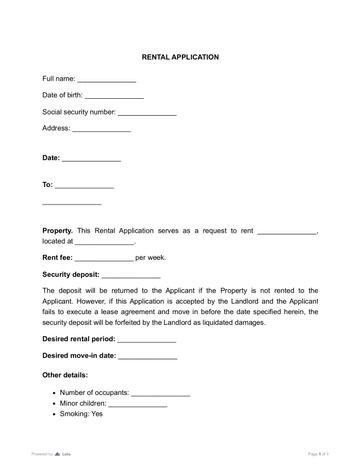 4266 downloads
 - Rental Application Approval Letter
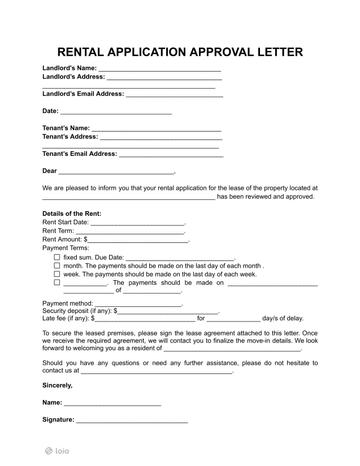 8411 downloads
Income that doesn't match the rent
Many landlords use the "three times the rent" rule as a starting point. For example, a tenant applying for a $2,000 apartment would typically need to earn about $6,000 per month. If the applicant uses a housing voucher, the ratio applies to their share of the rent rather than the full amount. On that same $2,000 apartment, an applicant whose voucher covers $1,600 pays $400, so the test is three times $400. Applying the full rent figure to a voucher holder is a recognized form of source-of-income discrimination in the states and cities that protect it. Here’s what requires additional review:
Income that barely meets minimum requirements;
Large recent deposits with no explanation;
Self-employment income without supporting records;
Substantial differences between reported income and bank statements;
Applicants who cannot clearly explain how they will afford the rent.
This doesn't always mean the applicant is trying to scam you. However, experienced landlords know that one of the most important red flags on rental application forms is a financial situation that looks different depending on which document you review.
Unstable employment history
Changing jobs is much more common than it was a decade ago. Many Americans now earn their income through remote work, contract work, and gig work. Still, landlords often take a closer look when they see several employers within a short period, long unexplained gaps in employment, or employment dates that differ across documents.
For example, a tenant relocating for a higher-paying job may present very little risk. On the other hand, an applicant who has held five jobs in two years and cannot explain why each position ended requires additional verification.
The goal of tenant screening is not to reject applicants with unusual employment histories, but to determine whether the explanation matches the available evidence.
Fake income documents
Fake pay stubs stopped being hard to get. Applicants can buy realistic pay stubs, bank statements, employment letters, and tax documents online in a few minutes, and the sellers advertise openly.
Inconsistent fonts or formatting;
Blurred company logos;
Income amounts that repeat exactly across pay periods;
Screenshots instead of original documents;
Missing employer contact information;
Payroll dates that don’t match employment history.
One of the mistakes new landlords make is calling the phone number listed on the application to verify employment. If the employer itself is fake, the phone number is usually fake too. Instead, verify employers using independently sourced contact information, public business records, or professional rental verification procedures.
Credit Report Warning Signs
First-time landlords may assume that the lowest credit score automatically represents the highest risk. Experienced landlords usually focus on the reasons behind the numbers instead.
Previous housing-related debt
Not all debt carries the same level of risk. Many landlords consider housing-related debt to be one of the strongest warning signs because it directly reflects how the applicant handled previous housing expenses. The issue may be reflected through unpaid rent balances, utility collections, property damage claims, or unpaid lease termination fees.
A tenant who fell behind on credit cards after a medical emergency may present less risk than someone who repeatedly failed to pay rent. That’s why housing debt is often considered one of the most important tenant red flags during the screening process.
Some debts result from disputes, identity theft, or extraordinary circumstances. If housing-related debt appears on a credit report, ask the applicant for additional context before making a final decision.
Patterns of late payments
Most people have missed a payment at some point. Landlords usually become concerned when late payments appear repeatedly across multiple accounts. These patterns may indicate ongoing financial stress that could eventually affect rent payments.
At the same time, landlords should consider how recent the problems are. Financial difficulties from five years ago may not accurately reflect an applicant's current situation. There's also a limit on how far back a report can reach. Federal law generally keeps negative credit information off a report after seven years, and bankruptcies after ten, so anything older is more likely a reporting error.
Bankruptcy and collections
Bankruptcy often concerns landlords, but it should not automatically disqualify an applicant. What matters is where the applicant stands now, not the filing itself. When reviewing bankruptcy records, consider:
When the bankruptcy occurred;
Whether housing debt was involved;
Current employment stability;
Recent payment history;
Available savings.
The same applies to collections. Medical debt, for example, may tell landlords very little about whether someone will pay rent on time. Reviewing credit reports can help identify financial risks that may require additional verification before signing a rental agreement.
Rental History Red Flags
Previous rental behavior is one of the most useful things on an application, because it's the only part of the file showing how the applicant handled the exact obligation you're about to hand them.
Prior evictions
A prior eviction is one of the first things many landlords look for during screening. However, not all evictions carry the same level of risk. For example, an eviction that occurred five years ago after a job loss may be less concerning than several recent eviction filings involving unpaid rent. Eviction records generally can't be reported past seven years, so anything older on a screening report is worth a question first. When reviewing eviction records, consider:
- 1
How long ago the eviction occurred;
- 2
Whether the case resulted in a judgment;
- 3
Whether the tenant eventually paid what they owed;
- 4
Whether there have been additional housing disputes since then.
Court records do not always tell the entire story. In some cases, landlords file eviction actions that are later dismissed, settled, or paid off, and screening reports don't reliably show how a case ended. One case can also appear as several entries as it moves through filing, hearing, and disposition, which makes a single dispute look like three. Check the disposition before you count a filing as an eviction.
Frequent moves
Military families, traveling professionals, and people relocating for work may move every year or two without creating any problems for landlords. However, sometimes frequent moves come with other warning signs, like gaps in rental history, short stays with multiple landlords, unexplained relocations, inconsistent addresses, or difficulty providing references.
For example, an applicant who moved four times in five years because of career opportunities presents a different risk profile than someone who moved four times because of lease disputes.
Negative references from previous landlords
Instead of asking whether the tenant was "good" or "bad," experienced landlords often ask more specific questions, such as:
Did the tenant pay rent on time?
Did they follow the lease terms?
Did they provide proper notice before moving?
Were there complaints from neighbors?
Did they leave property damage beyond normal wear and tear?
Would you rent to them again?
At the same time, references are not always reliable. Some applicants provide references from friends or family members pretending to be former landlords. Others intentionally avoid listing landlords with whom they had disputes.
A thorough landlord reference check confirms whether the applicant's rental history matches the information provided elsewhere in the application.
Inconsistencies and Missing Information
Many rental applications contain minor mistakes. Applicants forget apartment numbers, misremember move-in dates, or leave sections incomplete. These issues happen regularly and usually have a simple explanation.
Landlords become concerned when these inconsistencies start to look like a pattern.
Information that doesn't match
A rental application should tell a consistent story about the applicant's employment, finances, and housing history. Inconsistencies that deserve a better look are:
Employment dates that differ across documents;
Previous addresses that do not match credit reports;
Income figures that change between forms;
Missing household members;
Conflicting move-in or move-out dates;
References that cannot confirm basic information.
If an applicant reports living at one address while their credit report shows several other recent residences, you should ask for clarification before making a decision.
Missing information
Incomplete applications create risk because landlords cannot properly verify what they cannot see. Sometimes applicants simply overlook questions or misunderstand what information is required. However, applicants who repeatedly avoid providing requested information may deserve additional scrutiny.
Ask yourself:
— Can I actually verify this applicant's history with what's in front of me?
An applicant who won't provide previous landlord information leaves you without the record you'd normally check their rental history against. You can't confirm the dates, you can't confirm whether rent arrived on time, and you can't test their account against anyone else's. That's a screening problem rather than a collections one. Collectability comes down to verified identity, the signed lease, and a forwarding address, none of which come from a landlord reference.
Documents that look altered
Document fraud doesn’t look like obvious editing or handwritten corrections anymore. Many fraudulent documents now appear professional at first glance. Some warning signs are:
Different fonts within the same document;
Inconsistent spacing or alignment;
Cropped screenshots instead of original files;
Blurred company logos;
Mismatched dates;
Missing page numbers;
Bank balances that appear unusually rounded;
Documents submitted only as images.
Landlords should also compare information across multiple records. For example, pay dates should generally match bank deposits, and employment dates should match tax records or previous applications.
Many property owners now organize and compare documents digitally using an online PDF editor. Another tool that makes dealing with documents easier and faster is electronic signature. With it, you can finalize agreements in minutes even if the other party is hundreds of miles away.
Common Rental Application Scams Landlords Should Know in 2026
Rental fraud is not limited to fake pay stubs or false references in 2026. According to a 2024 NMHC pulse survey of association members, more than 70% of rental housing providers reported an increase in fraudulent applications and payments in recent years, and many reported that fraud attempts had increased substantially.
Fake employer and landlord references
Verifying references used to be relatively straightforward. Today, applicants can create convincing fake employers and landlord references with very little effort. Some common tactics include using friends or relatives as references, creating fake business websites, registering temporary phone numbers, or even using virtual office services to appear legitimate.
The same issue appears with employment verification. Calling the phone number listed on the application may simply connect you to someone participating in the fraud.
A thorough landlord reference check confirms whether someone rented a property and whether the overall timeline of the applicant's housing history makes sense.
Identity fraud and synthetic identities
Synthetic identity fraud means building an applicant out of a mix of real and fabricated details. One version pairs a real Social Security number with a false name and employment record. Another combines pieces belonging to several real people. The number often belongs to someone with no credit file of their own, frequently a child, so nothing about it looks stolen. These applications are hard to catch because parts of them check out. However, some warning signs to pay attention to are:
Identification documents that appear recently issued;
Credit histories with limited or unusual activity;
Addresses that do not match public records;
Applicants who avoid identity verification procedures;
Inconsistencies between identification and financial records;
The Federal Trade Commission and the FBI both accept reports involving identity theft and online fraud schemes. Landlords who believe they have encountered identity fraud can also report suspicious activity through the FBI's Internet Crime Complaint Center (IC3).
Occupancy fraud
Occupancy fraud is when applicants intentionally fail to disclose who will actually live in the property. There may be undisclosed roommates, unauthorized family members, tenants planning to sublease immediately, or applicants intending to use the property for short-term rentals.
Some applicants avoid disclosing occupants because they believe additional screening requirements will prevent approval. Others intentionally hide occupants with poor credit, criminal records, or previous rental problems.
The "I'll Pay Several Months Up Front" tactic
Many landlords assume that offering six months or a year of rent upfront is a positive sign and sometimes it really is. However, experienced landlords often become cautious when an applicant offers to pay six months or even a year of rent before completing the normal screening process.
This does not mean every applicant offering upfront rent is attempting fraud. International students, relocating professionals, and self-employed applicants may legitimately prefer this arrangement.
This becomes a red flag when the applicant insists that upfront payment should replace normal tenant screening procedures.
Advance rent also comes with rules that have nothing to do with fraud, and states handle it inconsistently. Some cap the amount, some require an installment option instead, and some regulate how you hold the money. Virginia requires prepaid rent to sit in an escrow account by the end of the fifth business day after you receive it, until each month's rent comes due. Check your own state's rules before accepting a lump sum.
No amount of prepaid rent eliminates the need to verify identity, employment history, and previous housing records.
AI rental application fraud
The traditional signs of a bad tenant are becoming harder to identify. Font and spacing errors still turn up in cheap forgeries, but a document generated by a current model usually won't have them. Once the artifact itself looks clean, verification against an outside source is the only step left. Confirm the employer through the state registry and the deposit through the bank statement, and treat the document as a claim rather than evidence.
When You Must Send an Adverse Action Notice
If you pull a credit report, tenant screening report, or background check, the Fair Credit Reporting Act decides what you do next. If the information in the report results in a negative decision, you owe an applicant an adverse action notice.
This doesn’t only apply to denials. An adverse action notice is still needed when requiring a co-signer, raising a deposit or charging a higher rent. The notice has to include:
- 1
The name, address, and phone number of the agency providing the report.
- 2
The applicant’s right to a free copy within 60 days.
- 3
A statement that the agency didn’t make the decision and can’t explain it.
- 4
The applicant’s right to dispute anything inaccurate.
Oral and electronic notices are permitted, but written notice is the only one you can prove you sent.
Which Red Flags Need Immediate Follow-Up?
Most experienced landlords avoid making decisions based on a single issue. However, certain issues often require serious consideration, such as:
Fake documents;
Identity fraud.
The rest need verification before they mean anything:
False references;
Undisclosed occupants;
Repeated housing debt;
Refusal to provide verification;
Multiple recent evictions.
Other concerns that may require additional investigation rather than automatic denial are low credit scores, job changes, bankruptcy, limited rental history, and self-employment income.
How to Investigate a Red Flag Without Violating Fair Housing Rules
Investigating a suspicious application is part of your job as a landlord. However, landlords must be careful to apply the same screening standards to every applicant. Under the federal Fair Housing Act, landlords generally cannot make rental decisions based on race, color, religion, sex, national origin, familial status, or disability. Many states and cities also add additional protected categories, such as source of income, sexual orientation, age, or marital status.
This means landlords should investigate specific facts, not personal characteristics or assumptions. If an applicant reports unusually high income but provides limited documentation, asking for additional verification is generally appropriate. However, requesting extra documents only because an applicant belongs to a certain protected group could create legal problems.
However, a policy applied identically to everyone may still violate the Fair Housing Act. Under this Act, a neutral criterion can still be challenged on its effects, which the Supreme Court confirmed in Texas Department of Housing v. Inclusive Communities Project (2015).
There are a few ways you can reduce this risk:
- 1
Write your criteria down before you review any applications.
- 2
Tie each criterion to a reason you can explain clearly.
- 3
Judge individually because one eviction filing or a bankruptcy can mean very different things depending on when and why.
Give applicants a chance to explain anything you are holding against them. Mind that screening reports may also contain errors.
When investigating possible fraud or inconsistencies, landlords should:
Verify employment using independently sourced contact information.
Confirm previous addresses and landlords.
Compare information across all submitted documents.
Keep written records of screening decisions.
Document communications with applicants.
Once you've made a decision, the file has to stay intact. Applications, pay stubs, reference notes, and any notices you sent should end up in one place and in a format you can produce later if the decision is ever questioned. An online PDF editor helps with combining and annotating what applicants send you, and an electronic signature tool closes out the lease without waiting on mail, which matters when the applicant is relocating from another state.
More guides
September 16
9 min read
Lease vs. Rent: What’s the Difference and What to Choose

September 11
10 min read
Rules for Renting a Room in Your House: How to Become a Landlord

September 4
How To Break a Lease in Florida Without Penalties
September 1
7 min read
How to Provide Proof of Employment: Documents and Steps

September 8
10 min read
What Is the Difference Between Joint Tenancy and Tenancy in Common?

July 24
4 min read
What Is a Fixed-Term Lease, and How Is It Different From an Automatic Renewal Lease?

One home for your
agreements
Edit PDFs seamlessly
Tweak agreements before signing or sending for signatures. Update details, add or remove clauses, adjust formatting, and redline changes instantly.
eSign legally and securely
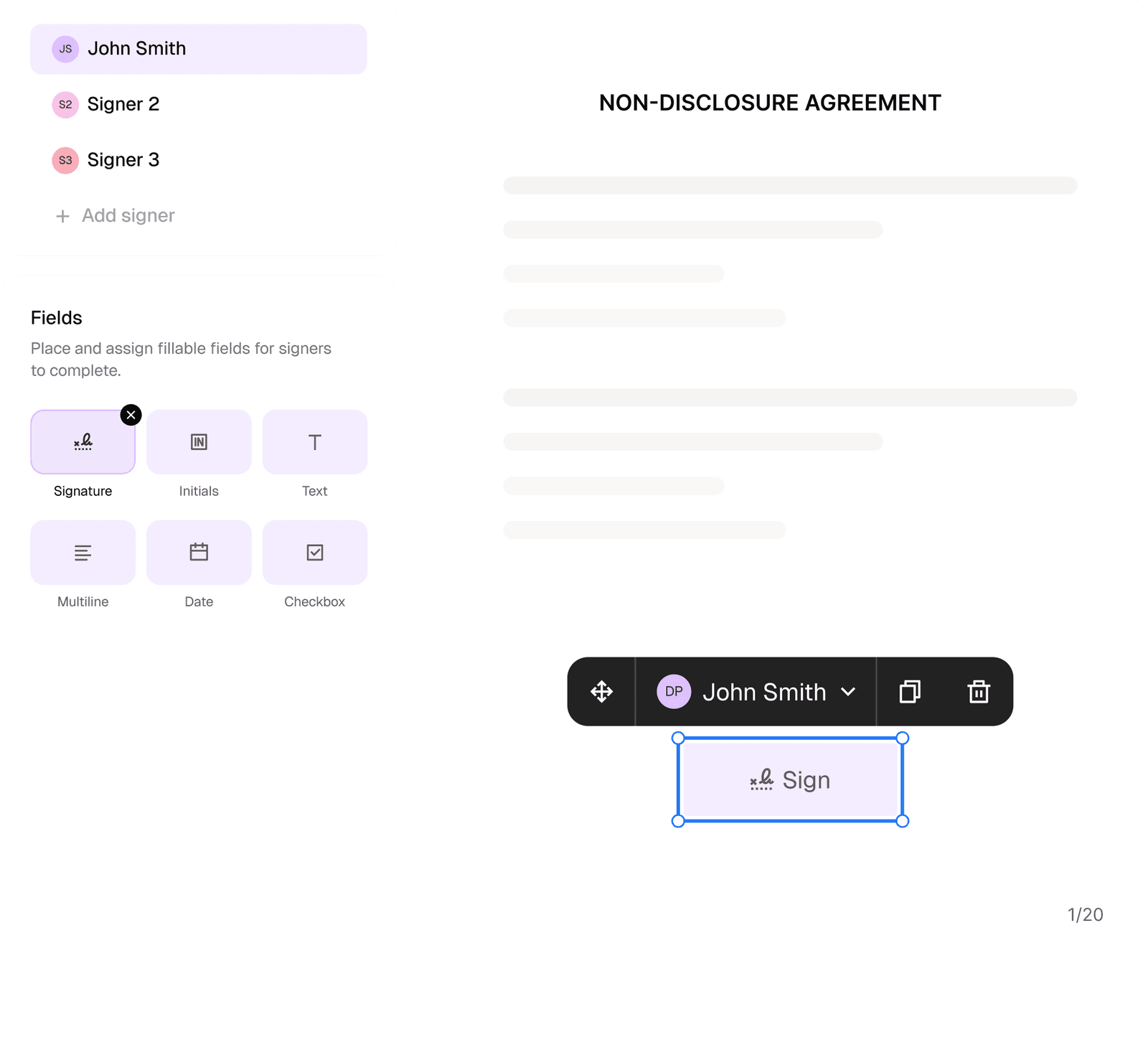
Sign documents and collect legally binding signatures. Invite up to ten people to sign in any order, track the progress, and send reminders.
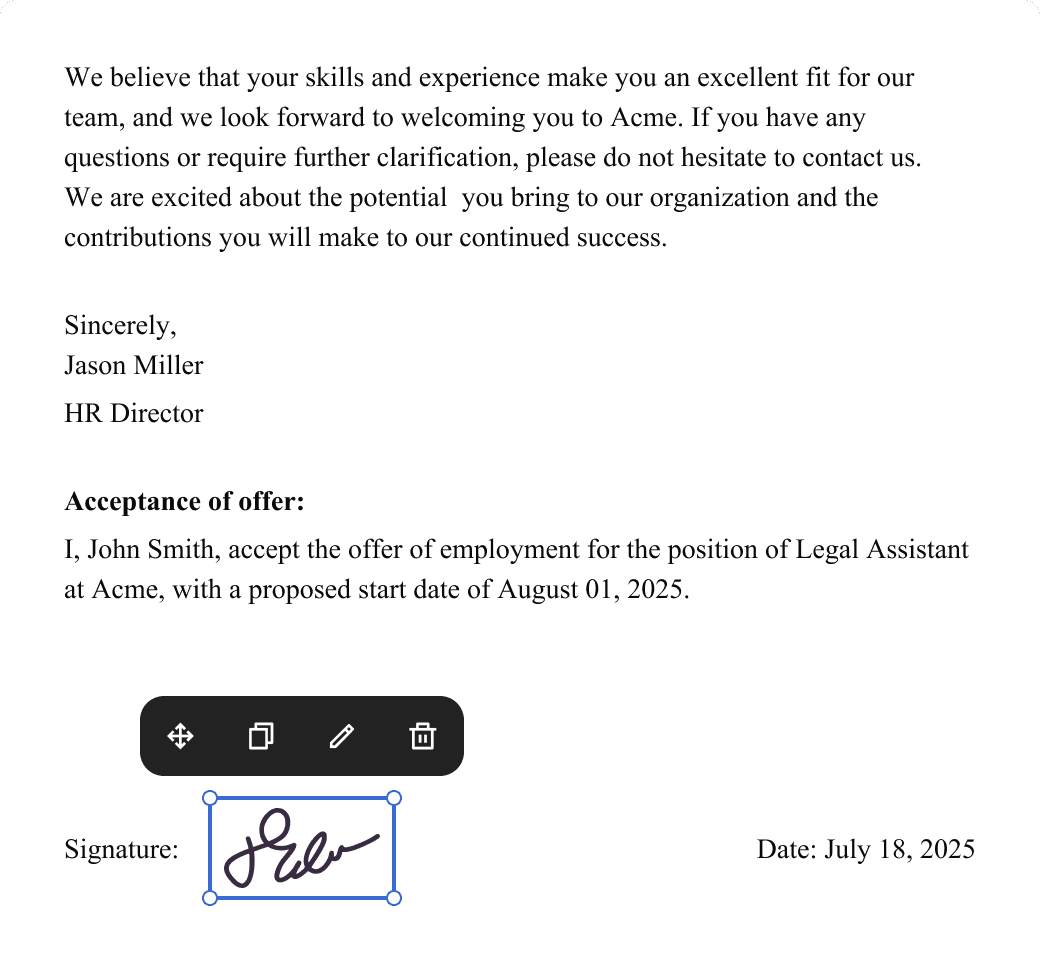
Request legally binding signatures
Invite up to ten people to sign your document in any order. Get a finalized, audit-ready copy without chasing signatures.
Skip the drafting.
Choose from 2,500+ templates
Browse templatesChoose a template
Fill in details
Sign and download