Updated July 21, 2026
7 min read
How to Write a Recommendation Letter in 5 Steps

How to Write a Recommendation Letter in 5 Steps
Content
Very often, situations arise when a person’s past records or conduct may come into question. The contemporary culture of record-keeping and usage has become so prevalent that many institutions or persons make it a duty to uncover a person’s performances in previous capacities.
There are many situations where you may need a letter of recommendation. You could be an employee leaving your current job to apply for another, and your prospective employer is interested in what your superiors say about you and your interpersonal relationships. You could be the supervising officer or professor, and your opinion about a subordinate is requested.
In this article, we will take a look at the most common questions regarding such letters: what are letters of recommendation, what do they look like, and why are they so important?
What Is a Recommendation Letter?
A professional reference letter is an official document communicating one person’s thoughts, observations, and commendations about another. Alternatively, it is a letter informing another person of a student’s or subordinate’s conduct while under the author’s supervision. From these definitions, a valid letter of recommendation must meet two requirements:
- 1
It must come from a superior in a recognized capacity;
- 2
Its contents should be a voucher for the qualities and character of the recommended person.
Types of Recommendation Letters
Recommendation letters are defined by what they do.
While they all serve a similar function, there are different recommendation letters based on what the writer needs to include. Knowing the distinctions between each type is necessary for understanding what information is relevant to be included.
Employment Recommendation Letter
Otherwise referred to as a professional recommendation letter, this kind of letter is obtained from a previous employer as a part of an application to a new position. An employment recommendation letter usually attests to the employee’s qualities, skills, expertise, and work ethic and may be requested from the employee’s current or previous immediate supervisor.
School Recommendation Letter
This type of letter involves students and schools and is often used when a student wishes to change schools, apply for grants or scholarships, and an advanced educational program.
A school recommendation letter, also referred to as an academic recommendation letter, affirms the student's performance, goals, and accomplishments while in school.
Character Recommendation Letter
This type of letter is also called a personal recommendation letter. A friend or colleague may need to write this letter to affirm a person’s good character, personality, or lifestyle.
Personal recommendation letters are instrumental when a person’s character is relevant or called into question, such as when conferring immigration status or determining business trustworthiness.
Rental Recommendation Letter
A rental recommendation letter is used to vouch for the likelihood that a person will be a good tenant. This type of letter could be necessary for a landlord to determine whether to rent or lease a property to a particular person. It confirms that a person can abide by tenancy agreements, pay rent on time, and maintain the property.
Why Are Recommendation Letters Important?
A quality recommendation letter can help someone take advantage of opportunities that may not otherwise be available. Recommendation letters are essential for many reasons, including the following:
- Affirmation — A letter of recommendation describes a person’s experience, professional certification, and qualifications. A resume or curriculum vitae (CV) is the primary document that outlines a person’s qualifications and experiences; it can be difficult for a prospective employer to determine the validity of the assertions in the document.
However, a recommendation letter provides a traceable and verifiable link to those qualifications and experiences from a third party who knows that information. - Perspective — Letters of recommendation assess the person’s performance from another perspective. While it may be easy for a candidate for a job or educational program to inflate or downplay their performance in a previous position, a letter of recommendation generally includes a fair opinion from a third party.
- Criticism — Letters of recommendation could also provide an objective outline of the candidate’s strengths and how to get them to perform best. Likewise, it could outline the individual’s weaknesses and areas for potential improvement. This information can help to identify how the candidate may be able to excel in a new capacity.
That’s why it’s important to do everything within your control — maintain good relationships, perform your best, and act professionally — because you can’t always control what others write about you. And if you ever face a negative recommendation, here’s how to handle it effectively.
Recommendation Letter vs. Reference Letter
Recommendation letters are often used in the same discourse as reference letters due to their perceived similarities. Still, on a closer inspection of their qualities, these letters are, in fact, distinct from each other.
A recommendation letter is more inclined toward supporting the individual’s candidature than a reference letter, which is more generic. Thus, recommendation letters are often sent directly to the requesting entity, and the individual collects reference letters for different situations.
Moreover, recommendation letters are usually affirmations written by people with first-hand experience working with candidates under conditions similar to the one they are pursuing. These letters also contain more information about the person’s qualities in that capacity and an opinion about whether they would excel in the position.
Conversely, the generic nature of reference letters makes them open to a broader pool of potential authors who can comment on a person’s general character and capabilities.
5 Steps To Write a Recommendation Letter
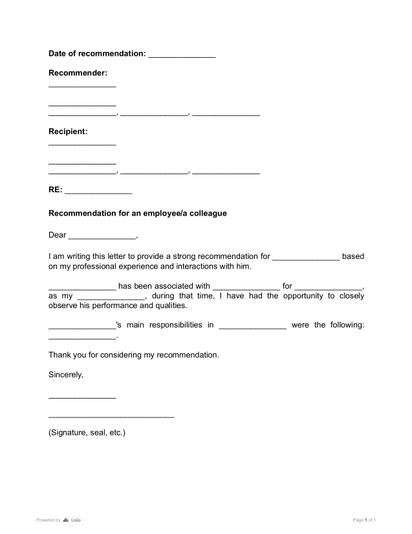
A winning recommendation letter could be the decisive step in an individual’s candidacy. Learn how to write a college or employment recommendation letter. Start by asking what a letter of recommendation should include. There should be five parts, so write your recommendation letter using the following steps.
1. Salutation
Because letters of recommendation are specific, the salutation should be directed to the letter's recipient if possible. If the letter is being sent to a group, something like “Dear Recruitment Committee” would be appropriate. If the name of the recipient or group is unavailable, “To Whom It May Concern” may be used.
2. Introduction
This part focuses on establishing the writer’s identity and relationship with the candidate. The writer should also indicate why they are writing the letter, which is generally to support the individual’s candidacy. The introduction should be succinct but sufficient, hitting the main points without elaborating too much on the peripherals.
3. Body of the Letter
The body is the main part of the recommendation letter. This is where the writer goes into detail about the reasons the candidate is qualified and competent enough to occupy the position. These could be supported with stories and examples from the writer’s time working with the individual.
To make a convincing letter, the author should refrain from mentioning qualities or examples considered basic or standard under the circumstances. Instead, emphasis should be placed on what makes the candidate stand out.
Another strong point would be highlighting the candidate’s potential, passion, and ability to improve.
4. Conclusion Paragraph
The conclusion paragraph is an opportunity to aggregate all the positive qualities of the candidate and restate why the writer has adopted their opinion of the individual. This is also the place to briefly highlight why the position would be best for the candidate and how the letter’s recipient would benefit from choosing them.
5. Closing
The closing is the last part of the letter before the signature. A professional closing should be used, such as “Due Regards,” or “Yours Faithfully,” or even “Sincerely.” The closing follows the author’s name, professional title, and contact details.
Conclusion
A recommendation letter serves three functions. Firstly, it provides the recipient with an informed opinion about a candidate's previous position. Secondly, it lends credibility to the candidate's job application. Lastly, it allows the author to share a practical assessment of the candidate with the recipient.
To write a recommendation letter, the author must be knowledgeable about the information they include, as the letter is intended to support the candidate's application for a specific position. Using a professional reference form of a recommendation letter or reference letter sample may be useful. It can save time and effort without compromising quality.
Legal Disclaimer
Please note that Loio does not provide any legal services. The information on Loio’s Site and its downloadable content, including legal articles and templates, shall not be considered legal advice and is not guaranteed to be correct, complete, and up-to-date. If you require legal advice on your issue, we recommend you contact a qualified attorney licensed in your state. You personally assume full responsibility for any consequences, damages, and costs associated with your use of any content of Loio Services available on Loio’s Site.
By using Loio’s Site you agree with mentioned above and give your irrevocable consent to comply with and to be bound by the provisions of Loio Service terms.
More guides
September 15
What Is Contract Redlining?

September 1
7 min read
How to Provide Proof of Employment: Documents and Steps

August 14
11 min read
Right to Work vs. At Will Employment Explained: What's the Difference?

October 7
How to Start a Staffing Agency: Licensing, Pricing, and Cash Flow

September 10
14 min read
How to Protect Your Small Business from Lawsuits

July 26
Employment Background Checks: What Employers Can and Cannot Review

One home for your
agreements
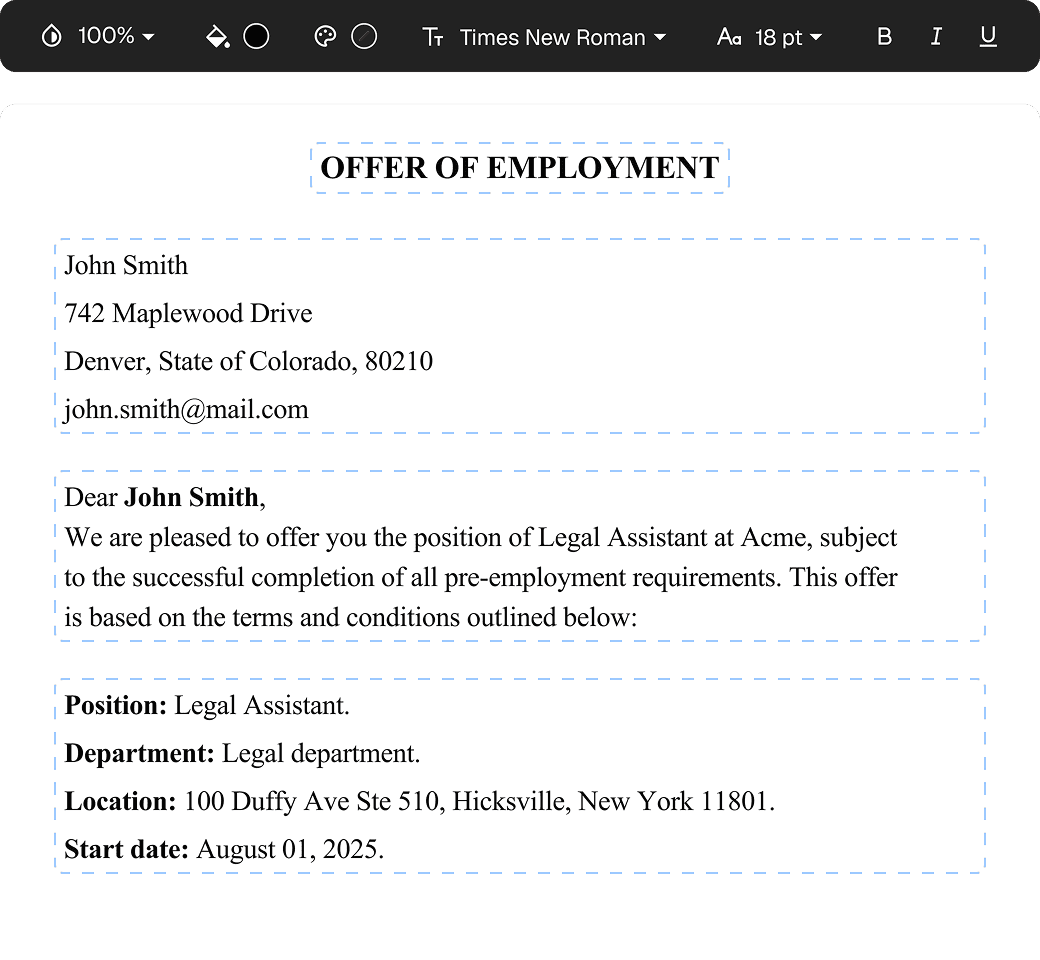
Edit PDFs seamlessly
Tweak agreements before signing or sending for signatures. Update details, add or remove clauses, adjust formatting, and redline changes instantly.
eSign legally and securely
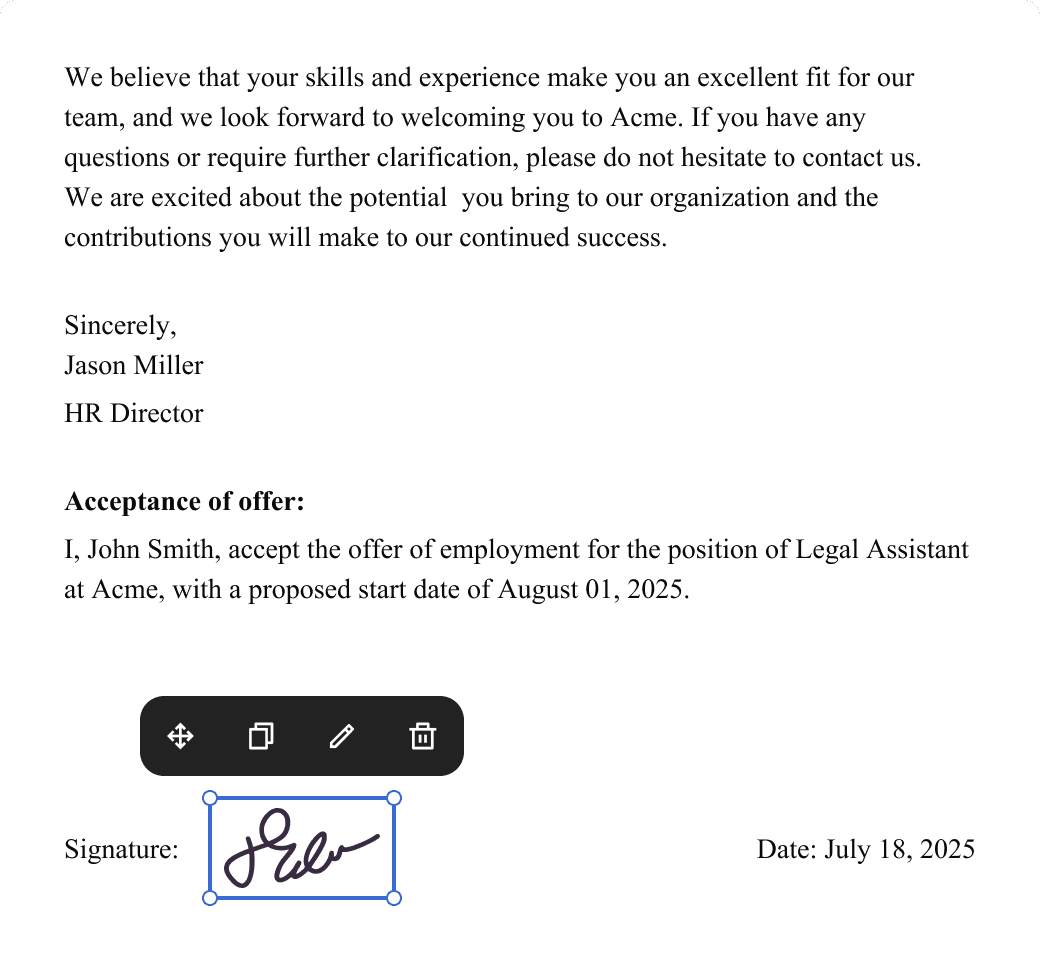
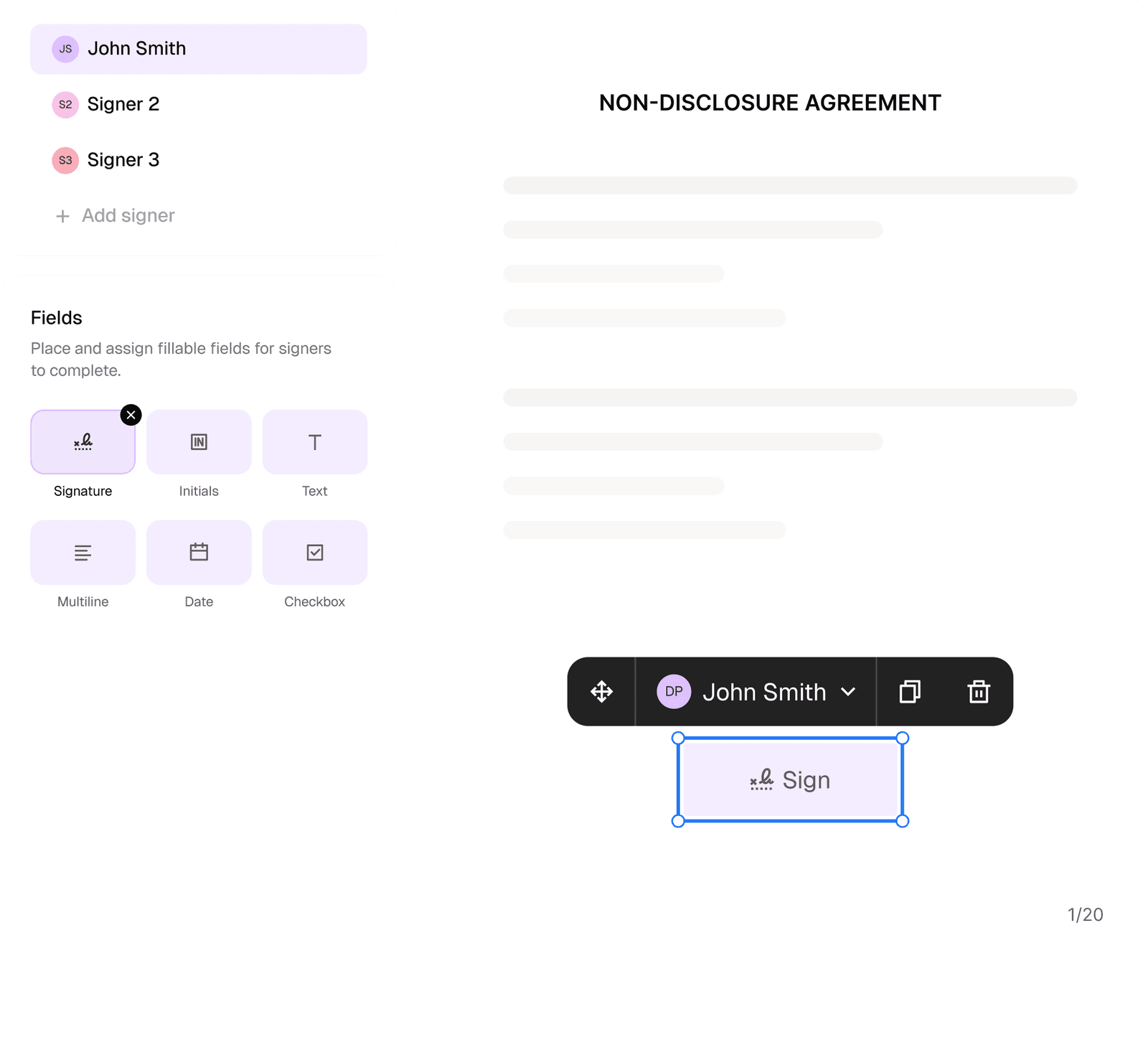
Sign documents and collect legally binding signatures. Invite up to ten people to sign in any order, track the progress, and send reminders.
Request legally binding signatures
Invite up to ten people to sign your document in any order. Get a finalized, audit-ready copy without chasing signatures.
Skip the drafting.
Choose from 2,500+ templates
Browse templatesChoose a template
Fill in details
Sign and download