Updated July 28, 2026
4 min read
What Is the Difference Between a Reference Letter and a Recommendation Letter?

What Is the Difference Between a Reference Letter and a Recommendation Letter?
- Reference Letter vs Recommendation Letter: What Are They?
- Letter of Reference vs. Recommendation: When to Use Which
- The Difference Between a Reference and a Recommendation Letter: Cases From Employment
- Reference vs Recommendation Letter: Cases from Academia
- Reference Letter vs. Letter of Recommendation: Who to Ask and How to Reach Out
- Build Your Network
Content
Even if you have years of impeccable experience in your back pocket, a letter from an authority figure acknowledging your dedication can be even more persuasive in your application. Whether you’re applying for a new career position, an educational institution, or a project, you may need to use either a letter of recommendation or a letter of reference. This guide explains the difference between a reference letter and a recommendation letter and shows when each can be most useful in promoting you as a top candidate.
Reference Letter vs Recommendation Letter: What Are They?
While both documents rely on a writer who verifies the candidate’s skills and character, the difference lies in how that verification is packaged and targeted.
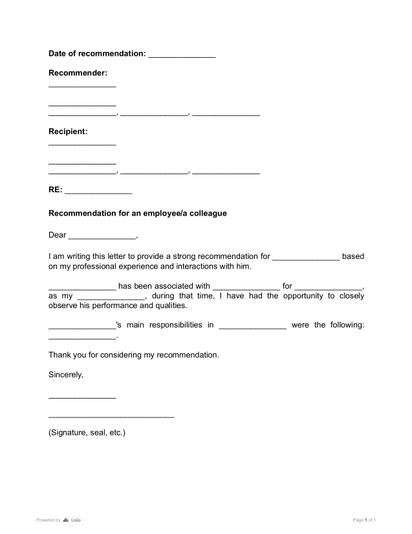
What is a letter of recommendation?
A letter of recommendation is a document in which someone familiar with you (your mentor, prior employer, or professor) evaluates your skills and character for a particular position. This document is frequently used to apply to a university or a specific job.
When an individual finds a specific opportunity, they ask a writer to advocate on their behalf.
A recommendation letter is drafted to support a candidate’s suitability for a particular position and is highly detailed and customized. Many companies request them when hiring employees in the final stages of interviewing.
However, it is a single-use document. It is sent directly to that specific recipient and is rarely, if ever, used again for a different application.
The writer focuses heavily on the exact requirements of the target role. For example, if the letter is for a Senior Project Manager role, the writer will specifically detail the candidate’s budget management and leadership skills, rather than their general traits.
What is a letter of reference?
A reference letter (often called a letter of reference) is a broad, multi-use statement of support regarding a person’s history and character.
Rather than being suitable only for a single situation or application, it reflects what the other person thinks about your abilities in general.
The writer focuses on your overall performance, reliability, and general competence.
It confirms facts (dates of employment, job titles, and day-to-day responsibilities) and provides a general statement that you are a good worker, student, or volunteer.
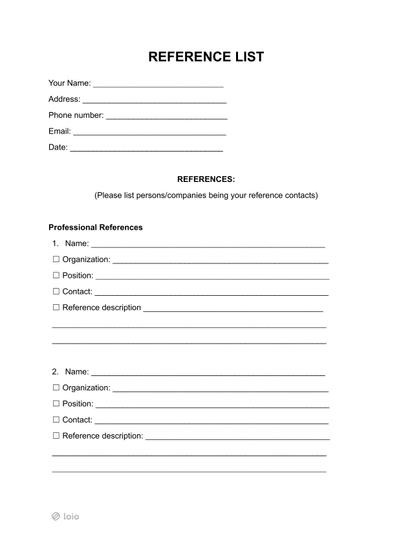
An employer can ask for more than one reference from your previous managers. A reference list is a document you can use to provide information and a broader description of your relationship with each contact.
Can I use a recommendation letter as a reference letter?
Yes. A recommendation letter is far more specific, and there might be situations when you don’t have the time to find a new person ready to vouch for you and write a letter about it. So you can use either a recommendation or a reference letter. You just need to adjust the texts.
Broaden your professional scope and skills. Remove references to a specific job opening or company name and keep the focus on your transferable skills, work ethic, and achievements.
Change the greeting. Update a specific greeting based on the new target audience.
Update the date. If the letter is relatively old, change it to show that the reference is fresh.
Always ask the writer’s permission. They may prefer to give you a fresh, undated copy for use as a long-term asset.

Letter of Reference vs. Recommendation: When to Use Which
Because a recommendation letter supports a specific opportunity while a reference letter provides a general endorsement, they excel in different scenarios.
Use a letter of reference when:
You apply to many positions. Use it if you are mass-applying to dozens of jobs, internships, or rental properties, and you cannot ask a busy writer to customize a new letter for every single application.
You build a proactive portfolio. You want to collect character and professional verifications over time so you always have proof of your work ethic ready to present.
The application generally asks for “references.” If an employer asks for standard references during the initial screening phase, use this one.
Use a letter of recommendation when:
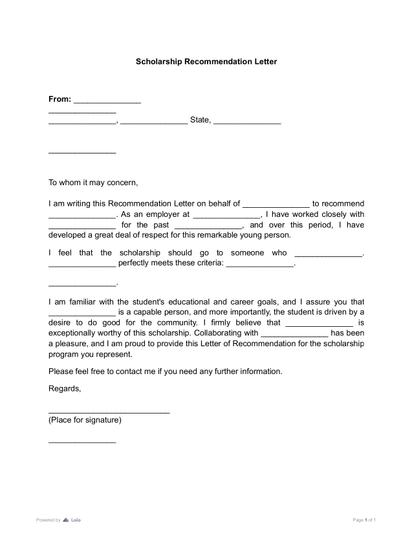
The application explicitly demands it. When you want to apply for scholarships, academic programs, and high-level corporate roles, you will need a formal recommendation.
You apply for a specific job title. You want the writer to directly connect your past achievements to the exact responsibilities listed in the new job description.
You apply for a promotion or internal transfer. You need a current supervisor to advocate for your readiness to take on a specific, elevated role within the same company.

The Difference Between a Reference and a Recommendation Letter: Cases From Employment
In the professional world, the type of letter you use depends on your current employment status and your immediate career goals. The cases below illustrate how one may overcome a common career hurdle.
Using a letter of reference
- 1
Standard company exit. You leave your current company on excellent terms to take a break or explore a new industry. Because you don’t have a specific job lined up yet, you ask your manager for a reference letter before your last day. Why do this now? Because you create a permanent record of your achievements and positive features, while your manager remembers you well.
- 2
Massive job hunting. You are actively sending out dozens of resumes a week across various job boards. A reference letter is a great blanket document that doesn’t require you to constantly edit it.
Using a letter of recommendation
- 1
Diving into a specific niche. You have experience in a field (e.g., history) and now want to move into a narrower niche (e.g., ancient African history). You ask your boss for a very specific letter that explains how your skills make you a strong candidate for this change.
- 2
Seeking an internal promotion. Your company has opened up a highly competitive internal position. Your manager submits a formal recommendation letter directly to the internal hiring committee, explicitly advocating for your readiness to handle the responsibilities in a new role.
Reference vs Recommendation Letter: Cases from Academia
Academia is a highly competitive environment that often comes with scrupulous scrutiny. The examples below highlight when it might be best to choose either a recommendation or a reference letter.
Using a Letter of Reference
- 1
Going for general admissions or grants. You are a high school senior applying to several local colleges or general community grants. As a rule, selection committees look for overall work/study ethic and community involvement. A reference letter from a scout leader, a pastor, or a local business owner should provide a general endorsement of your character. It proves to the committee that you are a reliable candidate.
- 2
Securing a graduate assistantship pool. Your university requires you to submit a general dossier to a broad pool of potential campus jobs or housing assistantships for the upcoming academic year. A broad reference letter satisfies this goal; for now, you’re just scouting.
Using a letter of recommendation
- 1
Securing private fieldwork funding or a research travel grant. You are a graduate student or junior researcher applying for a competitive, private foundation grant (like the National Geographic Explorer’s Grant) to fund a specific anthropology dig or marine research trip in another country. Alternatively, a letter of recommendation for a scholarship can be necessary if you need more financial support to work at a particular institution.
- 2
Applying for an inter-university exchange or an international transfer. You are a student who studies a rather narrow field. You want to transfer your ongoing research into a highly specialized and innovative laboratory at a partner university abroad for a semester.
Reference Letter vs. Letter of Recommendation: Who to Ask and How to Reach Out
To many, it comes as a surprise that getting a letter of recommendation or reference is difficult. It can be caused by:
Poor relationship with your boss/mentor/professor
Lack of contact with these individuals
Years since their job/studying experience
Elitist approach/bias at the institution/company.
These are a few ideas for getting the best letters of recommendation or references, drawn from personal academic and professional experiences.
1. Start early
Even if you don’t plan to apply or switch careers/majors, build positive relationships with people who might be good future references. Just keeping things professional and not hiding in the background is enough — all you need is to be remembered.
In some cases, it’s also a good idea to gather references early on; when you do so, you can ask for a refresher even years after that by showing this person that they did vouch for you before.
2. Ask everyone
Sometimes, the professor you had the most hope for suddenly rejects the request for a letter. Regardless of your personal impressions, reach out to everyone with whom you’re on neutral or good terms.
3. Offer them a draft
Ask them whether they would prefer to write an entire letter from scratch or receive a draft with some suggestions. Busy people often appreciate a simpler solution. Often, professors or employers admit that it’s far easier for them to edit an already existing letter than to write one themselves. You don’t even have to bring it to them in person — just share it with them, and they can edit the PDF draft when convenient.
4. Refresh their memory
If you reach out years or months later, they may have already forgotten who you were. When sending them an email with a request, attach your best academic essay from their class or remind them of your successful shared project.
5. Get some experience
If you have at least a few days, you can find a short-term volunteer initiative to join, and your supervisor might be willing to serve as your reference. Still, ask them in advance, just to be safe, and remember that an agreement doesn’t mean you shouldn’t be responsible. Volunteering relevant to your study or career field can be your golden ticket.
Catchafire. This website offers many options, including virtual volunteering — you can have your mentor eSign a recommendation/reference letter for you once you’re done.
UN Volunteers. This is a highly respectable and diverse place to find opportunities.
Idealist. It has one-day events for quick, immediate projects.
Build Your Network
Both a reference and a recommendation letter can be used many times to strengthen your applications. If possible, begin by gathering references and accumulating your own small network early on: at the start of your studies or during promotions. Over time, you can reach out to them to request letters of recommendation. Treat these documents as your most valuable assets, and they will do their job when you need them to.
More guides
September 11
4 min read
What to Look for in an Employment Contract
September 11
5 min read
Employment Contract Red Flags to Check Before You Sign
September 1
7 min read
How to Provide Proof of Employment: Documents and Steps

October 16
7 min read
What Is OCR (Optical Character Recognition)? How It Works & AI Uses
October 6
14 min read
How to Make a PDF Searchable: 5 Tested OCR Methods in 2026
September 11
6 min read
Employment Contract Mistakes Small Business Owners Often Make
One home for your
agreements
Edit PDFs seamlessly
Tweak agreements before signing or sending for signatures. Update details, add or remove clauses, adjust formatting, and redline changes instantly.
eSign legally and securely
Sign documents and collect legally binding signatures. Invite up to ten people to sign in any order, track the progress, and send reminders.
Request legally binding signatures
Invite up to ten people to sign your document in any order. Get a finalized, audit-ready copy without chasing signatures.
Skip the drafting.
Choose from 2,500+ templates
Browse templatesChoose a template
Fill in details
Sign and download