Updated September 13, 2026
10 min read
How to Open an LLC as a Foreigner in 2026: What You Need to Know

How to Open an LLC as a Foreigner in 2026: What You Need to Know
- Can Non-Residents Legally Form an LLC in the U.S.?
- What Are the Pros of Opening an LLC in the U.S. for Non-Residents?
- What Is the Best State for Registering an LLC for Non-US Residents?
- How to Open an LLC as a Foreigner: Step-by-Step Instructions
- What Tax Obligations Do Non-Resident LLC Owners Have?
- Mistakes to Avoid While Opening an LLC as a Non‑Resident
Content
The U.S. remains one of the most attractive markets for global entrepreneurs. Is it possible for a foreigner to open an LLC without U.S. citizenship or residency? Yes, absolutely. More than that, it’s almost as easy as for a U. S. citizen. This guide explains how to open an LLC in the USA for a non-resident step by step, uncovering all the details, from what documents you need to what tax rules apply.
Can Non-Residents Legally Form an LLC in the U.S.?
The law does not require business owners to be U.S. citizens or residents. To open an LLC in any state of the U.S., you need neither a visa nor a green card, as a company is formed under state, not federal, law.
However, the fact that you own a business here does not grant you the right to live or work in the U.S. So, if you plan to move to the country or manage daily operations there, you may need a proper visa.
What Are the Pros of Opening an LLC in the U.S. for Non-Residents?
Many entrepreneurs from all over the world choose to start their companies in the U.S., and there are plenty of reasons for such a choice:
- 1
Personal assets protection
An LLC is a separate legal entity. It means that if your business faces debt or a lawsuit, your personal savings and property won’t be taken away.
- 2
Flexible taxation
By default, you do not need to pay corporate tax unless you choose to. You report income on your personal tax return, which is very convenient.
- 3
100% company ownership
You do not need U.S. citizenship, residency, or a local partner to fully own and control your LLC as a foreigner.
- 4
Clients’ trust
Clients, suppliers, and sales platforms are usually more likely to choose U.S.-based companies because they are perceived as more credible and reliable. Besides, payment processors and online marketplaces also prefer working with U.S. companies because the procedures are simple and clear.
- 5
Low cost
Forming an US LLC for non-residents typically costs from $50 to $500, depending on the state. So, even if you do not have a large initial capital, you can still start a business.
What Is the Best State for Registering an LLC for Non-US Residents?
The right choice of the state impacts much in your LLC: from how much the formation costs to how much taxes you'll have to pay. Every state may offer something that matches your business goals better than others. So, ask yourself:
Will you operate physically in a specific state?
Will you hire U.S. employees?
Will you sell only online from abroad?
What is your annual compliance budget?
If you plan to run a physical office, warehouse, or store in a certain state, you should naturally form your LLC there. Meanwhile, if you register in one jurisdiction but operate in another, you may need a "foreign qualification," which entails additional fees and reports.
Here are the most popular states among non‑residents:
Delaware
- Well‑developed and predictable business laws;
- Separate Court of Chancery for business disputes;
- Preferred by investors and venture capital firms;
- Annual franchise tax (minimum $400 for LLCs).
- Best for scalable startups.
Wyoming
- No state income tax;
- Low annual report fee (minimum $60);
- Strong privacy protection;
- Simple compliance requirements;
- Best for online businesses and solo founders.
New Mexico
- Low formation fee (around $50);
- No annual report requirement;
- Good privacy;
- Best for small online businesses with tight budgets.
Florida
- No state income tax for individuals;
- Large consumer market of over 22 million people;
- Suitable for e‑commerce, consulting, and service businesses.
If your business operates fully online and you have no physical office or shop in the U.S., Wyoming or Delaware can be the most favorable options for you.
How to Open an LLC as a Foreigner: Step-by-Step Instructions
The process of forming an LLC in the U.S. is similar for residents and non-residents, but the latter have certain peculiarities. Let’s focus on them at every stage of the company formation.
1. Choose the name for your LLC
Your company’s name is your company’s identity, and it should comply with certain rules:
Be unique in the state where you register (no identical or confusingly similar names);
Include “LLC” or “Limited Liability Company” (you may also use “L.L.C.”);
Avoid words like “bank,” “insurance,” “university,” or “trust” unless you have special approval;
Do not mislead the public (you cannot imply that you are a government agency).
Here’s how a non-resident can choose the name for their LLC:
- 1
Search the USPTO database to make sure your name does not infringe on an existing U.S. trademark.
- 2
If you plan to work in other states later, check if the chosen name is available there as well.
- 3
You’ll probably need a website, so make sure the matching domain name is available, especially if you run an online business.
- 4
Use the same name for your website, contracts, and banking. It should be easy for U.S. customers to spell and remember.
- 5
If you want to use a different brand name for marketing, register a DBA (“Doing Business As”).
2. Hire a registered agent
Every non-US resident LLC must have a registered agent — a person or company that receives official documents on behalf of your business, such as legal notices, lawsuits, and correspondence from the state.
A non-resident cannot be a registered agent, so you need to appoint:
- An individual who lives in that state, or
- A company that provides professional registered agent services.
Can you choose a friend or relative who lives in the state to serve as your registered agent? Technically, yes, but this is often risky. If they move, are unavailable, or fail to forward important documents on time, you could miss legal deadlines and face penalties.
The best option for non-residents is to hire a professional registered agent service, as it offers many benefits:
Typically costs $50–$150 per year;
Adds reliability to your company;
The agent is always available;
Your personal or family address will not appear on public records;
All time‑sensitive legal documents are handled on time.
3. Choose the address for your LLC
To operate legally in the U.S., your LLC needs a registered office address for legal correspondence. It:
Must be a physical street address (no P.O. boxes);
Must be located in the same state where your LLC is registered;
Is typically your registered agent’s address if you have one.
Banks, payment processors, and some marketplaces may ask for a separate business address. In such cases, you can use a virtual office service that provides a physical U.S. street address and mail handling.
4. File Articles of Organization
The Articles of Organization (also called a Certificate of Formation) is the official document that legally creates an LLC for non-US citizens. You must sign it online and file it with the Secretary of State (or equivalent state agency) in the state where you are forming your company.
To be legally binding, this document must include:
The exact legal name of your LLC;
The name and address of your registered agent;
The registered office address;
The business purpose (often a general clause like “any lawful activity”);
The management structure (member‑managed or manager‑managed);
The names of members or managers.
For non‑residents, it is important to ensure that the information in all your documents matches exactly (especially the LLC name and registered agent details). Any inconsistencies can delay EIN approval or cause problems with opening a bank account in the future.
Once the state approves your filing, you will receive a stamped copy or a Certificate of Formation. At that point, your LLC becomes legally active.
5. Obtain an EIN
An Employer Identification Number is your LLC’s federal tax ID, issued by the Internal Revenue Service (IRS). Even if your LLC has no employees, you need an EIN to:
Open a business bank account;
File federal tax returns;
Hire employees or contractors;
Apply for certain business licenses;
Work with payment processors, such as Stripe or PayPal;
Register on major online marketplaces.
International applicants who have no legal residence, principal place of business, or principal office in the U.S. can apply for an EIN by phone at 267-941-1099, or submit Form SS-4 by fax or mail. The phone option is available Monday through Friday and allows the IRS representative to assign the EIN during the call.
When completing Form SS‑4, you must provide:
Your LLC’s exact legal name;
The name of the “responsible party” (a real individual who controls the company);
The business address;
A brief description of your business activities.
If the responsible party does not have and is not eligible for an SSN or ITIN, enter “foreign” or “N/A” on line 7b. Do not leave the line blank.
Make sure the state has already approved your LLC before you apply. Once issued, the IRS will send an official EIN confirmation letter (CP 575). If you need to send a scanned copy of the CP 575 letter to a bank, make the scanned PDF searchable first, since some banks' KYC review works faster on searchable text. Keep this document, as banks and financial institutions will request it.
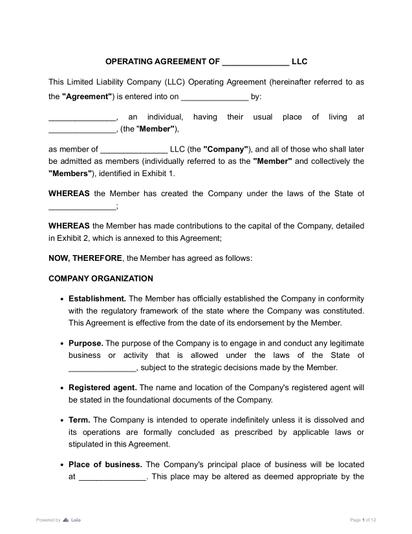
6. Sign an operating agreement
An LLC operating agreement defines how your LLC is owned and managed. While in most states this document is not obligatory, every LLC run by a non-resident should have one to prevent possible problems.
An operating agreement contains essential information about:
Who owns the LLC and in what percentage;
What voting rights and decision‑making rules the company has;
How profit and loss are distributed;
How the LLC is managed (by members or an appointed manager);
How members can be added or removed;
How the company’s functioning can be terminated.
In case any changes occur in the structure of your company, you must edit the document and update the information in it.
Why is an operating agreement an essential document for LLCs run by non-residents?
It limits your liability and shows that the LLC is a separate legal entity from you personally. This separation is critical when you operate from abroad and may not have a physical U.S. presence.
U.S. banks may request it when you open a business account. Without it, your application may be delayed or rejected.
If you have multiple foreign partners, the agreement prevents misunderstandings by clearly defining how you share profits, responsibilities, and resolve disputes.
Without an operating agreement, your LLC will be governed by default state rules, which may not reflect your intentions or business needs.
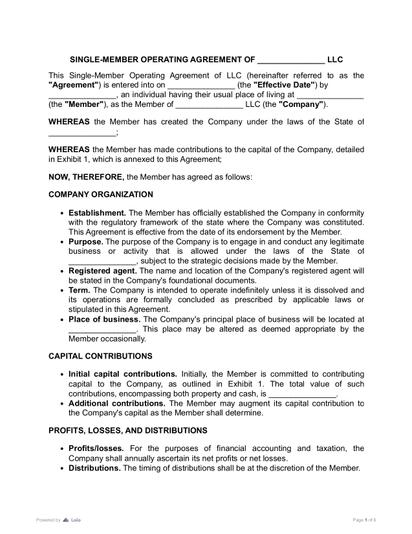
Even if you’re the only member running an LLC, a single-member operating agreement can help you ensure everything goes smoothly for your business.
7. Open a bank account
To operate in the U.S. and work with local clients, your LLC needs a U.S. bank account. The procedure is usually not time-consuming, but it is more complicated for foreigners.
If you apply with a traditional U.S. bank, you will likely need to travel to the United States to open the account in person at a branch. You should bring your passport, answer questions about your business, and sign a standard set of papers. Not all branches work with non‑residents, so you should contact the bank in advance and confirm their requirements before booking a flight.
If, for any reason, you cannot come to the U.S., you can choose online business banking platforms that allow remote account opening. Companies like Mercury or Wise let you apply online. However, approval is not guaranteed. They will review your country of residence, business model, industry type, and expected transactions. Some countries and high‑risk industries may not be accepted.
Besides, many LLC owners choose to use payment processors, like Stripe or PayPal, to receive customer payments online.

Typically, you will be asked to provide your:
LLC formation documents (Articles of Organization or Certificate of Formation);
EIN confirmation letter from the IRS;
Operating agreement;
Valid passport;
Proof of home address (from your country of residence);
Short explanation of what your business does;
Estimated monthly revenue and transaction volume.
What Tax Obligations Do Non-Resident LLC Owners Have?
All businesses in the U.S., whether they are run by residents or not, should file a standard set of taxes.
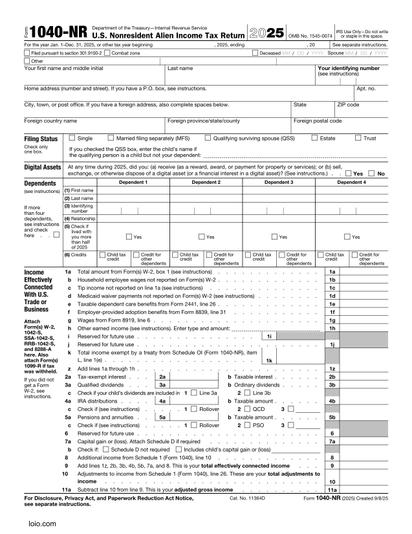
Federal filing requirements depend on how the LLC is classified. A foreign-owned single-member U.S. LLC treated as a disregarded entity must file a pro forma Form 1120 with Form 5472 attached when Form 5472 reporting applies. This requirement is separate from electing corporate taxation, and having zero revenue does not by itself eliminate the filing obligation when reportable transactions occurred. Failure to file Form 5472 on time and in the prescribed manner can result in a $25,000 penalty. The foreign owner may also need to file Form 1040-NR, depending on their U.S. business activity and income.
A multi-member LLC taxed as a partnership generally files Form 1065 and provides Schedule K-1 to each partner. If effectively connected taxable income is allocable to foreign partners, the LLC may also have withholding and reporting obligations under section 1446, including Forms 8804 and 8805.
Should non-resident LLC owners file taxes in their native state?
Many countries, including Canada, the UK, Australia, Germany, France, India, and Spain, tax residents on their worldwide income. It means you should report profits from your U.S. LLC in your home country as well, which may result in double taxation. However, the U.S. has tax treaties with many nations that allow you to claim a foreign tax credit.
For example, if you earn $100,000, pay 24% ($24,000) in U.S. tax, and your home country taxes income at 30%, you would typically pay only the 6% difference ($6,000) locally, not 30% again.
Mistakes to Avoid While Opening an LLC as a Non‑Resident
Thousands of foreign entrepreneurs form U.S. LLCs each year, attracted by access to the U.S. market and payment systems. However, many face penalties or administrative issues due to such compliance mistakes:
- 1
Choosing the wrong state
Do not automatically choose a popular state like Delaware or Wyoming just because someone recommends it. Compare formation fees, annual report costs, franchise taxes, and compliance requirements. If you will have physical operations or clients in a specific state, you may need to register there anyway. Review the total yearly cost — not just the initial filing fee.
- 2
Ignoring tax filing duties
Many non‑residents assume that if the LLC earns no income, they should file no taxes. Unfortunately, it doesn't work like this.
- 3
Mixing personal and business funds
Using your personal account for business transactions can become a serious problem when it comes to legal issues. Open a separate account at a U.S. bank to keep all income there.
- 4
Having no reliable registered agent
Your registered agent receives legal and government notices. If the person you appoint misses or loses them, your LLC can face penalties or even default judgments.
- 5
Assuming no U.S. tax applies
If you work in the U.S. and have U.S.-sourced income, you are typically obliged to pay taxes here, even if your native state wants you to pay them there too.
Opening a business in the USA by a foreigner is not a complicated procedure. Choose a state, file formation documents, appoint a registered agent, and pay taxes on time — that is what you generally need to do. Of course, the need to come to the state to open a bank account can be a hard part, but there is an alternative solution to it. In the end, the benefits you enjoy while running a U.S.-based LLC recompense for this minor inconvenience.
More guides
July 25
12 min read
How to Register a Company in the US: What No One Tells You in 2026

September 1
7 min read
How to Provide Proof of Employment: Documents and Steps

October 15
How to Start a Staffing Agency: Licensing, Pricing, and Cash Flow

July 25
12 min read
How to Start a Flooring Business and Get Your First Clients in 2026

October 8
8 min read
A Comprehensive Guide to Starting a Child Care Business

July 22
10 min read
How to Start a Storage Unit Business: What You Need to Know

One home for your
agreements
Edit PDFs seamlessly
Tweak agreements before signing or sending for signatures. Update details, add or remove clauses, adjust formatting, and redline changes instantly.
eSign legally and securely
Sign documents and collect legally binding signatures. Invite up to ten people to sign in any order, track the progress, and send reminders.
Request legally binding signatures
Invite up to ten people to sign your document in any order. Get a finalized, audit-ready copy without chasing signatures.
Skip the drafting.
Choose from 2,500+ templates
Browse templatesChoose a template
Fill in details
Sign and download