Updated July 24, 2026
7 min read
Shareholders vs Board of Directors: Ownership, Control, and Voting Rights

Shareholders vs Board of Directors: Ownership, Control, and Voting Rights
- What Is a Shareholder in a Corporation?
- What Is a Director in a Corporation?
- Shareholders vs Directors: The Core Differences
- Can the Same Person Be Both a Shareholder and Director?
- How Directors Are Chosen and Removed
- Important Corporate Documents That Define These Roles
- How These Roles Affect Investors, Employees, and Founders
Content
Before people start a corporation, they may assume ownership and control are the same thing. This is not the case, because corporations clearly divide power between different roles. Shareholders own the company, directors guide major decisions, and officers handle daily operations.
Separation between ownership and management helps corporations grow, bring in investors, reduce disputes, and protect personal assets. Knowing the differences between these roles early can prevent major confusion later.
With this guide, we explain the difference between shareholders and directors in a corporation, how authority works, where conflicts usually appear, and what business owners should document before problems arise.
What Is a Shareholder in a Corporation?
A shareholder is a person or business that owns shares or stocks in a corporation. Those shares represent ownership in the company. In simple terms, shareholders are the people who financially own part of the business.
In small corporations, shareholders are usually founders, family members, business partners, or private investors. In larger corporations, ownership may be spread across thousands of shareholders.
One of the biggest misunderstandings new business owners have is thinking ownership automatically means control over every business decision. In reality, shareholders own the company, but directors and officers usually handle management and operations.
Rights shareholders usually have
Shareholders usually receive certain rights under state corporate law and the company’s governance documents.

The exact rights depend on how the corporation is structured. Some companies issue different classes of shares with different voting or financial rights. This is one reason why understanding the difference between shareholder and director matters so much before creating a corporation. Shareholders usually influence the corporation through ownership and voting rights, while directors guide major business decisions.
What shareholders are not responsible for
Shareholders usually don’t manage daily business operations. They also are not normally personally responsible for corporate debts or lawsuits. That liability protection is one of the main reasons many people choose the corporate structure.
If the corporation signs a vendor contract or a loan agreement, for example, the corporation itself is generally responsible for repayment instead of individual shareholders.
However, shareholder protection depends on the business operating properly as a separate legal entity. Problems may appear, however, when owners mix personal and business finances, fail to keep records, or ignore corporate formalities.
Shareholders do not usually supervise employees unless they separately serve as directors or officers.
Majority vs minority shareholders
Majority shareholders usually own enough voting shares to influence director elections and major corporate decisions. Minority shareholders own smaller portions of the company and have less influence over how the business operates. In closely held corporations, this may create disputes involving:
Profit distributions
Company salaries
Ownership dilution
Access to financial information
Business direction
These conflicts appear more often when only a few people own the corporation and decision-making authority overlaps with personal relationships.
What Is a Director in a Corporation?
Directors are responsible for overseeing the corporation’s overall direction and major decisions. Together, they form the board of directors.
The board usually doesn’t handle routine daily operations. Instead, directors focus on larger business decisions that affect the corporation long term. Directors often approve:
Major contracts
Financing decisions
Executive appointments
Stock issuance
Mergers or acquisitions
Large strategic changes
In small corporations, directors are often founders or owners themselves. In larger companies, directors may include outside professionals with industry or financial experience.
Many business owners researching shareholders vs board of directors differences become surprised to learn that ownership and governance are intentionally separated in corporate structures.
Directors vs officers: What’s the difference?
Directors and officers serve different functions inside a corporation.
Directors oversee the corporation at a higher level and they also oversee corporate officers. Officers handle daily operations and management. Common corporate officers include, among others:
Chief Executive Officer
President
Chief Financial Officer
Secretary
For example, directors may approve hiring a CEO, while the CEO manages employees, operations, and business activity afterward. In small corporations, one person may serve as a shareholder, director, and officer at the same time. However, the shareholder vs director responsibilities distinction still matters even in owner-operated businesses.
Fiduciary duties directors owe
Directors are expected to act in the corporation’s best interests. These legal obligations are commonly known as fiduciary duty responsibilities.
Directors are expected to make informed decisions, avoid conflicts of interest, act honestly and prioritize the corporation over personal benefit.
For example, directors should not approve deals that secretly benefit them at the corporation’s expense.
When corporations have multiple owners or outside investors, they want reassurance that directors are managing the business responsibly and fairly. The relationship between the board of directors and shareholders depends heavily on trust, transparency, and documented decision-making.
Can directors be personally liable?
Directors usually receive liability protection when acting properly within their role. However, personal liability can still happen in some situations. For example:
Fraud
Misuse of company funds
Illegal conduct
Major conflicts of interest
Serious breaches of duty
Courts may also examine whether directors ignored important responsibilities or acted in bad faith. That’s why corporations should document major decisions carefully. When you need to show how decisions were made, meeting minutes, written approvals, and internal records are seen as a reliable source.
When dealing with a lot of paperwork, an AI contract review tool can help you review governance documents, contracts, or agreements tied to important business decisions and pinpoint all the important details right away.
Shareholders vs Directors: The Core Differences
Many small corporations use the same people as shareholders, directors, and officers. Even so, the responsibilities attached to those roles remain different.
Ownership vs control
Shareholders own the corporation, while directors govern the corporation. A shareholder may own part of the business without controlling daily decisions. Meanwhile, directors may influence major company strategy without owning most of the corporation themselves.
Most discussions around board of directors vs shareholders come down to this distinction between ownership and authority. This separation protects corporations operationally.
Board of directors and shareholders decision-making authority
Shareholders and directors usually vote on different categories of decisions.

For example, shareholders may elect the board, but directors often decide whether the corporation opens another location, raises funding, or enters a major partnership. This helps corporations make decisions faster but keep shareholders involved in major ownership matters.
Liability differences
Shareholders usually have limited liability tied to their investment in the corporation. Directors, however, may face liability if they misuse authority or violate legal responsibilities connected to their role.
That does not mean directors face constant personal risk. Most directors acting responsibly within company rules remain protected. Still, directors carry greater legal responsibilities than passive shareholders because they actively influence corporate decisions.
Compensation differences
Shareholders and directors are compensated differently because they participate in the corporation differently. Directors may receive board compensation, stock options and salaries if they also serve as officers or employees. Shareholders usually earn money through dividends, appreciation in stock value and sale of shares.
Voting power
Voting rights create probably the biggest practical difference between shareholders and directors. Shareholders usually vote according to the number of shares they own, while directors usually vote equally within the board regardless of ownership percentage.
— Are board of directors shareholders, too?
In many small corporations, directors are also owners. In larger corporations, outside directors may hold little or no ownership at all.
How Directors Are Chosen and Removed
Shareholders usually elect directors during shareholder meetings. The election process is typically explained in state corporate law and company governance documents.
Directors may also be removed under certain circumstances, such as misconduct, failure to perform responsibilities, conflicts of interest, shareholder dissatisfaction, or governance disputes. A reliable online PDF editing tool can help businesses organize and update governance records when board structures or ownership details change.
What happens when there’s a deadlock?
Deadlocks happen when decision-makers can’t agree on important business actions. This often appears in corporations with equal ownership or evenly divided boards.
For example, when two 50/50 co-founders disagree, directors split votes evenly or shareholders block major actions. Deadlocks can delay hiring, financing, expansion, or major approvals. Businesses reduce deadlock risk by creating:
Buy-sell agreements
Tie-breaker provisions
Mediation requirements
Voting procedures
Exit strategies
Deadlocks may lead to lawsuits, forced buyouts, or even dissolution of the corporation.
Important Corporate Documents That Define These Roles
Corporate governance depends heavily on written documents. These documents explain who owns the company, who controls decisions, how voting works, and what happens if disagreements appear later.
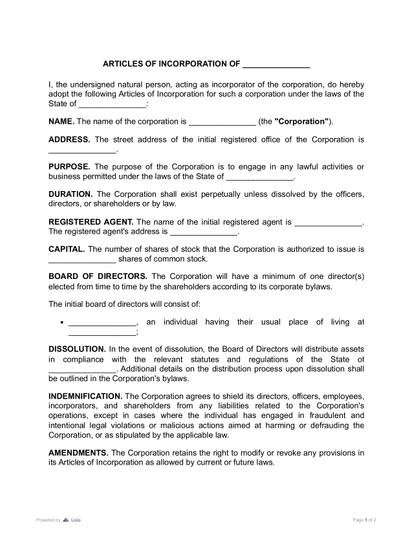
Articles of incorporation
The articles of incorporation officially create the corporation with the state. This document usually includes:
The corporation’s legal name
Registered business information
Authorized shares
Business purpose
Registered agent details
Although relatively short, this filing forms the legal foundation of the corporation. It also determines basic ownership structure and confirms the company exists as a separate legal entity.
Corporate bylaws
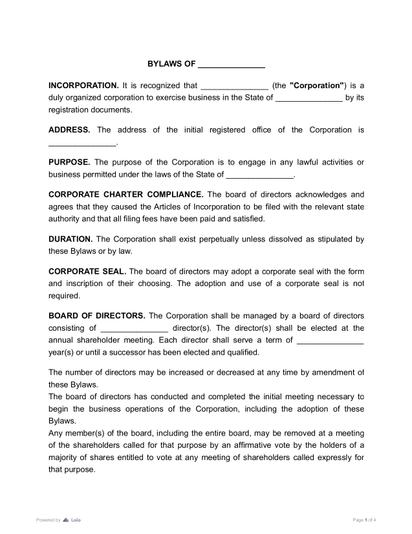
Corporate bylaws explain how the corporation operates internally after formation. These rules describe board structure, voting procedures, shareholder meetings, officer responsibilities, director elections, and approval requirements.
Basically, bylaws act as the corporation’s internal rulebook and help clarify how decisions should be made and who has authority to make them. Many businesses create bylaws during formation and rarely update them afterward. However, governance structures often change as companies grow, add investors, or expand management teams.
With the help of our online eSign tool, you can finalize updated governance documents faster and maintain clearer records of approvals and signatures.
Shareholder agreements
Shareholder agreements are especially important in privately owned corporations where ownership is concentrated among a small number of people. These agreements may define:
Ownership percentages
Transfer restrictions
Voting rights
Buyout procedures
Dispute resolution rules
Exit rights
Strong shareholder agreements often prevent disputes before they become serious. Clearly defining the director vs shareholder relationship also helps businesses separate ownership rights from management authority more clearly.
Board resolutions and meeting minutes
Corporations should document important decisions through written resolutions and meeting minutes. These records help show what decisions were made, when approvals happened, who participated and how votes were handled.
Good documentation supports liability protection and reduces confusion later. It also helps investors, lenders, and legal advisors understand how the corporation operates.
How These Roles Affect Investors, Employees, and Founders
Investors often pay close attention to governance because it affects accountability and decision-making. For example, investors may ask who controls voting, how directors are chosen, whether founders can be removed or how ownership transfers work.
Founders should also understand how governance changes as businesses grow. A small startup may operate informally at first, but investor expectations usually increase once outside funding enters the company.
Employees can also be affected by governance structure. Leadership disputes sometimes create inconsistent management, delayed decisions, financial instability and operational confusion. This is one reason the relationship between board of directors and shareholders matters beyond ownership itself.
Learning about the roles of shareholders, directors, and officers early makes it much easier to build a stable corporation later. Clear governance reduces disputes, but also helps businesses make decisions more confidently, attract investors more easily, and grow with fewer operational problems.
More guides
September 1
7 min read
How to Provide Proof of Employment: Documents and Steps

July 20
4 min read
Addendum vs. Amendment: Change Your Purchase Agreement Properly
July 22
4 min read
Income Statement vs Profit and Loss Statement: Is There a Difference?
July 25
7 min read
How to Sell a Business in the United States
July 22
5 min read
Articles of Incorporation vs. Articles of Organization: What's the Difference?
July 21
5 min read
Memorandum of Understanding vs Contract: Legal Effect and When to Use Each
One home for your
agreements
Edit PDFs seamlessly
Tweak agreements before signing or sending for signatures. Update details, add or remove clauses, adjust formatting, and redline changes instantly.
eSign legally and securely
Sign documents and collect legally binding signatures. Invite up to ten people to sign in any order, track the progress, and send reminders.
Request legally binding signatures
Invite up to ten people to sign your document in any order. Get a finalized, audit-ready copy without chasing signatures.
Skip the drafting.
Choose from 2,500+ templates
Browse templatesChoose a template
Fill in details

Sign and download