Updated September 14, 2026
10 min read
Trade Name vs Legal Name: What Business Owners Need to Know
Trade Name vs Legal Name: What Business Owners Need to Know
- Trade Name vs Legal Name: What Business Owners Need to Know
- Trade Name vs Legal Name: Difference at a Glance
- What Is the Legal Name of a Company?
- What Is a Trade Name and When Do You Need a DBA?
- Business Legal Name vs Trade Name by Business Structure
- Where to Use the Legal Name vs Trade Name
- Brand Name vs Trade Name vs Trademark
- How to Register and Protect a Trade Name
- Laws That Govern Trade Names and Trademarks
- Conclusion
Content
Trade Name vs Legal Name: What Business Owners Need to Know
Imagine this situation: Maya registered her design studio as Bright Path Media LLC, but her website and storefront said Bright Path Studio. Then a client sent a contract to the studio name, while her bank and tax records showed the LLC. Which name was the business’s real name?
Understanding trade name vs legal name is about using each name in the right place. The legal name identifies the person or entity responsible for the business. A trade name — often called a “doing business as” or DBA name — is the name customers see. Depending on state or local law, the business may need to register it as an assumed or fictitious name. The IRS even provides separate fields for a legal name and a trade name on Form SS-4.
The business legal name vs trade name distinction affects contracts, taxes, banking, licenses, invoices, and branding. It also matters when deciding whether a public-facing name needs DBA or trademark protection.
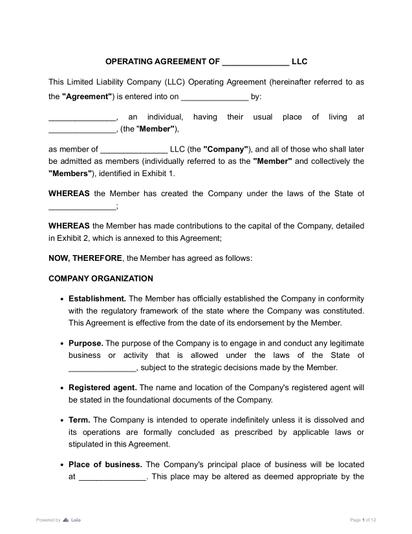
An LLC operating agreement can record the company’s official legal name, ownership, management structure, and signing authority. It does not register a DBA, but it helps show who owns and controls the legal entity behind the trade name.
Use Loio’s LLC Operating Agreement Template to document the LLC’s legal name, members, management rules, and authority to act for the company.
Trade Name vs Legal Name: Difference at a Glance
A legal name identifies the person or entity legally responsible for the business. A trade name identifies the business to the public.

A trade name can match the legal name. The distinction appears when Bright Path Media LLC starts using Bright Path Studio instead. Registering that public-facing name does not create another entity or give the business a new liability shield.
What Is the Legal Name of a Company?
The answer to what is the legal name of a company depends on its structure.
For a sole proprietorship, the legal name is usually the owner’s full personal name. If Maya operates without forming an entity, her legal business name may simply be Maya Torres. Bright Path Studio would then be a trade name she may need to register under state or local law.
For an LLC, the legal name is the name accepted in its formation records, such as Bright Path Media LLC. For a corporation, it is the corporate name shown in its certificate or articles of incorporation. A corporation preparing its formation documents can use an Articles of Incorporation Template as a drafting aid before checking the state’s filing requirements.
The legal name should identify the exact person or entity that owns assets, assumes obligations, receives official notices, and signs agreements.
The IRS reflects the legal name vs trade name distinction on Form SS-4. Line 1 asks for the legal name of the entity or individual, while line 2 asks for the trade name if it is different. The instructions define the trade name as the DBA name and emphasize using the name recorded with the IRS consistently to prevent processing errors.
A legal name is not a brand promise. Bright Path Media LLC tells a bank or court which entity is involved; it does not explain what the studio sells.
Founders who are still establishing the entity can follow Loio’s guide on how to register a company in the US to connect naming decisions with structure, tax IDs, licenses, and other formation steps.
What Is a Trade Name and When Do You Need a DBA?
A trade name is a name a person or entity uses to conduct business when that name differs from its legal name. It may also be called a DBA, assumed name, fictitious name, or trading name. The preferred term and registration process depend on the state and sometimes the county or city.
So, what is the trade name of a business? For Bright Path Media LLC, it is Bright Path Studio — the name customers see on the door and website.
A business may need a DBA when a sole proprietor uses a name other than the owner’s, an entity advertises under a different name, one company operates several brands, or an institution requests proof connecting the public name to its owner.
According to the SBA guidance on choosing a business name, registering a DBA does not provide legal protection by itself, although many jurisdictions require registration when a business uses one. A DBA generally gives the public a record of who stands behind the name. It does not form another LLC, separate debts, or create a liability shield.
A DBA filing does not guarantee that a name is safe to use. A state may accept it even when another party has stronger trademark rights. A business-name filing and trademark clearance are separate tasks.
Business Legal Name vs Trade Name by Business Structure
The business legal name vs trade name distinction changes slightly with the business structure, but the main rule stays the same: the trade name does not replace the underlying owner or entity.

For a sole proprietor, registering Bright Path Studio as a DBA may allow public use of the name, but it does not create an LLC’s limited liability. Loio’s comparison of LLC vs sole proprietorship business structures explains how ownership, taxes, and personal exposure differ.
Can a limited company have a trading name?
Yes. An LLC or corporation can often operate under a trading name if it follows the relevant state and local filing rules.
This is the practical answer to trade name vs LLC: an LLC is a legal business structure, while a trade name is a name used by that structure. Bright Path Studio cannot own the LLC. Bright Path Media LLC is the legal entity that operates the business, owns its business assets, and uses Bright Path Studio as its customer-facing name.
Are a trading name and a company name the same thing? Not necessarily. They may be identical, but a company can choose a different trading name for marketing purposes without changing its underlying legal identity.
The LLC should continue to keep formation, ownership, and authority records under its legal name. Entrepreneurs forming one can review how to register an LLC in the US. A sole owner should also understand what may happen when a single-member LLC has no operating agreement, especially when a bank or contracting party asks who can act for the company.
Where to Use the Legal Name vs Trade Name
A polished brand can still cause trouble when the wrong name appears on the wrong document.
Use the legal name to identify the responsible party. Use the trade name to help customers recognize the business. When both matter, show both.

For Bright Path, a contract introduction could read:
Bright Path Media LLC, a [state] limited liability company doing business as Bright Path Studio (“Bright Path”).
This wording connects the familiar name with the entity that must perform. The signature block should show the legal name and the signer’s name and title.
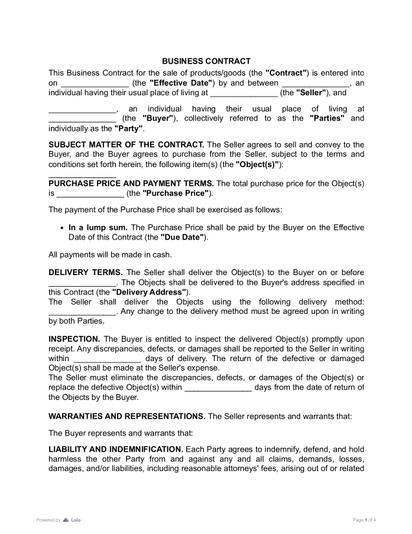
A business contract should clearly identify its parties and their material rights and obligations, including pricing and payment terms where applicable. Loio’s template provides a structured place to enter each party’s full legal name and the authorized signer.
Use the Business Contract Template to identify the legal persons or entities behind a transaction and connect any trade names to them, reducing uncertainty about who must perform, pay, or enforce the agreement.
Before signing an existing agreement, businesses can use AI Contract Review to inspect party names and other key terms. Once the names and authority are correct, the parties can sign the document electronically and retain a finalized copy.
Brand Name vs Trade Name vs Trademark
A trade name tells the public which business is operating. A brand name helps customers recognize particular goods, services, or experiences. A trademark is a word, phrase, symbol, design, or combination that identifies the source of goods or services and distinguishes it from others.
The categories can overlap. Bright Path Studio may be both a trade name and a trademark if customers associate it with the studio’s services.
However, registering a trade name does not provide the same protection as registering a trademark. The USPTO explains that trademark rights can arise through commercial use, although unregistered rights may be limited geographically. Federal registration provides significant nationwide benefits for the goods and services covered by the registration, including public notice and a legal presumption of ownership, subject to prior rights and other legal limitations.
Trademark filing activity remained high in FY2025. Applicants filed more than 824,000 new trademark application classes in FY2025, a 7.4% increase from FY2024. The word “classes” matters because one application may seek protection in several categories of goods or services.
Businesses developing valuable names, logos, or original content can explore broader steps for protecting intellectual property and trademarks.
What is an example of a brand name and trade name?
Suppose Bright Path Media LLC operates as Bright Path Studio and sells a project-planning app called PathFlow.
- Bright Path Media LLC is the legal entity name.
- Bright Path Studio is the trade name and may also function as a service brand.
- PathFlow is a product brand and may function as a trademark.
- A DBA filing for Bright Path Studio would not automatically protect PathFlow or Bright Path Studio as trademarks.
Well-known businesses show the same pattern on a larger scale, although their structures may involve many subsidiaries, licensees, and franchisees.

These simplified examples compare corporate owners with public-facing brands. They do not mean every listed brand is one universal DBA. Large businesses may use different subsidiaries, franchise entities, trademark owners, and local registrations.
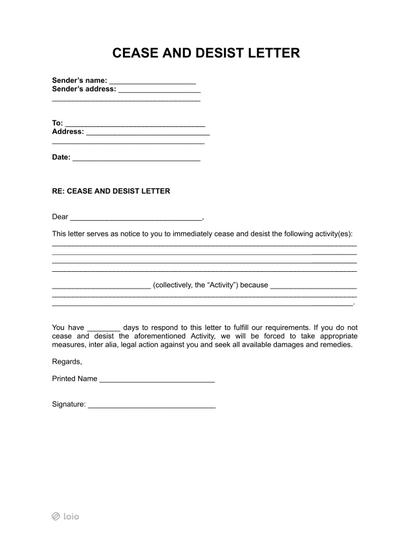
If another company uses a confusingly similar name, a cease-and-desist letter can demand that the disputed use stop. It does not prove infringement, so investigate ownership and consider legal advice first.
Use the Cease and Desist Letter Template to organize the parties, disputed conduct, requested action, and response deadline in a written notice.
How to Register and Protect a Trade Name
There is no single federal DBA registration for all U.S. businesses. Rules may depend on the state, locality, entity type, and place of operations.
- 1
Confirm the exact legal name
Check formation records, partnership documents, or the owner’s legal identification. Do not rely on a logo, domain, social profile, or old invoice.
- 2
Search state and local business records
Look for similar entity and assumed names. A state database result does not guarantee that the name is free of trademark claims.
- 3
Check trademarks, domains, and real-world use
Search USPTO and state trademark records, domains, websites, social platforms, and industry directories. As a preliminary check, consider whether customers could think the businesses share a source. This is not a complete trademark-clearance analysis; depending on the circumstances, additional searches or legal advice may be appropriate. Registering a domain or business name does not by itself grant trademark rights.
- 4
Identify the correct filing office
The filing office may differ by location and structure.
In Texas, an assumed-name certificate filed with the secretary of state must state its duration, which cannot exceed 10 years. Florida fictitious-name registrations are generally valid for 5 years.
New York uses different procedures depending on the business structure. Corporations, LLCs, and limited partnerships operating under a name other than their true legal name generally file a Certificate of Assumed Name with the Department of State. Sole proprietors using an assumed name generally file with the clerk of the county where the business operates.
- 5
Complete the DBA or assumed-name filing
Use the exact legal owner’s name. Add the trade name, address, business structure, and counties or locations requested. Keep the accepted filing with the company’s permanent records.
- 6
Update operational records
Provide the registration to banks, payment processors, licensing offices, insurers, and vendors. Use a consistent format such as:
Bright Path Media LLC d/b/a Bright Path Studio
- 7
Review trademark protection separately
A DBA connects a public name with its owner. A trademark helps protect a source-identifying brand. If the name carries real customer recognition, conduct a proper clearance search and assess whether state or federal trademark registration fits the business.
Choosing between company legal name vs trade name is not really the final decision. A growing business often needs both. The legal name gives contracts, ownership records, and official filings a clear responsible party. The trade name gives customers something memorable.
For Maya, the roles are clear: Bright Path Media LLC is the legal entity that operates the business and owns its business assets, while Bright Path Studio is its customer-facing name. Formal documents can connect the two to reduce confusion about who stands behind the business.
Laws That Govern Trade Names and Trademarks
Business-name requirements are not governed by one nationwide DBA statute. States regulate assumed-name, fictitious-name, and DBA filings, while federal trademark law addresses registration, false designation of origin, misleading representations, and related unfair-competition claims involving names and brands.
The following official laws support the distinctions explained in this guide:
- The federal Trademark Act registration provisions under 15 U.S.C. § 1051 explain who may apply to register a trademark based on current or intended commercial use. This is separate from registering a trade name with a state or county.
- 15 U.S.C. § 1125 covers several distinct trademark and unfair-competition claims. Section 1125(a) addresses false designations of origin and misleading representations, including uses likely to confuse consumers about source, sponsorship, or affiliation. Section 1125(c) separately addresses dilution of qualifying famous marks; dilution does not require a likelihood of confusion and can apply when use impairs a famous mark’s distinctiveness or harms its reputation.
- The official PDF of the Texas Assumed Business or Professional Name Act sets out who must file an assumed-name certificate, where it must be filed, and what information the certificate must contain.
- The Florida Fictitious Name Act, Florida Statutes § 865.09, defines a fictitious name as a name other than the person’s legal name and establishes Florida’s registration requirements. The law also makes clear that registration does not reserve the name against future use.
- New York General Business Law § 130 governs assumed-name certificates for individuals and partnerships. Corporations, LLCs, and certain other entities follow separate provisions and filing procedures, which is why New York requirements should not be described as one universal DBA process.
These laws also show why a successful filing does not settle every naming issue. A business may comply with a state DBA statute and still face a trademark dispute, use restrictions, or separate filing obligations in another jurisdiction.
Conclusion
The difference between a trade name vs legal name becomes simple once each name has a defined job.
The legal name identifies the individual, LLC, corporation, or other entity responsible for the business. The trade name helps that business present itself to customers. A DBA filing may connect the two in public records, but it does not create another company, provide limited liability, or automatically establish trademark rights.
Before adopting a public-facing name, verify the legal owner, check state and local filing rules, search for existing trademark rights, and use both names consistently. A memorable trade name can strengthen a brand, but formal records and agreements should clearly identify the underlying person or entity that owns the assets, assumes the obligations, and enters into agreements.
More guides
July 25
12 min read
How to Register a Company in the US: What No One Tells You in 2026

September 1
7 min read
How to Provide Proof of Employment: Documents and Steps

October 15
How to Start a Staffing Agency: Licensing, Pricing, and Cash Flow
July 25
12 min read
How to Start a Flooring Business and Get Your First Clients in 2026

October 8
8 min read
A Comprehensive Guide to Starting a Child Care Business

July 22
10 min read
How to Start a Storage Unit Business: What You Need to Know

One home for your
agreements
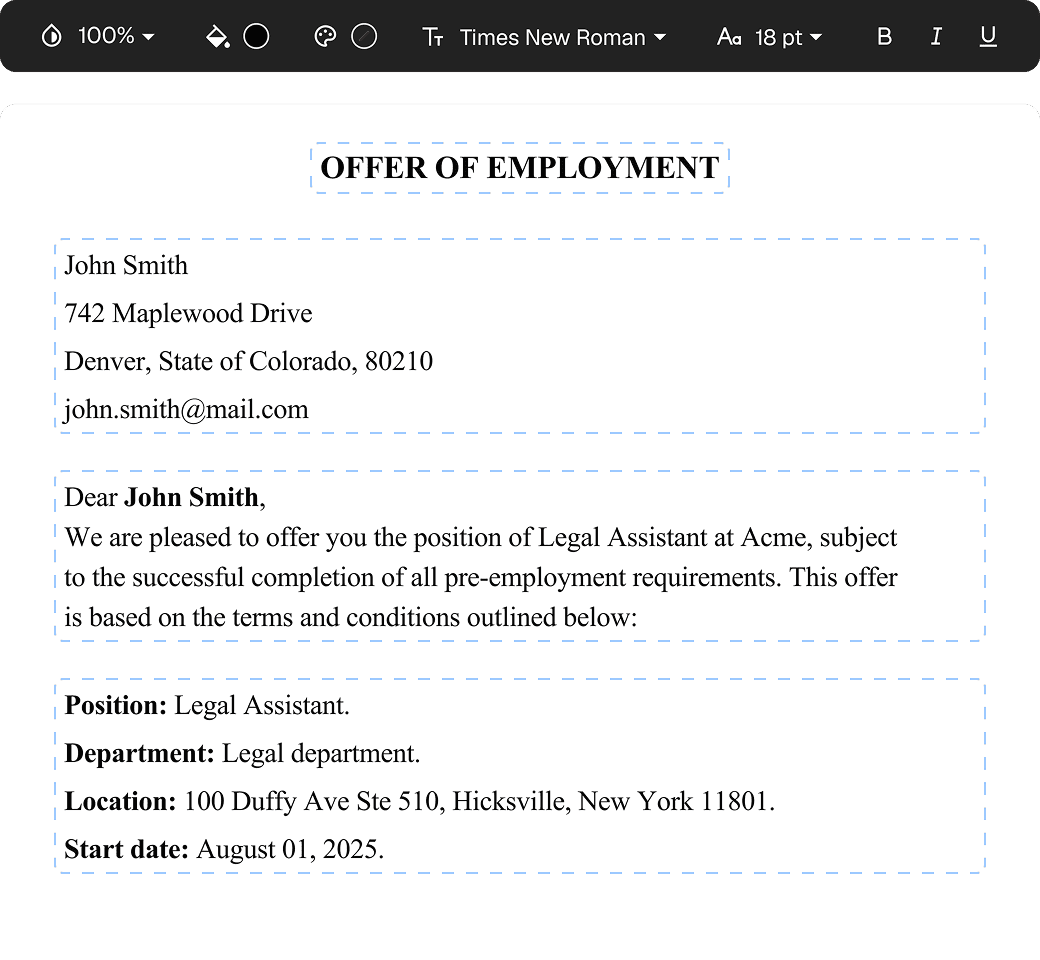
Edit PDFs seamlessly
Tweak agreements before signing or sending for signatures. Update details, add or remove clauses, adjust formatting, and redline changes instantly.
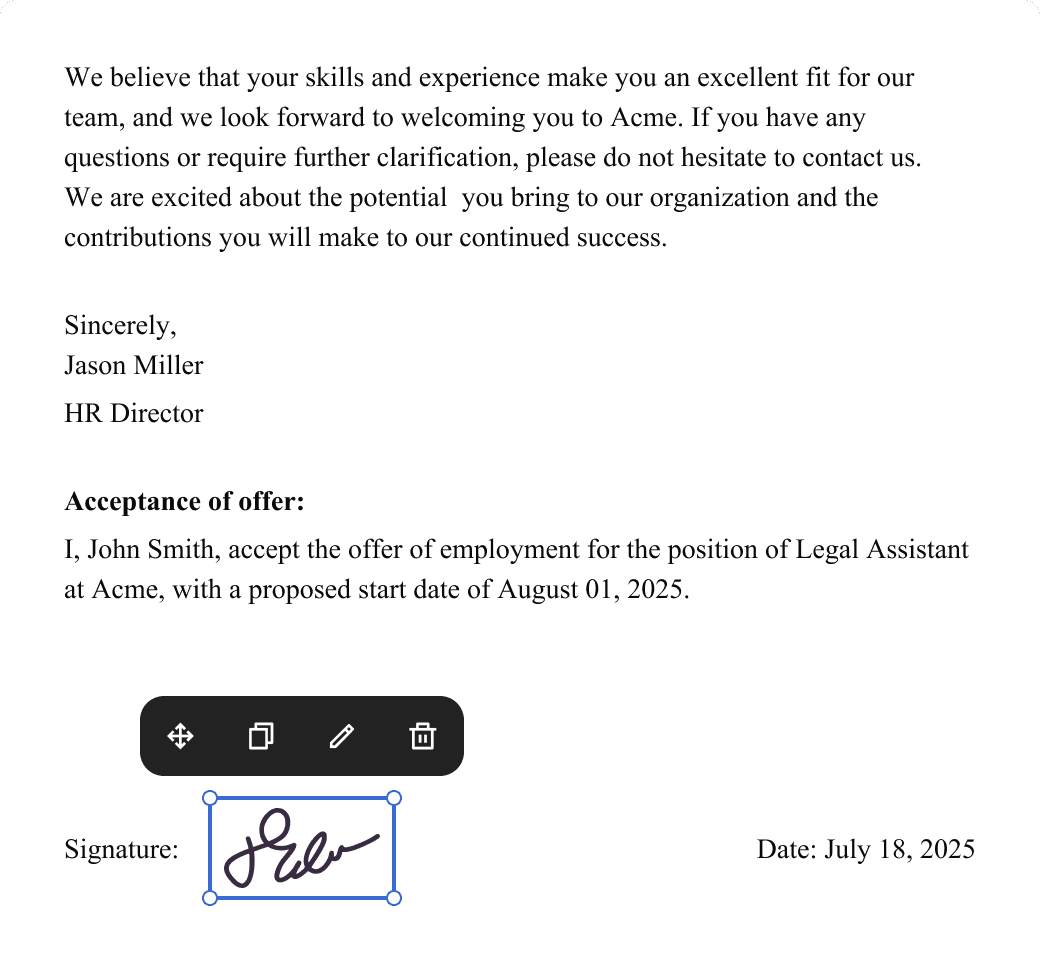
eSign legally and securely
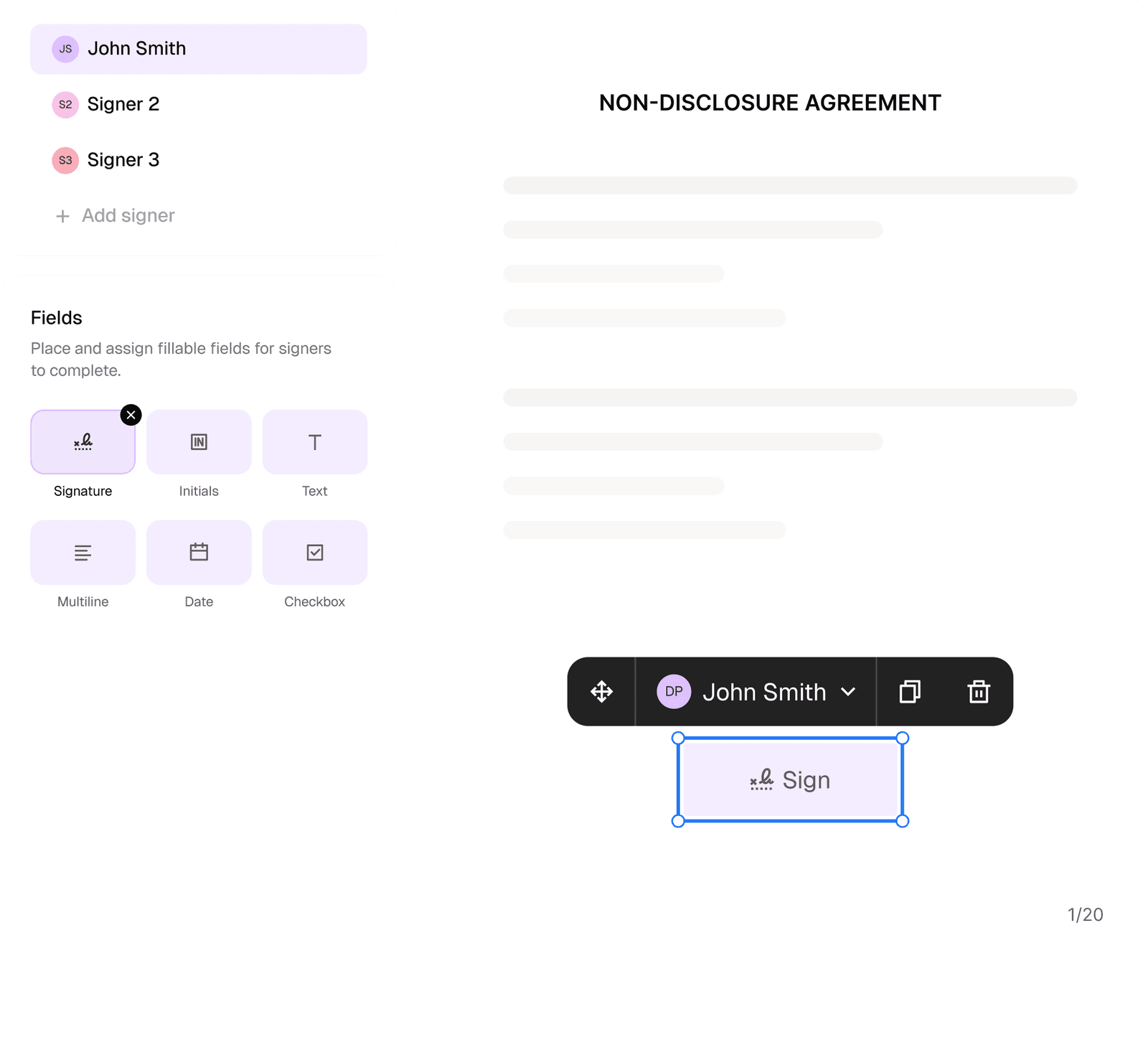
Sign documents and collect legally binding signatures. Invite up to ten people to sign in any order, track the progress, and send reminders.
Request legally binding signatures
Invite up to ten people to sign your document in any order. Get a finalized, audit-ready copy without chasing signatures.
Skip the drafting.
Choose from 2,500+ templates
Browse templatesChoose a template
Fill in details
Sign and download