Updated August 10, 2026
8 min read
Strategic Alliance vs. Joint Venture: How to Build a Partnership that Works

Strategic Alliance vs. Joint Venture: How to Build a Partnership that Works
Content
Want to do business fast? Do it alone. Want to build something that lasts? Find a partner. Someone who shares your vision and challenges can take your business places you'd never reach alone. Depending on how much control you’re ready to give another person, you can choose between two options: a strategic alliance and a joint venture. Each comes with its own rules, risks, and rewards. This guide breaks down all the differences so you can choose the collaboration structure that fits your goals.
Companies engaging in joint ventures and partnerships make 25% or more of revenue or net income.
What Is a Strategic Alliance?
A strategic alliance is a formal agreement between two or more companies that decide to work together while each party remains independent. Unlike more complex partnership structures, a strategic alliance enables flexible collaboration without creating a new entity. The partners share resources, expertise, or market access to achieve mutual goals, but they do not merge their operations.
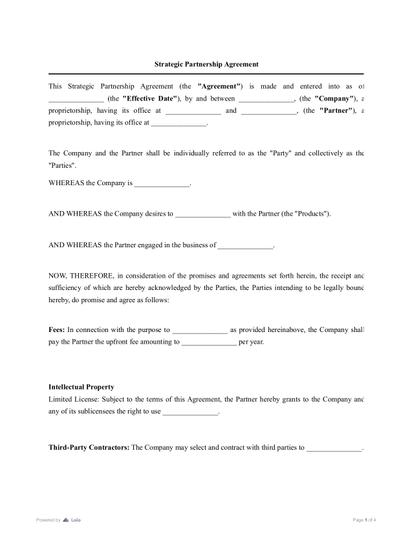
Depending on the nature of the partnership and the resources companies share, strategic alliances can be of the following types:
Marketing alliances: Two companies promote each other's products or services.
Supply chain alliances: Partners coordinate their supply chains for better efficiency.
Technology alliances: Companies share technical resources or develop products together.
Distribution alliances: One company uses another's distribution network.
Licensing alliances: One partner grants another the right to use its intellectual property.

What Is a Joint Venture?
A joint venture is a business arrangement where two or more companies create a new, separate entity to pursue a specific project or business goal. The partners not only contribute money, resources, and expertise but create and share ownership in a new business entity that operates independently from its parent companies.
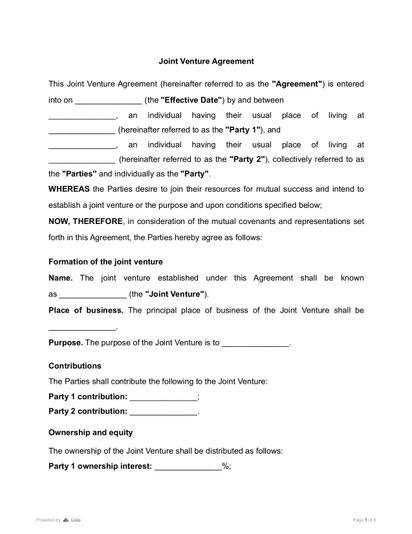
The type of joint venture to choose depends on how many resources partners are ready to invest and what goal they both have, whether it is a brief project or a long-term partnership:
- 1
Equity joint ventures: Partners invest capital and own shares in the new entity. It is the most common type for large projects.
- 2
Contractual joint ventures: Partners collaborate based on a contract without formal equity stakes. Popular in states with strict foreign ownership rules.
- 3
Project-based joint ventures: Created for a single project with a clear end date. Common in construction and real estate.
- 4
Functional joint ventures: Formed to handle a specific business function like research and development.
- 5
Vertical joint ventures: Partners from different levels of the supply chain combine forces.
What Are the Joint Venture vs. Strategic Alliance Differences?
Though both joint ventures and strategic alliances are popular business expansion models, they operate under completely different rules. Let’s discuss major strategic alliance vs. joint venture differences in detail:
Level of independence
The most important distinction between the two models is the degree of independence each partner maintains.
- Each company operates as a fully independent organization.
- Each company maintains its own management team, corporate identity, and decision-making authority.
- Both partners share only the management of specific areas of cooperation.
- Each party's independence is limited.
- The new entity has its own operations, and parent companies must coordinate their actions through the joint venture's structure.
- Partners cannot make unilateral decisions about the venture's direction.
Corporate governance
The corporate and management hierarchies also differ greatly between the two structures. In a strategic alliance,
- 1
There's no unified board of directors or formal corporate hierarchy.
- 2
Each partner governs its own contribution to the alliance.
- 3
Coordination committees or alliance managers from each company control the partnership.
- 4
Regular meetings to review progress and resolve issues are practiced.
- 5
Decisions often require consensus but remain within each partner's authority.
In a joint venture,
The formal structure is similar to that of a corporation.
Each parent company has its representatives on the board of directors.
Each company appoints executives (e.g., CEO, CFO) with clear responsibilities.
The board approves all major decisions, budgets, and strategic plans.
The entity operates independently from parent companies.

Essential documentation
Considering the discrepancies in legal status and operational specifics, the documents needed to establish each partnership type also differ.
To form a strategic alliance, the companies entering the partnership should prepare a strategic alliance agreement – a legally binding document that outlines:
The scope of collaboration;
Each partner's roles and responsibilities;
The size of each party’s contributions;
Intellectual property rights;
Confidentiality terms;
Dispute resolution procedures;
Exit conditions.
This document serves as the legal foundation of the alliance. Without it, partners have no formal protection if their expectations are unmet or conflicts arise.
Besides, before the parties e-sign the contract and document their strategic alliance, they need to prepare:
- 3
Service level agreements (if applicable);
- 4
Intellectual property agreements.
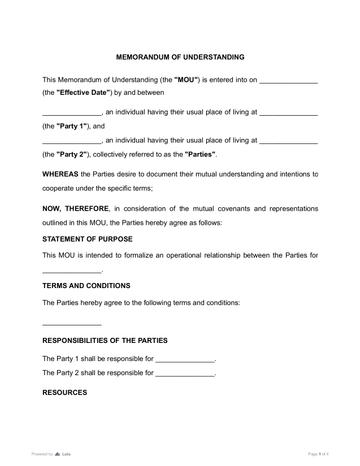
- Memorandum of Understanding
 4536 downloads
 - Letter of Intent (LOI)
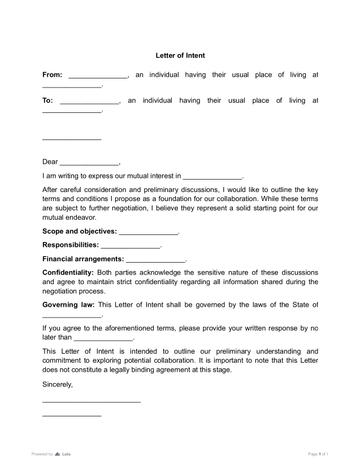 4667 downloads
 - Non-Disclosure Agreement (NDA)
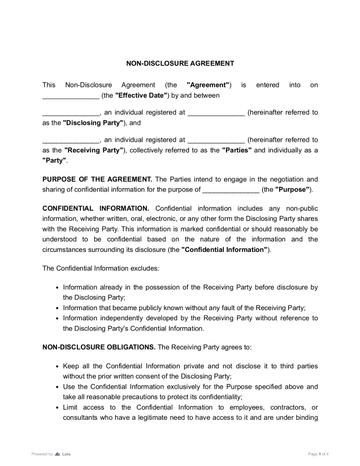 4699 downloads
Meanwhile, the most important document in a joint venture creation is a joint venture agreement that defines:
Ownership percentages;
Capital contributions;
Profit and loss distribution;
Board composition;
Voting rights;
Management responsibilities;
Intellectual property ownership;
Exit strategies;
Dissolution procedures.
It acts as the constitution of the newly created entity and governs how partners make decisions, resolve disputes, and protect their investments throughout the life of the venture.
To ensure the effectiveness of the joint venture agreement, you can also prepare:
- 1
Memorandum of understanding (MOU);
- 2
Articles of incorporation for the new entity;
- 3
Shareholders' agreement;
- Articles of Incorporation
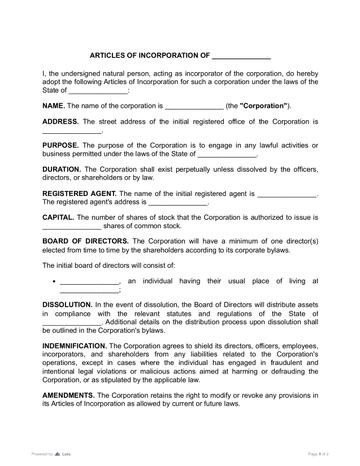 3952 downloads
 - Corporate Bylaws
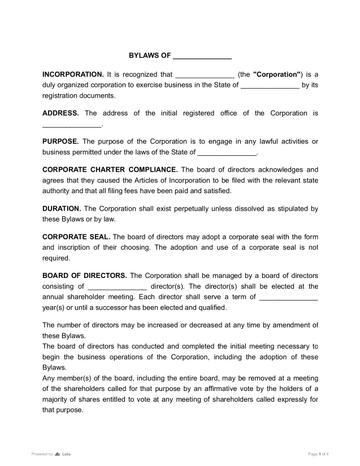 3995 downloads
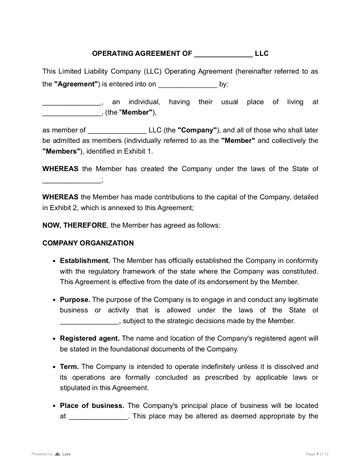
 - LLC Operating Agreement
 4046 downloads
Legal structure
The creation of a legal entity represents another difference between a joint venture and a strategic alliance. This distinction affects taxation, liability, and how the partnership appears to the outside world. Besides, if you want to change the terms of the cooperation, the joint venture members should draft a new legally binding contract, while the strategic alliance parties can just edit the document and update it.
- Creates a separate legal entity for a shared business goal;
- Has its own tax identification number;
- Can hire employees;
- Owns assets;
- Enters contracts in its own name;
- Exists independently under the law.
- Does not create any new legal entity;
- Exists only through contracts between the parties;
- Leaves each partner a separate legal person;
- Has no independent legal status;
- Cannot own property, sue, or be sued; only the individual partner companies can.
Commitment
While joint ventures presuppose more legal complexity, they also require different levels of involvement from the partners.
Strategic alliances work best for:
Short to medium-term projects (1-5 years);
Market exploration in new territories;
Technology access without major investment;
Test partnerships before deeper commitment;
Projects where the exit should remain simple.
Joint ventures suit these cases:
Long-term initiatives (5-20+ years);
Large infrastructure or development projects;
Entry into markets with complex regulations;
Situations that require substantial capital investment;
Projects where shared ownership motivates both parties;
Ventures where a unified brand presence matters.
Research from Harvard Business Review indicates that joint ventures work best when partners plan for at least a 10-year horizon. Shorter commitments often fail because the setup costs cannot be recovered quickly enough.
Risk and reward
Financial and legal risks vary considerably between a strategic alliance vs. joint venture.
- Capital investment may be lost if the venture fails.
- Partners share responsibility for the venture's debts.
- Additional capital contributions may be required later.
- Fair valuation at exit is often difficult to agree on.
- Risk of antitrust issues in markets with few competitors.
- Disputes between partners are hard to resolve.
- Partners may be liable if the venture breaks any laws.
- Dissolution involves complex legal procedures.
- One partner may use shared knowledge to compete.
- Revenue depends on partner performance.
- Each partner has less control over outcomes.
- Conflicts may arise over who owns shared technology or ideas.
- Partners may sue each other for broken contract terms.
- Risk of antitrust issues if the alliance limits competition.
- Liability boundaries are often unclear.
- Less legal protection since there is no formal entity.
The reward structure also differs. Joint venture partners share profits based on their ownership percentage: a clear, predictable model. Alliance partners typically benefit through increased sales, cost reduction, or access to new markets, but the gains remain within each company's own financial statements.
Control
In a joint venture, control flows through formal corporate governance. Board seats typically match ownership percentages. If you own 50% of the joint venture, you usually appoint half the board members. Some joint ventures give one partner operational control while the other maintains veto rights over strategic matters.
Meanwhile, strategic alliances distribute control through contractual terms rather than ownership. Partners agree in advance which decisions each party controls. Alliance management committees coordinate activities, but each partner retains ultimate authority over its own resources and operations.
Joint Venture vs. Strategic Alliance: What to Choose?
Your decision should depend on your specific goals, resources, and readiness to risk. Each option has its benefits and opportunities that it can open up for a business. Let’s consider some of them:
- Lower upfront costs and faster setup;
- Greater flexibility to adjust or exit;
- Preserved independence and brand identity;
- Reduced risk exposure;
- Ability to have multiple partnerships simultaneously;
- Simpler tax and accounting treatment.
- Stronger commitment from all partners;
- Clear ownership and profit distribution;
- Ability to raise external capital for the venture;
- Unified market presence;
- Better protection of shared intellectual property;
- More suitable for large-scale projects.
For flexible business collaboration when you need to test a market, access specific capabilities for a limited period, or maintain the ability to pivot quickly, a strategic alliance works better than a joint venture. If your industry changes rapidly or your goals may shift within a few years, it offers the adaptability you need.
On the other hand, if two companies want to bid on a major project that will take 15 years to complete, a joint venture makes far more sense. The project requires unified management, shared capital investment, and a single entity to hold contracts and permits.
Challenges and Risks in Joint Ventures and Strategic Alliances
Both partnership types face obstacles that can destroy even well-planned collaborations. Here are the key things one should consider while entering any type of business partnership:
- 1
Cultural and operational conflicts: Partners from different corporate cultures often clash over work styles, communication preferences, and decision processes.
- 2
Unequal contribution or commitment: One partner may invest more effort or resources than the other, which leads to resentment. To avoid disputes, define contribution expectations in detailed written agreements.
- 3
Intellectual property disputes: Shared technology or knowledge can become contested when the partnership ends or evolves. Therefore, it is important to clearly document IP ownership from the start and explain what happens to jointly developed IP if the partnership dissolves.
- 4
Exit complications: Partnerships end, but poor planning can make this process faster and more costly. Discuss how each of you will exit the deal before you sign an agreement: address valuation methods, buyout rights, and transition periods.
- 5
Regulatory and compliance issues: If the parties are registered in different states, it may create ambiguity about the state law each should rely on.
- 6
Loss of competitive advantage: Partners may use shared knowledge to compete against you later. Therefore, it is important to include non-compete clauses in the main contract and limit the scope of shared information.
- 7
Management distraction: Partnerships require attention that may pull focus from core business operations. This problem can be solved by appointing dedicated partnership managers.
Strategic alliances and joint ventures both offer pathways to business growth, but they serve different purposes. A strategic alliance gives you flexibility, lower risk, and the ability to collaborate without complex legal structures, while a joint venture provides stronger commitment and motivation for major long-term projects.
Here’s a universal tip: think about how you see your business in five years, and whether the partnership you want to enter still fits into that picture. If your answer is “yes,” choose a joint venture; if you're hesitant, a strategic partnership is a good place to start.
More guides
September 15
10 min read
Who Can Sign a Contract on Behalf of a Company?

September 15
What Is Contract Redlining?

September 15
What Are the Stages of the Contract Management Lifecycle?

October 14
8 min read
Electronic Signature vs Digital Signature: What Is Best for You?

September 14
12 min read
How to Review a Contract: Rules and Checklist

September 12
9 min read
Wet Signature vs Electronic Signature: Key Differences and When to Use Each

One home for your
agreements
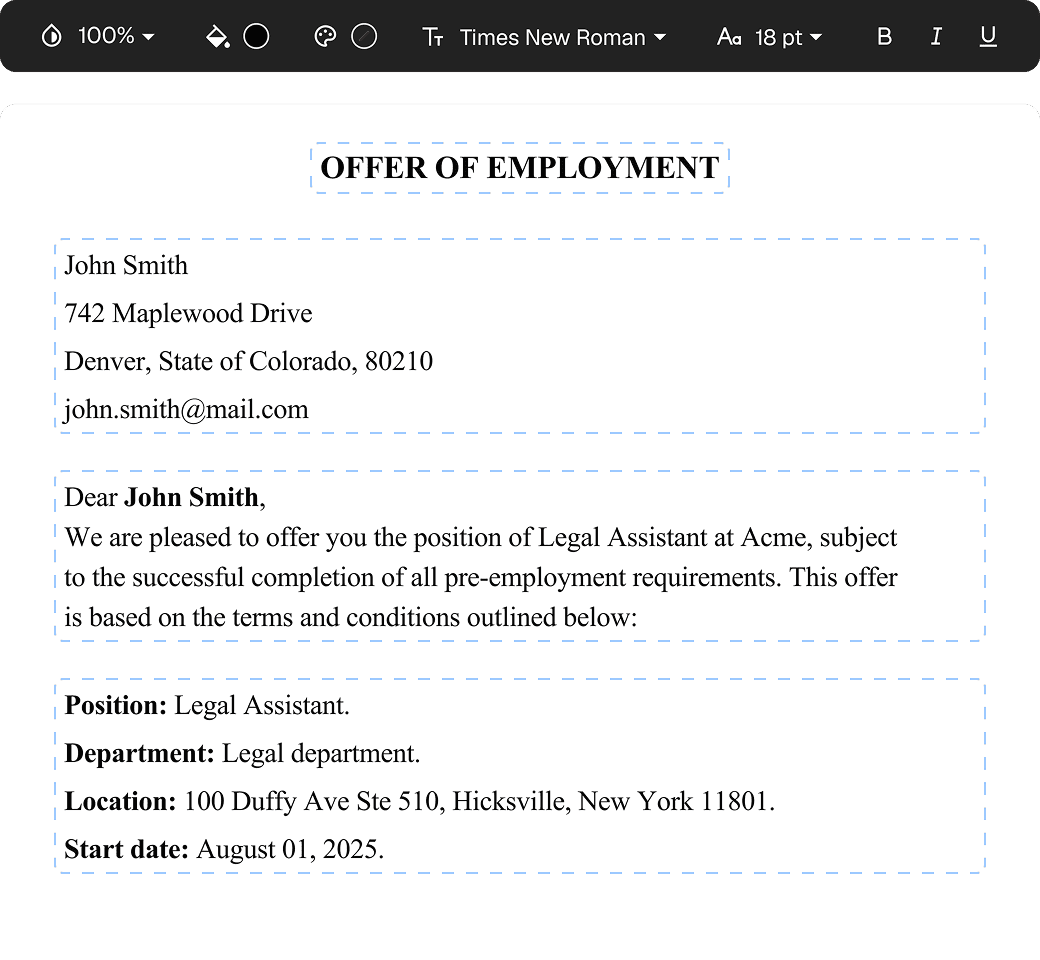
Edit PDFs seamlessly
Tweak agreements before signing or sending for signatures. Update details, add or remove clauses, adjust formatting, and redline changes instantly.
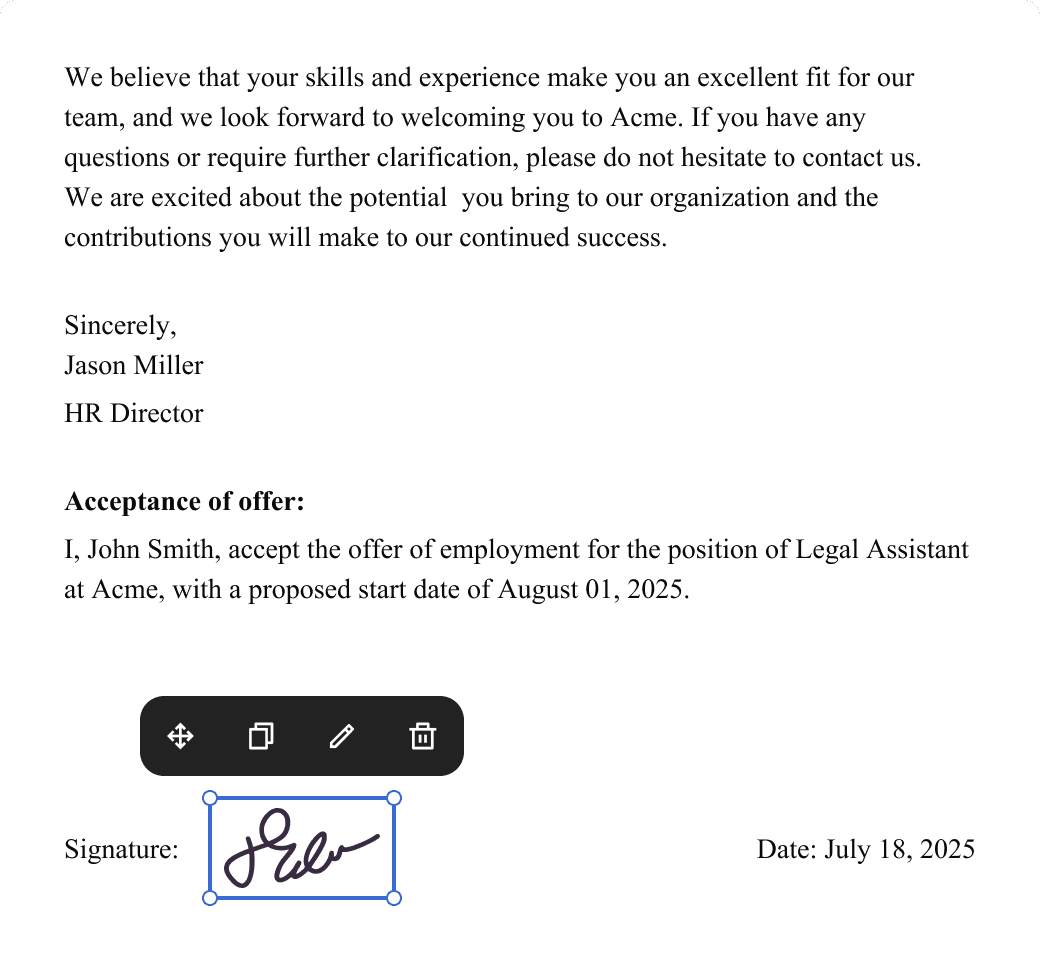
eSign legally and securely
Sign documents and collect legally binding signatures. Invite up to ten people to sign in any order, track the progress, and send reminders.
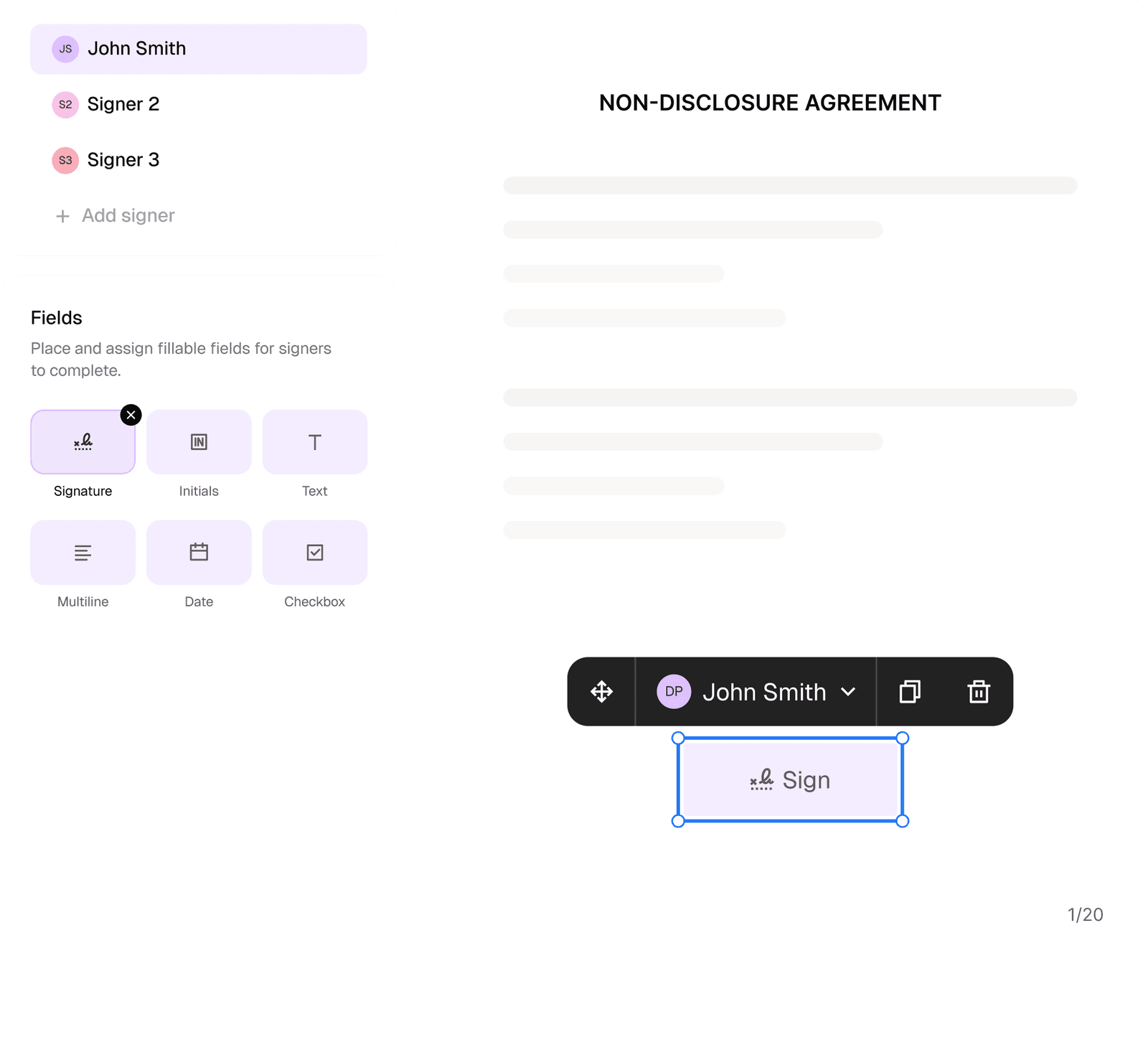
Request legally binding signatures
Invite up to ten people to sign your document in any order. Get a finalized, audit-ready copy without chasing signatures.
Skip the drafting.
Choose from 2,500+ templates
Browse templatesChoose a template
Fill in details

Sign and download