Updated July 26, 2026
How to Start a Photography Business: Practical Guide

How to Start a Photography Business: Practical Guide
- How to Start a Photography Business Legally
- Create a Photography Business Plan before You Spend Money
- Build a Simple Budget before You Buy Equipment
- Get Photography Liability Insurance before You Book Clients
- Build a Photography Brand that Clients Can Recognize and Trust
- Use Photography Contracts to Protect your Work and Payments
- Set Up a Client Workflow before Instagram Messages Get Messy
- How Profitable is the Photography Business?
- Market your Photography Business and Find your First Client
- How to Run a Photography BBusiness after Launch
- Avoid Mistakes that Hurt your Photography Business
Content
Starting a small photography business can feel simple at first, until questions about pricing, contracts, taxes, and copyright start piling up. Knowing how to start a photography business means learning not only how to attract clients, but also how to run a photography business in a way that protects your time, income, and creative work. In this guide, you will learn the practical steps to start a photography business, avoid common mistakes, and build a setup that works in real client situations.
How to Start a Photography Business Legally
If you want to start a photography business legally, begin by choosing a business structure. For many photographers, the main question is whether to stay a sole proprietor or form an LLC.
A photography business often registers as a limited liability company (LLC) because this structure helps separate personal and business liability. According to the SBA, an LLC can protect personal assets in many cases if the business faces lawsuits or bankruptcy, though that protection is not absolute. That legal separation can be useful for photographers handling client contracts, paid shoots, and other business risks.
An LLC helps establish legal separation between you and your business. It is also recommended to create an LLC Operating Agreement, which outlines how the company is managed, who owns it, and how decisions and profits are handled. Even for single-member LLCs, this document strengthens the business's legal structure.

Steps to register:
- 1
Choose a unique business name.
- 2
Check availability in your state database.
- 3
File Articles of Organization.
- 4
Obtain an EIN from the IRS.
- 5
Open a dedicated business bank account.
Opening a dedicated bank account is essential. It proves financial separation.
📌 Warning: Mixing personal and business finances can “pierce the corporate veil,” meaning a court may disregard your LLC and allow personal liability.
Create a Photography Business Plan before You Spend Money
A photography business plan should help you answer one practical question before you buy gear or pay for ads: how will this business make money without putting you under pressure too early?
Your photography business plan outlines your marketing strategy, pricing structure, target clients, and revenue goals before you spend money on equipment or advertising.
Your plan should cover:
Services you will offer.
Target client and niche.
Startup costs and monthly costs.
Pricing model.
Expected revenue per job.
How many shoots you need each month to break even.
Do not treat photography as one market. Weddings, portraits, events, and commercial shoots all have different pricing, editing time, insurance needs, and client expectations.
For example:
Wedding photography usually means bigger contracts, deposits, and more liability if something goes wrong.
Portrait photography may book faster, but average revenue per client is often lower.
Commercial photography can pay more, but clients may expect licensing terms and revisions.
That is why your plan should say exactly what kind of work you want first, instead of offering everything.
Build a Simple Budget before You Buy Equipment
SBA recommends separating startup costs from monthly operating costs.
Example:
- Camera and lenses $4,500.
- Website and branding $600.
- Registration and setup $300.
- Insurance upfront $700.
Total startup cost is $6,100
- Software and gallery tools $80.
- Insurance $60.
- Bookkeeping tools $40.
- Marketing $250.
- Travel and misc $170.
Total monthly cost is $600
This helps you see how much cash you need to launch and how much revenue you need to stay afloat.
Calculate your break-even point.
SBA’s break-even formula is:
Fixed Costs ÷ Price minus Variable Costs.
Example:
Monthly fixed costs = $600.
Average package price = $400.
Variable cost per shoot = $50.
$600 ÷ ($400 - $50) = 1.71
That means you need at least 2 paid shoots per month just to cover basic operating costs. If you want to pay yourself, save for taxes, and handle slow months, the number goes up quickly. That is why pricing should be based on your numbers, not just what other photographers post online.
Research competitors in a way that helps you price better.
- Entry price.
- What each package includes.
- Turnaround time.
- Image count.
- Print rights or licensing terms.
- Whether they compete on price, speed, or premium service.
- What kind of photography work do you want to sell first.
- How much money do you need to start.
- How many shoots do you need each month.
- What does your minimum profitable price look like.
- Which clients you actually want to target.
That is what makes the business plan useful. It helps you make decisions before the business becomes expensive.
Get Photography Liability Insurance before You Book Clients
Liability insurance is one of the first things to set up before taking paid photography work. It helps protect your business if a client is injured during a shoot, if you damage property at a venue, or if a dispute turns into a claim. Some venues and event spaces also require proof of insurance before they let photographers work on-site, so having coverage can protect both your finances and your ability to book jobs.
General liability for small businesses averages about $45 per month through Insureon, for example. Professional liability averages about $88 per month through Insureon, though actual pricing depends on your services, location, limits, and claims history.
- General liability insurance for third-party injury and property-damage claims.
- Equipment insurance for cameras, lenses, lighting, and other gear.
- Event coverage for one-off shoots or venue-specific requirements.
- Professional liability insurance for claims tied to mistakes, missed deliverables, or service disputes.
- General liability is about $45 to $68 per month.
- Professional liability about $88 per month.
- Business Owner’s Policy often costs about $83 to $141 per month if you bundle liability with property-related coverage.
- Some low-risk businesses may find entry-level policies starting around $19 to $21 per month, but that is usually a starting price, not a realistic average for every photographer.
- Compare quotes from several carriers instead of taking the first offer.
- Start with the core coverage you actually need for your current type of work.
- Avoid overinsuring gear you do not bring to shoots.
- Ask whether bundling policies lowers the total cost.
- Choose deductibles carefully so the premium goes down without creating an out-of-pocket amount you could not handle later.
- Review your coverage after your first year, once you know what kinds of shoots and risks are actually common in your business.
Many venues require proof of insurance before allowing photographers on-site. Without it, you may lose bookings even before a legal or financial problem appears.
Build a Photography Brand that Clients Can Recognize and Trust
Brand identity is not just about how your business looks. A clear brand identity helps attract your target audience and makes your photography services easier to recognize and trust. It helps potential clients understand who you work with, what kind of photography you offer, and why they should choose you over someone with similar prices. A clear brand also makes it easier to market your services consistently instead of trying to appeal to everyone.
Start by choosing a niche based on demand, profitability, and the kind of work you actually want to book. Wedding photography, family portraits, and commercial shoots all require different portfolios, pricing, and messaging.
- Who you serve.
- What style or experience do you offer.
- What clients can expect from working with you.
- How is your service different from local competitors.
- A professional website.
- Service pages that match your niche.
- A portfolio built around the kind of work you want more of.
- Social profiles that support the same visual style and message.
The goal is consistency. If your website, portfolio, editing style, and messaging all point in the same direction, clients are more likely to trust what your business offers.

Use Photography Contracts to Protect your Work and Payments
A photography contract does more than confirm the booking. It helps control the parts of a project that most often lead to disputes later, especially payment timing, cancellations, delivery expectations, and image-use rights. Verbal agreements tend to fall apart when a client wants extra edits, reschedules at the last minute, delays payment, or assumes they can use the photos in ways you never agreed to.
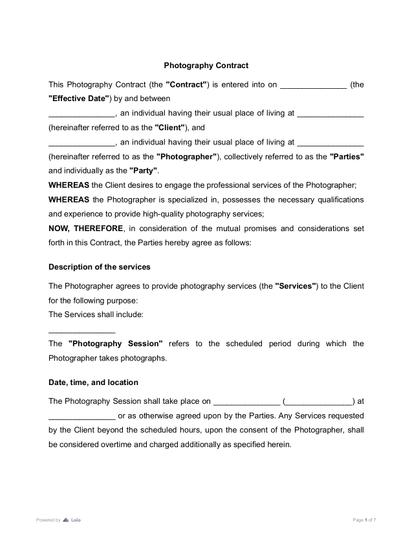
At a minimum, the contract should clearly state:
Scope of work and what is included.
Shoot date, time, and duration.
Deliverables and delivery timeline.
Total price, deposit, and final payment deadline.
Cancellation, rescheduling, and refund terms.
Copyright ownership and image usage rights.
Revision limits if editing is included.
Location rules or venue-specific requirements when relevant.
These clauses matter when running a photography business because they set boundaries before the work starts. For example, a vague contract can turn a one-hour shoot into a half-day scheduling problem, or a simple portrait booking into an argument over commercial use, rush edits, or unlimited revisions.
If you receive venue rules, location policies, or custom client terms as PDFs, review them before the shoot. A PDF editor can help you highlight liability language, timing restrictions, and usage terms, while also making it easier to add notes or make edits if the document needs changes before signing.
Without a written contract, small misunderstandings can turn into payment disputes, missed expectations, or conflicts over who owns the final images.
Set Up a Client Workflow before Instagram Messages Get Messy
If your first clients come through Instagram DMs, it can feel manageable at the beginning. One person asks about prices, another wants to book next weekend, someone else says they will “confirm soon,” and you think you can keep track of it all in chat. The problem starts when inquiries, deposits, dates, and follow-ups are spread across DMs, email, notes, and your camera roll. That is when leads go cold, payment reminders get missed, and two clients can end up thinking they both booked the same date.
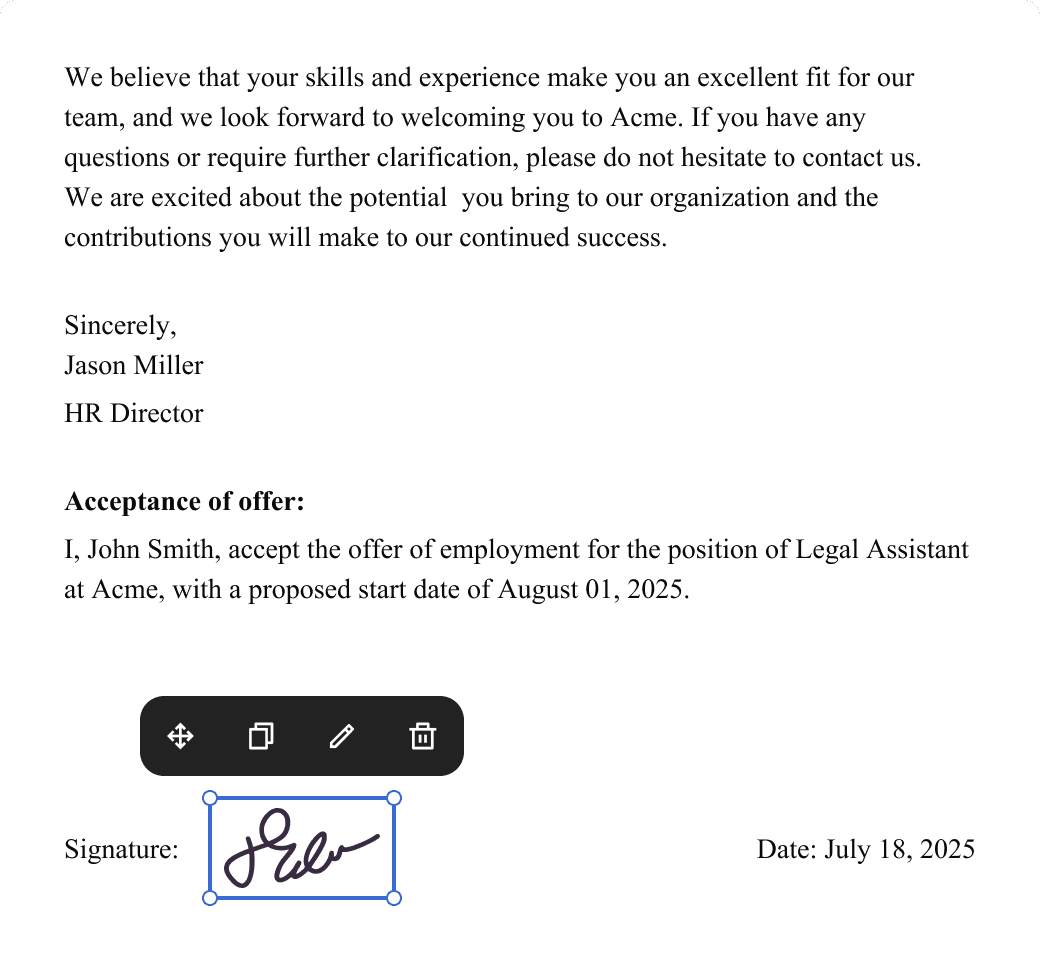
A CRM helps you move client information out of your inbox and into one system. Once a client says yes, the next step is getting the agreement signed and the deposit paid. Using an eSign can make that step easier to complete quickly, especially when the booking starts in Instagram DMs but needs to move into a more reliable system.
A simple workflow helps you track:
New inquiries and what service they want.
Who asked for pricing but has not booked yet.
Which dates are being held and which are confirmed?
Whether the contract was sent and signed.
Whether the deposit was paid.
When to send the session reminder and final invoice.
For example, imagine three people message you on Instagram in the same week. One wants a family session next Saturday, one asks about brand photos for a small business, and one says she is interested in engagement photos “later this month.”
Without a system, it is easy to forget who received pricing, who is waiting for a contract, and who never paid the deposit. A CRM, or even a simple documented workflow, helps you move each person through the same steps instead of relying on memory.
At a minimum, your workflow should look like this:
Inquiry comes in.
You send pricing and availability.
The client chooses a package.
The contract is sent.
The deposit is paid.
The date is confirmed.
A reminder is sent before the shoot.
The final payment and delivery are tracked.
That structure reduces ghosting, missed follow-ups, and unpaid work. It also helps you see whether someone is a real booking or just an inquiry sitting in your DMs.

How Profitable is the Photography Business?
Photography can become profitable once a steady client pipeline and clear pricing structure are in place. Photographers typically earn revenue through session fees, tiered packages, retainer agreements, print sales, and licensing commercial use rights for marketing or advertising.
Photographer earnings vary widely by specialization, market, and whether the work is salaried or self-employed. The U.S. Bureau of Labor Statistics reports that photographers had a median hourly wage of $20.44, which equals about $42,515 per year for year-round full-time work. Higher earnings are possible in specialized fields such as commercial, brand, or wedding photography, but those numbers vary much more by location, client mix, and business model than broad national wage data suggests.
Photography pricing varies widely by specialization and market. Portrait photographers often charge around $150 to $370 per session, while wedding photography packages commonly range from the low thousands upward, depending on hours, location, and experience.
Beginner photographers usually price lower as they build a portfolio and reputation. As experience, specialization, and demand grow, professionals can charge premium rates for high-value work such as weddings, corporate events, or commercial licensing.
Profitability ultimately depends on cost control, consistent bookings, proper pricing, and efficient workflow systems that reduce administrative work and protect margins.
Market your Photography Business and Find your First Client
Getting good at photography is only part of the job. You also need a simple plan for getting found, building trust, and turning interest into paid work. In the beginning, your marketing should focus on visibility, credibility, and relationships.
Develop Your Photography Marketing Plan
Your photography marketing plan should include:
Website and SEO. Build a simple website that clearly shows your services, style, pricing approach, and contact details. Optimize it for local search, create location-specific pages, and publish useful content for the types of shoots you want to book, such as weddings, events, or corporate sessions.
Social Media. Post consistently so people can see your work and remember your brand. Share finished photos, behind-the-scenes moments, and client testimonials to make your business feel active and trustworthy.
Partnerships. Build relationships with venues, planners, coordinators, and other local vendors who already work with your ideal clients. These partnerships can become one of the most reliable sources of referrals.
Find Your First Clients Through Networking
Your first bookings often come from visibility and personal connections, not from ads alone. Focus on practical ways to get in front of real people in your area.
Useful strategies include:
Referral incentives for past clients or business contacts.
Community events where you can meet potential clients face to face.
Introductory packages that make it easier for people to book you the first time.
Strategic partnerships with venues, planners, or local businesses.
How to Run a Photography BBusiness after Launch
Execution matters once your photography business begins working with clients. Clear documentation, organized delivery processes, and secure payments help prevent disputes and keep operations predictable.
Before the shoot:
Confirm the signed contract.
Collect the deposit.
Confirm the schedule, location, and scope of work.
Using written agreements protects both sides of the project. In addition to a photography services contract, photographers often rely on supporting legal documents such as a photo consent form and a photo license agreement.
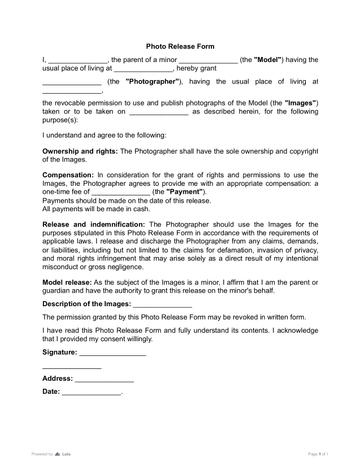
You might also need a photo release form, which helps photographers obtain written permission from individuals appearing in photos, allowing the images to be legally used for marketing, portfolios, social media, or commercial purposes.
- Photo Consent Form
 5086 downloads
 - Photo Licensing Agreement
 5461 downloads
 - Photo Release Form
 6632 downloads
After the shoot, edit the photos within the agreed timeline, deliver the files through a secure platform or gallery, and obtain the final payment before releasing high-resolution files.
Handling Payments and Financial Controls
Reliable payment procedures protect your revenue and prevent delays.
Best practices:
Require deposits before confirming bookings.
Define clear payment deadlines in the contract.
Use professional invoicing tools.
Automate reminders for unpaid invoices.
Never begin editing or deliver final images without a signed contract and deposit confirmation. Written agreements and structured payment policies are essential for maintaining cash flow and avoiding misunderstandings with clients.
Tax compliance and recordkeeping
Self-employed photographers usually file Form 1040 with Schedule C to report business income and expenses. If net earnings from self-employment are $400 or more, they generally also file Schedule SE, and many make quarterly estimated tax payments with Form 1040-ES.
If you hire freelance second shooters or editors, you may also need to collect Form W-9 before paying them.
Good recordkeeping matters just as much as filing: keep organized records for income, invoices, deposits, gear, software, insurance, travel, and other deductible expenses, and make sure your personal and business bookkeeping stay separate.
📌 Keep financial records for 3–7 years for IRS compliance.
Avoid Mistakes that Hurt your Photography Business
- Underpricing leads to burnout and cash flow instability.
- Lack of contracts creates disputes.
- Vague scope allows clients to request unlimited revisions.
- Ignoring copyright rules creates exposure when clients misuse images.
- Written agreements.
- Defined revision limits.
- Structured packages.
- Deposit requirements.
- Clear licensing terms.
To avoid legal and financial pitfalls, you need clear cancellation policies to reduce last-minute losses, equipment insurance to protect against theft or damage, liability insurance to protect against injury claims, and written documentation for every agreement.

More guides
July 25
12 min read
How to Register a Company in the US: What No One Tells You in 2026
October 16
7 min read
What Is OCR (Optical Character Recognition)? How It Works & AI Uses
October 16
8 min read
How to Scan a Document to PDF & Convert to Editable Text
September 1
7 min read
How to Provide Proof of Employment: Documents and Steps
October 8
8 min read
How to Start a Videography Business: 8 Essential Steps
October 15
How to Start a Staffing Agency: Licensing, Pricing, and Cash Flow
One home for your
agreements
Edit PDFs seamlessly
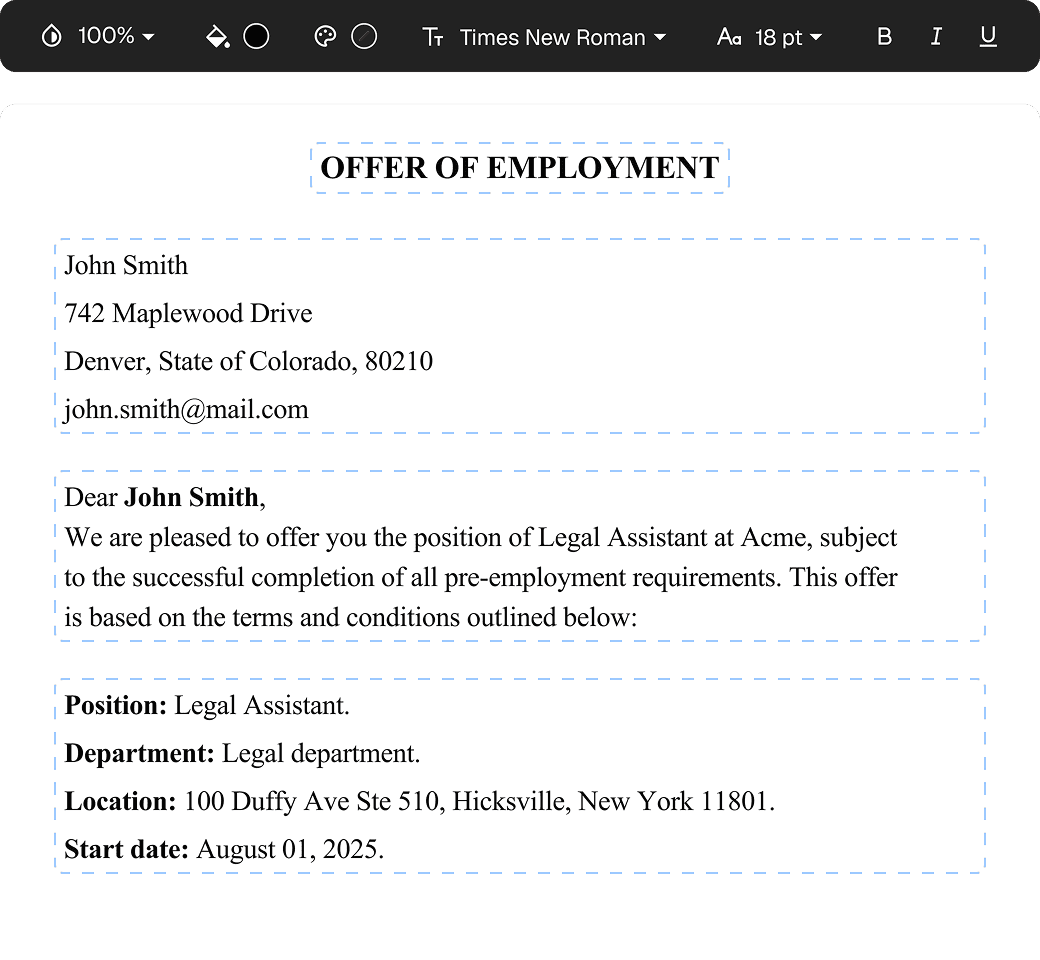
Tweak agreements before signing or sending for signatures. Update details, add or remove clauses, adjust formatting, and redline changes instantly.
eSign legally and securely
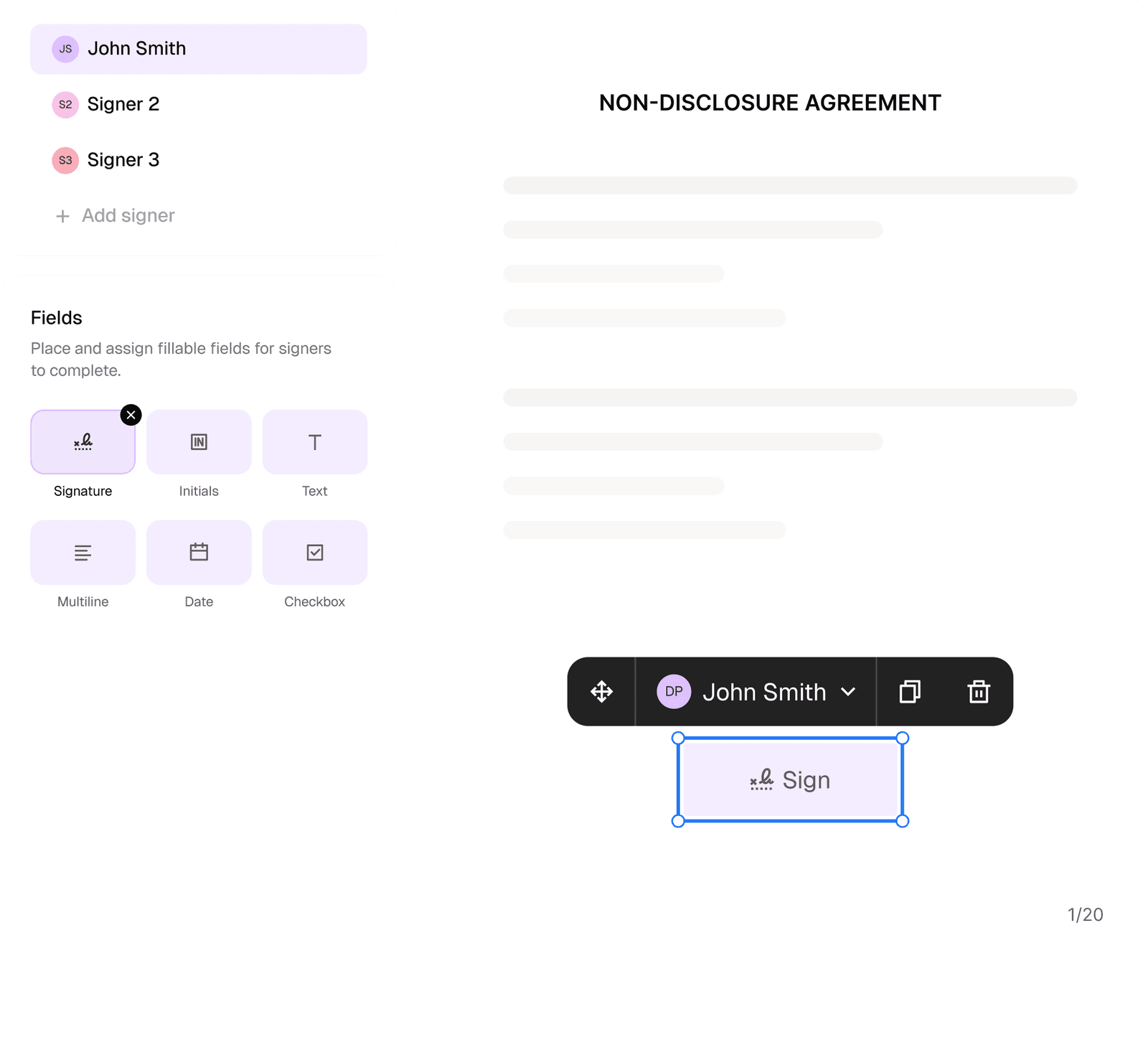
Sign documents and collect legally binding signatures. Invite up to ten people to sign in any order, track the progress, and send reminders.
Request legally binding signatures
Invite up to ten people to sign your document in any order. Get a finalized, audit-ready copy without chasing signatures.
Skip the drafting.
Choose from 2,500+ templates
Browse templatesChoose a template

Fill in details
Sign and download